



Meet Arpana Shahi, the woman entrepreneur building an AI-powered longevity platform with Gabit
From an AI-powered smart ring that tracks key health metrics to a platform that analyses over 150 biomarkers, Gabit, founded by Arpana Shahi and Gaurav Gupta, is building a preventive healthcare ecosystem.

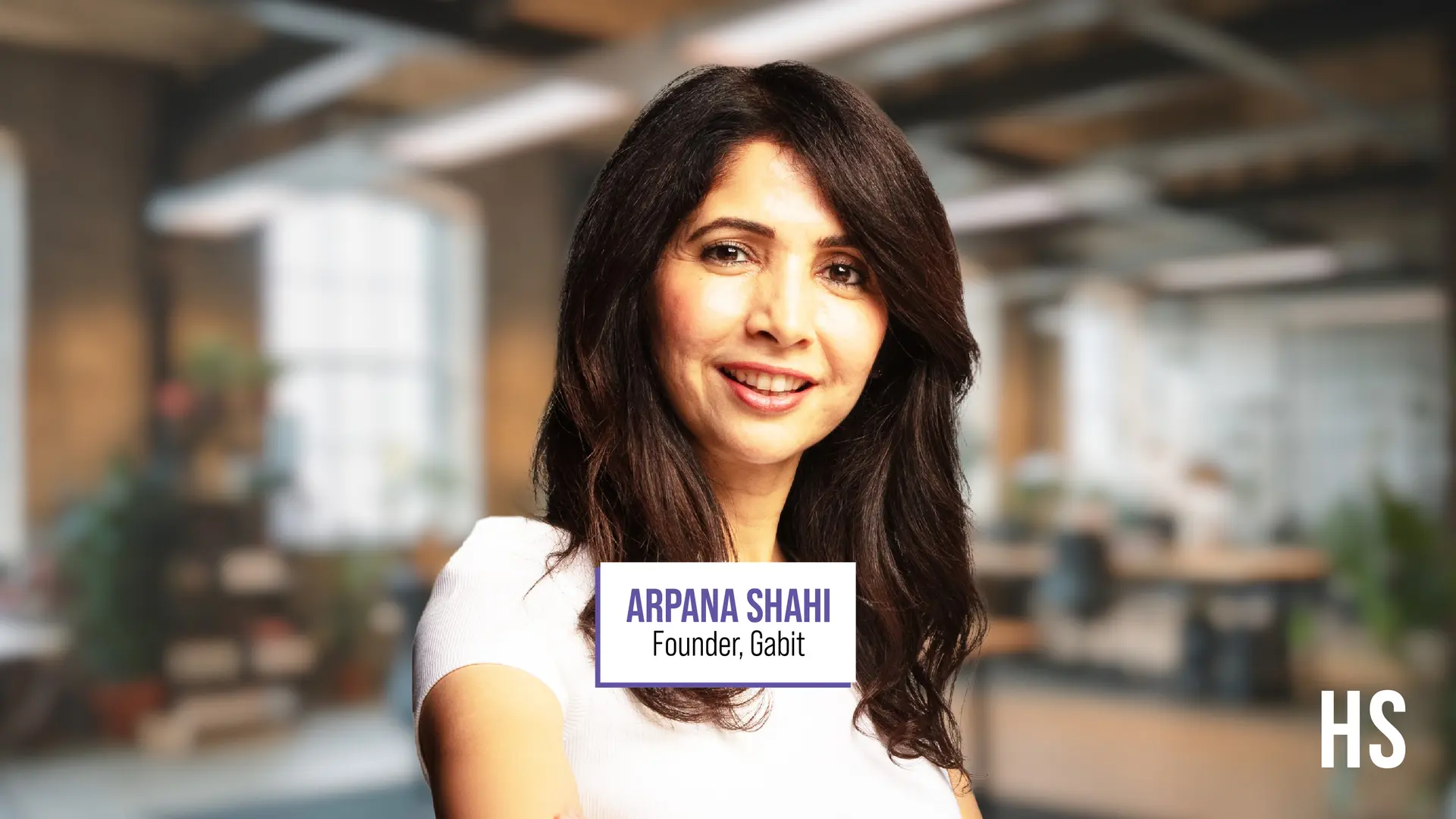

Like many founders, Arpana Shahi realised during the COVID-19 pandemic that one of the biggest unsolved consumer challenges was health.
The founder of Gabit, an AI-powered wellness tech platform with a smart ring at its core, observed that most conversations and solutions were centred on treating illness rather than preventing it, leaving a significant gap in the preventive healthcare space.
“I realised how little I understood about my own health, despite being educated and aware. My lean frame naturally responds to eating consciously. I always assumed that meant I was fit and healthy. But being lean and being fit and healthy are different things. Fitness is about endurance and stamina. I had no real understanding of it, and I’d never worked towards it,” she tells HerStory.
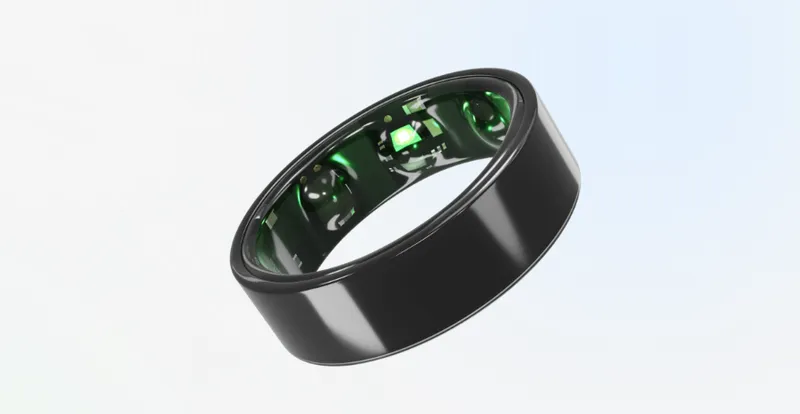
The Gabit Smart Ring
Born and raised in Purnia, Bihar, Shahi completed her engineering degree at IIT Kharagpur and earned an MBA from IIM Calcutta. She joined consulting firm McKinsey, the only woman in that year’s intake of 11 hires.
Consulting taught her frameworks and, interestingly, what clients thought of consultants. It’s so easy for you—you come, and you tell us what to do, but you don’t know how to actually do it," she remembers hearing, more than once.
The comment stuck with her long enough to become a decision: she left McKinsey to join Telenor’s newly launched Indian telecom venture, trading strategy decks for the slower, heavier work of actually running something.
In 2010, when entrepreneurship wasn’t yet a buzzword in India, Shahi was inspired to build something of her own.
While on maternity leave, she decided against returning to the corporate track and instead built SkillTap, a children’s learning venture designed to go beyond “math tuition and science tuition” towards a more holistic approach. It grew by word of mouth. Eventually, she sold it and went back to consulting, mostly with startups.
The four pillars of health
When the pandemic happened, Shahi was sleeping just four to five hours a day and treating it as “a badge of honour”.
“I now understand, through research, that this isn’t the way to perform well at work, let alone live a longer, healthier life. A lot of these realisations came together around that time. As I went through my own health journey, I thought I should bring this understanding to millions of people, the importance of preventive health, and start their own health journeys. That's where Gabit, as a venture, was launched,” she explains.
Gabit’s co-founder is Gaurav Gupta, who is also Shahi’s husband. They met as batchmates at IIM Calcutta, and then went their separate ways professionally, before deciding to build Gabit together.
They spent two-and-a-half years researching what existed in the health space, what was solved and what wasn’t, and the right way to approach health. They consulted experts in India and internationally, and a few things stood out.
“First, health is interconnected—across fitness, nutrition, sleep, and stress. Unless you address all four pillars, you can’t fully achieve a health goal, whether that’s healthy skin, managing hypertension, or managing weight. That became our core thesis,” Shahi elaborates.
The second was about friction, and it’s the sharper insight of the two. Humans, she argues, are wired to repeat whatever gives them an immediate hit—sugar, junk food—and to avoid whatever doesn’t, no matter how good it is for them.
“When you eat a salad, it’s not giving you any rush immediately. And that’s why you are not really drawn towards it.”
She gives another example: if you offer free fitness classes across India, turnout would struggle to clear 5 per cent. “If we hit 1 per cent, that will be an achievement,” she adds. She believes a tracking device asks nothing of them, and adoption looks completely different.
Once the team had settled on tracking as the mechanism, they ruled out a smartwatch because it’s bulky and uncomfortable to wear overnight. A ring, on the other hand, has less signal noise and is closer to the source. This, combined with a design that weighs just about three grams, ruled in its favour.
“It’s so simple to kind of put on and forget about it. You can sleep with it. You can shower with it. It’s just non-intrusive,” Shahi says.
Shahi says the Gabit Smart Ring is designed to cater to users across the fitness spectrum. For athletes, it offers on-demand VO₂ max tracking, a key indicator of cardiovascular fitness, endurance, and longevity. VO₂ is the maximum volume of oxygen (O₂) your body can use during intense exercise.
Unlike most wearables that estimate the metric periodically, Gabit Smart Ring lets users perform a guided exercise in the app and measure their VO₂ max whenever they choose.
At the other end of the spectrum are people just beginning their health journey. “Someone who’s never exercised can simply start by tracking sleep,” says Shahi.
Beyond the number of hours slept, the ring also monitors sleep stages, including deep sleep and REM (rapid eye movement) sleep, and generates a recovery score to help users build healthier habits over time.
More than a fitness wearable

But Gabit is positioning itself as more than a wearable company, building a longevity ecosystem that tracks over 150 biomarkers through a suite of products and services, including a smart scale, blood tests, and a continuous glucose monitor (CGM). The company's AI-powered platform, Gabit One, brings together insights from these sources, identifies correlations across health markers, and provides users with a handful of personalised recommendations rather than isolated reports.
The blood tests are conducted at the user's location through home sample collection, while the CGM and smart scale are available as separate products within the ecosystem.
Shahi says the aim is to simplify health data that is often difficult for consumers to interpret. Rather than presenting users with dense lab reports, Gabit uses colour-coded indicators, reference ranges, and plain-language explanations to help them understand what each biomarker means and what actions they can take to improve their health.
Also part of Gabit’s AI offerings is PEP, an AI-powered health coach that users can interact with at any time to ask questions about their health or receive personalised insights based on data from the smart ring, such as sleep patterns.
According to Shahi, the Gabit Smart Ring has been validated against gold-standard benchmarks for multiple health metrics and delivers over 95% accuracy across key parameters. She says one of the company/s biggest challenges was balancing clinical-grade accuracy and affordability.
The smart ring is priced at Rs 14,500.
The effort, she adds, has paid off. Gabit Smart Ring has received industry recognition, including Amazon India’s Best Smart Ring of the Year award and honours from technology publications such as Gadgets 360.
Gabit’s users are men and women aged 15 to 90 years.
“We have a large number of women in our user base, which counters the assumption that health tracking is a ‘male, tech’ thing. We have a fairly even split of men and women across age groups. While adoption starts in metro areas, we also have a large number of users from smaller cities and towns,” says Shahi.
Gabit has also built women’s health features from day one, rather than adding them later as most other wearable companies do, she says.
“People assume skin health is about products and creams, but it actually depends on sleep, stress management, diet, and exercise, which affect collagen synthesis and hormone balance. We have launched supplements like Astaxanthin to support skin health, and a longevity skincare line—we were India’s first prebiotic/probiotic superfoods brand to integrate that approach into skincare,” she explains.
With many other smart rings on the market, Shahi emphasises that Gabit’s key differentiator is its focus on fitness, nutrition, sleep, and stress, all in a single ring.
Does building a deeptech company as a woman come with unique challenges?
Shahi says gender stereotypes continue to persist. “There is often an assumption that if a woman is part of a startup, she must be handling branding or customer-facing roles, not the technology. You have to establish that credibility because people don’t always assume women understand the technical side,” she says.
As an engineer, she could challenge technical assumptions, question timelines, and engage developers on product architecture.
Looking ahead, Shahi believes Gabit sits at the convergence of two defining trends: artificial intelligence and longevity. As consumers increasingly seek preventive healthcare and AI becomes deeply integrated into everyday life, the company’s focus is on building a connected health ecosystem.
Edited by Swetha Kannan