



This couple is building India’s answer to Barbie with 100 women artisans in the Nilgiris
The Good Doll, founded by Sunita Suhas and Suhas Ramegowda, employs over 100 women in the Nilgiris who handcraft Nilah, its flagship doll, and her growing universe.

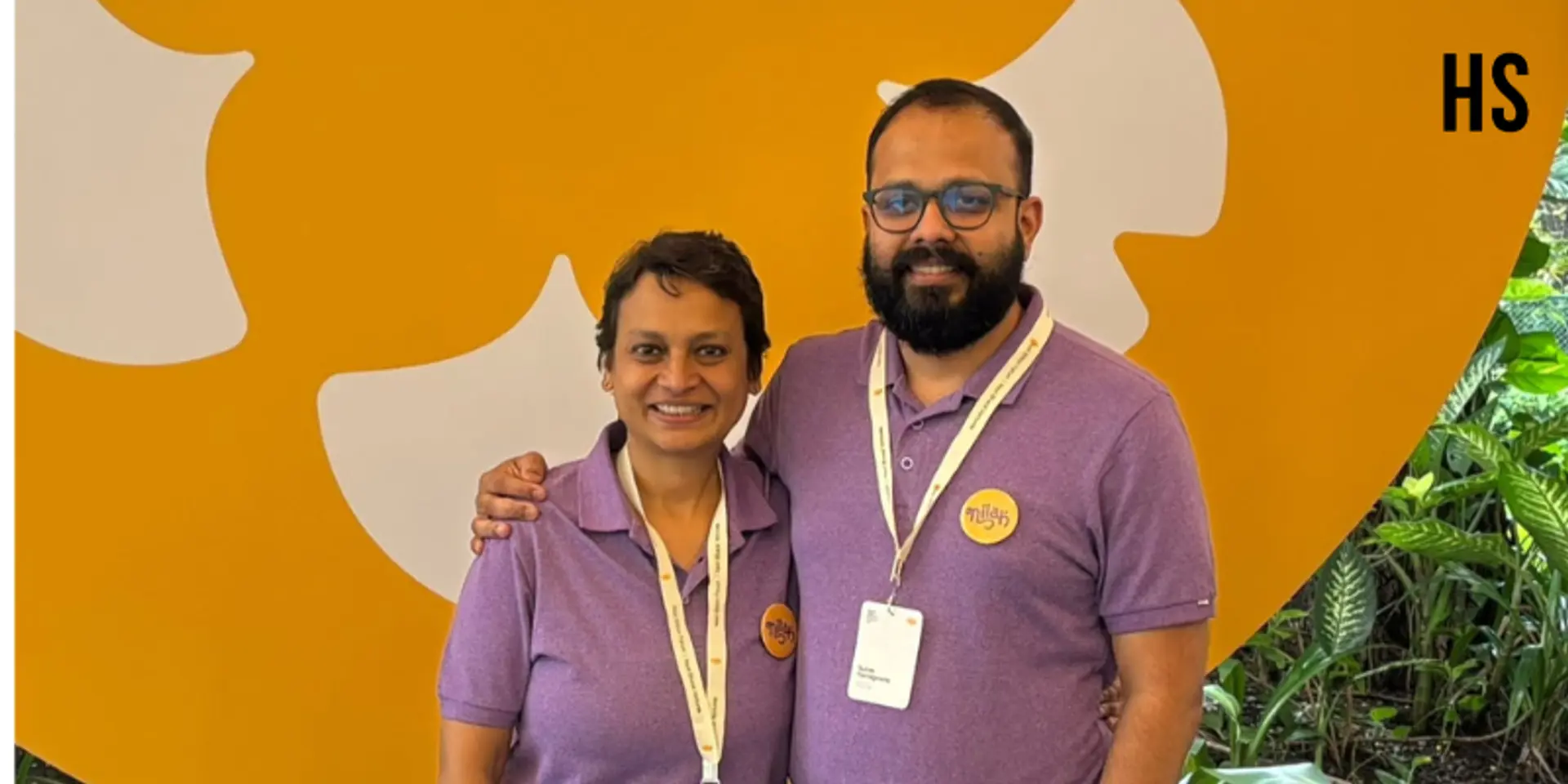

In 2017, Sunita Suhas and Suhas Ramegowda packed their entire lives into five bags and left Bengaluru, walking away from their corporate careers for good.
The existential questions that had long lingered led them to the Nilgiris, where they founded The Good Doll and created its flagship doll, Nilah. Today, the company employs more than 100 women and its founders hope to build India's answer to Barbie, one rooted in local craftsmanship, culture, and purpose.
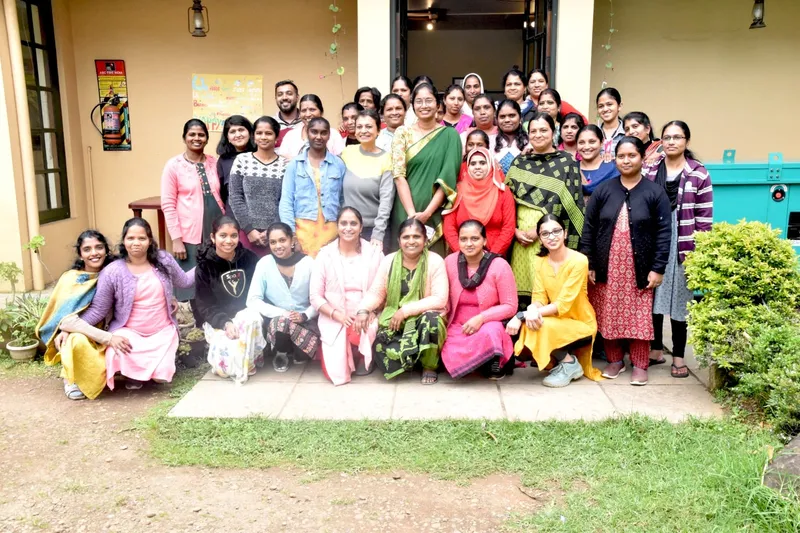
The team
“We realised that whatever we did with our lives or with material things, we could only generate happiness momentarily. And then we had to do something else: the next weekend getaway, the next promotion. It was all momentary,” Suhas recalls.
Also, they didn’t want their nine-year-old son to go through the same discovery phase or conditioned life they had. So, they “unschooled” him without a curriculum or a fixed syllabus, allowing him to decide what he wanted to learn.
In 2016, the couple, along with their son, took a two-and-a-half-month, 10,000-kilometre road trip across 14 Indian states, spending 85% of their time in rural India, living with strangers in villages.
“We realised you don’t actually need a lot to be happy. It’s more internal than external,” Suhas says.
By mid-2017, they quit their jobs and moved to a small cottage in the wilderness in Coonoor, Tamil Nadu. In the third month, they found a piece of land, surrounded by the forest on the outskirts of Kotagiri, three kilometres from the nearest village.
Their plan was to live off the grid, away from social structures. But people kept dropping by, bringing in bananas, greens, pumpkin or eggs. Before they even realised it, they had become part of the community, and they started helping them to work on the land.
In two years, something shifted for Sunita and Suhas.
“We loved cooking a good meal; we'd get tender jackfruit and make jackfruit biryani. But at some point, we stopped fully enjoying a good meal, because we could see families around us not experiencing the same privilege. We were wearing similar clothes, eating similar food; our days looked the same, but the way we experienced that life was very different from how they experienced it. For us it was bliss; for them, it was often a burden,” he elaborates.
During one conversation, a district forest officer they had befriended suggested they had the skills for community development. The couple had never heard the term, knew little about social entrepreneurship, and weren't one to embrace labels. But over time, they found their purpose.
Common sense told them there had to be commerce in whatever they did, because the venture would eventually have to be run by the community when they were ready.
They chose to work with women because men in the villages already had daily-wage work.
Sunita had the ability to learn new crafts from scratch, often just from YouTube, and to translate that craft into something that could be applied, sold, or put to use. She also had the ability to teach the skills to others.
In 2019, she began teaching patchwork quilting to five women in their living room and selling the quilts online. In a year, they generated Rs 30 lakh in revenue.
During the pandemic, they used leftover quilting fabric to make three-layered masks after consulting doctors, and delivered orders across the country. They understood the difference between building something people want and something they truly need.
After the pandemic, they experimented with macramé, crochet, and embroidery. As the venture grew from five women to 21, they registered The Macrame Decor Craft Limited in 2021 and joined startup incubators such as NSRCEL and Unlimited to learn the fundamentals of building a scalable business.
In late 2022, Rainmatter, the investment arm of Zerodha co-founder Nithin Kamath, became their first investor.
Along the way, they strengthened their training systems and community networks while trying to build new products.
While designing a baby quilt, Sunita was looking for a complementary product. She created a rag doll inspired by the handmade cloth dolls Indian grandmothers once stitched from discarded fabric.
The quilt failed to find buyers, but the doll became a hit.
"Within a month, people started calling it the ‘Indian Barbie’. We stopped almost everything else we were doing and decided to focus entirely on the doll.”
Sunita experimented with different sizes and designs as they travelled to pop-up markets in Bengaluru, Chennai, Mumbai, Delhi, and Kolkata, speaking directly to parents.
The birth of Nilah
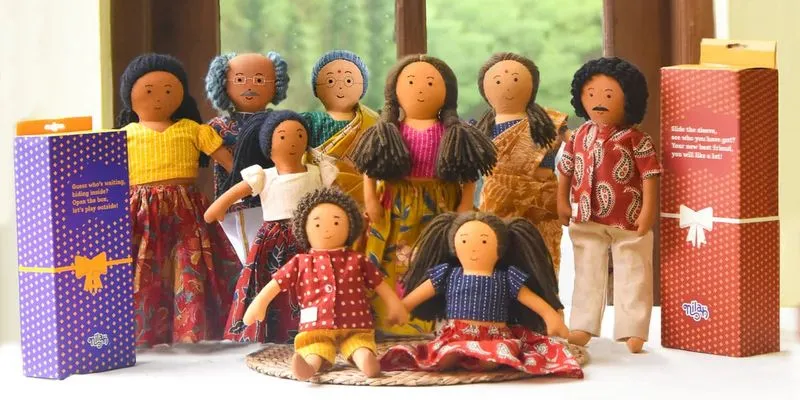
The family
By mid-2023, their Indian dolls were finding buyers, demand was growing, and the company expanded from 21 to 55 women artisans. But despite the commercial success, something was missing.
For 1.5 years, the company’s messaging had revolved around sustainability and livelihoods. There was no storytelling around it for the child.
“We chanced upon the doll business, but when we paid attention and listened to customers, we knew we had to build to fill this gap: the lack of Indian representation in the toy industry. That’s how we designed the initial doll: body-positive, colour-inclusive, and celebrating being Indian. The next turning point was when we realised we needed a character to anchor a universe,” says Sunita.
That insight led to the birth of Nilah in early 2025.
The character was named after the blue mountains that turn a brilliant shade of blue when the Neelakurinji flowers bloom every 12 years. Nilah’s backstory imagined her as a child born in the year of the bloom.
Today, Nilah lives in the fictional village of Neelakumbai on the edge of a forest in the Nilgiris, surrounded by a large family, farm, and forest animals. Over time, her world has evolved through constant conversations with parents and children.
“She began as a rural mountain girl. But we wanted her to be just as relatable to a child in Bengaluru or Delhi. So, her home is rooted in the Nilgiris, yet its interiors reflect a modern Indian household. Most importantly, she’s curious and questions everything instead of accepting ‘this is how it's always been’. That's the kind of thinking we want to nurture in children,” says Suhas.
Through the brand’s Raising Nilah’s storytelling series, the character explores themes such as emotions, boredom and curiosity.
Unlike most toys with exaggerated smiles, Nilah has dot eyes, a simple nose and a subtle smile.
“It’s inspired by Waldorf education. A minimal expression lets children decide whether she's happy, sad or thoughtful, leaving room for their imagination,” says Suhas.
Around 40 artisans work from its central unit in Ooty, while another 60 women stitch components from village-based producer groups across the Nilgiris. The different pieces are then assembled and finished at the central facility.
“Every doll is handcrafted. Sewing machines are used, but each doll passes through five or six pairs of hands before it’s complete,” says Suhas. About 60-70% of the fabric used is upcycled from rejects, excess or offcuts procured from large textile houses.
The company produces between 4,000 and 5,000 dolls every month. A Nilah doll costs Rs 1,250 and up, and prices vary depending on accessories.
The Good Doll now sells through three channels: direct-to-consumer, retail, and B2B, with D2C accounting for nearly half its revenue. Its products are also available on Blinkit, Amazon, and FirstCry, and stocked by around 90 retail outlets, including airport stores, bookstores, and lifestyle retailers.
Its B2B business has also grown steadily through partnerships with hospitality brands such as Hilton, Hyatt, and Taj, for whom it creates customised dolls and handcrafted charms.
Impact on the women
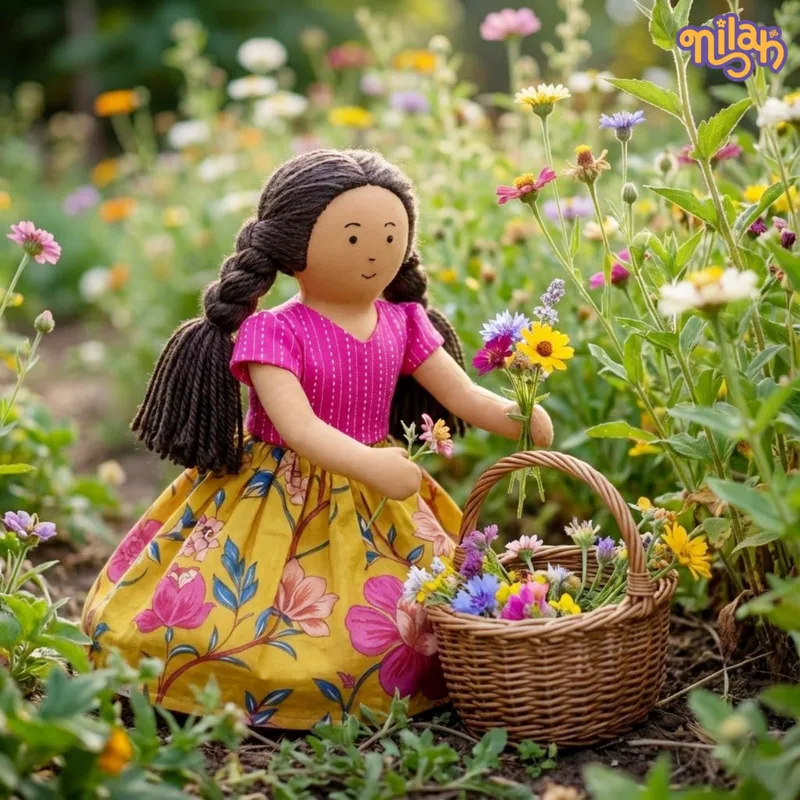
Nilah
For many of the women who join The Good Doll, the job is their first experience of formal employment. Every artisan undergoes two months of intensive training under Sunita, who is uncompromising about quality.
“Some women come with 15 years of stitching experience but can't stitch a straight line. For the first two weeks, that's all they do. They find it frustrating, but by the end it becomes second nature,” says Suhas.
As they gain confidence, many move beyond production into leadership roles. Today, many of them work as trainers, supervisors, quality-control specialists and coordinators.
“More than half of the women now contribute significantly to their household income—some even earn more than their husbands. The additional income has enabled many women to buy scooters, build homes, send their children to private schools and improve their families' nutrition.”
The Good Doll raised Rs 1 crore in funding from the Tamil Nadu government's venture fund last year, which helped it move into D2C. This year, with another investment of Rs 3 crore, it will help it reach a revenue-run-rate of about Rs 10 crore. It is also part of Technoserve’s Greenr Accelerator Programme, which helped the founders build the right organisational structure and recruit key professional talent.
While it can train women artisans from the community, building a professional team for functions such as marketing, sales, and design has been more challenging.
“In the beginning, it was just Sunita and me wearing every hat. Today we have a 10-member professional team, but convincing young talent to move to the Nilgiris and build a life here is still difficult,” he says.
The company also faces the challenge of creating a new market. “We are not just selling a doll. We are selling sustainability and a more thoughtful approach to childhood. That requires educating consumers, especially if we want to reach beyond a niche audience and build for the Indian middle class.”
What’s next for Nilah
When people first called Nilah the Indian Barbie, Suhas and Sunita were offended. But they soon realised they could learn from Barbie’s success as a global brand.
Beyond Nilah, the founders are building an entire universe from furniture, clothing, and DIY kits to animal companions inspired by the Nilgiris and storybooks that bring her world to life.
It also plans to expand its retail presence through experiential spaces where children can interact with Nilah’s world before taking it home.
“Our mandate is simple. Everything we build should increase play, and that play should be driven by imagination,” he concludes.
Edited by Megha Reddy