



Shalini Neelankavil of Honeywell PSS on women, AI, and leadership
Shalini Neelankavil, CTO of Honeywell Productivity Solutions & Services, shares how career breaks, mentorship, flexible work, and sponsorship helped shape her journey, and why women need stronger support in tech.

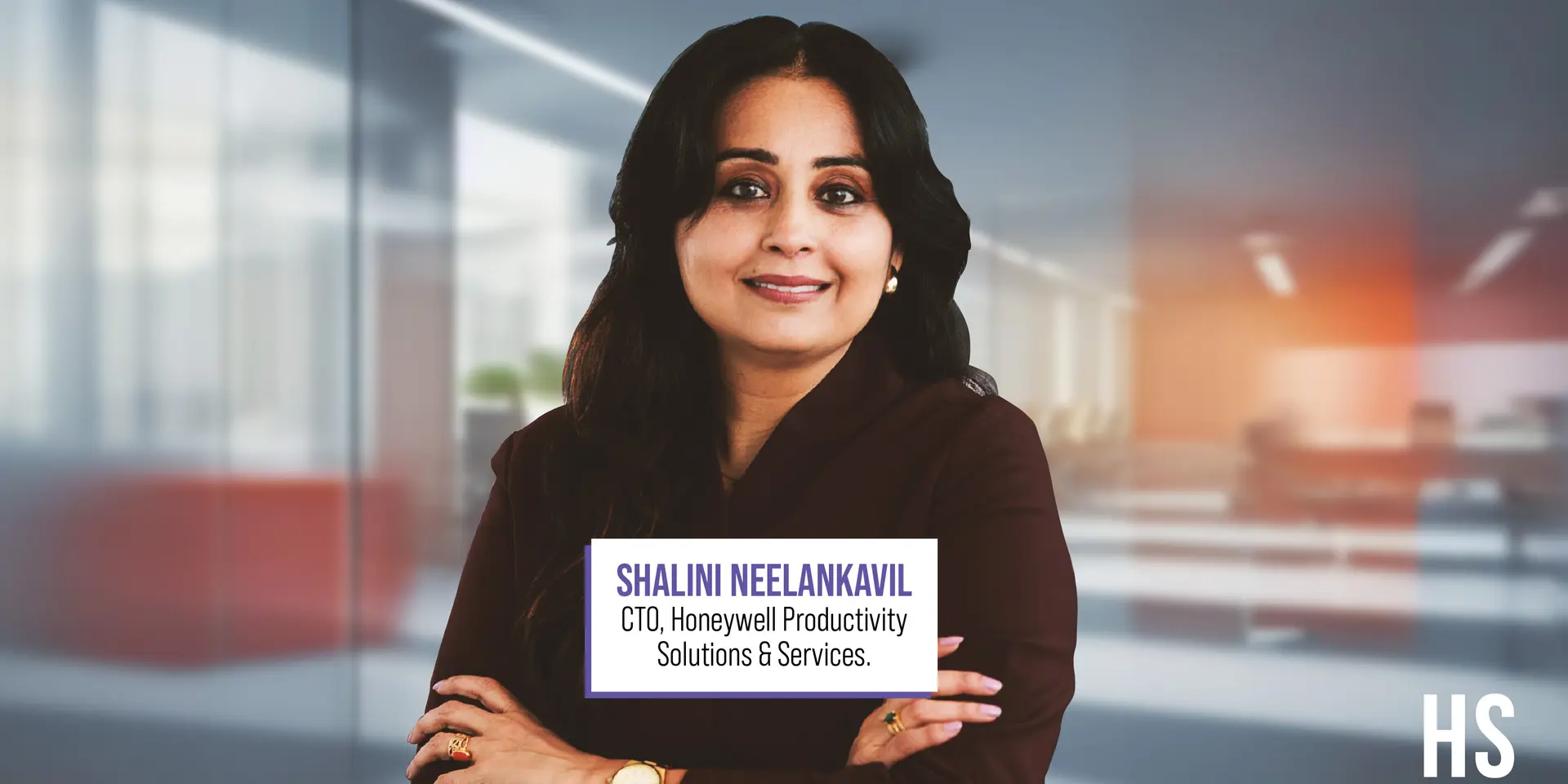

Shalini Neelankavil remembers her mother leaving her job to ensure she did well in her 10th grade exams. It is a sacrifice she describes as one of the defining examples of strength in her own life.
She also discusses another statistic—the number of women in technology who step back from their careers to take on family responsibilities.
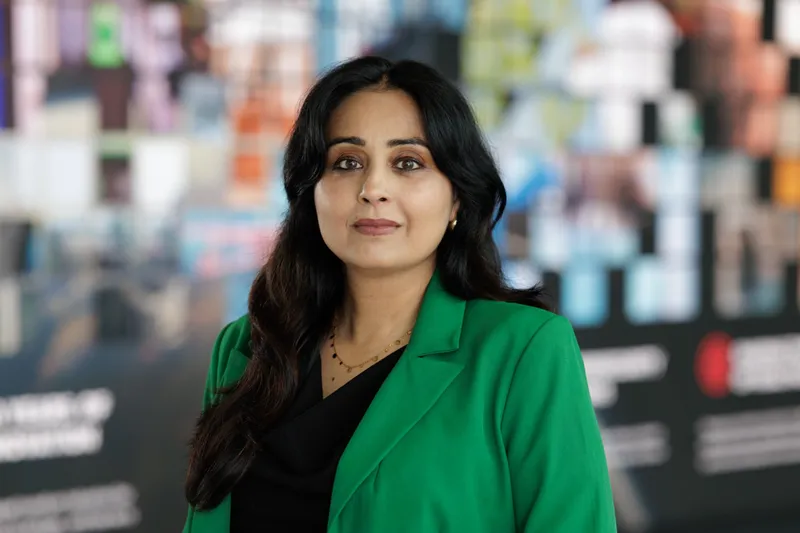
Shalini Neelankavil
The Chief Technology Officer at Honeywell Productivity Solutions & Services, Negot married during her second year of electrical engineering at Madras University and had her son in her third year.
Rather than taking a conventional full-time job after graduating in 2002, Shalini did not return to formal work until around 2007. Even then, she chose consulting over a permanent role, a decision she made deliberately to follow a strict 40-hour workweek while raising her son in the US without extended family support.
“If you focus on growth, sometimes women cannot have it all. It’s a juggling act; you have to drop a few balls to catch the ones that matter,” she admits.
Over roughly ten years, she consulted across industries—banking with Wells Fargo, entertainment with Fandango, healthcare technology with pharmacy-services company PDX, and telecom with Sprint.
She began her career as a software developer, but it didn’t take long for her to realise that writing code alone wasn’t enough.
“As a developer, you take orders. You don’t know what the business is doing; you are not responsible for the outcome—you just take the order, code it, and give it back. I clearly knew that wasn’t for me.”
She wanted to understand the bigger picture—why a product was being built, how decisions were made, and what impact her work created.
She moved into technical analysis and technical leadership, roles that gave her greater ownership and the ability to influence decisions rather than simply execute them.
From there, she expanded into technical program management and consulting, where she could oversee entire programs while drawing on both her technical expertise and business understanding.
However, it was the two-year consulting stint with American Airlines that proved to be the turning point in her career.
At American Airlines, Shalini led the end-to-end technology behind an industry first: the airline’s premium economy cabin for people who wanted a little more legroom and a little more service than economy class. She led the technology implementation for this, working across both technology and business to bring the product to market.
Soon after, she became their full-time employee in 2019.
She moved through revenue planning and technology into airport operations, a shift that taught her to think like an operator, not just a technologist.
Leading technology for staffing, reservations, and communications across American Airlines’ operations at roughly 365 airports worldwide put her in direct contact with one of the company’s device vendors: Honeywell.
In 2025, she joined Honeywell Productivity Solutions & Services as its CTO and leads its overall technology strategy.
“I am responsible for technology strategy and engineering execution across our global portfolio, which includes hardware and software, AI cloud, connected solutions and engineering teams that bring products to life,” she explains.
A large part of Shalini’s role is focused on driving innovation.
“We are making sure that we are modernising how we develop software and improve speed to market and create a culture where engineering excellence is top priority,” she adds.
Naming the missing middle
When the conversation turns to the “missing middle”—the stage where many women leave the workforce or plateau in their careers—Shalini quotes one of her biggest role models, PepsiCo CEO Indra Nooyi, who said, “The biological clock and the career clock are in total conflict with each other.”
She knows the challenge firsthand. While raising a child in the US with her husband, she deliberately chose consulting over a more demanding corporate trajectory to balance work and family.
And it isn’t about a woman’s choice alone; it’s a societal problem.
She believes that the solution lies in building workplaces that support women. Flexible work, empathetic leadership, mentorship, sponsorship and strong allies all play a key role.
“As long as the work gets done, why should it matter whether it’s done at 3 pm or 9 pm? Maybe from three to six she needs to pick up her children, help with homework, or make dinner,” she notes.
Looking back, she considers herself fortunate to have had great leaders, mentors, male allies, and an ecosystem that supported her.
Support, she believes, is a two-way street.
“I was always upfront. I'd tell my managers, ‘These are the hours when I need to focus on my family.’ But I'd also tell them, ‘By morning, you’ll have what you need.’ You build that confidence through your work, not just through your words,” she says.
When Shalini joined American Airlines, she was the only woman working in the airport technology space within the organisation. She encouraged leaders to hire more women to the team. By the time she left, female representation in the function had grown from 0 to 35%.
“At Honeywell, if you look at the C-suite, especially for the productivity solutions, at a board meeting there are only two of us who are women. I am trying to change that and am hiring women so that I can grow the next level of leaders,” she says.
It’s okay to be imperfect
Shalini points out that women, including her, hold themselves to a more perfect standard—they want to be 100% ready for the job; only then will they raise their hands and take on challenging assignments.
“My advice to them is to be comfortable. My biggest strength is that I am very comfortable in uncomfortable spaces. That’s where growth happens. And, when I look at my own journey, I didn’t have a perfectly linear career. There were breaks and pivots and moments when I questioned myself whether I was ready for the next role,” she says.
“It’s okay to not know everything. It’s okay to be imperfect. You will learn along the journey,” she adds.
With AI permeating every aspect of our lives, she says women as a gender are more empathetic and inclusive and that makes them ideal for leadership roles within the AI space.
“We are mentors, daughters, partners, mothers, community members, and so AI cannot replace these roles. However, it can help reduce the administrative burden that comes with them,” she says.
Looking ahead, Shalini hopes to devote more time to coaching and mentoring women, helping them navigate the same career crossroads she once faced.
Beyond the corporate world, she is actively involved with an organisation working to combat human trafficking and hopes to dedicate more of her time and expertise to the cause in the years ahead.
Edited by Megha Reddy