



How two women are making Indians more 'food-wise' through sustainability and education
Foodwize, founded by Srijata Sengupta and Priya Joshi, is a Bengaluru-based social enterprise that helps people build a healthier relationship with food while creating more sustainable food systems.



‘We are what we eat’ has never rung truer than now, in the age of ultra-processed foods, climate anxiety, and growing lifestyle diseases.
Food is deeply connected with culture, identity, livelihoods, biodiversity and sustainability. Yet, modern food systems have reduced food to calories, convenience and consumption. Beyond individual health, what we choose to eat shapes agricultural practices, influences local economies, affects biodiversity, and contributes to climate change.
In this context, Srijata Sengupta and Priya Joshi are asking a simple question. What if changing our relationship with food could transform our health, communities, and the planet?
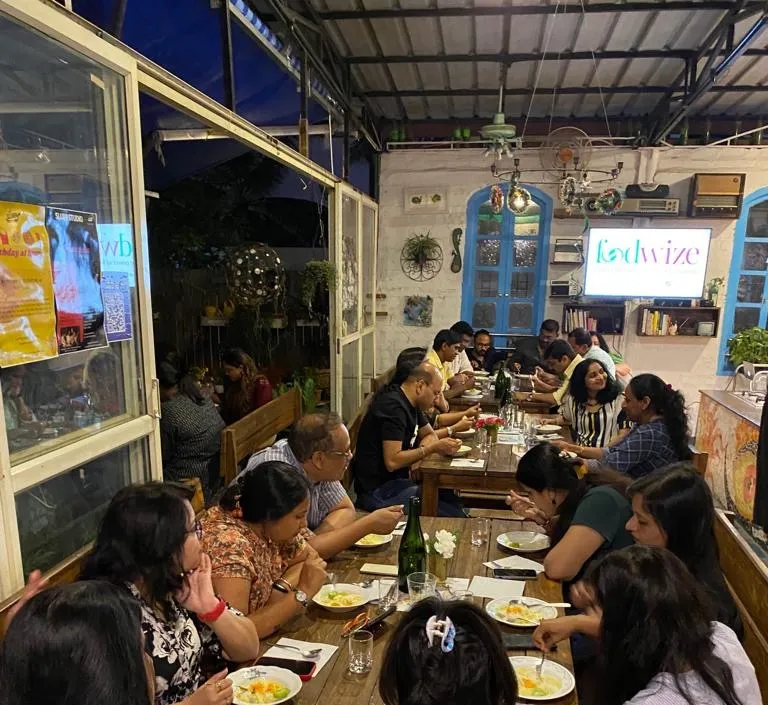
Pop Ups with a Purpose
Their social enterprise, Foodwize, aims to shape consumer behaviour, build sustainability leaders, and help businesses create a more resilient food future.
Priya and Srijata met at Accenture nearly 20 years ago.
Priya, an electronics engineer with an MBA in HR, spent much of her career working across geographies outside India. Srijata, a graduate of the Tata Institute of Social Sciences, built her career in strategy consulting and HR, eventually becoming the head of HR for one of Accenture's technology businesses.
About five years ago, within a year of each other, they arrived at the same thought—to contribute to a bigger challenge.
“Are we going to plant more trees? Are we going to save lakes?” Priya recalls asking herself. The answer, when it came, was food, not as a career pivot into culinary arts or food technology, but into what she calls “the intersection of our strengths and skills and the intersection of what we want to impact.”
Neither of them was qualified to work in the field. But this didn’t deter them.
Priya left Accenture and, on Srijata’s suggestion, enrolled at the University of Gastronomic Sciences in Pollenzo, Italy—founded by Carlo Petrini, the founder of the Slow Food movement—for a master’s in sustainable food systems, one of the few programmes of its kind in the world. She returned to India a year later, by which time Srijata had also exited her role. Together, they began building Foodwize in 2022.
What Foodwize does
Foodwize works across multiple disciplines, but they all fit together.
The first is STHIRA, a youth innovation challenge, now in its third year, through which roughly 1,000 students have developed ideas addressing soil health in food systems and food education.
Every idea is evaluated against four criteria: biodiversity, livelihoods, health and nutrition, and cultural relevance.
“We have actually had 30 to 40 prototype solutions emerge, and we want to take them further this year. We are also launching a virtual incubator to grow these solutions from an idea to an MVP. Over the next five years, our vision is to grow 100-plus such entrepreneurs,” says Srijata.
The second front is consumer and corporate education, where the founders are helping people become “food-wise”. This includes retail learning experiences and paid programmes for corporate clients, including two employee cohorts at Accenture, as well as engagements with Mahindra & Mahindra, GE Vornova, and Expedia.
“Our sessions always start with addressing your individual relationship because that is very different for each individual. First you have to address your relationship with it, know what it means to you, and then look externally for solutions,” says Srijata.
The company’s B2B segment, Foodwize Ignite, helps chefs, hospitality professionals, and businesses embed sustainability into their food practices.
As more people eat food prepared outside the home, be it via cloud kitchens or delivery, commercial kitchens carry growing responsibility for how sustainably food is sourced and served. Foodwize runs a gamified session that walks chefs and hospitality professionals through the same four-part framework, alongside a conversation on sourcing more sustainably.
For the past year, Foodwize has been working on a project with the University of Trans-Disciplinary Health Sciences and Technology in Yelahanka, Bengaluru and GIZ, the German government’s international cooperation agency, running an innovation challenge that has incubated nine youth teams and built a 350-person food-systems youth network.
The founders are deliberate about all their interventions working on human transformation to find solutions for the future.
“We do not have any tech solutions. So we work with human beings, and we know that that is a very slow process. But we do believe that that process can bring more lasting change,” says Srijata.
Foodwize also organises ‘Pop-Ups with a Purpose’, immersive five- or six-course meals where the menu remains a surprise.
“Our goal is to move people from awareness to awakening. We want to show that you can eat well, enjoy your food and still make choices that benefit the world around you,” says Srijata.
Each pop-up explores a specific theme. One centres on provenance, with every ingredient, including the salt, sourced from within 300 kilometres of Bengaluru, proving that locally sourced food can be as exciting as exotic imports.
Another pop-up celebrates seasonality, demonstrating how summer vegetables alone can create an elaborate meal. A third explores taste, encouraging people to embrace a wider variety of flavours, which naturally leads to more diverse and nutritious diets.
Challenges and learnings
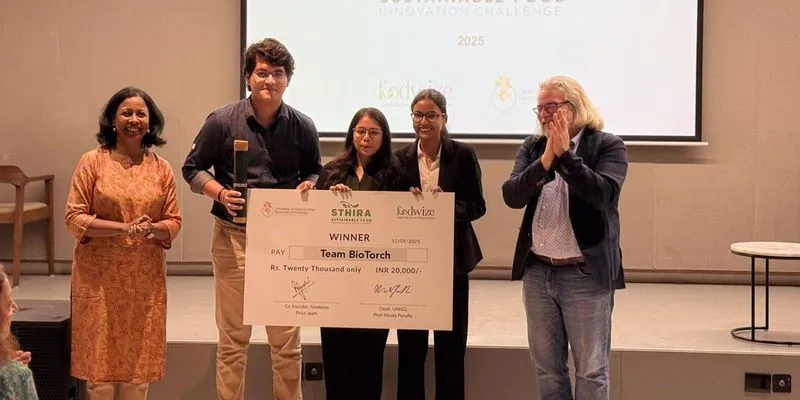
A STHIRA winner
When they launched their consumer learning experiences, the founders assumed that urban, educated consumers, who were already conscious of climate change and its impact on society, would be eager to make more sustainable food choices.
But after 18 months of engaging with participants, surveying more than 200 urban consumers, and interacting with 50–60 professional chefs across India, they realised the gap between intention and behaviour was wider than they had imagined.
“People know the right things to say, but when we asked what they valued most, more than 80 per cent said convenience. If convenience becomes our highest value, it is impossible to become truly responsible consumers of food,” explains Priya.
This insight prompted them to rethink their approach. Instead of beginning with conversations about planetary health, they decided to first help people make better food choices for themselves.
As a niche organisation working at the intersection of food, sustainability and education, they are constantly advised to follow more commercially attractive paths, such as building an app, selling food, or chasing viral topics.
“Food today is surrounded by noise, from trends and exotic ingredients to virtue signalling. Our challenge is to cut through that clutter and reach something deeper: people’s wisdom and their relationship with food,” says Priya.
What is next for Foodwize?
“We see Foodwize as an ecosystem enabler. Our vision is to create many more organisations, initiatives and consumers who are food-wise,” says Srijata.
Edited by Swetha Kannan