



Allstate’s Tejaswini Hebalkar on breaking barriers, mentorship, and the AI revolution
Tejaswini Hebalkar, SVP at Allstate Insurance Company, takes us through her journey in tech, shares lessons on leadership and explains why empathy will matter more in an AI-driven world.

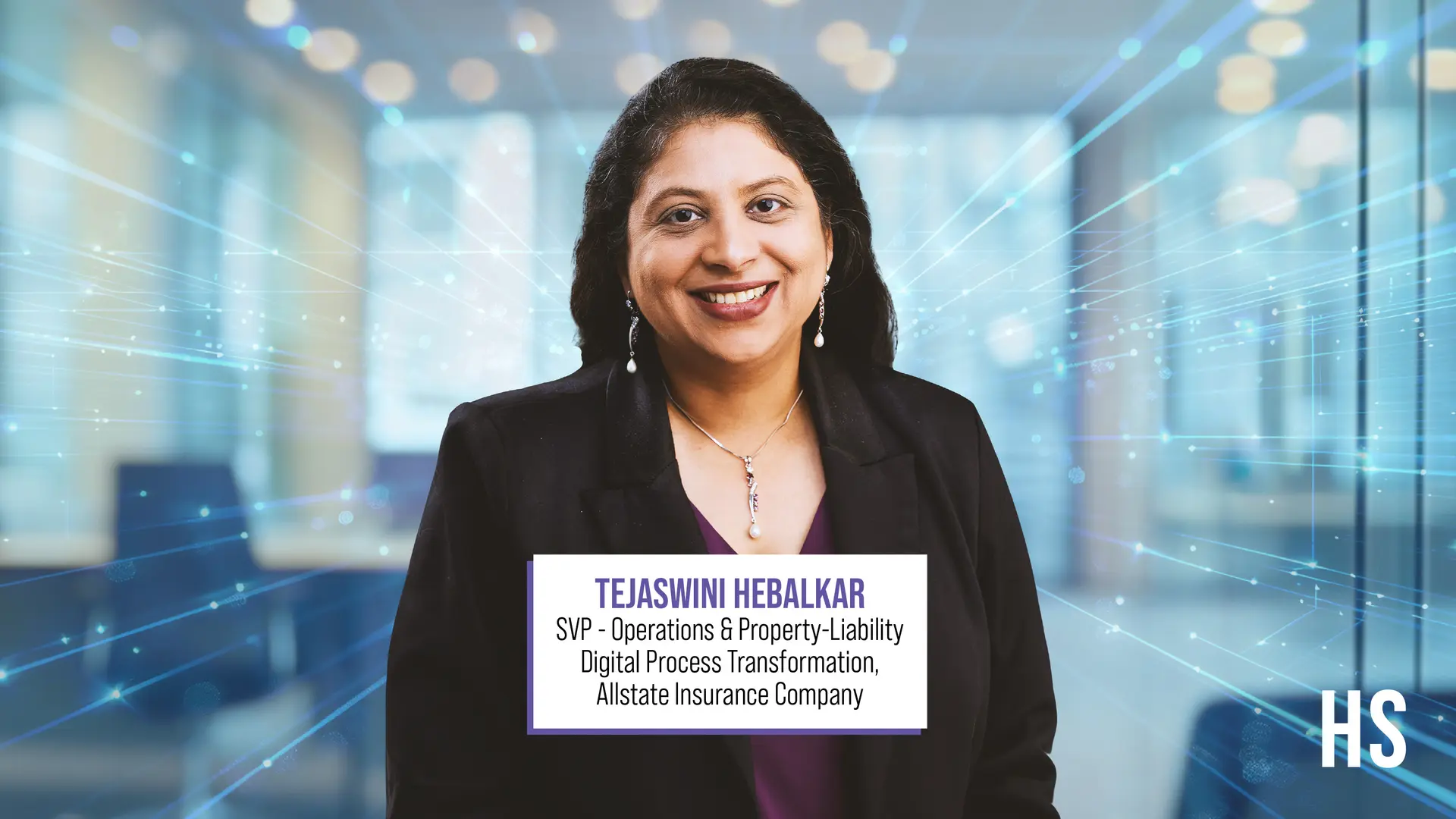

In the late 1990s, when Tejaswini Hebalkar was studying engineering at Carnegie Mellon University, she wanted to design chips but was instead pulled toward networks.
It was a time when the internet and the dotcom boom had begun, and resilient, high-speed networks were emerging as the next big thing.
That pivot, followed by many learnings and experiences, eventually led Tejaswini to her current role as Senior Vice President of Operations and Property-Liability (PL) Digital Process Transformation at Allstate Insurance Company—where she continues to work at the intersection of business and technology, a space she has occupied for 25 years.
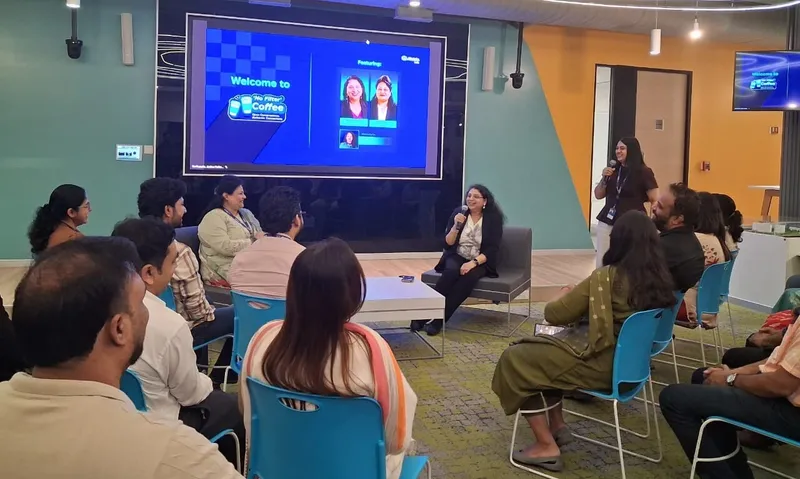
Tejaswini at a mentoring session
The Allstate Corporation is one of the largest publicly held insurance providers in the US. In India, it operates as a GCC with centres in Bengaluru and Pune, employing over 7,000 professionals.
Growing up in Mumbai, Tejaswini describes herself as a “bit of a Maths and Science nerd” from an early age. Her path was shaped by an unusual advantage. Both her parents had studied in the US and understood the value of an education there. They would bring back high school and college textbooks from their business trips, whetting her appetite for learning.
After completing her master’s degree in engineering, she joined Lucent Technologies (now Nokia Bell Labs).
“We were building large routers and switches for the backbone of the internet, working with third-party suppliers who innovated on the smaller components that went into the routers. This got me interested in the business side of things: how do you source these modules, which suppliers have the right technical capability, how do you evaluate them, and how do you negotiate IP-based contracts,” she explains.
From that point on, in the early 2000s, her career straddled the business and tech worlds. From Lucent, she moved to Infosys Consulting for a year, working in its newly formed management consulting arm before enrolling in MIT for an MBA.
As part of her MIT thesis, she worked with Cisco Systems and learned how it managed hard swaps and repairs for the routers it deployed to data centres worldwide, keeping global networks resilient even when individual components failed.
From there, she moved into consulting again, this time at ZS Associates, where she applied her analytical training to customer insights and marketing strategy for biotech and pharmaceutical clients, spending nearly a decade in that world.
The beginning of a digital transformation
Then came the pivot that would define the next chapter of her career: a Bay Area startup called SquareTrade.
The company wanted her to build a repair network from the ground up, at nationwide scale across the US, across multiple cities and geographies, but with limited resources since it was a startup.
“So the challenge was how to do this in a tech-enabled way. That's supply chain operations, logistics operations, or reverse logistics operations — but using technology because you can't do it at scale with human beings alone. That's where my digital transformation journey really started,” she says.
Ten years ago, SquareTrade was acquired by Allstate, and Tejaswini has been part of the ecosystem ever since.
“In the last year to year-and-a-half, I've moved into a different role at Allstate, playing a dual role. I'm SVP of Operations, so I handle customer service, back-office operations, capability operations, and digital transformation. We're really trying to shift from a "human only" model to a "human plus technology, human plus AI" model in the ecosystem we operate in,” she explains.
Navigating gender dynamics in tech
Tejaswini entered the tech industry in an era when women in highly analytical, technical roles were rare, in networking engineering, in management consulting, in operations.
"You are not the only one, but you are the first. Sometimes you are the pioneer who starts to break down some barriers, starts to break some ceilings, starts to create opportunities for other women to follow you or to support you or come alongside you."
She's proud that she brought others along with her — mentoring numerous women over the years and watching the ranks in those roles grow.
Tejaswini is vocal about the “missing middle” - women entering technology careers in strong numbers at the entry level but disproportionately leaving mid-career.
She doesn't claim to have a silver bullet, but she has a set of principles she returns to when mentoring mid-career women who feel stuck at a crossroads:
Own your accomplishments. Before deciding what's next, she asks women to look back — to recognise how far they've come, and to get genuinely excited about what they have built, rather than dwelling only on what still feels uncertain.
Build a village. She credits both women and men who championed her throughout her career, along with a strong personal partnership with her spouse, as essential to her success. "You need that support network. You need what I call the village around you to help you be successful,” she says.
Reframe the clock. Rather than framing the tension as a "biological clock," she offers a different lens: "You can do it all — you just can't do it all at the same time." She believes in recognising your priorities at any given moment and giving yourself permission to shift focus as circumstances change.
At Allstate, that philosophy translates into concrete programmes — including a maternity support programme called "All Mama" and a reinstatement initiative that helps women who've stepped away from the workforce return with the support they need to succeed.
Tejaswini draws a distinction between sponsorship and mentorship.
“Sponsorship is about building trust. Once you've moved past the mentor stage and built trust as mentor and mentee, and you can say, "I've personally seen this person in action, and I know they can go far," you put your own political capital on the line in the work environment to bring that person up to the next level,” she elaborates.
The AI revolution
Tejaswini sees the AI revolution as a world where women have access to democratisation of information and skills.
As technical skills become more accessible to everyone through AI tools, Tejaswini believes a different kind of advantage will matter more—human empathy.
"AI can do the transactional work. AI can do even some of the more analytical, more challenging coding work. But the human empathy and the relationships that we build, I think, are paramount. I personally think women have a little bit of a natural bias towards providing that empathetic engagement with customers or with other people,” she says.
When asked to reflect on her biggest successes and challenges across her career, Tejaswini says, "My legacy and my accomplishments are the number of people I touched and helped along the way. If you are successful, as a leader, I am successful. If I cannot help you be successful as a leader, I have not been successful."
Tejaswini’s outlook on the future looks “bright and exciting.”
“My career has always been about transforming legacy businesses, building new capabilities, new businesses, and high-performing teams. As you think about mentoring and supporting people to help them become leaders, it's really about setting a high-performance bar. For me, it's about how I continue to raise the bar for myself and for the people around me,” she concludes.
Edited by Affirunisa Kankudti