



Amdocs VP Anjali Mahajan on women in tech, leadership, and navigating the AI shift
From starting out as a developer to leading large engineering teams at Amdocs, Anjali Mahajan’s 29-year career has spanned technologies and transformations. She reflects on motherhood, leadership, creating pathways for women in tech, and preparing the next generation for an AI-first future.

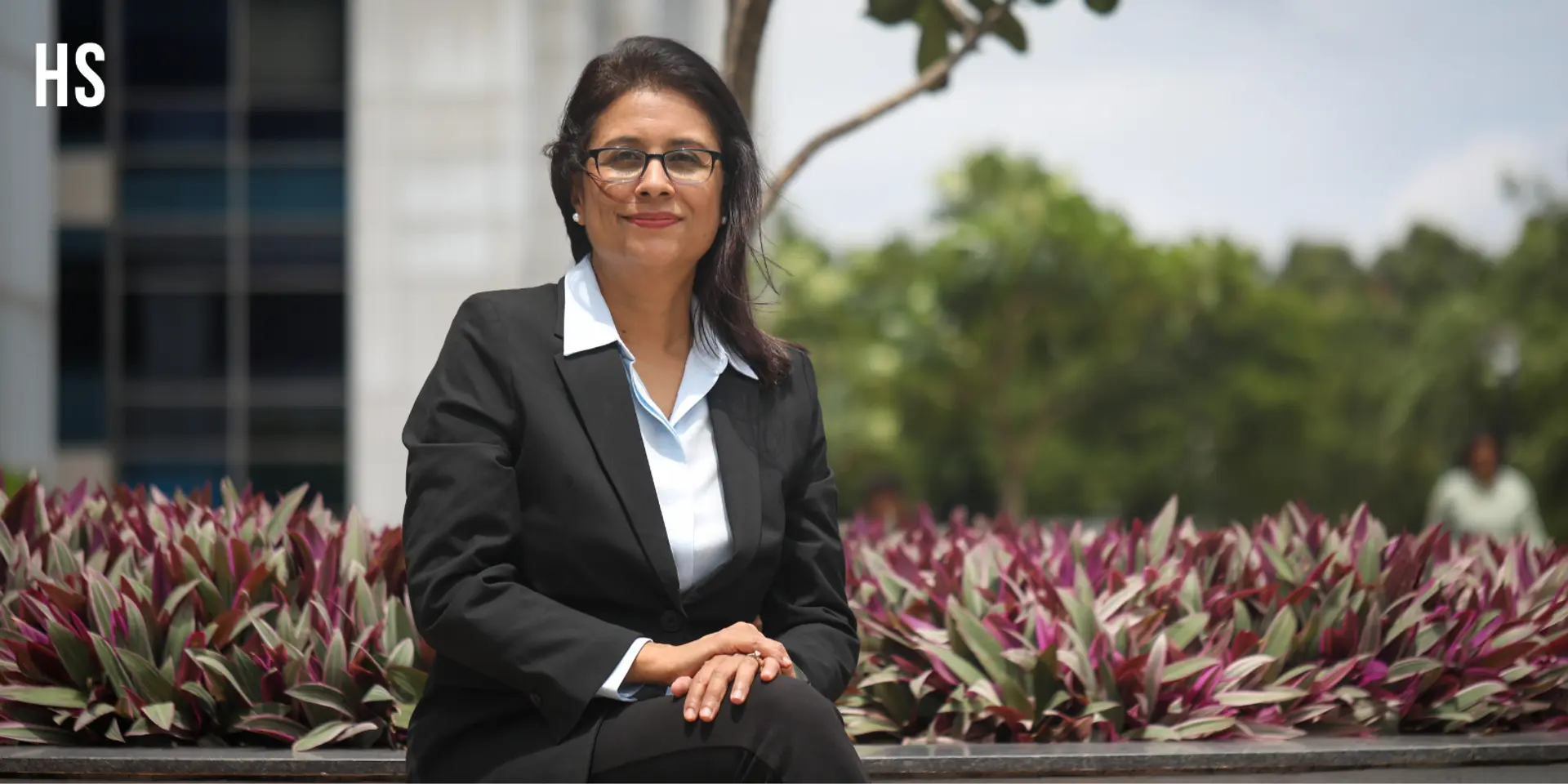

In 1997, Anjali Mahajan moved to the US to pursue a master’s degree. But with the strong job market, she started working instead, and never really stopped.
Twenty-nine years, many companies, two continents, and one AI revolution later, Mahajan is Vice President and Head of Engineering Services at Amdocs, leading large engineering teams that keep telecom giants running.
The story of how Mahajan got here is about a journey that has seen some quiet trade-offs, the kind working mothers will recognise instantly, but also a strong will to succeed.
Connecting technology to business

Growing up in Dhule, Maharashtra, Mahajan was influenced by her teacher parents and an uncle who ran a factory manufacturing electrical devices.
“I deliberately chose not to take computer science, and took up the core electrical branch instead, because that’s what I wanted to learn and be like my uncle,” she says.
Mahajan started her career as a developer, coding across Java, Visual Basic, C, PowerBuilder, the hot technologies of the time.
“My early roles were consulting engagements across multiple companies: MasterCard, Magellan Healthcare, and Deutsche Bank under a year, but each gave me exposure to a different business, financial services, healthcare, and the different challenges and technologies within them,” she explains.
As a systems analyst at AT&T (SBC Communications), she entered a core developer role that spanned interfacing with the customer, understanding their business, building and deploying systems, and managing them in production. She progressed from systems analyst to senior systems analyst, to application architect, to solutions architect, working across many of AT&T's systems.
“What really helped was connecting technology to the business—understanding how the business actually used the technology—which let me build systems that were far more usable in the telecom domain: ordering, billing, the typical BSS/OSS software,” she adds.
Her manager suggested she take on people leadership too on top of the architecture work. Her first reaction was no, because she was already good at what she did and was able to manage work and life. They moved her anyway.
She became a senior technical team lead with AT&T and later joined Amdocs in 2007, rising to development manager, and then to a senior leadership position as director.
In 2010, with two young children, Mahajan and her family made the call to return to India. Over the years that followed, her portfolio expanded from AT&T alone to engagements across Europe and APAC—10 to 15 tier-one telecom customers, C-suite relationships, large-scale technology transformations.
“In my current role, I lead large engineering teams as Head of Engineering and VP. My teams deliver software to customers and manage it in production, so our customers can sleep at night knowing we are here,” she says.
The balancing act
When you ask Mahajan about the biggest challenge, she reaches for a line from Indra Nooyi: that a woman’s biological clock and career clock are in conflict with each other.
"When you are ready to have kids, you are also trying to build your career. When you are in middle management, your kids are teenagers. The challenge has been balancing the two, and making decisions I won't regret ten or twenty years from now, on both fronts,” she says.
She’s happy to have paced herself rather than chasing every opportunity, even though there were many more she could have taken.
“I didn’t want to regret not being there for my kids. I don’t think there’s such a thing as work-life balance—it’s a choice you make daily. Which role am I playing right now: daughter, mother, wife? That decision is constant and ongoing; it never really ends. Choosing the right role at the right time, throughout the day, is both very important and very challenging,” she elaborates.
When Mahajan started her career, there weren’t many STEM graduates. It was important to make sure her voice was heard, which meant working harder on everything, doing her homework, and presenting her thoughts in a structured way so she could earn a seat at the table.
“I was also fortunate to work with teams in both the US and India who understood me as a female technology and people leader and gave me flexibility to manage my kids, working from home when they were sick or during their activities,” she says.
It’s an understanding she’s spent much of her leadership career trying to institutionalise. She points to WeCode, an Amdocs programme that went looking for women who had left the industry—five-year breaks, ten-year breaks, careers paused for children—and ran them through a boot camp designed to rebuild not their skills so much as their confidence to return.
“I've personally mentored many women, both within my own teams and across Amdocs, and I can say many of them have progressed in their careers. I lead diversity efforts across multiple units at Amdocs India. Across programmes, wherever women aspire and put themselves forward—because it has to work both ways—we have seen progression rates as high as 70 to 80%,” she explains.
Mahajan’s relationship with AI is hands-on. She has built her own AI agents to sift through the hundreds of emails and thousands of chat messages she receives, surface the five things that need her attention each day, and quietly defer the rest.
She tells the story of a graduate on her team, fresh out of college, who looked at an entirely manual approval-and-patching workflow and automated the whole thing end-to-end.
“In five years, I want to keep growing in what I do. But what I love the most is making a difference in someone’s career, seeing my teams progress, being their mentor and their inspiration. Alongside that, as we work through the AI disruption and adopt an AI-first culture, I want to keep making a difference in how young professionals adopt AI, using it positively and securely,” she concludes.
Edited by Megha Reddy