



How a caregiving crisis at home led Priyanka Rastogi to build EzyHelpers
After struggling to find dependable help for her mother-in-law, Priyanka Rastogi saw an opportunity to address a larger gap in home care. Five years on, EzyHelpers has trained and placed more than 2,000 domestic helpers.

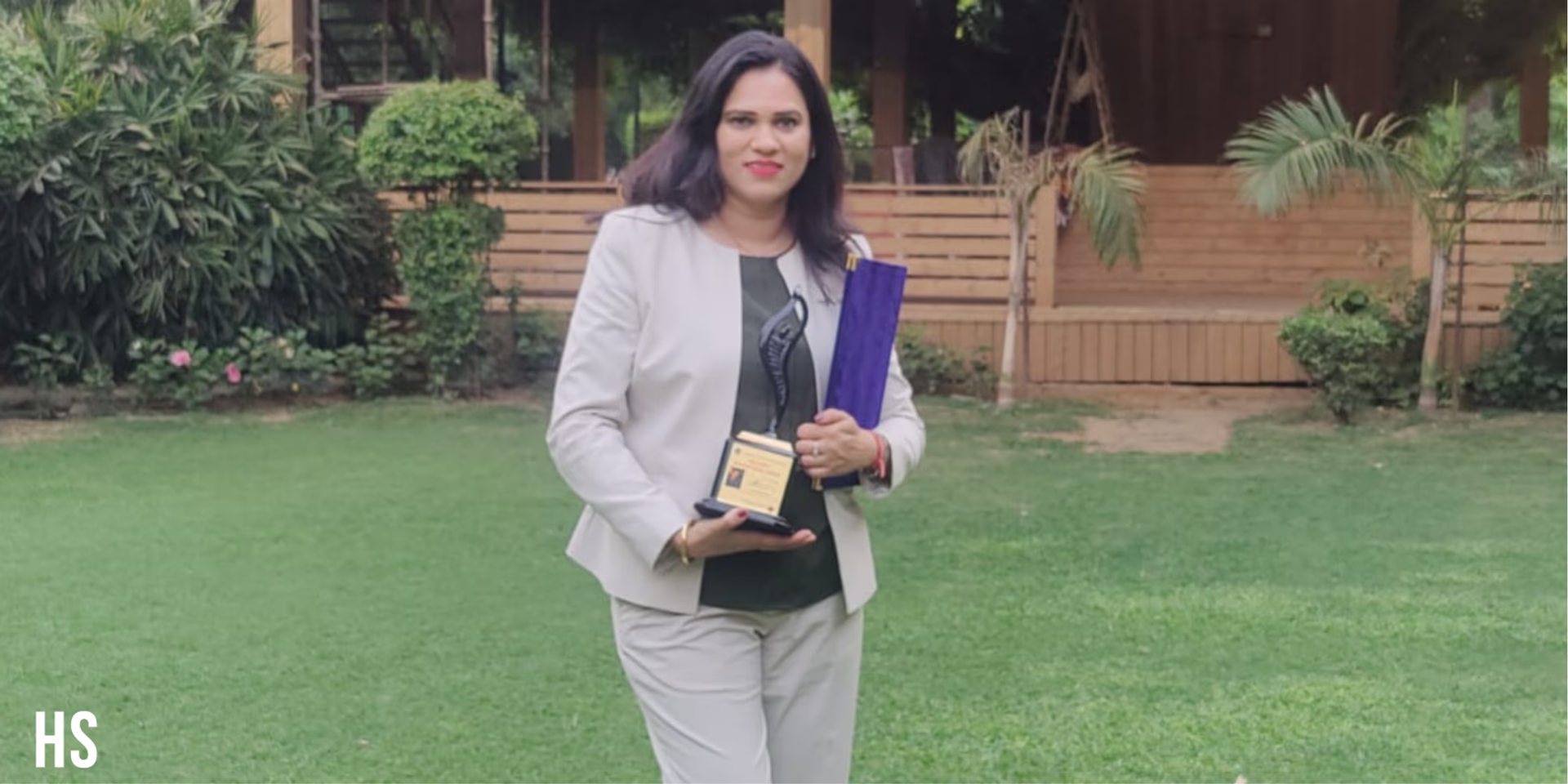

Growing up in Bareilly, Uttar Pradesh, Priyanka Rastogi had always wanted to fly planes. She cleared the selection tests to train as a pilot, but an accident changed her life. She ended up with 250 stitches and a rod in her right leg.
After completing her BSc, she moved into the travel industry and eventually joined Indian Airlines, then IHR, where she also met her husband, Ankit. When Goibibo acquired the company, she became the contracting head for Northeast and East India. The job kept her constantly on the road, as she managed a team spread across some of the country’s most under-connected regions.
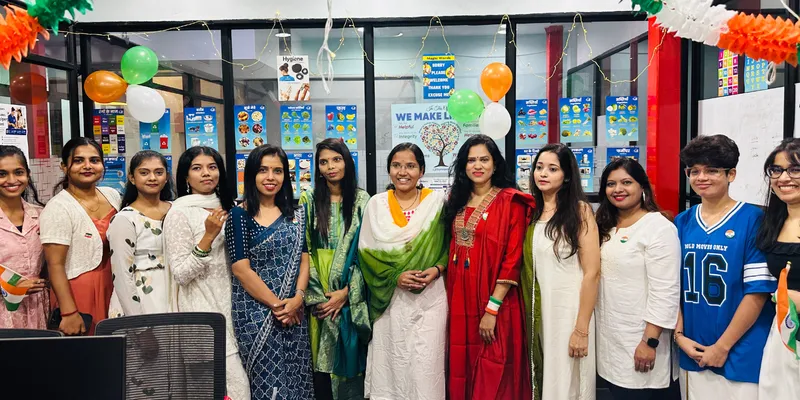
Priyanka with the team
In 2014, Priyanka’s mother-in-law suffered a stroke and was paralysed. That same year, the couple moved from Gurugram to Bengaluru, and Priyanka struggled to find reliable help to care for her mother-in-law.
“While I was caring for her, I approached several agents to find good domestic help. The helpers would come for a day or two and then simply stop showing up. It was a really stressful time, juggling caregiving, work and unreliable help,” she recalls.
While looking for a solution, Priyanka learned about a government certification that allowed people to train as home-care helpers. She became a National Skill Development Corporation (NSDC) certified master trainer for domestic work in Karnataka,
She began training caregivers and, once they completed their training, they started asking her for help finding jobs.
With Arun Mahendran, a friend of 10 years whom she had met while working at Stayzilla in Bengaluru, Priyanka began training and placing helpers. Soon, the people she was training began asking whether she could find jobs for them.
What had begun as Priyanka's attempt to solve a problem in her own home gradually became a business aimed at solving the same problem for other families. With Arun, she started EzyHelpers in 2020 to connect trained and reliable help and caregivers with people who needed them.
“We began by training two helpers, charging Rs 100 per hour, out of which we kept a small commission. Soon we decided to hire helpers on our own payroll, which worked out better,” she says.
Priyanka personally recruited Selvi, their first employee, by visiting her at home and convincing her to join them for an “on-demand” role, paying Rs 20,000 a month for eight hours a day, plus overtime for extra hours.
When the pandemic hit, people stopped calling for temporary help; so Priyanka decided to offer live-in help for families.
“We travelled to nearby areas and convinced people to convert from part-time or full-time roles into live-in ones. They would stay through the week and go home on Sundays,” she says.
Today, EzyHelpers has 11,000 domestic helpers registered on its platform, of whom over 2,000 (over 90% of them being women) have been trained and placed in Bengaluru. More than 1,000 families across 400-plus residential societies have used its services, and around 300 have returned to hire helpers again.
The team has also grown from just two people to 25 salaried employees. Women make up 75% of EzyHelpers’ workforce, including the management team.
Spanning an entire range of services
The company’s services now span multiple categories: housekeeping (sweeping, mopping, dishwashing, dusting, cleaning bathrooms); cooking; baby care for toddlers and kids; caregiving, which covers patient care, child care, and special-needs care; permanent drivers; carpentry; gardening; and dry-cleaning pickup and delivery—often connecting customers to independent vendors even without a direct commercial arrangement.
“Whenever there’s a demand, we don’t say no,” says Priyanka.
The company follows a strict verification process that includes Aadhaar card verification, a physical home visit, and finally e-KYC and police verification handled through a third-party vendor at an extra cost.
Skilling is an important part of the process. EzyHelpers runs a hostel called ‘Nest’, where new helpers, many of them migrants, can stay, settle in, and get oriented before taking up their first placement.
The team uses a mix of training modules to prepare people for various roles, so they can get a feel for the work and practise before they start their jobs.
How it works
Customer acquisition happens mostly through Instagram, Facebook, Google Search, alongside strong word-of-mouth referrals. Priyanka’s first customers came through her housing society.
“When a customer calls in, our sales team, 75% of whom are women, takes down the requirement. We then search for a helper already registered with us, and our field officers also help source candidates. We build each helper a proper profile, like a resume, including a passport-size photograph, so the customer can review it.
“If they are interested, we set up a call over Google Meet, and once both sides are happy, we arrange a trial. When the trial goes well, we send an agreement to the customer,” she explains.
The help is not charged a single rupee, while the customer pays a fee to EzyHelpers.
On the helper side, recruitment happens through search visibility, word of mouth, and government-run ‘rozgar melas’ (job fairs) organised under NSDC, where prospective helpers can register directly with the EzyHelpers team.
The domestic-help market is crowded, particularly in the on-demand segment. Priyanka says competition is intense, with domestic helpers often moving between platforms for a difference of a few thousand rupees in pay. Also, big players can afford to hire help at much lower price points.
EzyHelpers is currently bootstrapped and is looking to raise its first round of funding. It says it recently crossed Rs 1 crore in revenue and remains profitable.
The challenges of running EzyHelpers go beyond competition and the everyday demands of running a business. For Priyanka, it’s also about managing people and the expectations that come with being a woman, a mother, a wife, a daughter-in-law, and an entrepreneur.
“Our business revolves around people, and a large part of my day is spent dealing with their expectations and emotions,” she says.
With a largely women-dominated team, Priyanka often finds herself dealing with employees’ family pressures, financial worries, health concerns, and personal situations.
“Sometimes I am not just the founder or the person taking business decisions. I suddenly become the listener, mediator, counsellor and problem-solver as well,” she says.
The responsibilities extend beyond the workplace. Her daughter may feel she isn't getting enough time, her mother-in-law may need her for a doctor’s visit, or her husband’s travel may leave her with more to manage at home.
“I think one of my biggest challenges has, therefore, been learning how to manage all these different expectations without carrying guilt all the time. Running EzyHelpers has taught me that while entrepreneurship is definitely about business decisions, revenue and growth, for me it has also been equally about managing people, relationships, emotions, family and society while still finding the energy to wake up the next morning and keep moving forward,” she says.
EzyHelpers is all set to launch its app next month. It’s looking to expand its caregiving vertical and invest further in technology, hiring more staff, and opening additional hostel facilities to house a growing workforce of live-in helpers.
Edited by Swetha Kannan