



Girl Rising’s RISE Premier League is using cricket to challenge gender stereotypes
Girl Rising’s RISE Premier League is putting girls and boys on the same cricket field, and challenging stereotypes along the way.

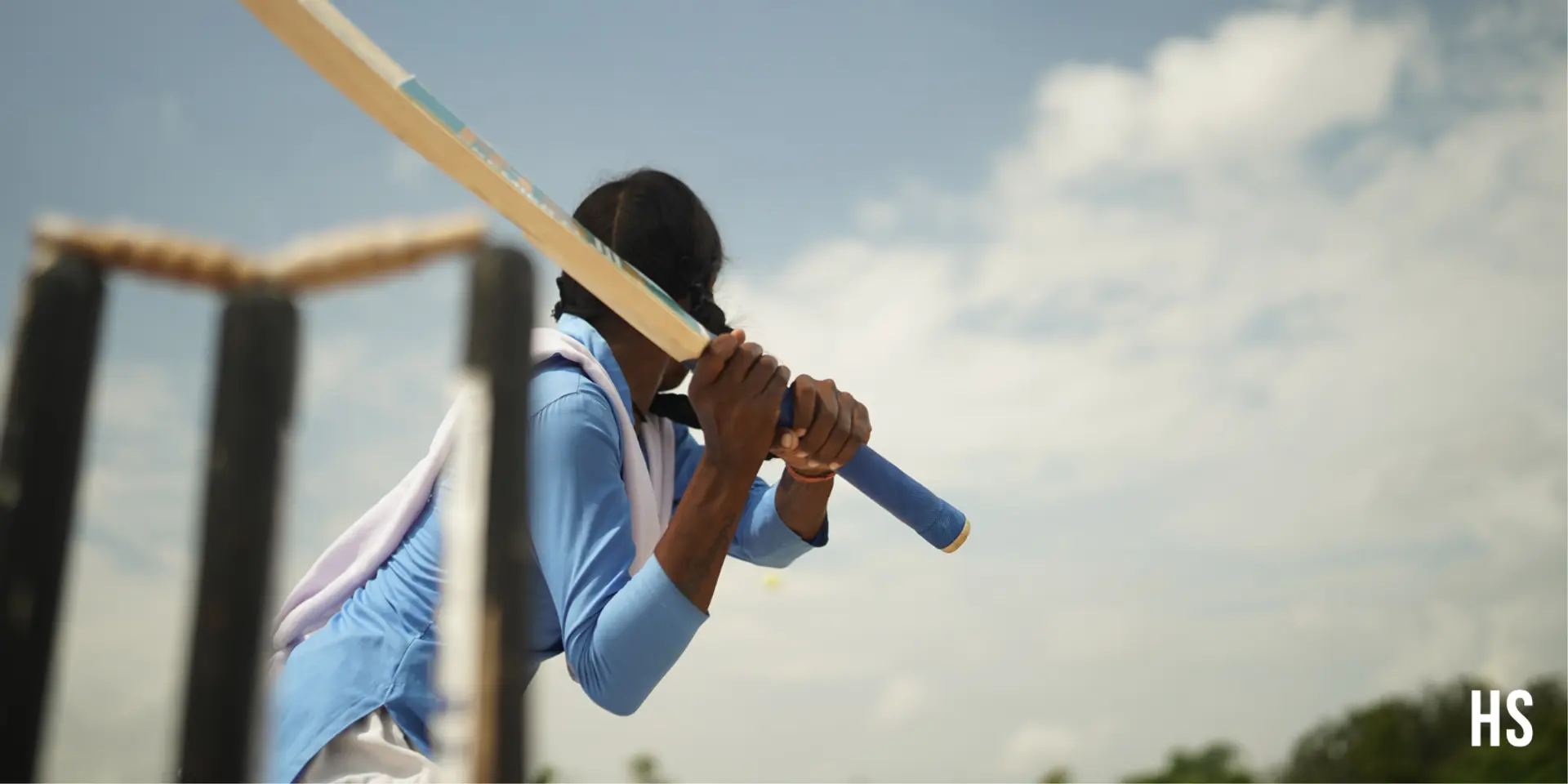

On August 11, 2026, around 300 people gathered at the Government Higher Secondary School, Bhadi, in Bilaspur, Chhattisgarh, for something the village had never seen before—a cricket match in which girls and boys played together on the same team, as equals.
It was the opening match of the RISE Premier League (RPL) organised by non-profit Girl Rising as part of its flagship RISE education programme. The league features four mixed-gender teams and eight matches, and ends on October 10.
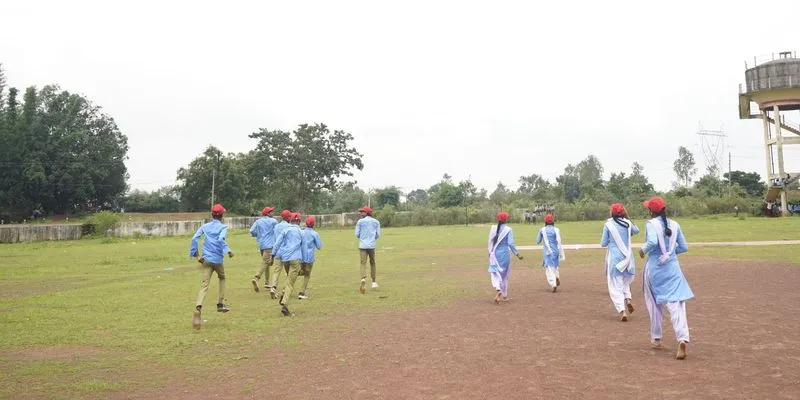
Girls on the field
Parents, teachers, panchayat members, and the local Block Education Officer watched as the Bhadi ke Blasters took on Daganiya ke Dhurandhar in the first inter-school mixed-gender tournament either school had ever hosted.
By the end of the match, Bhadi ke Blasters won by nine runs, defending a total of 75 against Daganiya’s 66. But it was clear this was about far more than cricket.
The story of Girl Rising
Sixteen years ago, a group of filmmakers came together to tell nine stories of nine girls around the world navigating a difficult path to education.
It came after Oprah Winfrey asked them what single subject could help break the cycle of global poverty.
“They did a lot of research, spoke to a lot of NGOs, and everything pointed towards investing in girls’ education—because if we did that, we could really take the cycle of poverty within one generation,” says Nidhi Shukla, Co-CEO of Girl Rising.
Narrated by Meryl Streep, Anne Hathaway, and other prominent voices, it became an unexpected global phenomenon.
The film reached India in 2016 and, localised in partnership with the Ministry of Women and Child Development, was called Girl Rising: Woh Padegi, Woh Udegi.
It created a curriculum with the Bharti Foundation and worked with 40,000 adolescents in a pilot evaluated by George Washington University.
It confirmed what the team had known all along: a school-based platform was the most effective way to shift how adolescents thought about gender, confidence, and their own futures.
That insight led to the formation of the RISE (Resilient, Inclusive, Skilled and Educated) curriculum, a programme delivered by trained government-school teachers with the support of local community organisations, focused on social-emotional learning and gender-equitable attitudes, layered more recently with 21st-century skills like digital literacy, financial literacy, climate awareness, and at the specific request of teachers, principals and students, the basics of AI.
The need for this kind of intervention is well documented. India’s 2024 Skills Report found that one in two young people are not employment-ready. “Why they are not employment-ready is because they lack some of these skills—confidence, critical thinking, creative thinking, decision-making, emotional regulation. All of that is so important, and we are just not teaching our kids that in school, Nidhi says.
Over the past decade, the organisation has reached more than 600,000 adolescents, 36,000 teachers, and 27,000 parents. In the current academic year alone, it is working with over 60,000 adolescents and 1,200 teachers across Chhattisgarh, Madhya Pradesh, Bihar, and Uttar Pradesh.
In Bilaspur, Girl Rising and its local partner, Samarpit, have expanded the RISE programme to 12 schools, reaching close to 3,000 students through its 30-session curriculum.
The comic book that started a cricket league
In the middle of it all, a comic book became the unlikely spark for the RISE Premier League.
Stories gathered from different projects and communities slowly came together to create Kusum’s Adventurous Innings, a comic book whose central character, Kusum, dreams of becoming a cricketer.
The comic was never meant to be just about cricket. Through Kusum and the other characters, it explores the stereotypes and challenges children face every day—from the idea that cricket is a “gentleman’s game” to expectations about what girls and boys should and shouldn't do. Themes such as menstrual health, adolescent health, and climate change weave through the story, making the comic both entertaining and educational.
“We had no idea how much the kids would love it. The comic was initially created for one project and designed to complement the curriculum. But its reception quickly changed its trajectory,” Nidhi points out.
Even the teachers could not put it down.
During a teacher training session, the team handed out the comic and gave teachers five minutes to read 10 pages before the session began. Instead, after the comic was distributed, children began turning its stories into skits and plays. Everyone wanted to play Kusum.
Then the children came up with an idea.
“Didi, hum log cricket khilna chahate hain. Kusum ki tarah hum cricket khilna chahate hain (We want to play cricket like Kusum),” they told the team.
That request led to cricket gear, practice, and eventually, a mixed-gender friendly match last year. The response surprised even the organisers.
The excitement extended beyond the students to the schools and principals. The match became such a hit that Girl Rising began to wonder: why not turn it into something bigger?
What it looked like on the field
Himani Yadav, a Class 12 student of GHSS Bhadi and captain of Bhadi Ke Blasters, had never captained a team before. It was also her first time playing in a mixed-gender cricket match. During the match, Himani communicated with her teammates, made decisions about bowling changes, and tried to keep the team’s energy up. Her team batted first and scored 75 runs. When they took the field to bowl, she focused on what she could control: encouraging her players and sticking to the strategy.
As part of the RISE programme this year, Himani has begun learning about social-emotional learning, gender equality, and key life skills.
Himani said, “It feels special to come together, play, support each other and create memories that we will always remember. For us, this match is also a chance to live the spirit of Kusum within ourselves, to be confident, break stereotypes, believe in ourselves and show that the game belongs to everyone, girls and boys alike."
For Nagesh Verma, Himani’s schoolmate, it was a historic moment as for the first time boys and girls from their school would play together as equals on the field. He was named Player of the Match after taking five wickets and scoring 20 runs.
Through the RISE programme, Nagesh is learning core life skills, self-confidence, how to identify and manage emotions, a deep understanding of gender equality, and digital and financial literacy.
Shalini Kashyap, a Class 11 student of GHSS Daganiya, bowled with confidence and took five wickets. Shalini is part of a classroom where the RISE programme was already being implemented, and she learned about gender equality and life skills like teamwork, learning from failures, and managing emotions.
“I didn't expect to take five wickets. When I saw my teammates and everyone cheering for me, I felt proud of myself. It gave me more confidence to believe that I can do well when I take up an opportunity.”
Beyond the field
For Girl Rising, strong partnerships on the ground are critical to ensuring that such programmes can continue beyond a single event.
HP, which is partnering with the league, has been a long-standing partner, and that continuity matters, says Nidhi.
“As part of our strategic programming, we decided that we are going to be working with the government. So that there is that element of scalability, sustainability, ownership, and also reaching the population that needs it the most,” she adds.
Community-based organisations are equally important, particularly in places where trust has already been established.
“All of this has to come together really well to be able to execute a meaningful project. You can go to a project, go in, come out, and have great findings. But to be able to continue to work in a community for a long time, it’s really hard unless you have the trust of that community,” Nidhi explains.
Girl Rising does not see the RISE Premier League as a one-off initiative.
“We plan to have the RPL every year, in a bigger format. I really see this cricket match, mixed-gender cricket match, and everything that we are trying to achieve with our curriculum all coming together really beautifully,” she concludes.
Edited by Megha Reddy