



How Progcap’s ProgShakti is bridging the credit gap for women entrepreneurs
With women facing persistent barriers to formal credit, Progcap’s ProgShakti wants to change how women entrepreneurs are seen and funded.

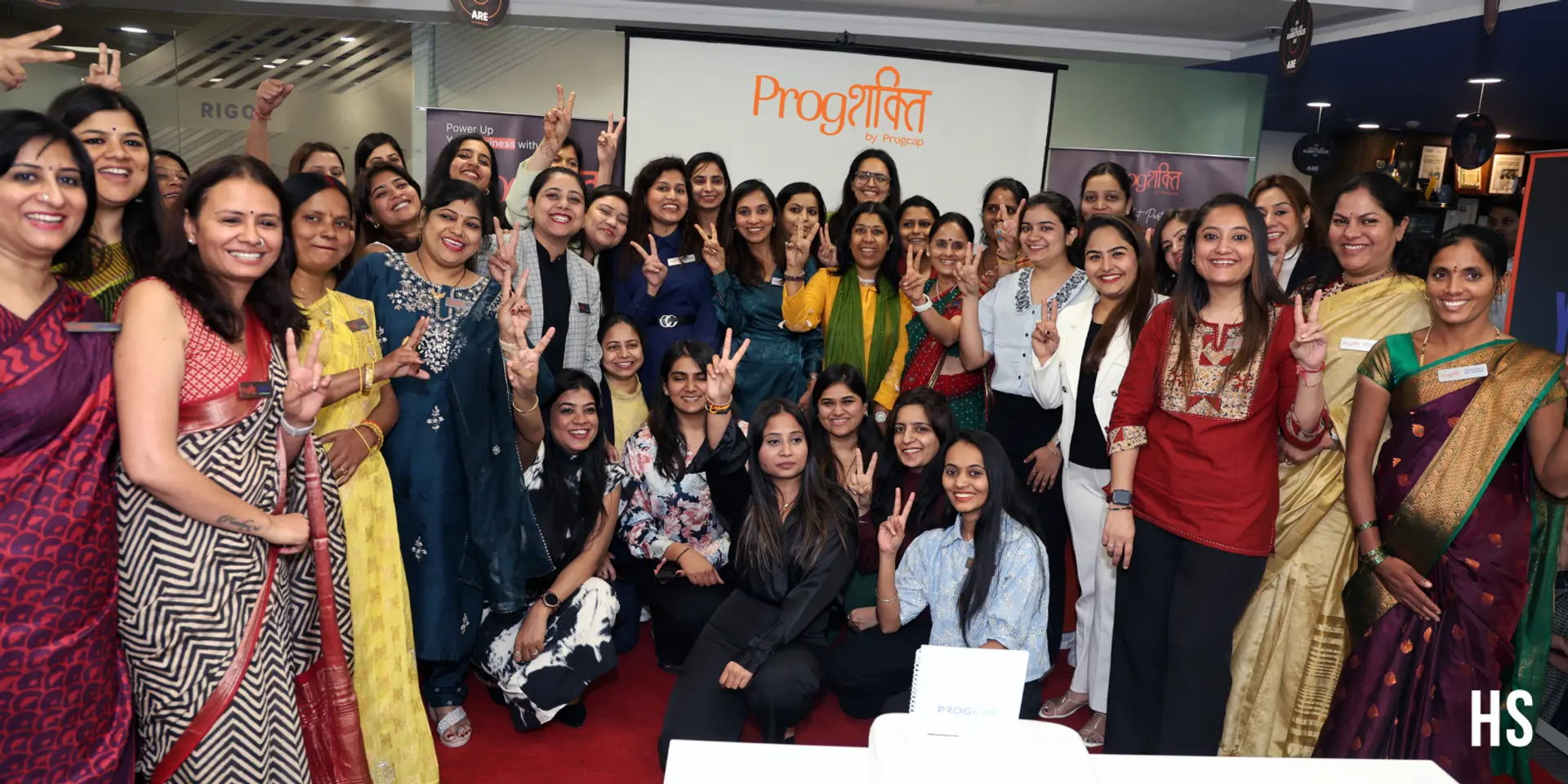

Access to formal credit remains one of the biggest barriers facing women entrepreneurs in India.
According to an International Financial Corporation (IFC) study, women entrepreneurs in India face a 19% rejection rate from lending institutions, versus 8% for men.
This is often attributed to lack of collateral, thin credit histories, and structural bias in traditional lending systems.
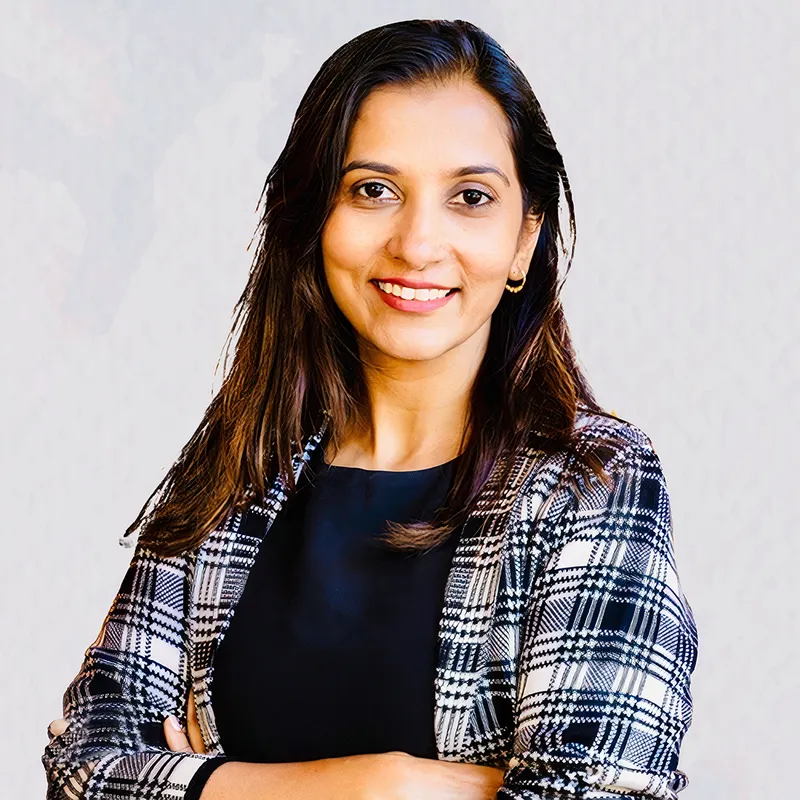
Pallavi Shrivastava
A SIDBI publication on the Indian MSME sector also notes that female-owned MSMEs face the largest credit gap, around 35%, compared to about 20% for their male counterparts, with more women turning to informal credit to bridge the difference.
Recognising this gap, New Delhi-based MSME fintech company Progcap launched ProgShakti to help women-led small businesses access credit.
The idea for ProgShakti came from the realisation that women may be borrowers on paper, but are far less likely to be the people actually running the businesses.
It emerged at Samvaad, Progcap’s monthly customer meet. When the company decided to hold one session specifically for women borrowers, the team struggled to get even 100–150 women into the room.
“What we discovered was that while a loan was on paper in a woman’s name, the business was often actually being run by a husband, father or son,” says Pallavi Shrivastava, Co-founder, Progcap.
Worse, women were sometimes used as the names on loans without any role in the business and, in some cases, without even knowing a loan had been taken in their name or that it could affect their credit record.
At the same time, women who genuinely ran businesses faced a different barrier. For instance, a woman running a toy manufacturing unit and looking for money to expand could still be asked to bring in a male co-applicant.
“The market simply has no reliable way to distinguish a real front-line woman operator from a paper owner. So by default, lenders insist on a male co-applicant,” Shrivastava adds.
Built around three ‘Cs’
ProgShakti aims to solve both problems.
The initiative identifies women who are actually running their businesses and gives them access to credit on their own merit. A woman who is certified as a genuine owner-operator can access loans of up to Rs 10 lakh without a male co-applicant. At higher ticket sizes, a co-applicant may still be required for risk reasons, but need not be a man.
Progcap first looks within its existing borrower base, using calls, interviews and business visits to identify women who are genuinely running the businesses attached to female-held loans. It has also opened ProgShakti to new applicants, including businesses outside its traditional supply-chain network and D2C and manufacturing enterprises.
For a new applicant, the process begins much like any other credit assessment — KYC, documentation, and financial checks, plus a deeper assessment of whether the woman actually understands and runs the business.
A visit to the business helps validate what it sees on paper. If she clears that assessment, she becomes a certified ProgShakti entrepreneur.
ProgShakti is also built around what Shrivastava calls the “three Cs — credit, community and commerce.”
Women borrowers get access to a six-module learning programme covering financial management, marketing, business operations and growth. They also join a peer community where they can discuss business challenges and seek help from other women entrepreneurs and Progcap’s team.
Progcap continues to track repayments and offers both term loans and revolving credit lines, with tenures ranging from three months to two years, depending on business needs.
The company says delinquencies in the ProgShakti portfolio are below 0.5%, giving it confidence that lending to women on their own merits need not mean taking on disproportionately higher risk.
To date, Progcap has enabled more than Rs 10,000 crore in credit to women entrepreneurs through ProgShakti, with very strong repeat financing and growth patterns emerging from Tier II and III markets.
“Roughly 50% of the segment comes from our core dealer-distributor-supply-chain business. We are also now working with a government initiative to fund women from self-help groups, in categories like masala-making or bangle-making. We also have D2C brands, and smaller, newer categories — wooden toy manufacturing, doctors and clinic owners, creche owners — all of whom need working capital,” she explains.
Ticket sizes are typically Rs 7–8 lakh, and for Progshakti-certified loans, the average is closer to Rs 5 lakh; including its larger existing loans, it moves closer to Rs 9 lakh.
Speaking of the high interest rate of 16-18%, Shrivastava clarifies, “As an NBFC, our borrowing costs aren't especially low either — and these are entirely collateral-free, unsecured loans. We would welcome the chance to collaborate with the government on lowering borrowing costs,” she says.
More awareness needed
With Progshakti just a year old, already 75-80% are repeat borrowers, and repayment efficiency is around 99%. Women borrowers now account for 17% of Progcap’s overall portfolio, growing at 40% year-on-year, with nearly 90% coming from Tier II and III markets. Among the cities, Ghaziabad has the highest number of women borrowers, followed by Lucknow, Jaipur, Bengaluru South and Patna, reflecting the growing demand for credit among women entrepreneurs beyond India’s major metros.
Shrivastava talks of an ambition among women that is often invisible.
She recalls visiting one of Progcap’s strongest distributors in Jaipur, a male-dominated industry where, on paper, the business appeared to be run by a man. But during the visit, she saw his wife managing the business from the front — planning inventory, juggling three phones and handling calls in real time.
“These women need a nudge, a signal that we see them, that they are already solving problems and driving the economy,” Shrivastava says.
How does she see women’s entrepreneurship evolve over the next five years, especially outside major cities? Will access to credit improve?
Shrivastava believes it depends on a broader enabling environment.
“But the more worrying picture is in truly marginalised, tier-three-and-below markets, where the information gap is enormous. I don't think the private sector alone can close that. Many schemes already exist, but awareness is extremely low for men and women in these regions.
On credit specifically, Shrivastava says that the fundamentals of underwriting won’t change: if you run a business well, with data and some collateral, one can access credit from anyone.
“We need more nudges to bring women forward into the economy, help them formalise (GST registration, formal business practices), and digitise even in small ways, using WhatsApp for order-taking, maintaining simple digital records.”
What’s next for Progshakti?
“We have set an ambitious target: 10,000 women over the next five years. We are at roughly 800 formally onboarded and certified under Progshakti — though separately, women already make up 28% of our broader portfolio. As we scale, we want to build a strong enabling ecosystem bringing in more partners already doing frontline work with women, not just funding, but learning and development, capacity building, and connecting women to relevant government schemes.”
Edited by Affirunisa Kankudti