


India’s women farmers are being left out of the system—at a cost of up to Rs 2 lakh crore a year
A new Arya.ag report finds that women make up a significant share of India’s agricultural workforce but remain underrepresented as recognised farmers.

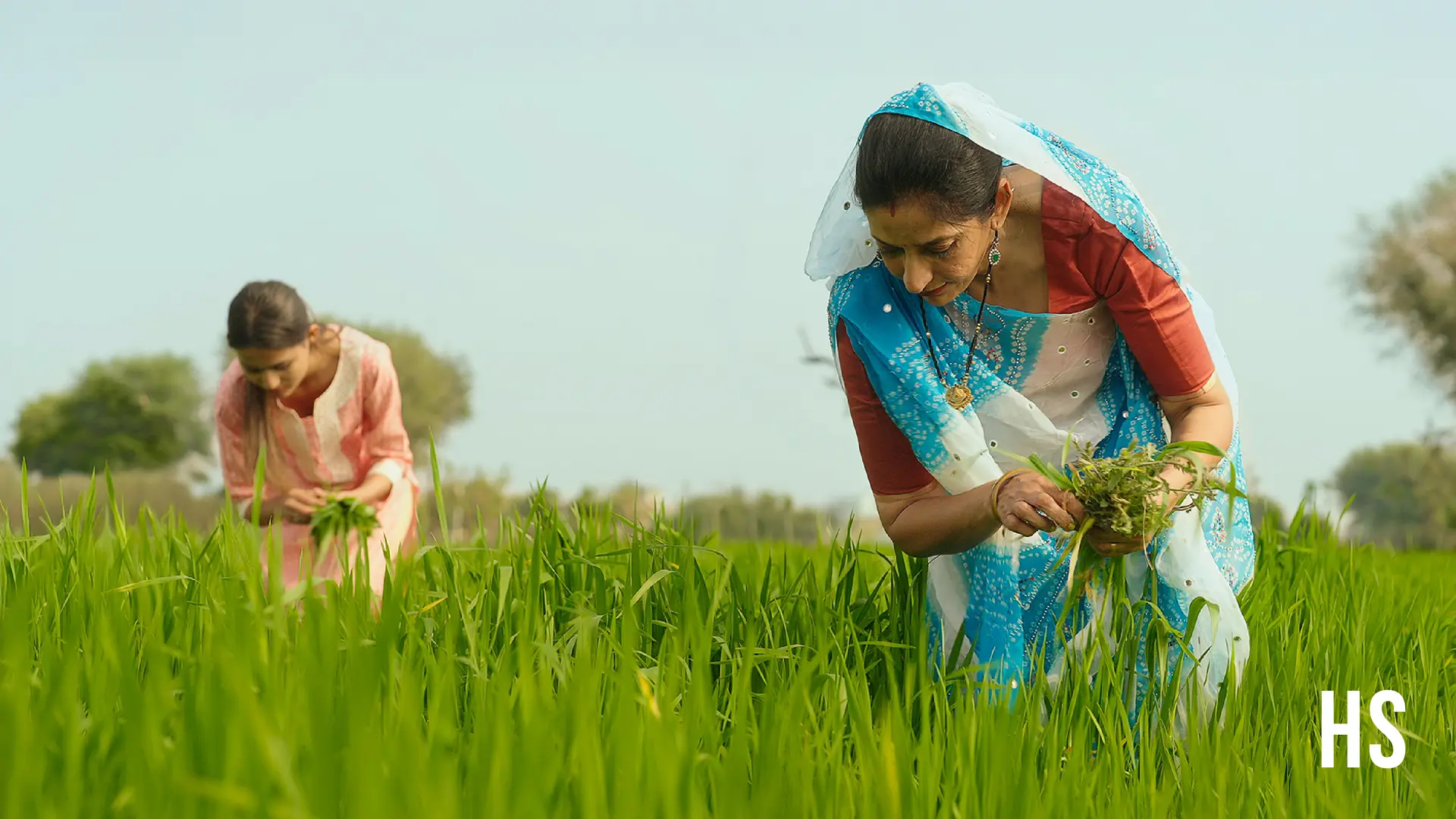

Women farmers in India are doing the work. Sadly, the system is still struggling to see them as farmers.
A report by Arya.ag, Her Harvest 2026: The Hidden Cost of Women’s Invisible Work in Indian Agriculture puts a number to what this invisibility costs India–between Rs 1.2 lakh crore and Rs 2 lakh crore in agricultural output every year.
Not because women are less capable farmers, but because they have less access to the resources they need to farm productively.
The report, released in a year the UN has declared the International Year of the Woman Farmer, highlights that while women do an increasing share of the work, many remain invisible in the official systems that determine who gets recognised, financed, and supported as a farmer.
64% of the country’s working women are engaged in agriculture, up from 57% in 2017-18. Nearly 77% of rural working women are engaged in agriculture.
Recognition has not kept pace with women’s growing role in agriculture. Women account for roughly 48% of the agricultural workforce, up from about 30% in 2017–18, yet 50.5% are recorded as unpaid helpers rather than farmers. They operate 11.72% of India’s farmed area and hold 13.96% of operational holdings, highlighting the wide gap between the work they do and the land they control.
The woman who sows, harvests, manages the crop, and takes it to market can still be recorded as an “unpaid helper” on a family farm.
In Indian agriculture, the label determines access. The land title effectively becomes the master key to the agricultural system. The report argues that land titles shape who is recognised as a farmer and who can access credit, extension services, procurement and other schemes.
Women may do much of the farming without possessing that key. Without a title, she is not a farmer and therefore cannot borrow as one.
This gap has economic consequences.
Women’s farms can be 24% less productive compared to farms of the same size run by men, the report says. It attributes the difference to unequal access to credit, inputs and support rather than ability.
Women earn about Rs 82 for every Rs 100 men earn in agrifood work, while women farm workers earn 20-30% less for the same work.
This is where the report’s Rs 1.2-2 lakh crore estimate becomes significant. Applying the FAO’s estimated 2.5-4% output loss from unequal access to productive resources to India’s agricultural GVA of Rs 48.7 lakh crore produces the estimate of annual output forgone. The report carefully describes this as an estimate derived from that methodology, rather than a directly measured loss.
In other words, India is not necessarily losing because women are less productive farmers. It is losing because it has built an agricultural system in which the people doing the work often cannot access the resources that would make that work more productive.
Solving this problem may not have to wait for land ownership patterns to change.
Changing land records is slow and generational. But storage, warehouse-receipt finance, farmer producer organisations and technology can begin to separate access to agricultural resources from the question of whose name is on the deed. The report’s argument is simple: finance can follow the crop rather than the title.
The report's stories show what happens when that access becomes available. Nita Isal, for instance, became known as “Dronewali Didi” for facilitating drone spraying services. Josma Konoje moved from agricultural labour to running an FPO, while Suman Kumari helped establish a Smart Farm Centre where interventions, including drone spraying, lowered input costs and reduced spraying time.
These are more than individual success stories. They point to a different way of thinking about rural women—not as beneficiaries of agricultural welfare, but as economic actors whose productivity has been constrained by the system's architecture.
The report says equal access to resources could lift yields on women-run farms by 20–30%. It also notes that higher harvest incomes can raise household incomes, with women often reinvesting their earnings in food, schooling and healthcare.
Arya.ag offers four recommendations—count her, finance her, equip her, and organise her—and a useful framework.
But the larger shift required is conceptual: move women’s participation in agriculture from the welfare column into the productivity column.
India’s women farmers are already producing. The opportunity lies in removing the barriers that prevent them from producing more, earning more and controlling more of the value they create.
Edited by Megha Reddy