



How Shashruti Nakade went from a swimmer to a top para triathlete
Shashruti Nakade has gone from winning swimming medals to becoming a para-triathlete ranked World No. 9. After narrowly missing the Paris Paralympics, she is now working towards qualifying for the LA 2028 Games.

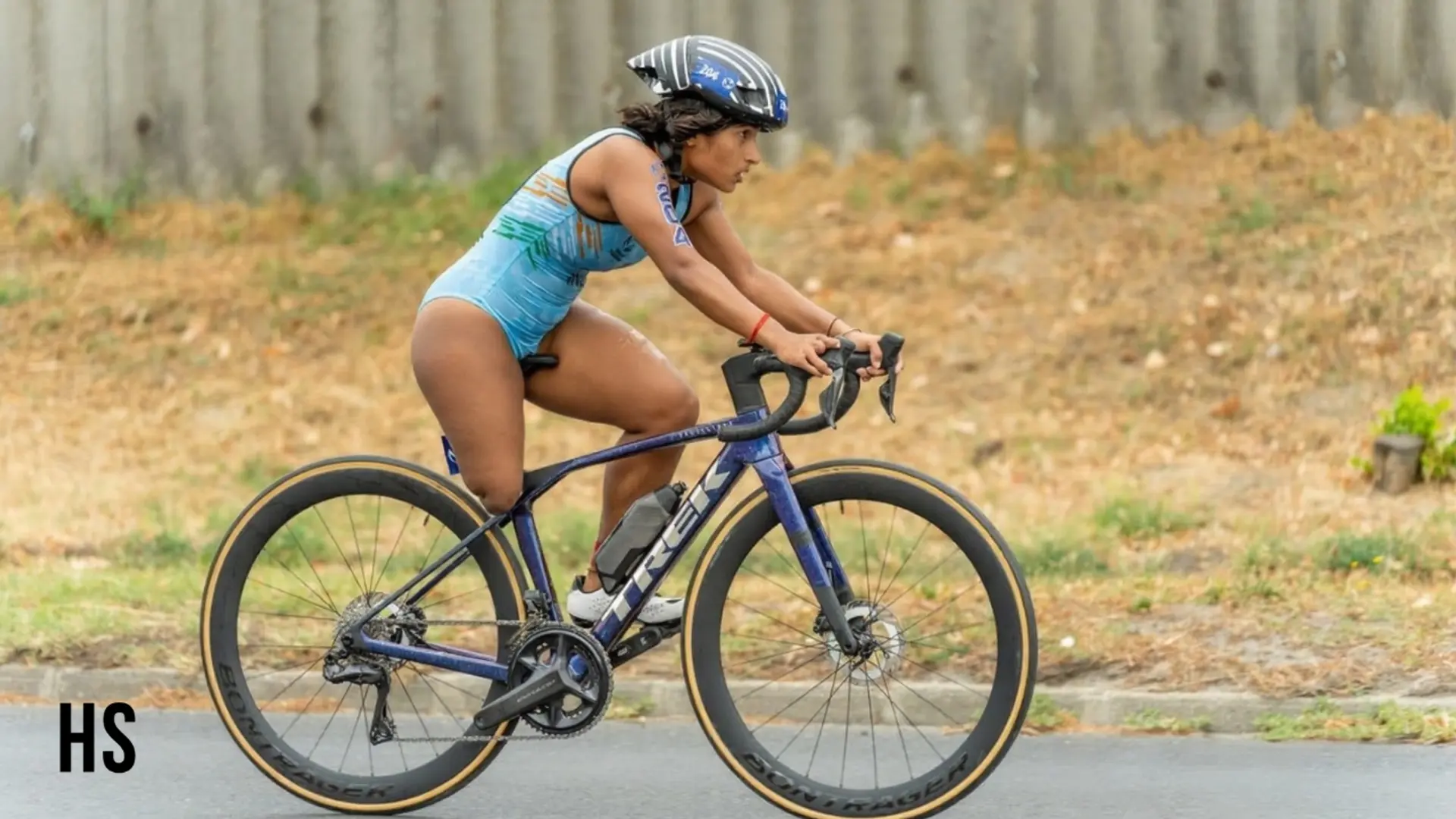

Shashruti Vinayak Nakade was born without a fibula (the calf bone) and had deformities in her right hand. Much of her early childhood was spent in hospitals, where she underwent multiple surgeries so that she could be more mobile and active and lead a normal life.
In 2014, when she was 10 years old, she underwent surgery for the last time, with an amputation of her leg. She was fitted with an advanced Ottobock prosthetic to replace the Jaipur foot she had previously used.
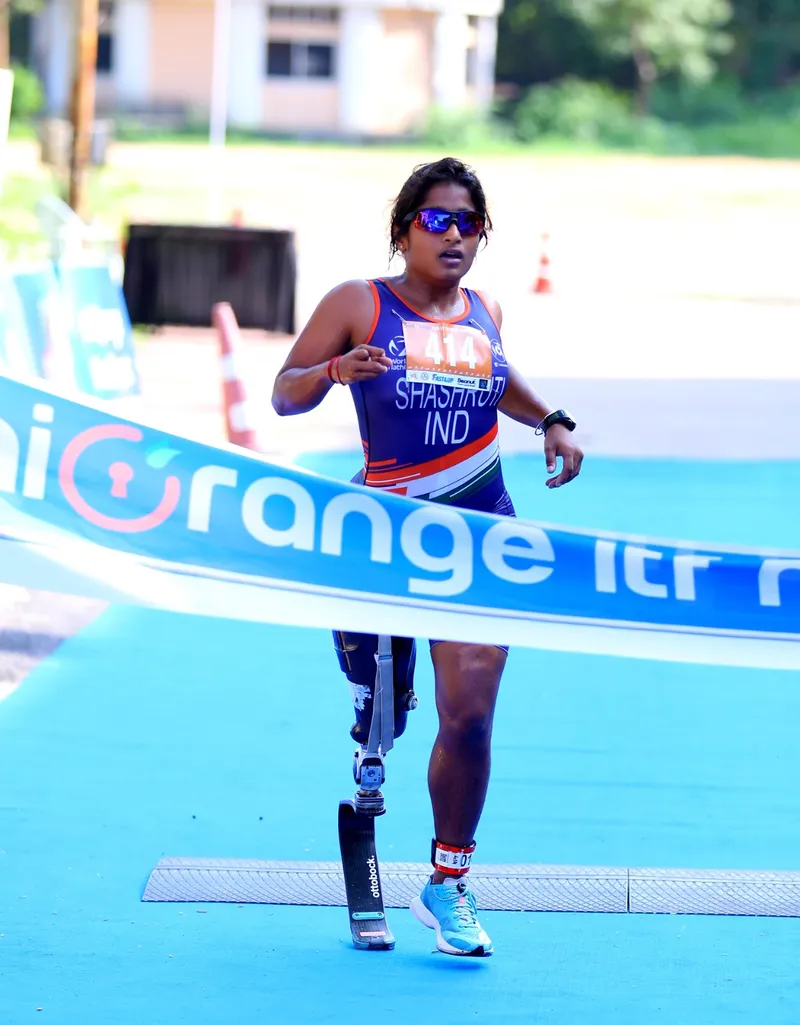
Shashruti Vinayak Nakade
The prosthetic marked a turning point in Shashruti’s life, but it wasn’t the only thing that changed.
Before the surgery, Shashruti had attended a camp, and someone suggested to her parents that they introduce her to swimming. Her parents were cautious but willing.
They went to swimming pools in Nagpur and were met with, “We don’t teach a person with a disability.” When the summer vacations arrived, Shashruti was determined to learn to swim, just for enjoyment. Further search led to a swimming pool near their home where the coaches agreed to teach her.
“I started swimming. After my amputation, I became more active,” Shashruti says.
In 2015, she participated in her first Nationals where she won four golds, a silver, and two bronze medals. At the Junior India Camp in 2016, she was identified by her coach Prasant Karmakar, with whom she continues to train.
Until 2023, Shashruti remained a swimmer, competing in 10 Nationals and winning the individual title in her category. In 2019-20, her coach suggested she try training for the triathlon.
“In 2021, I shifted to triathlon but participated in the Para Asian Games in 2023 in swimming. Post this, we purely shifted our goals to the triathlon since I was going to attempt to qualify for the Paris Paralympics in triathlon,” she explains.
Three international wins in 2024 shot her ranking up to World No. 10, but she missed qualification by a whisker—only the top nine qualified for Paris.
“I would have been at No. 9, but I started experiencing a sharp pain in my lower back that was not letting me run. The pain continued, and I was not able to maintain my fitness levels. I was just cycling and swimming. I wanted to continue training for triathlon and at the same time, was searching for a better prosthetic solution,” she says.
No above-knee amputee in India, she points out, was running five-kilometre distances competitively; the prosthetic technology for that simply didn't exist in the way she needed it.
Swimming the Palk Strait
Rather than wait idle, her coach proposed a different kind of test: the Palk Strait in April 2025.
The swim lasted 11 hours and 30 minutes, beginning in the pre-dawn darkness and ending as the sun began to dip towards the horizon.
“In the swimming pool you can see the bottom. You cannot see it over there,” she says of the open ocean. In the final two hours, with the shore visible but seemingly not getting any closer, the escort boat kept telling her, “Fifteen minutes, fifteen minutes.”
“I was very much frustrated with him—‘Why are you lying? Just tell me how much time is exactly remaining.’” She finished anyway.
Soon, she got the new prosthetic and triathlon looked possible again.
Earlier this year, Shashruti won bronze at the World Triathlon Para Cup in Samarkand, before returning home to win the ParaTRI National title in Pune. She participated in the World Triathlon Championship Series in Germany and the World Cup in Hungary, improving her rankings.
Currently ranked World No. 9, she has qualified for the World Triathlon Para Championships in Spain at the end of September.
Training for the para-triathlon
Para-triathlon, Shashruti explains, comprises 750 metres of swimming, 20 kilometres of cycling, and 5 kilometres of running.
Coming from a swimming background, Shashruti had to unlearn her instinct to go all-out from the first stroke. “It's like conserving and expanding at the same time,” she explains.
She says she tries to pace herself through the water so there’s enough energy left for the bike and the run, without going so slow that she can't catch the field later.
The physical adaptation runs deepest in the run. Her gait, what she calls a circumduction movement, swinging her amputated leg out to the side rather than through a standard stride, means her left and right sides work differently, placing uneven demand on different muscle groups. That meant looking at the physiological side and including physiotherapy sessions.
Her swim stroke required its own adjustments to account for how her body sits and floats in open water, distinct from a pool. Cycling, by contrast, has required no major changes.
A typical day for Shashruti starts at 5 am with a run, followed by an optional rehabilitation session. Around 11 am, she has a bike session, and an evening swim from 5 to 7:30 pm.
“If you ask me what the most challenging thing is, it's like all three of them because all three of them are hard. But personally, I’ll say I love swimming because I have been doing it for a long time,” she says.
Her goals are clear: qualify for the World Championships; improve her ranking to No. 7; improve her performance and time; compete in four to five competitions on the 2027 circuit, aiming for No. 5 or 6; and secure a position in the LA Paralympics in 2028.
Asked if she feels the pressure, Shashruti says. “No, I don’t. This is something I started to love a long time ago, and I'm doing it by my choice—not anyone else's."
Shashruti credits several people who have helped her in the journey. Vikram Bhosale, who accepted her into the pool as a beginner when other coaches had already turned her away, along with Sambhaji Bhosale, the late Raju Borkar, and Anand Bhosale, laid the foundation she still trains on.
Her parents drove her from Nagpur to Kolkata to Bhiwani for better coaching, a routine that has continued since 2014. Her mother now lives with her in Bhiwani, Haryana, her current training base, and even completed a massage therapy course at NIS Patiala so she could treat her daughter whenever needed.
And since 2017, Prasanta Karmakar has shaped nearly every major decision in her career, including taking up triathlon. The GoSports Foundation has also supported her in competitions, providing prosthetic solutions, nutrition, and other essential support.
Shashruti believes awareness of people with disabilities in India is better than before.
“It’s important to identify the appropriate sport for a person with disability and then develop long-term plans for them. And this should happen at the grassroots level. My coach has a dream: when India celebrates 100 years of independence, we should win 100 medals in the Paralympics,” she says.
Edited by Megha Reddy