



Meet the solar didis turning sunlight into a source of livelihood in rural Bihar
In Bihar’s Muzaffarpur district, solar didis use clean energy to bring water to farms, build incomes, and gain financial independence.

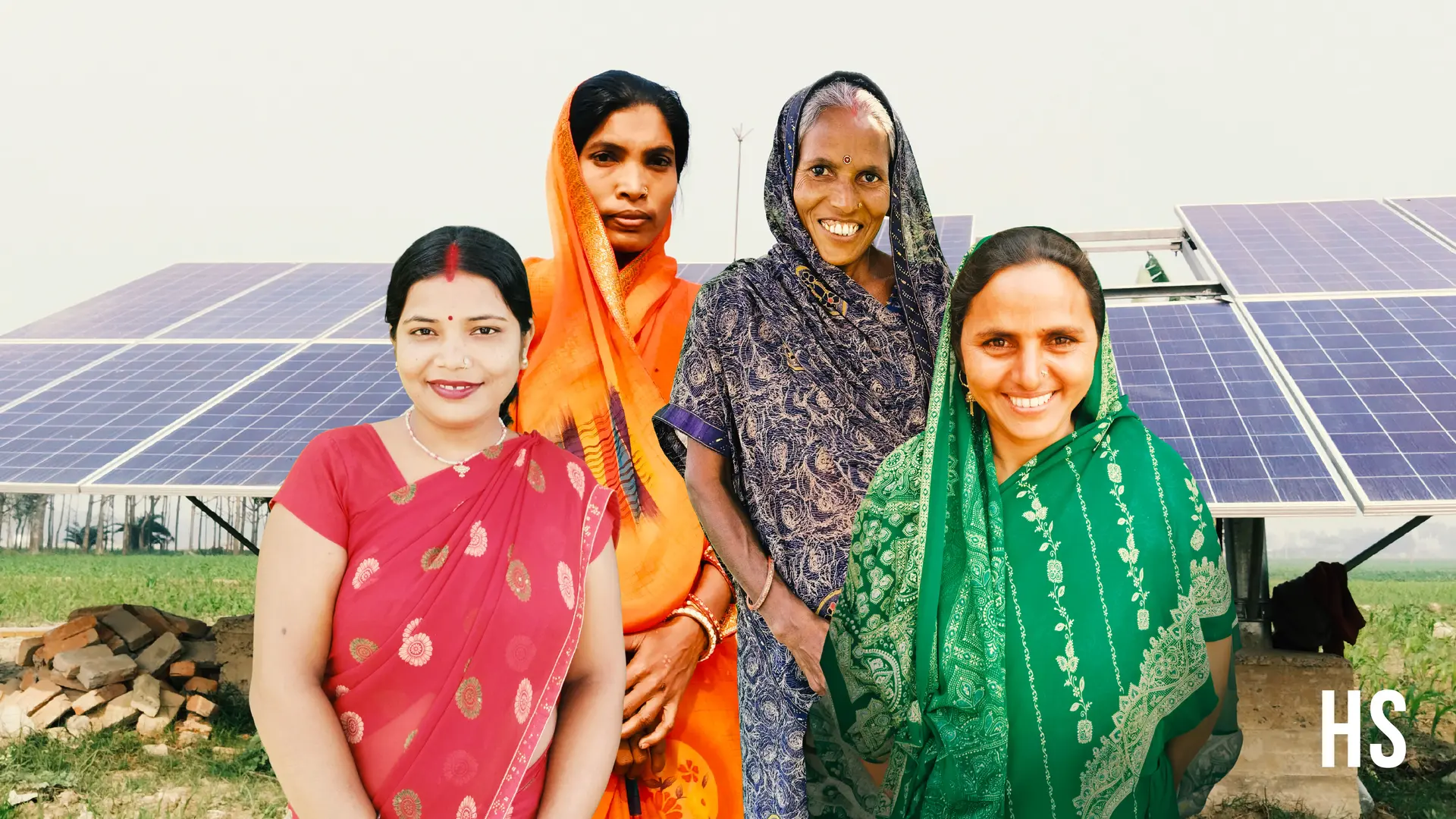

In the villages around Bochaha block in Bihar’s Muzaffarpur district, something interesting is happening in the fields—women are turning sunlight into a source of livelihood.
The idea grew out of the Bihar government’s ‘Har Khet Tak Paani’ (Water to Every Farm) initiative of the Chief Minister’s Seven Resolves - 2, which sought to make irrigation more accessible to women farmers with small agricultural holdings. In villages in Muzaffarpur, the initiative has opened a new opportunity for women farmers to become ‘solar entrepreneurs’.
Under a partnership between JEEViKA (the Bihar Rural Livelihoods Project), Aga Khan Rural Support Programme, and Gates Foundation, a woman-led solar irrigation model is being developed. The Cluster Level Federation selects the women farmers, while Aga Khan Rural Support Programme provides them a 5 HP (horsepower) solar-powered water pump and solar panels.
The Cluster-Level Federation is a secondary-tier, umbrella organisation that groups together multiple self-help groups (SHGs) or village organisations across a specific geographic cluster of villages.
With support to set up a borewell, a pipeline, and a pump house, the women run small irrigation businesses, supplying water to other farmers in their communities. If a woman entrepreneur needs financial support to set up the enterprise, an SHG and a village organisation facilitate loans under applicable norms.
The Gates Foundation has supported the Aga Khan Rural Support Programme in conceptualising, designing, and co-creating these interventions. The foundation has also helped build connections with SHGs and helped the rural support programme coordinate more effectively with the JEEViKA programme and the Government of Bihar, with a view to scaling the efforts at the state level.
JEEViKA was launched in 2006-07 with support from the World Bank. Implemented by the Bihar Rural Livelihoods Promotion Society, the programme works with rural women through SHGs, focusing on improving livelihoods, financial inclusion, and women’s empowerment.
The scale is striking. Across 12 panchayats, 189 women are now running solar-powered irrigation enterprises, bringing water to 1,410 acres and benefiting more than 3,200 farmers. Together, they have earned over Rs 1.28 crore.
What started as a way to bring water to farms is, in the process, giving women an enterprise they own and a steady source of income.
Meet the Solar Didis running irrigation businesses, mentoring other women, earning their communities’ trust, and gradually emerging as leaders in their villages.
Anu Devi
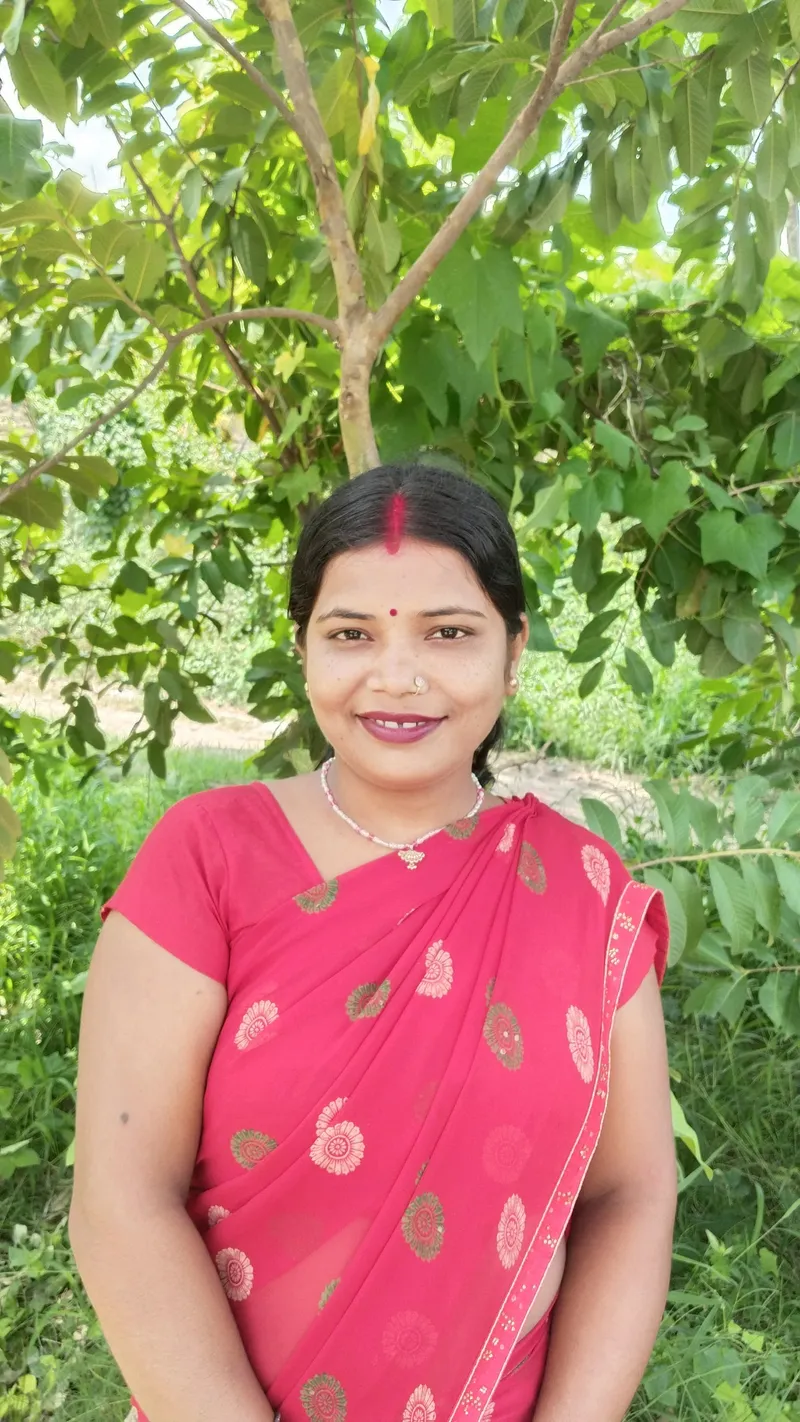
Thirty-five-year-old Anu Devi belongs to Saraffudinpur village in Bochaha block. Her family owns an acre of land in the village.
Married at 15 years, her life became financially challenging. She completed her tenth standard before joining the Aashiyana Self-Help Group and then the JEEViKA programme in 2005. She started participating in group activities and worked as a ‘community mobiliser’.
“I began helping other women and attending various meetings and training sessions. I learned to hold meetings with women in groups, how to keep the records of the SHG, and how to abide by the SHG regulations,” she says.
Then came an awareness session on solar irrigation. Solar irrigation, she realised, could mean more than simply getting water to the fields. It could give her a good measure of independence.
When Mala CLF, a community organisation under JEEViKA, introduced a lottery to select women to receive support for setting up solar irrigation systems, Anu did not hesitate to put her name forward. She was selected.
But getting the pump installed was easier said than done.
Her family resisted, especially because of the financial risk involved. Anu, however, decided to go ahead. She cobbled up the money from wherever she could: SHG loans, her savings, family support, and even credit from a local shop.
The financial hurdles were not the only challenge. Anu also faced opposition from her family and others around her, many of whom questioned whether a woman could handle the physical labour of running an irrigation business.
Finally, on June 14, 2023, her solar irrigation pump was installed. The setup included a borewell, solar panels, a pump, a pipeline, and a pump house. The project team provided technical support.
“This scheme is good because it has cheap running costs and offers steady income. It also promotes independence because it can be maintained by anyone with basic skills learned through workshops and training,” she says.
Anu works with around 30 farmers and has made over Rs 2.25 lakh so far. She is happy with the consistent income.
The socio-economic benefits are evident. Anu says the money from her venture covers her children’s education and household expenses. As a result, the family’s quality of life has improved vastly.
Today, she speaks with a confidence she lacked before. “I used to be dependent. Now, I work to support my family and other farmers.”
Anu now wants to expand her irrigation business by extending her pipeline network. She also hopes to start nurseries and vermicomposting.
Her larger ambition is simple: to become completely self-reliant.
“Abla nahi, sabla didi (not a helpless woman, but an empowered woman,” she says.
Sita Devi
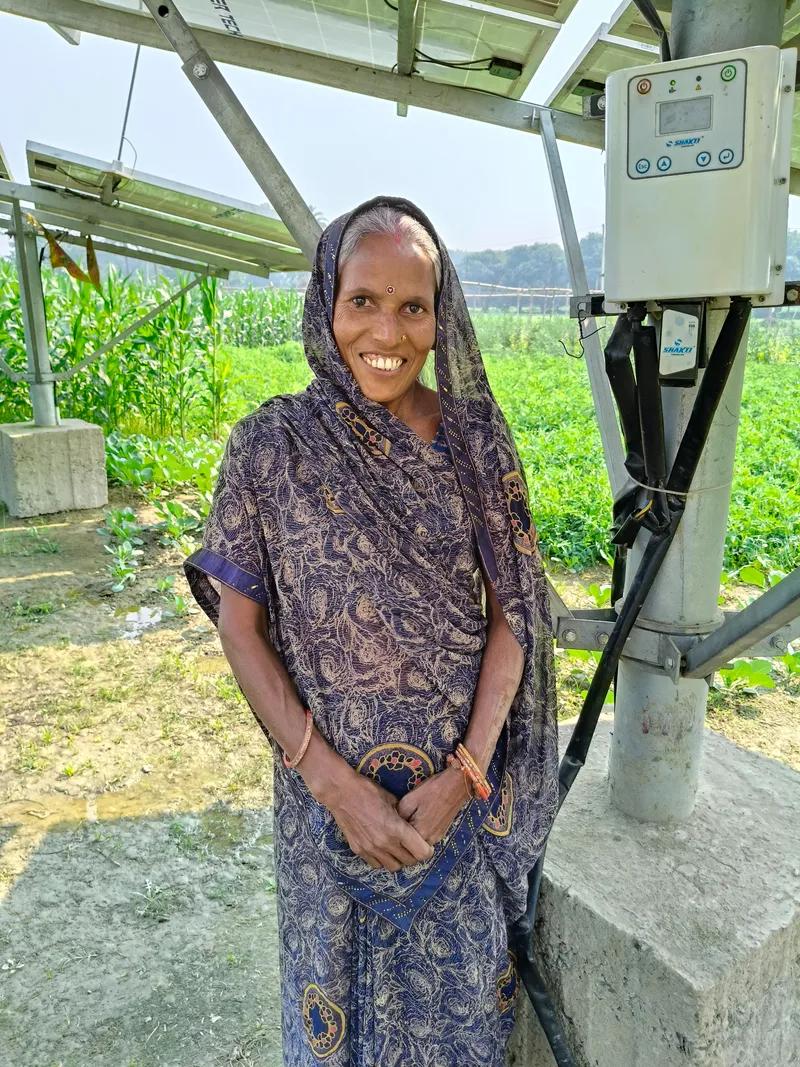
Sita Devi had been part of the Dipak SHG for years. A resident of Mirzapur village in Bochaha block, she first heard of the solar irrigation programme in an SHG meeting.
Her family had always relied on other farmers for water, and often had to wait for their turn. Their crops suffered as a result.
“Yeh sab kaam humse nahin hoga (I won’t be able to do this) was my first reaction. It was technology, money and responsibility. But after I learned more from another solar didi, I was assured,” says Sita.
Also, the belief she had to try something different to bring about change strengthened her resolve.
“It was difficult to organise the funds; I took out loans from the SHG and Range De (a non-profit),” she shares.
In December 2023, the solar irrigation system was installed.
So far, Sita has earned more than 1.5 lakh by providing irrigation services to farmers. She also received a Rs 20,000 prize from Rang De for her efforts.
Becoming a solar entrepreneur has increased her household income and improved family dynamics.
“In the past, my husband made all the decisions. When money started coming in, my husband began to help me more. Now I am empowered to make my own decisions, and we also work together as a team,” says Sita.
Ladli Khatoon
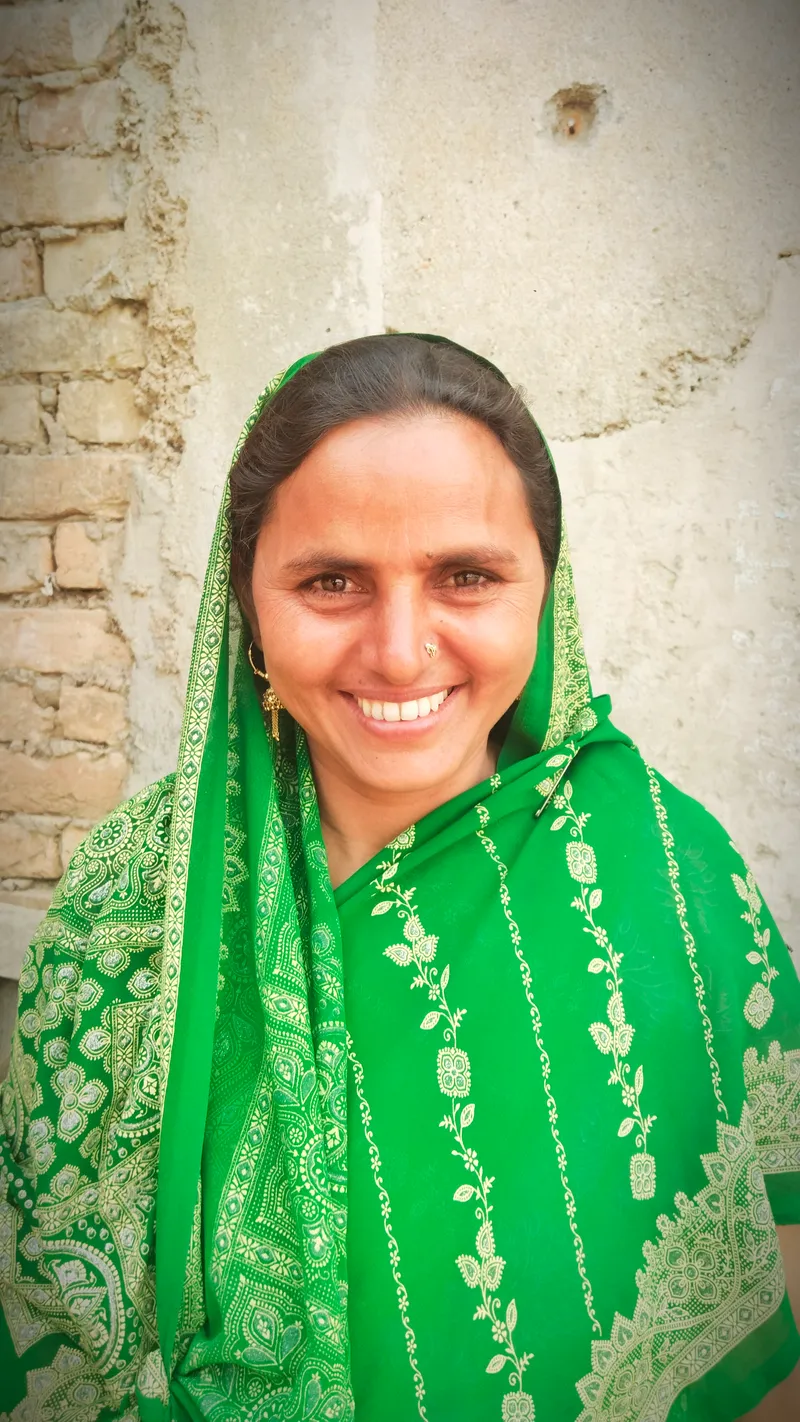
Ladli Khatoon is a solar entrepreneur from Bahwanpur Ghoncha village in Bochaha block. Her husband drove an autorickshaw, and the family of six managed with a meagre income. They also owned 1.5 acres of land.
But life took a turn when their son died of an electric shock while helping with the irrigation of crops in the fields. For Ladli, this incident brought to the fore the risks farmers often face in the fields. What should have been another routine day of work ended in a tragedy the family would have to live with.
A member of the Muskan SHG of the Dharti Mata Village Organisation and the Phoolmala Cluster Level Federation, Ladli learned about the solar initiative in a SHG meeting organised by JEEViKA.
The system cost Rs 4,92,275. Ladli invested Rs 1,79,420, which was a significant sacrifice, as her family’s income was meagre. She also took a loan of Rs 1,25,000 from Rang De.
Currently, Ladli provides irrigation services to 35-38 farmers and has earned one lakh.
“A lot has changed in my life. There used to be financial anxiety because we were entirely reliant on one source of income. I am also learning new things. I didn't know solar energy could be used for irrigation. I am making money now, too. I feel self-assured. I am respected by the villagers,” she says.
Indu Devi
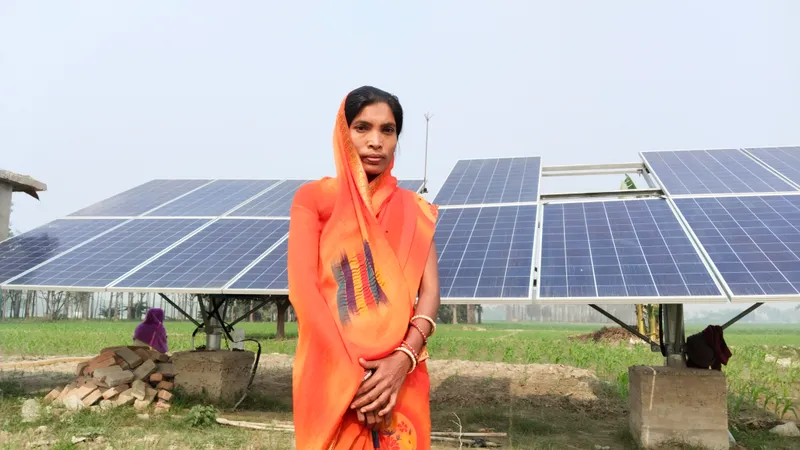
When Indu Devi’s husband passed away, she became the family’s sole breadwinner. The resident of Lohsari village in Bochaha block had four children and found it hard to meet the daily expenses of the household.
Indu opened a grocery shop in the village and joined the Rani SHG. In one of the SHG meetings, she learned about solar irrigation.
“I was initially apprehensive and scared. I kept thinking, “Yeh kaam main kaise karungi (how will I do this work?) My father-in-law supports me, but this work was voluminous. It included arranging the funds, machinery, and so much more,” she recalls.
Then there were others who would remark, “Yeh aurat ka kaam nahi hai (this is not a woman’s work).”
Though this made her uneasy at first, Indu decided to go ahead when she understood that the solar irrigation system was a profitable enterprise.
One thought has stayed with Indu. ‘Agar dusre kar sakte hain, toh main bhi kar sakti hoon (If others can do it, so can I).’
With loans and support from Rang De, the solar irrigation pump was installed on September 23, 2023, marking Indu’s strides as a solar entrepreneur.
She currently provides irrigation services to 12 farmers and has earned more than Rs 1.5 lakh.
“I am more confident now. I used to be hesitant to speak up or voice my opinions. I now manage my work, interact with farmers, and take care of everything myself.
“Since I started this work, my life has been good. I have a source of income, and I can take care of my household. I am also able to take care of my children’s education,” she says.
Edited by Swetha Kannan