



Meet Sollisai Sistahs, an all-female rap crew from Tamil Nadu challenging caste and misogyny
From an eviction in Chennai to Tamil Nadu’s hip-hop scene, Sollisai Sistahs is using rap to question caste, misogyny, inequality, and the issues shaping their communities.

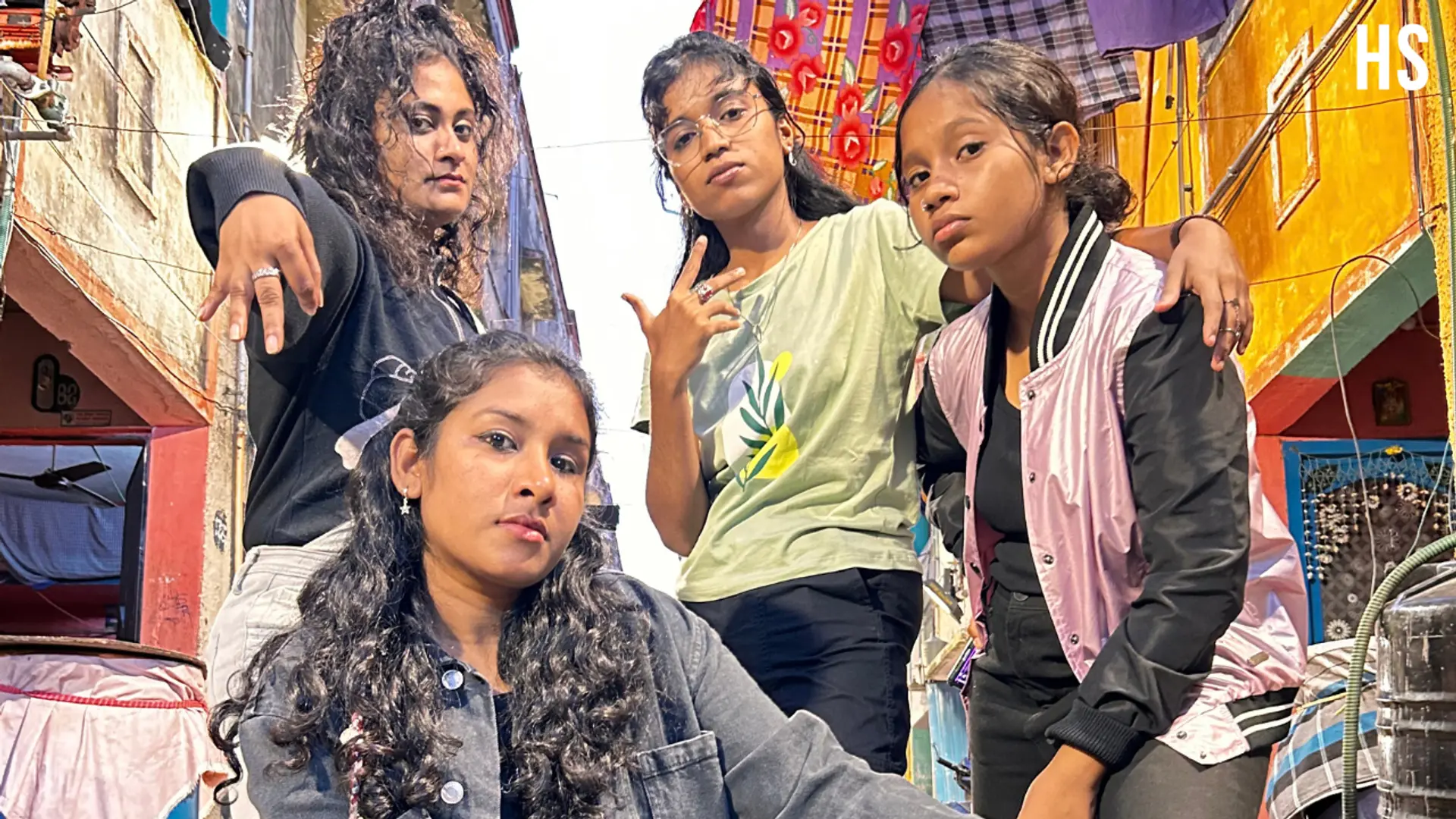

The song that started it all wasn’t written for a stage. It was born out of a tragedy in Chennai.
While filming an eviction in RA Puram, where three generations of people had lived for more than three decades, Abisha witnessed something that would stay with her. One of the residents took his own life rather than leave.
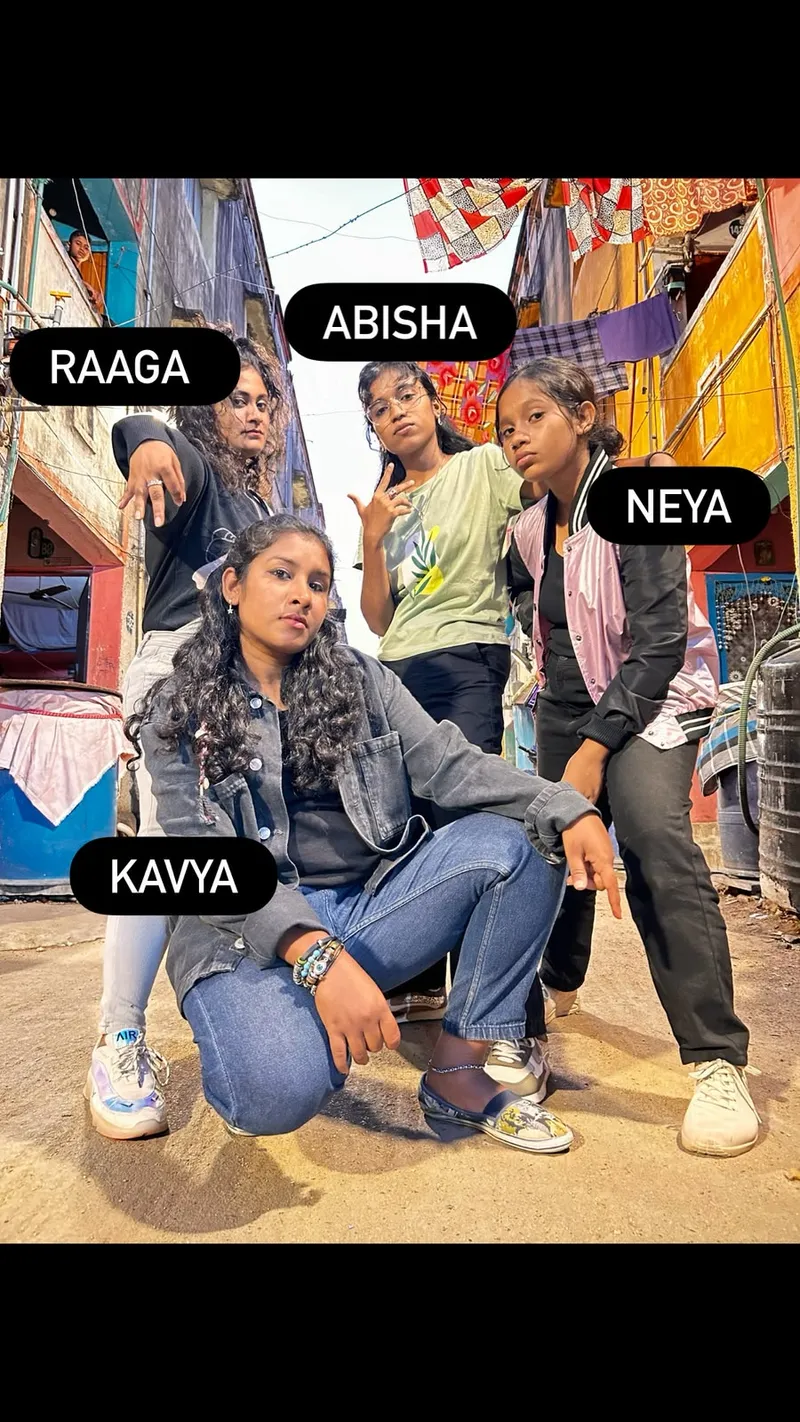
“It was very traumatic, even for me as an outsider. I could feel the pain those people were going through. I'd been seeing these things from behind the lens, but I felt that holding a mic and asking the question directly, facing people, telling them, ‘These are the issues here, why are you still silent?’ felt more powerful than shooting from behind the lens,” she recalls.
She turned that anger and helplessness into a song, marking the beginning of what would become Tamil Nadu’s first all-female rap crew, Sollisai Sistahs.
Growing up in Trichy, Abisha had always been drawn to writing.
Her first major break came with an internship at Neelam Social, a platform under Tamil Director Pa Ranjith’s Neelam Cultural Centre, known as a voice for Dalit rights, Ambedkarite thought, and social justice.
The experience became a learning ground where Abisha was introduced to politics, feminism, and cinematography. Soon, she started filming her own documentaries and doing camera work for other YouTube shows.
It was also here that she was introduced to hip-hop through a collaboration with her colleague Adithya on a music and hip-hop show.
The eviction and its aftermath
After being evicted from the show, Abisha, who performs under the stage name B-Sha, wrote a song and shared it with rapper MD Sheik, asking if he could sing it.
“He told me that hip-hop doesn’t work that way, and you have to spit what you have written. That’s when I started rapping. I felt I was asking people questions directly. I felt connected, and that’s how the journey started,” she says.
She soon started participating in underground movements, hip-hop communities, and cyphers. She saw that women were rarely present and male rappers were often crude.
“The boys who rapped also used very derogatory, slur-filled words. It was disgusting to hear,” she says. At one such cypher, a teenage boy performed a diss track about his ex-girlfriend. Abisha was in the crowd. He noticed her and apologised afterwards.
“If one woman being present could create that kind of impact on a teenage boy, more women in the room would create a bigger impact; those boys would be more careful,” she thought. She wanted to build a crew, and also a space for women coming into hip-hop the way Neelam had been a space for her.
Abisha already knew the other members of Sollisai Sistahs separately before they came together as a crew.
Kavya, who performs as Kavi Chikki, was a journalist documenting marginalised art forms, and the two connected through conversations about their work. Neya came into Abisha’s life through Koogai Thiraipada Iyakkam, a community at Neelam where filmmakers gathered to learn about politics. Neya would come there with her mother, a filmmaker and assistant director. Abisha knew she was interested in music, and when she asked if she wanted to rap with them, Neya was eager.
Abisha had connected with Suwathi (stage name: Raaga Kaatralai) through Instagram. The opportunity to bring them together came through Marghazhiyil Makkalisai, an annual event at Neelam. There, Sollisai Sistahs came together as a crew.
Choosing the fights worth writing
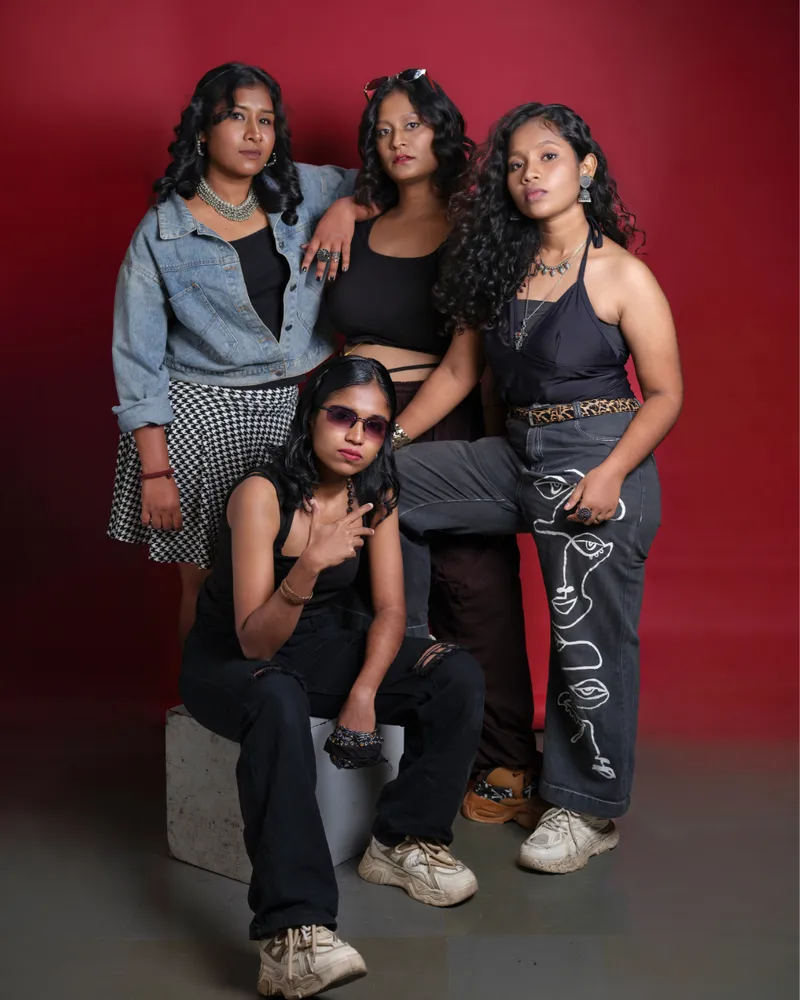
Kavya grew up around Kannada art forms and studied Kannada literature, while also following Tamil traditional art forms and gaana. Without formal music training, she found her rhythm through beatboxing for rappers.
After meeting Abisha, she began travelling between Bengaluru and Chennai, and worked on a documentary about gaana, learning about its artists and the form's social and emotional roots. When she joined Abisha’s team, they began writing, practising and performing together.
“Music, rhythms and trends shift with each generation, but the message and content carried through lyrics stay important,” Kavya says.
For Kavya, music is also activism.
“Personally, it's hard for me to separate being a musician from being an activist. I use music as an activism tool,” she says.
This has at times led to censorship. At a Tamil Nadu festival, the group was asked to avoid using the Tamil word for menstruation in one of its songs.
“We thought we'd broken the taboo around menstruation, but there are people who still silence and censor a lot of things,” she says.
At the same time, the group has to navigate the realities of making a living from music. “In the commercial world, we also have to survive and make a living. Musicians are born through that process, I feel,” Kavya says.
Inside the songs
Sollisai Sistahs raps on diverse subjects ranging from caste, misogyny, period leave, honour killings, and now recently, climate change. “We write about what impacts us; we write about what connects with us,” Abisha explains.
Highya Highya centres on sisterhood and challenges misogyny. Kaadhal Pannaa explores contemporary love and inclusivity. In their live performances, the group combines traditional folk instruments such as the Parai with street rap, using the form to address caste and institutional inequalities.
Their recent track, Veppa Marathadiyila, is a Tamil-Kannada folk-rap fusion that explores urban heat, water scarcity, and climate injustice in Bengaluru. It is the group’s fifth single from the Climate Emergency Mixtape produced by Youth Ki Awaaz.
At first, Abisha did not see climate change as an issue that concerned her. She associated it with elite politics, until an interview for a documentary introduced her to how disproportionately climate change affects marginalised and minority communities.
For Kavya, the Kannada verse focuses specifically on Bengaluru’s transformation.
“With the Bangalore situation, I wanted to bring in how the city is contributing to the larger global crisis, so I wrote the Kannada verse about the city's real-estate boom and the disappearance of its lakes,” she says.
Dealing with criticism
Abisha talks of a sad reality where even within hip-hop communities, they are criticised, saying they get shows only because they are women. At first, it hurt, but after a point she realised women will always be judged for whatever they do. Once that set in, she stopped caring much.
Has the hip-hop scene changed since they started performing?
Abisha says the slut-shaming and victim-blaming language in the songs hasn’t stopped entirely, but it’s being acknowledged. “People are becoming more careful about what they write because we know we will question them,” she says.
Kavya shares that young girls come up to them and say they are inspired.
“They want to do this too but don't know how. Just planting that thought in them is a change. And that makes us really happy, because we've made someone think they can do this too,” she says.
What's still missing from the conversation
For Kavya, some of the challenges facing women artists are basic. Women are sometimes invited to shows to help draw crowds but given little time to perform. Even basic facilities such as a place to change or a proper toilet are not always guaranteed.
“Some more established names get luxurious treatment, but the rest of us sometimes can't even find a place to get ready. The same gaps that existed in the past still exist today,” she says.
Abisha points to another gap: representation.
“Most songs still only feature women who fit conventional beauty standards,” she says. Despite their efforts to challenge those standards, she says, brown- and dark-skinned women remain largely absent from music screens.
She also wants greater attention on girls in rural India. “Village girls are often glorified for being ‘innocent’, but what should actually be discussed is that they still don't have access to freedom, or even simple things,” she adds.
The group's next goal is to widen that space.
“We want more female rappers and more queer artists in the community,” Abisha says. She admits that they have lost trust in the wider hip-hop community because they still give space to misogynists and sexual predators.
Sollisai Sistahs wants to build a safer community for women. The group also wants to take its music beyond India and perform on larger international stages.
“People won't really listen to what we are saying now until we get that recognition. Only then will they start listening to us,” Abisha points out.
Edited by Megha Reddy