



How this woman entrepreneur is boosting tribal forest incomes in Jharkhand, Chhattisgarh
The Open Field, founded by Dr Manisha Oraon, Kumar Abhishek and Prateek Toppo, combines traditional knowledge, technology and markets to reshape how forest produce reaches consumers.

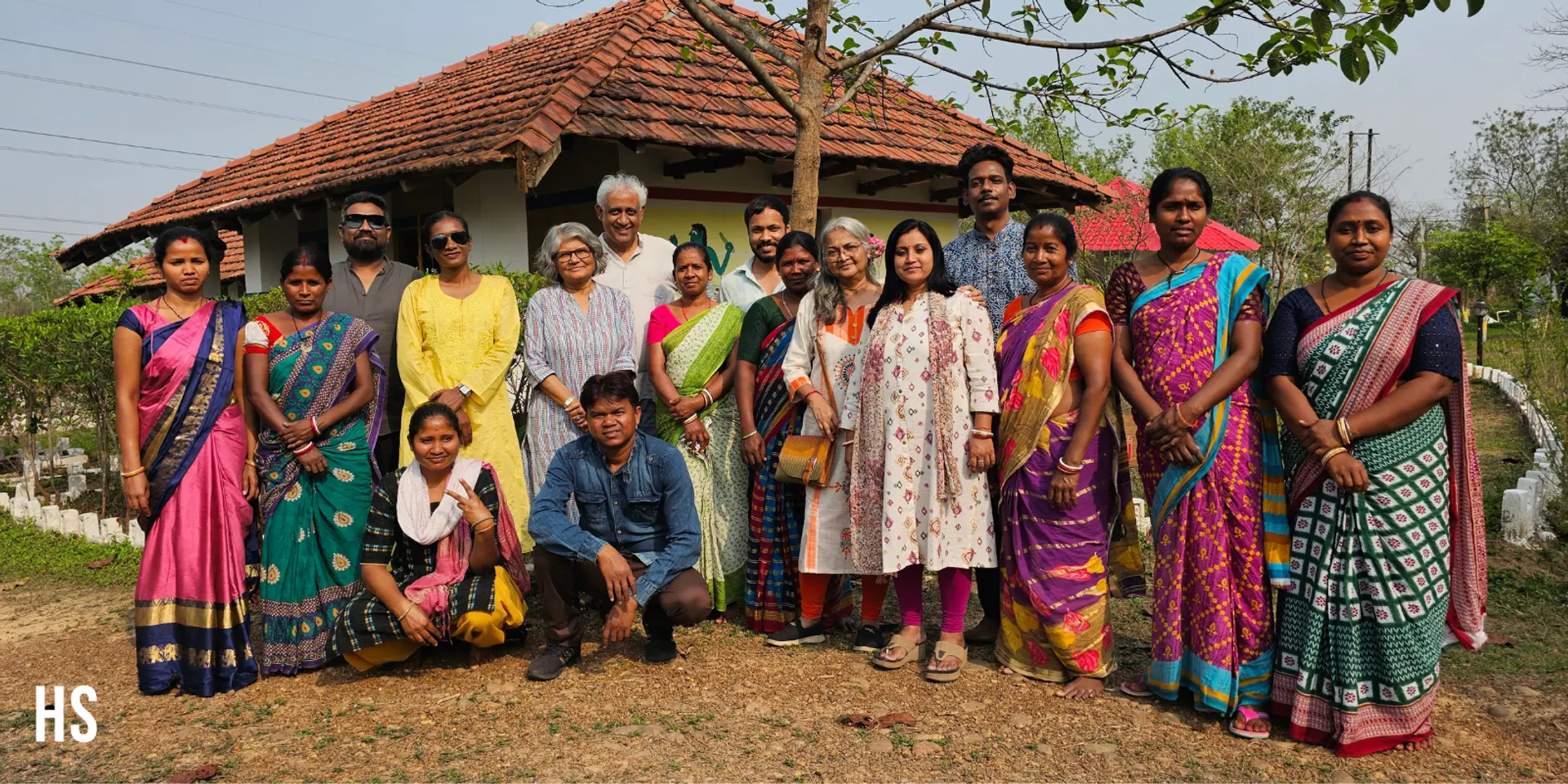

Trained as a dental surgeon, Dr Manisha Oraon chose to offer quality dental healthcare at rural centres instead of pursuing a conventional urban practice.
Through the Paroksha Foundation, which she started in 2016, Manisha travelled to “hardest-to-reach places,” from the remote parts of Kashmir and Ladakh to the jungles of Jharkhand, running small rural health camps alongside agricultural health camps.
Dentistry brought her closer to communities and opened her eyes to everything around healthcare, and eventually, to land, livelihood, and the market.
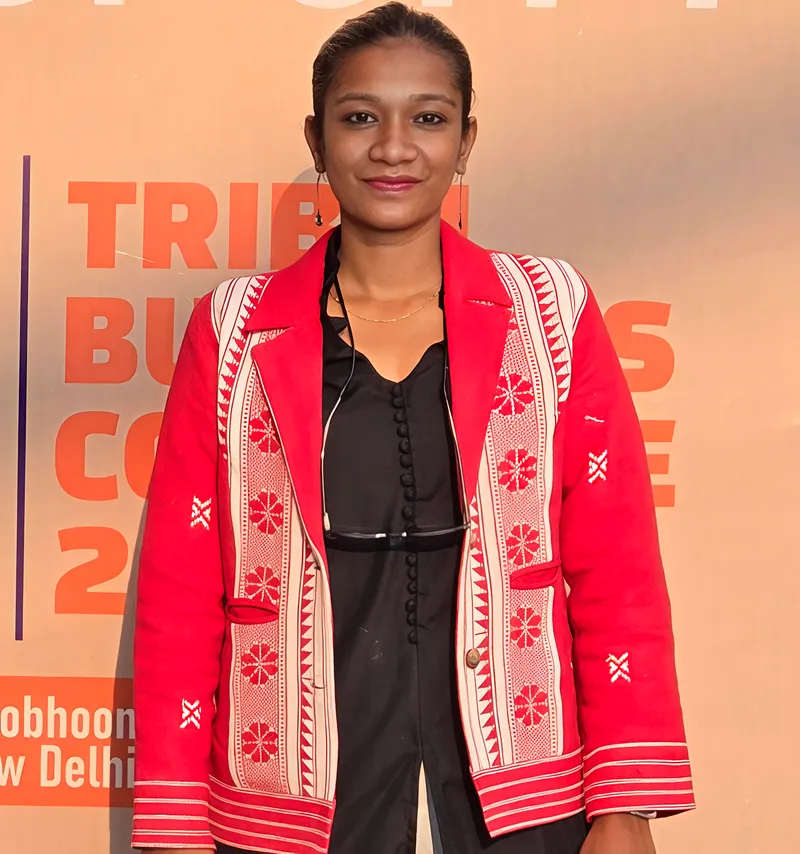
Dr Manisha Oroan
A woman from a tribal community, Manisha began to see land differently from how her training had taught her to.
In 2018, that realisation pulled her back to her ancestral land in Khunti, about 25 kilometres from Ranchi, where she and Kumar Abhishek, now her co-founder at The Open Field, tried their first real business experiment: a poly house, cash-cropping roses.
It failed badly. But the roses took them from horticulture into farming, and deeper into understanding indigenous food systems.
They decided to start The Open Field in 2023 to build physical, digital and market infrastructure for the forest economy. The organisation works with tribal and forest-dependent communities to help them get a fairer share of the value from forest produce.
“We discovered that Jharkhand's forests were rich in ingredients, but the communities working closely with us weren't visible in the market. Why weren't they, despite being closest to the resource, receiving even a small share of the final value?” Manisha explains.
Mahua is the clearest example she gives. It's a produce that "sustainably falls" — you don't harvest it off the tree, you collect it off the ground — which means there's no clean point in the existing system for grading, drying, or processing it near where it's collected. (Mahua seeds are used to extract oil and the flower is used as a natural sweetener)
What follows is a familiar rural economics story: post-harvest loss, weak price discovery, barter instead of cash and a cycle of seasonal distress selling to intermediaries who control the only price information the collectors have.
On the buyer’s side, it's a different version of the same problem — inconsistent volumes, no quality assurance, limited traceability, because sourcing is fragmented across scattered forest clusters.
The Ranchi-based Open Field’s operations cut across different layers of the forest economy.
“We are placing decentralised micro-processing units across the forest — that's the infrastructure. The intelligence layer is the forest operating system we are building on data and traceability. And the third piece is the buyer-linked market system we are building around this tech and these decentralised units. Our goal is to make forest produce more valuable, reliable, and traceable, while enabling communities to participate meaningfully in the value chain,” Manisha adds.
The Ayan Hub
At the centre is the Ayan Hub—primary decentralised processing units that feature a solar dehydrator with sensors and function as a data collection point. It turns a drying process that used to happen on stones and roadsides into the first data point in a formal supply chain.
The hubs are portable as forest regulations largely prohibit permanent concrete structures. The units, refined with help from IIT Kharagpur and now headed toward a patent, are built to be dropped into a cluster, tested for a month or two, and adjusted based on how well a community adopts them. Today, women's self-help groups and the micro-entrepreneurs The Open Field has trained at the local level mostly run them.
Above the hubs is what Manisha calls the Forest OS, a layer of apps for field coordinators and farmers that turns individual trees into visible, trackable assets. A farmer with 10 trees producing 100–200 kg of Mahua or tamarind each now has a record of that capacity as market information the farmer previously had no way to hold onto or negotiate with.
Bridging a gap
The Open Field currently works directly with 278 farmers and has engaged more than 4,500 forest producers across Jharkhand and Chhattisgarh through its projects and partnerships. It has created 75 local micro-entrepreneurs in collection, processing, and market linkage. On the digital side, it has mapped more than 500 forest trees across roughly 200 hectares. Its team has grown from the founders to a core team of 11 people, supporting the field coordinators.
“On the buyer side, one of our key segments is HoReCa. We tapped into the chef community first. We've organised chef expeditions in Jharkhand, since its food hasn't really been shared with the world. There are 32 tribal communities here, and while our languages have been documented to some extent, our food largely hasn't been,” says Manisha.
During one of the first "chef expeditions" she organised in the forests of Jharkhand, a well-known chef bent down, picked a wine-red pod off the ground, and asked her farmers if they knew what it was. It was Roselle, a tart, hibiscus-like fruit that grows wild across the region. They sold it for Rs 30–40 a kilo. In Delhi, the same produce was going for Rs 3,000 a kilo.
“That gap, from Ranchi to Delhi, is huge — and when we communicate it directly to farmers, it builds real confidence and buy-in for the project,” Manisha adds.
The Open Field runs multiple connected revenue streams across the entire value chain. It earns from selling processed, value-added forest produce to B2B buyers, including HoReCa businesses and institutions. It also deploys Ayan Hubs and the surrounding value chain—processing, training, and implementation with institutions like Hindalco and other CSR partners —and works with several CSOs on the ground to help scale farmer incomes. Hindalco has recently adopted Forest OS.
Its marketing arm uses food and storytelling to create a market for forest produce. Last year, The Open Field organised a tribal food show at the IIFA Awards—the first of its kind in India—bringing forest ingredients to fine-dining experiences through collaborations with chefs. The format has since expanded to weddings and other events. It was one of the organisation’s first revenue streams when it started and still generates revenue today.
The other co-founders, Kumar and Prateek Toppo, lead key aspects of the venture: Kumar oversees strategy, business development, market relationships, and partnerships, while Prateek handles operations, technology development, manufacturing, and infrastructure deployment.
Women at the forefront
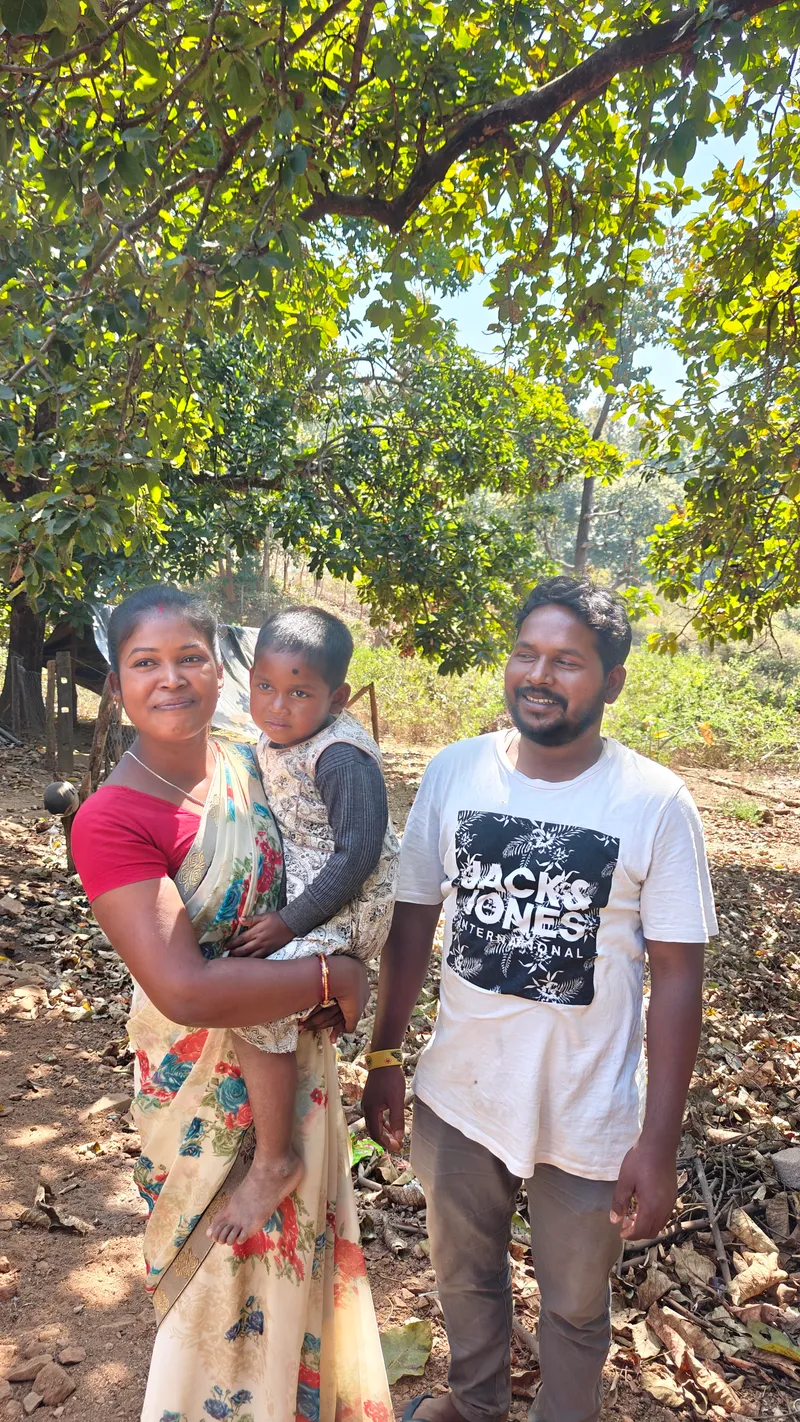
Suman Khandulna with her family
Most of The Open Field’s farmers come from the community, with women largely leading the efforts.
Manisha tells the story of Suman Khandulna, a mother of two in Rania in Kunti district, Jharkhand, who manages her household's agricultural work and her in-laws' land.
When The Open Field began its sensitisation work in the area, Suman had around 150 mango trees, but much of the produce either went unsold or was given away to relatives when it failed to sell by the roadside.
With improved processing, quality handling, and stronger market linkages, Suman can now earn better revenue from the same forest resources.
For Manisha, the story also reflects something much larger. Migration has long been a challenge in Jharkhand and Chhattisgarh, leaving women to manage the land, household finances and their children's education.
“Women have definitely led the change; they have owned it. They were already doing this work before we came along. We've just introduced a few changes that help increase their income,” she says.
Challenges and way forward
For Manisha, the challenges were both structural and personal. The first was helping tribal communities recognise land and trees as valuable assets, challenging the belief that the only way to earn is to leave.
Another challenge was building and financing a business from scratch. Tribal land cannot be used as collateral under Jharkhand’s CNT laws, while loans are limited to four years and 11 months, which made scaling difficult.
Perception was also a challenge. “People look at you as a ‘tribal entrepreneur’, not just an entrepreneur,” she says.
The Open Field’s association with TechnoServe’s Greenr Sustainability Accelerator helped the venture strengthen its business model and communicate its impact more effectively. Manisha says the programme helped the team understand unit economics, scalability and how to present an impact-led business beyond just the numbers.
The Open Field has already validated its model in Chhattisgarh and is running a pilot under IFAD’s Moonshots for Development competition.
The immediate focus is to deepen its cluster model, which has already shown traction. The longer-term ambition is to build The Open Field into an intelligence and infrastructure company for the forest economy, connecting forest assets, producer data, processing capacity and buyer demand.
Edited by Affirunisa Kankudti