



From selling posters in Delhi’s footpaths to building a gifting empire: 46 years of Archies
Starting with a single store in New Delhi, Archies has expanded its footprint across continents with its export business. But its greatest legacy continues to be teaching generations how to express emotions through gifting.


Before Instagram reels and WhatsApp forward wishes became the norm, millennials had greeting cards and slam books—where our school memories and emotions growing up were shared, cherished, and carefully tucked away.
Crushes were wooed with heart-shaped chocolates or even coffee mugs, if one managed to save enough pocket money. For millennials, at the heart of all these exchanges, emotions, and memories was one brand—Archies.
For over four decades, from cards for every occasion to iconic stationery and gift packages, Archies grew into a beloved Indian brand that defined how Indians celebrated their emotions.
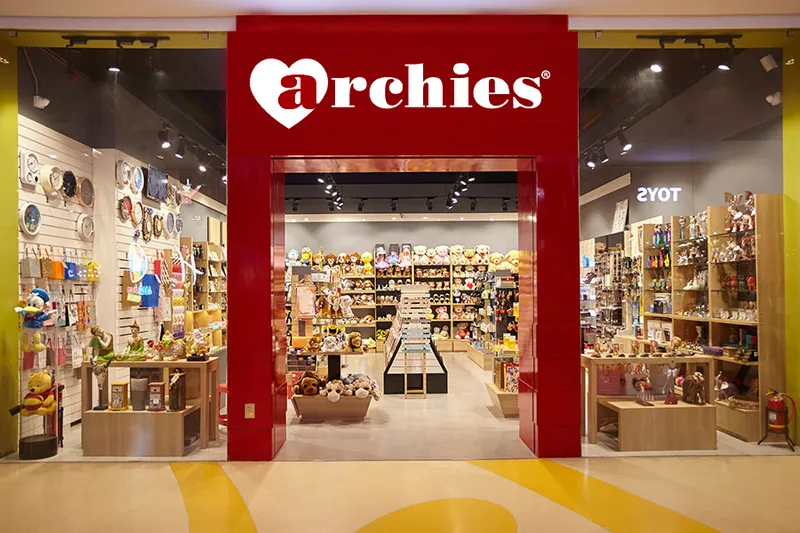
An Archies store
What started with a single poster on the footpaths of Delhi’s Connaught Place has grown into a gifting powerhouse, adapting to changing consumer trends and preferences, retail challenges, and now expanding into global markets.
According to Archies, its total income from operations for FY25 stood at Rs 69.70 crore. It is now looking at scaling global operations, with a focus on cultural offerings.
Humble beginnings
Archies’ story begins in 1979 in Delhi, stemming from Anil Moolchandani’s fascination with English pop culture and Hollywood films.
In a conversation with SMBStory, Varun Moolchandani, second-generation entrepreneur of the Archies family, recalls, “Dad was very passionate about English songs: ABBA, Michael Langston, Cliff Richards… and loved Bruce Lee movies. He took printouts of Enter The Dragon posters and started selling those in CP’s footpaths… everything sold out immediately.”

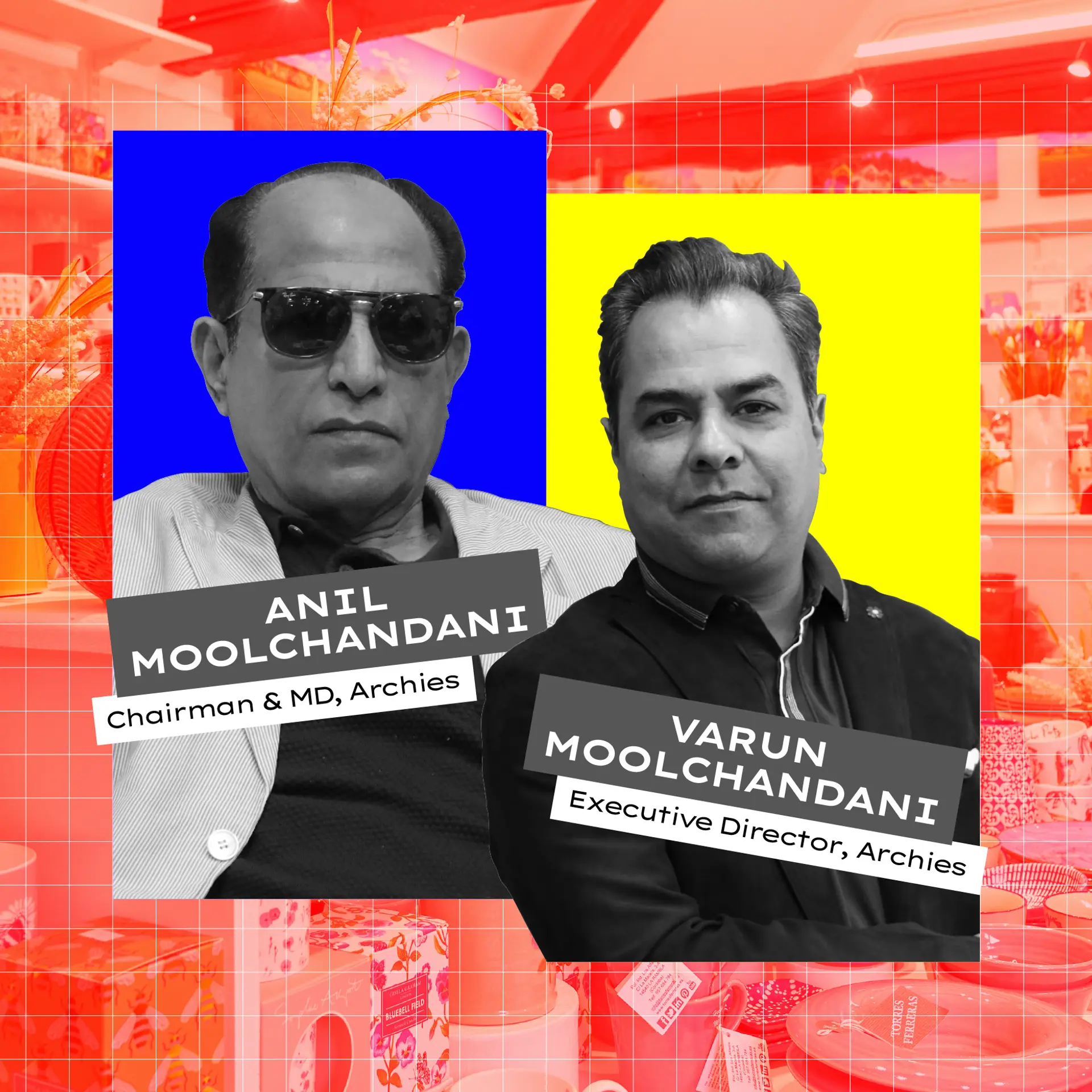
Varun and Anil Moolchandani (L-R)

House of Bindu, started by an auto-rickshaw-driver-turned-entrepreneur, is now a Rs 570-crore FMCG brand
This early success led to the creation of songbooks with lyrics, a novelty in the late 70s, which were met with huge success.
Eventually, in 1981-82, the senior Moolchandani borrowed Rs 5,000 from a relative to set up a small shop in Delhi’s Kamla Nagar, and scaled production; this time, also selling greeting cards besides posters and songbooks. The first store was called Archies Gallery.
The name ‘Archies’ was inspired by the globally popular Archie Comics. “The name was good; it was catchy. Mom and Dad liked it; it sounded international!” Varun explains.
Soon, orders began coming from places like Mumbai, Kolkata, and Punjab. By the early 80s, Archies had evolved into a brand dedicated to greeting cards and stationery, with its first store catering to the Delhi University crowd.
Growth phase
The 90s marked a period of aggressive expansion. Archies introduced the franchise model—one of the first in India—growing to over 300 franchises and more than 100 company-owned stores by the end of the decade.
According to Varun, peak operations saw 245 stores and about 1,900 employees across India, making Archies a household name in gifting.

Archies' Manesar facility
Although initially hesitant, he joined the family business in 1999 to launch Archies’ perfume line, aligning with the brand’s philosophy of gifting. “Gradually, perfumes entered the shops, then franchises. To date, 25-26 years later, our perfumes are selling and rocking.”
Soon, Archies was in malls with franchise and brand-owned stores, and the business was growing exponentially, until COVID-19 hit.
Navigating challenges
COVID-19 was a critical juncture for Archies. “High rentals, especially fixed costs, made malls a risky proposition during the pandemic… We realised that we had put all our eggs in one basket by being an offline player,” Varun says, adding that it pushed the company to go the digital way.
Once things started normalising, he focused on building an online website and hired a professional team to run it. Simultaneously, he also set up Archies’ export business and started manufacturing and exporting paper bags for high-end American and European brands. The company set up a 3 lakh sq ft facility in Manesar, Gurugram, to cater to the rising export demand.
Archies also opened 16 new stores, pivoting from malls to high streets, which offered lower rents, better accessibility, and higher walk-in traffic, enabling the company to capture significant local demand. “High street locations, being more economical with flexible lease terms, became the focus,” he says.
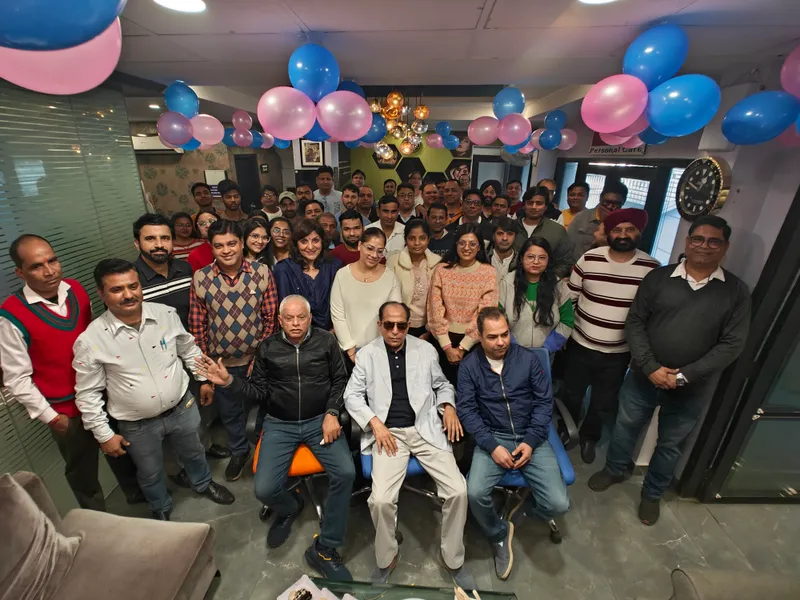
The team at Archies
In 2022, Archies also jumped on the quick commerce platforms—a game-changing moment for the brand.
Varun says, “The response and demand were phenomenal… Quick commerce players wanted 25 lakh wrapping sheets and two lakh greeting cards at a time. They took us pan-India, and Archies products were delivered within 10 minutes; it was unimaginable.”
In the last three years, the brand also signed up with BigBasket, Myntra, and FnP, among other ecommerce platforms.
While offline channels continue to contribute around 90% of sales, ecommerce and quick commerce account for 5-7% of its total revenue. “We have set clear growth targets, aiming for online channels to contribute 15-25% of the revenue in the near future,” Varun says.
Staying relevant
Over the years, Archies has diversified its portfolio to include stationery, gift boxes, soft toys, mugs, chocolates, perfumes, and lifestyle accessories. “In Tier II and III cities, soft toys contribute around 8% of revenue, while mugs account for 6%,” Varun reveals.
The corporate gifting segment, operational since 2007–08 via the Giftworks brand, contributes about 5-7% of sales, serving clients with bulk orders during festive seasons.
In order to stay relevant with changing trends, Archies is building a personalised product category, designed specifically for millennials and GenZ consumers. “This segment focuses on trendy, customisable gifts that allow people to add a personal touch—whether it’s names, dates, photos, or quirky inside jokes.”
Going global
Archies’ global strategy is anchored in emotional relevance and diaspora demand. The Middle East, Sri Lanka, the US, and Canada are key markets, where large Indian and South Asian communities celebrate occasions, including Raksha Bandhan, Diwali, Karva Chauth, Valentine’s Day, and Christmas.
In the US and Canada, the brand has introduced products for Thanksgiving, multicultural weddings, and Christmas, complementing traditional South Asian festivals. This approach ensures authenticity while broadening appeal beyond the diaspora.
In the Middle East, Archies products are distributed through partners to retail stores, supermarkets such as Carrefour and Lulu, and speciality outlets. Sri Lanka, on the other hand, has franchisee partner stores in malls and hypermarkets.
Archies’ export business, including paper bags and carry bags, accounts for roughly 25–30% of its revenue.
“We started exports around 2020–21… While it’s not the majority, it has become a significant growth lever alongside our domestic operations,” Varun says.
Archies’ revenue model is multi-faceted. While offline stores remain the backbone, ecommerce and quick commerce supplement growth, and exports provide global leverage.
Across categories, greeting cards are still its best-seller, but gift and lifestyle products have emerged as key revenue drivers. The company anticipates 8–12% growth this fiscal year, with plans to open 18–21 new stores, focusing initially on North India before expanding further.
“GST 2.0 and improving market sentiments are expected to boost consumption, particularly during festive seasons and weddings,” Varun says.
Technology, including its revamped mobile-first platform, personalised gifting journeys, and integrated inventory management, is central to Archies’ post-pandemic agility.
“Our greatest legacy is teaching generations of Indians how to express emotions through gifting. It’s about saying ‘I love you,’ ‘I miss you,’ or ‘Congratulations’ in ways that are personal and meaningful,” Varun says.
Looking ahead, Archies plans to expand product categories, enhance digital experiences, and scale its global footprint. With ongoing discussions for external funding, the company is poised to grow while retaining its core ethos: creating emotional connections—whether in Delhi, Dubai, Colombo, or Toronto.
Edited by Suman Singh