



How India Sweet House is competing with traditional mithai brands by building a 50-store business
Bengaluru-based India Sweet House is growing 100% YoY and is eyeing an IPO in 2026.


Long before modern cafes, patisseries, and ‘Instagrammable’ dessert bars took over India’s food streets, mithai was the country’s original language of celebration.
For its cultural significance, the mithai industry remained largely traditional, dominated by family-run shops, guarded family recipes, and hyperlocal businesses. Today, a new-age brand is scaling exponentially and bringing a shift in the otherwise traditional segment.
Only four years into business, Bengaluru-based India Sweet House (ISH) has already scaled to 50 stores, generating Rs 80.5 crore in revenue, up from Rs 47 crore in FY24. After doubling its revenue year after year, India Sweet House is now ambitious about going public.
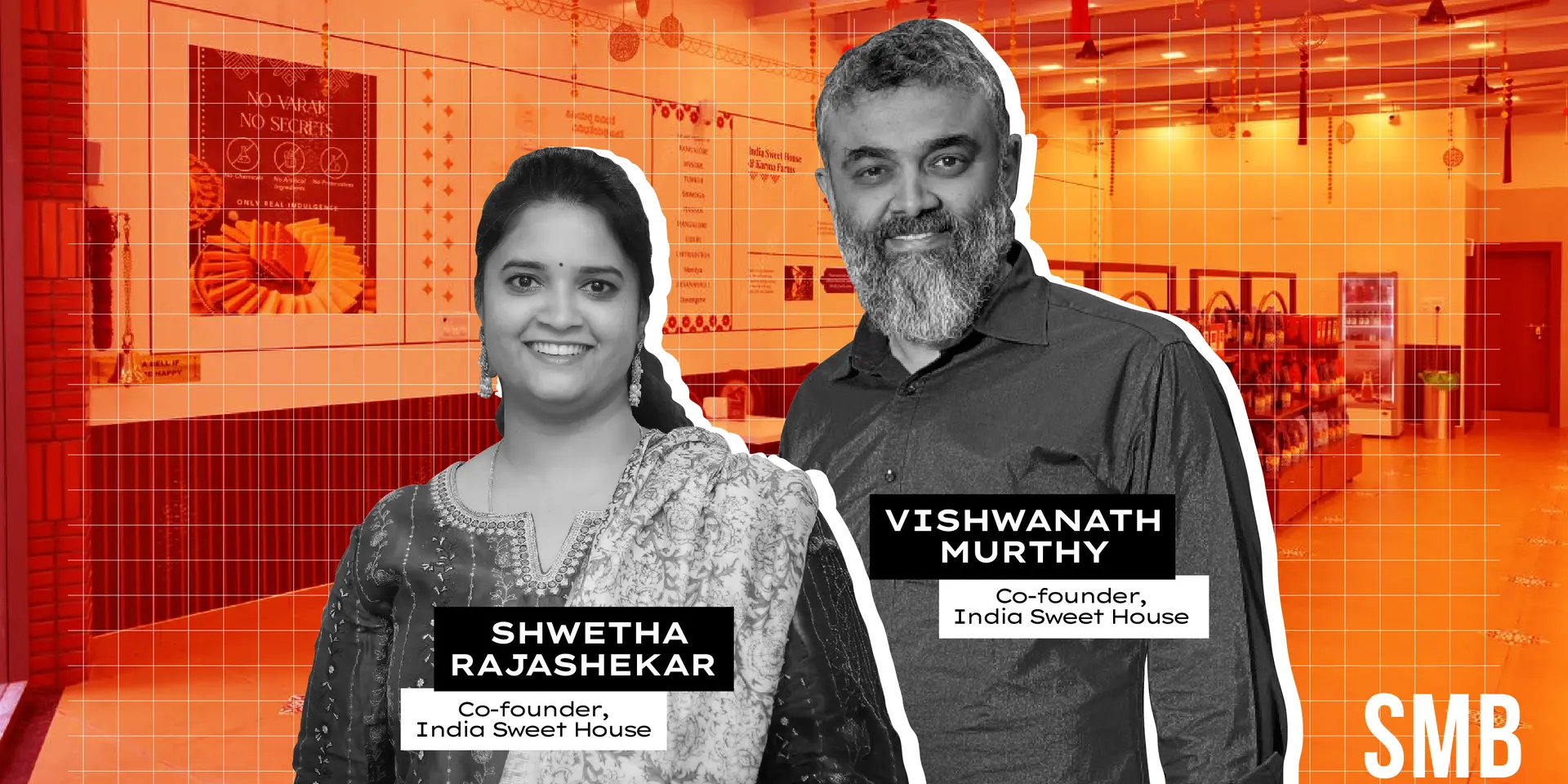
“We will be expanding to the neighbouring states next year, and work is underway to become an IPO listed company in 2026,” says Co-founder Shwetha Rajashekar during a conversation with SMBStory. “When this happens, we will be the first sweets brand in the country to get listed.”
This rapid scale-up, Rajshekar says, comes from the simple idea of making high-quality Indian sweets accessible to customers while offering a modern, experience-driven store format.
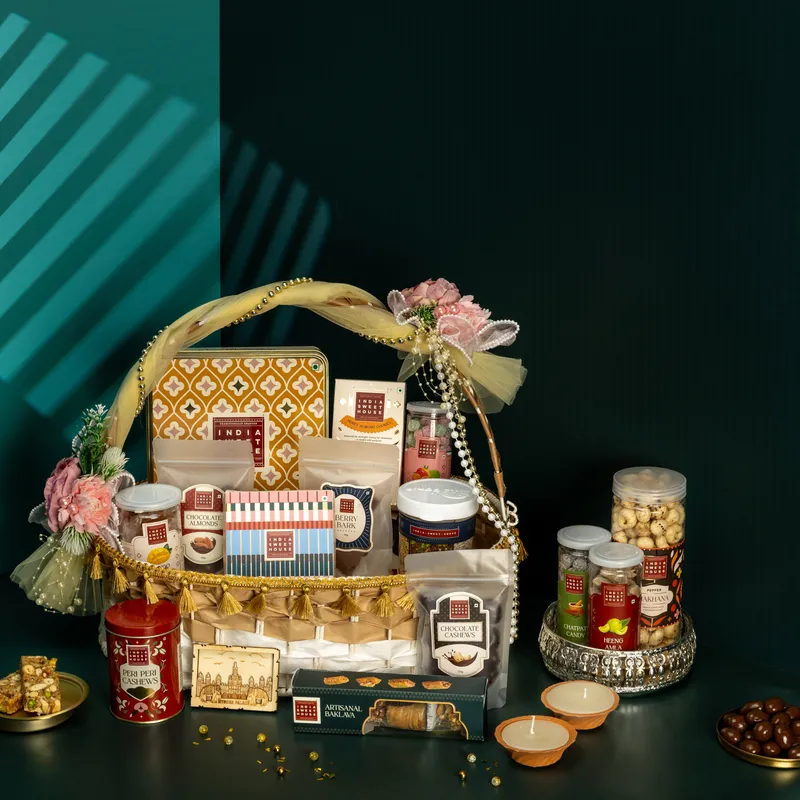
Festive hamper by India Sweet House
A chance beginning
ISH’s origin story began around 2015-16, when Rajshekar was transitioning out of a decade-long corporate career, and her husband and co-founder, Vishwanath Murthy, was running his own business.
Together, they decided to pursue organic farming, which came with 100 cows and an abundant supply of milk. From their 20-acre farm in Bengaluru, the duo bottled the extra milk, made paneer and ghee, and retailed it under the label of ‘Karma Farms’, building a B2C and B2B supply chain.
However, the pandemic changed everything.
“We approached one of the brands we were supplying to, and during that discussion, the idea emerged: instead of only supplying milk, why not build something of our own?” Rajshekar recalls.
With their B2C milk business struggling—largely due to the logistical challenge of returning glass bottles during the COVID pandemic—the duo began experimenting with sweets. ISH started as an online-first brand on BigBasket, Metro Cash and Carry, and SPAR India, among other platforms.
Finding the ‘sweet’ spot
By 2021, with an initial investment of Rs 3 crore, ISH officially registered itself and opened its first physical outlet in Bengaluru’s cultural heart, Malleswaram.
But entering a category dominated by legacy brands, such as Anand Sweets, Kanti Sweets, Asha Sweets, and Haldiram’s, was no small feat. “The early challenges included the blaring fact that we were entering a segment and business usually run by ‘mithai families’ or long-known and standing brands. New brands were not in their consideration set at all,” says Rajshekar.
The founders decided to focus on three things: natural ingredients, standardised and quick expansion, and a differentiated consumer experience.
“Being a first mover in advertising opportunities, podcasts, and being awarded for what we do, credibility, and top of mind were built with customers,” she says.
ISH also realised that the Bengaluru market was polarised. On one side were the affordable bakery-style chains, and on the other, the ultra-premium mithai brands. “The premium mass market was left open,” says Rajshekar. “There existed low-cost, bargain prices, sweet specialists, and premium brands… but nothing in between.”
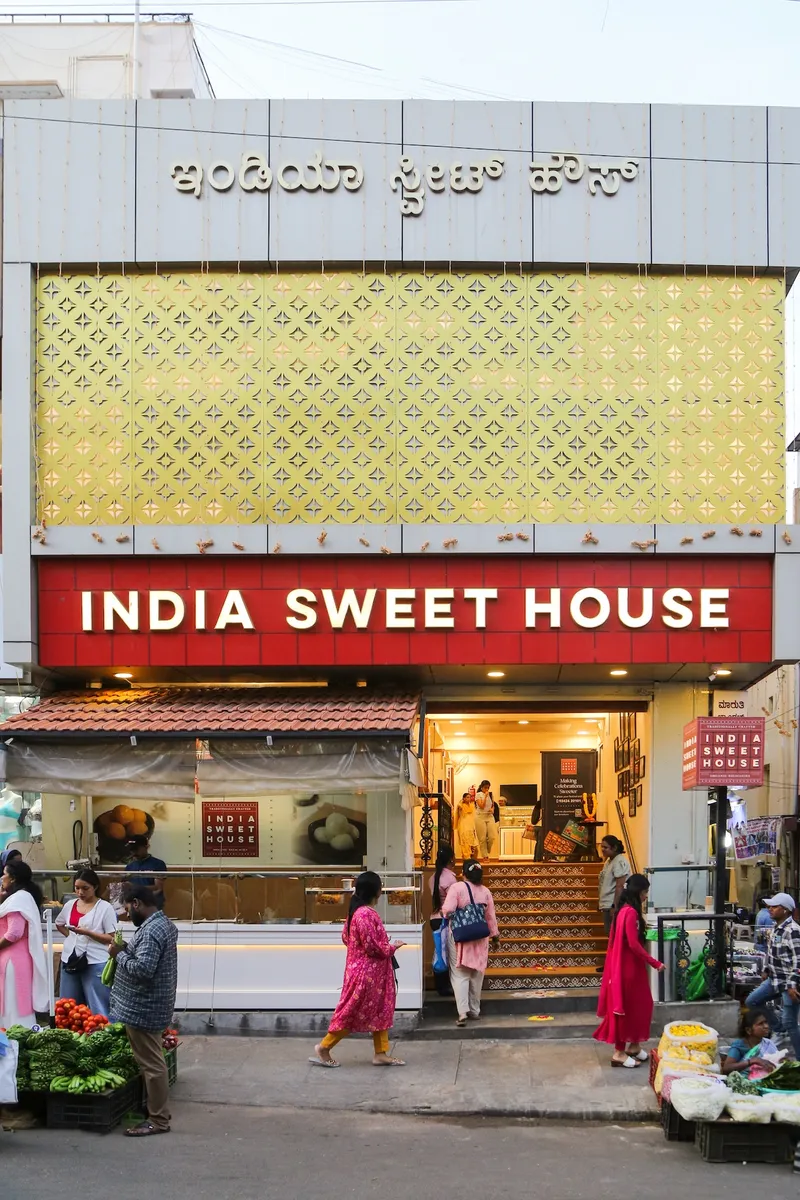
An India Sweet House store
The brand positioned itself in this middle ground. Its stores offer curated seating, a menu that pairs sweets with fresh chaat and savouries, and an ambience to encourage lingering rather than rushing. “Come in, pick a box of sweets, try it, still have a seat, order a chaat, watch things get made fresh… We aimed to be a friendly hangout,” she adds.
Although sweets remain the core of ISH’s identity, savouries, including chaats, local snacks like murukku, chips, Imli mithai, jeera cookies, and millet-based cookies, have been part of the product portfolio since day one. These often act as entry-point categories for newer customers.
A rasagulla or gulab jamun costs Rs 40 per piece, while barfis range between Rs 680 and Rs 1,600 per kilogram. “We do not use warak (silver foil) or artificial colours.”
Scaling the brand
Today, ISH employs a 900-member workforce. Its central production unit operates from Kamakshipalya in western Bengaluru, a shift from the founders’ original farm kitchen in Nelamangala, where milk once went directly from the automated milking machines into the sweet-making process.
As demand rose, ISH began sourcing milk from local farmers, onboarding only those who follow the company’s ethical and quality standards. “While government collection centres pay around Rs 35 per litre, we pay them more because they follow our farming practices. This model also helps local farmers sustain their operations,” she adds.
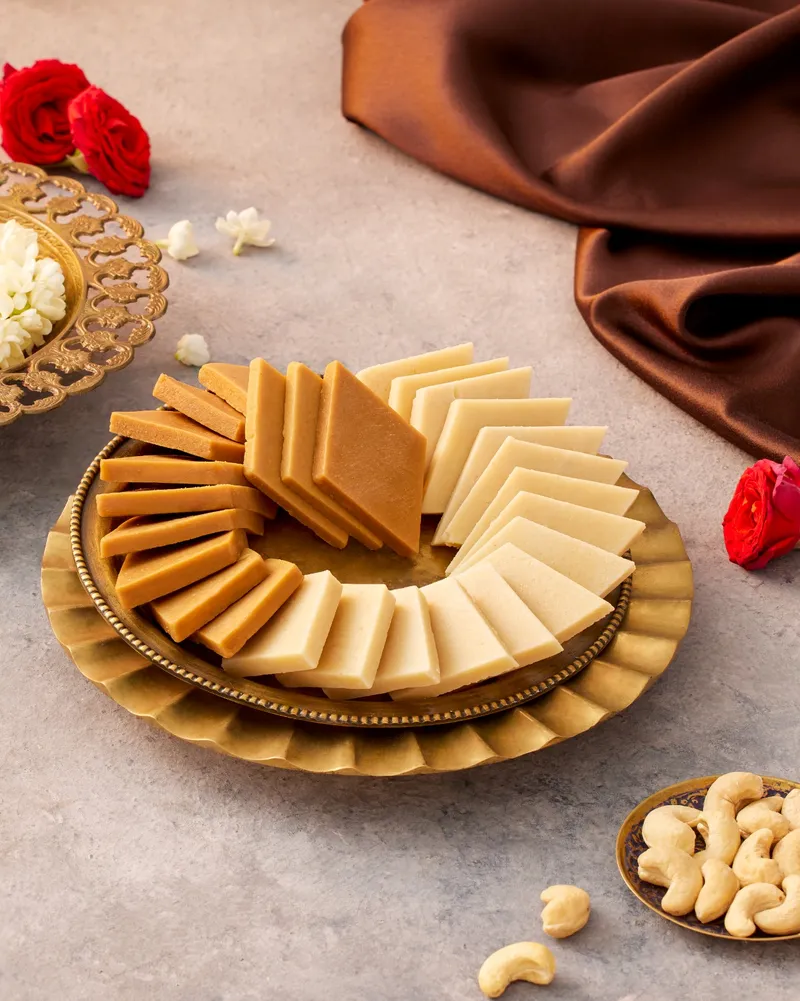
Kaju katli, a bestseller by India Sweet House
To further strengthen its supply chain, ISH is developing an ‘ISH-approved’ supplier certification to ensure consistent standards across hundreds of ingredients.
ISH’s backend is fully tech-enabled, starting from procurement to sales operations. “Technology forms a large part of what we do… We leverage this in almost all areas, from raw material supply and inventory management to the point of sale,” Rajshekar says, adding that the company has built systems that track products from “Cashew purchase to the sale of a kaju katli.”
It is also preparing to launch an in-house loyalty programme to understand buying patterns and improve customer retention.
Meanwhile, it has diversified its sales channels too. ISH now operates 50 retail outlets across Karnataka, sells its sweets and savouries through quick commerce channels like Swiggy and Zomato, and its products via white-label partnerships and to prominent restaurant brands in Bengaluru via B2B partnerships.
“We are present every four km, offering accessibility with quality,” she adds. The offline-to-online sales ratio stands at 70:30.
Among its mithai, the special ghee Mysore Pak and the motichur laddu stand out as undisputed volume leaders, with the brand selling close to 500 kgs of each every day.
Other consumer favourites include ISH’s jaggery-based kaju katli and its buffalo-ghee Mysore Pak, both innovations that helped the brand develop a reputation for premium ingredients.
Number game
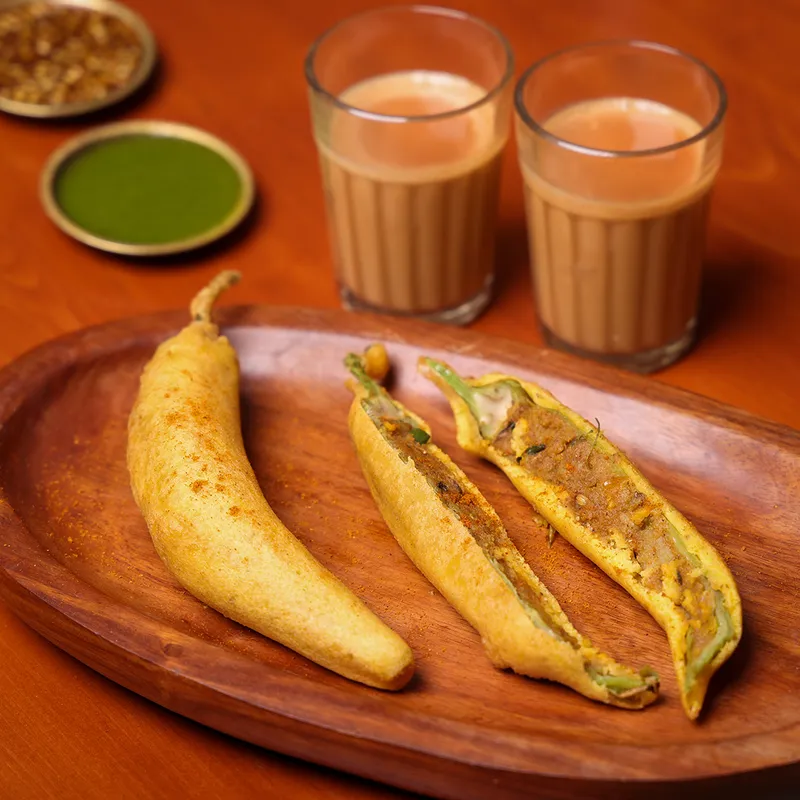
Aloo-stuffed chilli bhajji by India Sweet House
According to media reports, the Indian sweets market stood at Rs 6,229 crore in 2023. By 2030, this number is expected to reach Rs 25,970 crore. The largest mithai brands in the country include Haldiram’s, Sangam Sweets, KC Das, and Bombay Sweet Shop, among others.
Although the brand is experimenting with exporting through intermediaries, domestic expansion remains a priority. Today, ISH has stores across Bengaluru, Mysuru, Tumkur, Chitradurga, Hassan, Davanagere, Mangalore, Udupi, Shimoga, and Mandya. “Bengaluru remains our largest market simply because of our mere presence in most of the neighbourhood areas and the market size.”
Its expansion into Tier II cities has delivered surprising results. In Chitradurga, for instance, ISH saw footfalls of 50,000 visitors within just three days of opening.
With an average annual revenue growth of 100%, Rajshekar adds that an industry study ranked ISH as the second fastest growing brand in India to hit Rs 100 crore revenue, after boAt.
Meanwhile, since its inception, the company has invested in MAP (modified atmosphere packaging) technology and has been shipping to the US and Australia. “We identified a few cities in the US, where we stocked products for local distribution. However, due to the recent restrictions following [US President] Donald Trump's decision to open and inspect every package valued at about $100, we’ve paused shipments for the US now,” she adds.
ISH is now planning for the future, one where Indian sweets resonate with a younger consumer base. “We would like to be current with the trend that Gen Zs prefer, yet tie it to the traditional Indian mithai flavours.”
This includes innovating with flavours, expanding to neighbouring states by 2026, and strengthening corporate governance structures ahead of a planned IPO.
Further, ISH is planning to expand to all major districts in Karnataka and neighbouring South Indian states; revive old recipes while keeping the offerings contemporary; and balance tradition with relevance, “without shifting to unrelated categories like chocolates.”
(The story was updated to fix a typo)
Edited by Suman Singh