



The Anand Sweets legacy: 37 years of giving the humble mithai a premium twist
Bengaluru’s popular sweet brand Anand Sweets started with a single store in 1988. Today, the brand has become the go-to destination for all sweet purchases, redefining how consumers perceive and present traditional mithai.

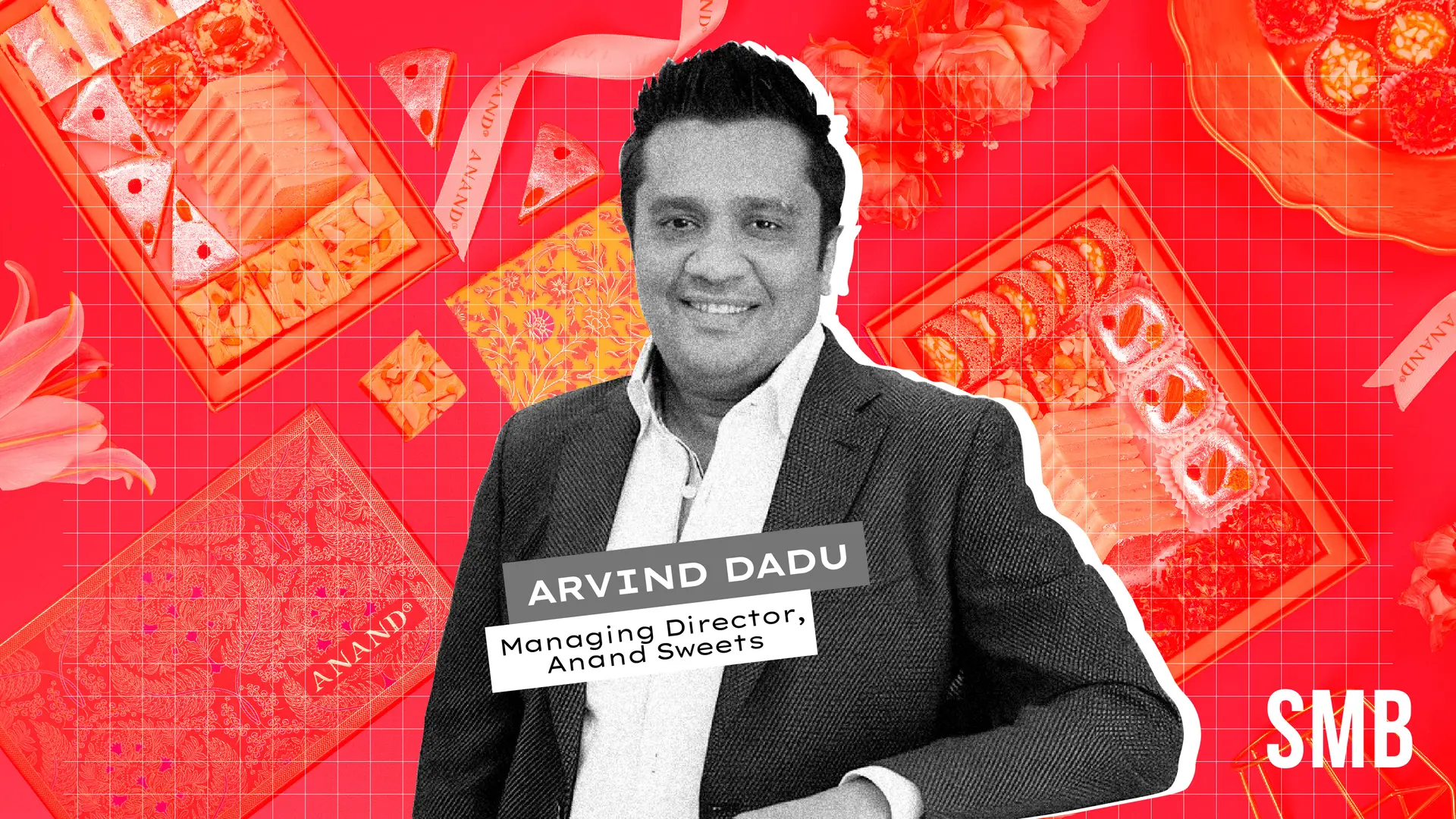

The Mysore pak—a ghee, gram flour, and sugar-based sweet—originated in the royal kitchens of Mysore. Once considered a regal gift, it was gradually overshadowed by global favourites—French truffles, American brownies, and European tarts.
Bengaluru-based Anand Sweets is now working towards restoring Mysore pak’s past glory, and placing it in modern gifting—with the use of premium packaging.
At the core of this initiative is Managing Director Arvind Dadu, who joined his father’s business in 2001. He drew inspiration from Laduree in Paris. “If you buy a Ladurée macaron, you would keep it on your table proudly…For mithai, people take it to the kitchen, put it on a plate, and bring it out because the boxes were not attractive. How do we make that box go onto your table as is?”
With this vision in mind, Arvind hired an in-house design team and also collaborated with external design companies to create boxes and tins that are not only presentable but also add a great recall value for the brand. Today, the packaging itself drives the sales, with customers often insisting on Anand’s branding even for occasions, Arvind tells SMB Story during an interview at its head office.
Premium packaging has elevated Anand into a giftable brand, especially strengthening its presence in airports and quick-commerce, where impulse gifting is a key driver. “It has directly led to higher average order values and repeat orders in the corporate gifting space. Assorted travel-friendly packs at airports have performed particularly well with both domestic and international travellers,” he adds.
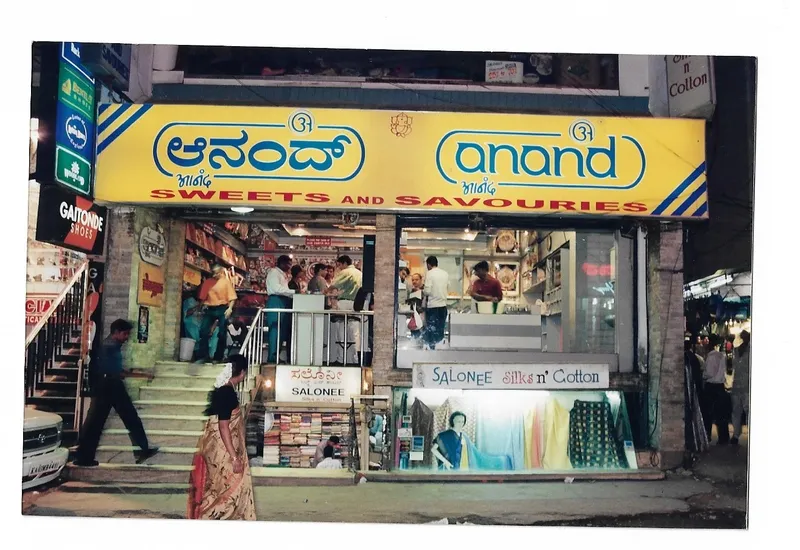
Anand Sweets and Savouries very first shop in Commercial Street, Bengaluru
The legacy brand has managed to reposition traditional mithai with contemporary appeal. With the use of premium packaging that combines classic motifs and modern design, the brand today sells an average of 500 kgs of Mysore pak every day.
Inception story
Founder Anand Dadu migrated from Hyderabad to Bengaluru (then Bangalore) in 1974. For the next 14 years, he worked in a sweets shop and learnt the intricacies of the business before starting Anand Sweets in 1988.
He opened the first sweet shop in Commercial Street, then a part of Bangalore’s contentment area. “At that time, Majestic was the city centre, and moving to a place like this (Commercial Street), in hindsight, was a great move because you catered to a very different audience…a more premium clientele,” Arvind says.
A second-generation entrepreneur, Arvind recalls how his father faced difficulties while cracking the Bengaluru market that was loyal to its existing brands. But right from the beginning, the brand cracked the code by premiumising sweets. “We were the first brands that offered decent packaging at that time, because sweets were considered not very premium,” he says.
By the mid-1990s, as corporates entered Bengaluru, Anand entered the corporate gifting space. “Bulk orders we used to call it, because companies used to order in bulk from us,” Arvind says.
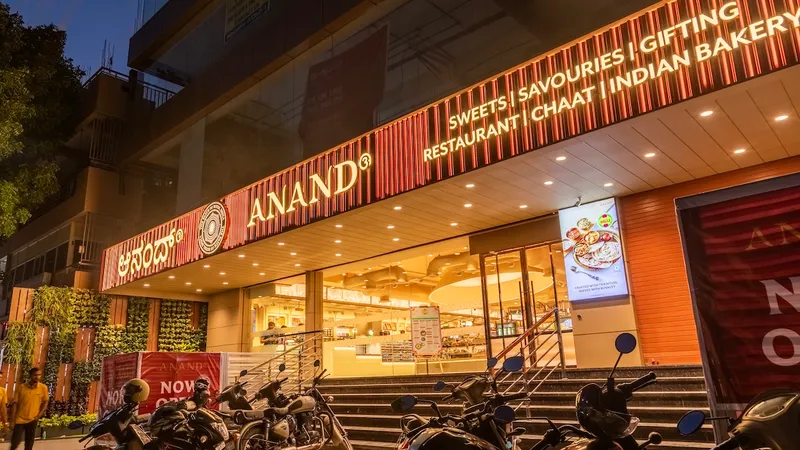
Anand Sweets
Anand Sweets opened its second store in Jayanagar in 1996, giving the brand “A little bit of a push. Once these two stores happened…revenue started going up, the whole brand started getting known,” he adds.
Around this same time, a larger manufacturing unit was set up near Bellandur to ensure quality and consistency, centralising production and controlling costs.
Scaling with the city’s growth
By 2001, Anand Sweets started experimenting with newer formats and entered the savouries segment with chaats at their Koramangala outlet. “We started looking at the whole category very differently, not being another ‘me-too‘ mithai brand. We focused on making Anand a destination of sorts,” Arvind says.
The 2000s brought rapid growth, aligned with Bangalore’s IT boom. Anand expanded its product portfolio, adding bakery items, dry fruits, Turkish sweets, and also becoming one of the first players to introduce baklava.
In 2009, a 1.2 lakh sq. ft. unit was established in the Hosur region. “At that time, we called it South India’s largest…all the production happened there,” he recalls. This enabled Anand to cater to large corporate gifting orders as IT companies became clients. “Most of the IT companies became our clients—Diwali gifting, New Year gifting, any gifting used to come to us. We became the corporate gifting brand across the city, and somewhere across South India.”
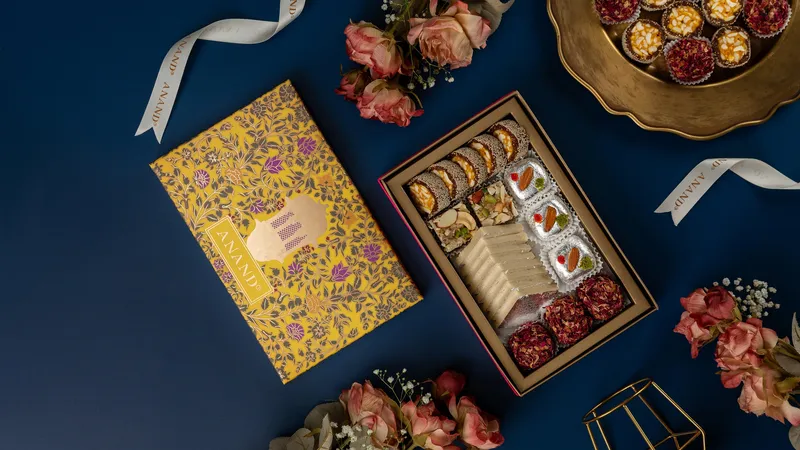
Anand Sweets Royal Opulence sweets box
As a high-potential vertical for the brand, gifting contributes around 30% of the revenue, and the segment is growing at 30% year-on-year, fueled by the brand’s investment in premium packaging, curated hampers, and seasonal assortments.
Today, with corporate gifting having expanded beyond the traditional mithais to chocolates, cookies, gift vouchers and even electronics, Anand’s approach has evolved too. “They’ve taught us to mix and match things. Today, it’s not about just buying a box of mithai—some mithai, some makhana, some cookies, all packaged well.”
In 2012, Anand ventured into restaurants with Purani Dilli. It intentionally did not get into the South Indian restaurant space since it was already cluttered with existing players. Instead, Anand tried building a North-Indian QSR space providing comfort food, also including global hits like pizzas and burgers—but with an Indian twist.
Today, the 11 Purani Dilli outlets across Bengaluru offer an all-day dining format with a menu comprising chaats and fusion Indian food.
Anand operates 15 exclusive retail stores, all company-owned, in Bengaluru, along with airport stores at Bengaluru, Ahmedabad and Kochi airports. It has also expanded into cloud kitchens by partnering with Rebel Foods to serve mithais and savouries through food delivery platforms like Swiggy and Zomato.
The team is 1,500-plus strong and has been consistently delivering 25% year-on-year growth.
Over the last four decades, Anand Sweets has become a household name in Bengaluru, synonymous with not just festivities and weddings, but also with corporate gifting and everyday indulgence. Its biggest highlight has been customer loyalty. “We have seen weddings where both sides gift Anand (sweets) to each other...There are families where three generations—the grandfather, father and child visit the store together,” Arvind says.
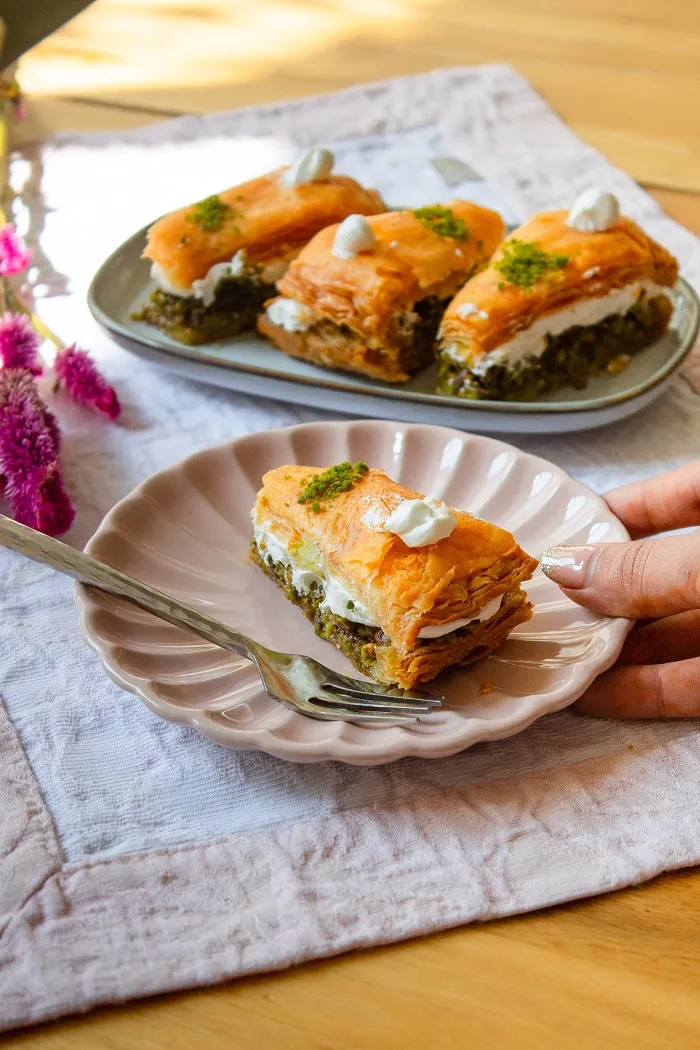
Cream cheese baklava by Anand Sweets
According to RoC filings accessed by SMB Story, the company is profitable and generated a revenue worth Rs 288.36 crore in FY2024, up from Rs 231.96 crore in FY2023.
Challenges along the way
Anand experimented with the franchise model in 1999, but that did not work due to operational constraints, which is when the brand decided to expand by opening company-owned stores in early 2000.
Although initially the growth was slow, post COVID-19, the company accelerated its expansion plans. “The challenge is to maintain the standards we’ve set…customer expectation is so high that we can’t make mistakes. But we try to make it 99% error-free,” Arvind says.
The centralised kitchen helps maintain uniformity since everything is recipe-controlled. Its cold-chain logistics network ensures consistency across geographies, while direct sourcing of ghee, jaggery, and dry fruits secures authenticity and quality. “Our in-house R&D and packaging design capabilities further enable us to constantly innovate and premiumise our offerings,” Arvind says.
However, the biggest code to crack is staying relevant among the newer health-conscious generation. The answer, Arvind says, lies in fusion and health.
“We’re getting this fusion range of mithai…with chocolates, different nuts, less sugar, even sugar-free options. Mithai is made of pulses, grains, and ghee—things you eat at home. The only problem is sugar.”
The brand has launched innovative products like the Jaggery Mysore Pak, Purani Dilli’s street-food inspired menu, healthy snacks like jowar bhel, Middle-Eastern sweets and bottled beverages. “This balance helps our heritage intact while attracting modern consumers,” and drives 30% of the total sales.
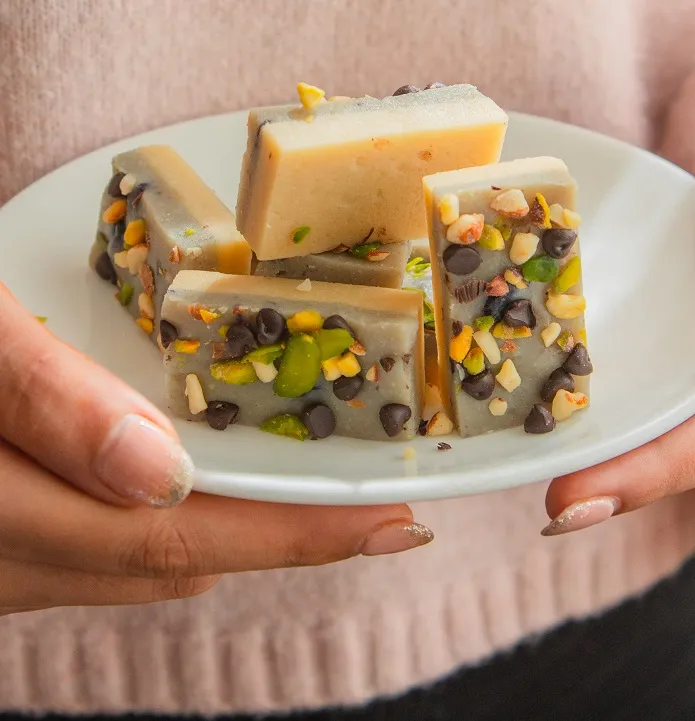
Blueberry kaju bar by Anand Sweets
However, Anand’s portfolio is anchored by legacy favourites like motichoor laddu, kaju katli, mysore pak, and ajmeri kalakand, contributing about 70%. Its best-selling products, besides the mysore pak, are motichoor laddu and rasmalai at 1,000 kgs and 1,000 pieces, respectively, being sold on average every day.
Over the last five years, Anand has maintained a steady 25% CAGR, claims Arvind.
Number game
Sweets have always been an integral part of India’s food culture. According to media reports, in 2023, the Indian sweets market stood at Rs 6,229 crore. By 2030, it is forecasted to reach Rs 25,970 crore. The largest mithai brands in India include Haldiram’s, Sangam Sweets, KC Das, Bombay Sweet Shop, among others. The southern region is dominated by brands like Adyar Anand Bhavan (A2B), Sri Krishna Sweets, Kanti Sweets and Anand Sweets.
For Anand, while traditional retail through Bengaluru stores remains the backbone of the business, contributing close to 80% of its revenue, new-age channels account for 20% of the mix—equally split between airport retail (10%) and online channels (10%) that include ecommerce, quick-commerce, and cloud kitchens.
Its export growth is led by markets like the Middle East, Singapore, Malaysia, Canada and the USA. “These diaspora-rich markets have a strong appetite for premium Indian mithai presented in a contemporary format. We see this as a significant opportunity to position Anand as India’s foremost premium mithai export brand,” Arvind says.
Road ahead
Moving forward, Arvind reveals, the brand is exploring the Kochi market. “Kochi has got nobody in the (sweets) space…they have spending capacity and we’ve seen great sales in the Kochi airport, which is giving us confidence,” he adds.
Additionally, it is also eyeing expansion to the Hyderabad and Chennai markets. “Our goal is to sustain a 25% year-on-year growth trajectory while expanding our footprint in both retail and airport formats.” The business is focused on scaling digital platforms like quick-commerce and its own website to drive pan-India reach. At the same time, it aims to deepen its presence across the Middle East, Southeast Asia, and North America.
“I don’t want to make it another store down the road. I wanted to be like a destination…a brand where people are proud to show off,” Arvind concludes.
Edited by Jyoti Narayan