



KisanKraft is powering rural India with affordable modern tools
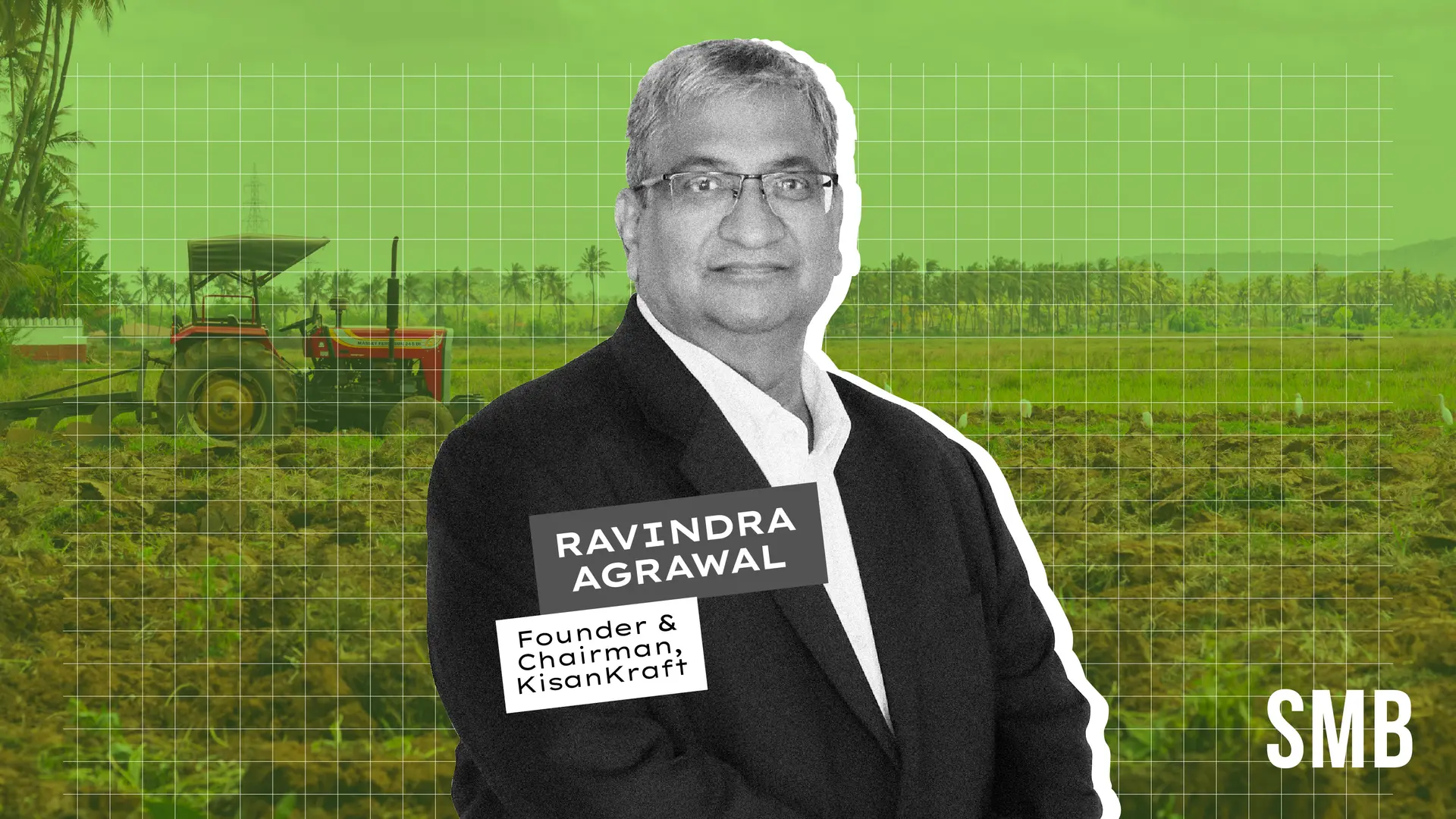
Founded by Ravindra Agrawal from a small garage in Bengaluru, KisanKraft today offers over 300 models of machines across the complete crop cycle—land preparation, planting, crop management, harvesting, and post-harvest operations.


In the mid-2000s, Indian agriculture faced a pressing challenge: small farmers were caught in a cycle of low productivity, high labour costs, and minimal access to mechanisation. Traditional equipment was expensive, fragmented landholdings made large machines impractical, and rural credit was hard to secure.
These challenges inspired Ravindra Agrawal to start KisanKraft in 2005. He wanted to democratise farm mechanisation for India’s 120 million small and marginal farmers.
KisanKraft began its journey from a small garage in Bengaluru as an exclusive importer and distributor of farming tools from renowned American and Japanese brands such as Ardisam and Tanaka.
“We saw a massive gap in accessibility—most small farmers simply couldn’t afford mechanisation. That’s where KisanKraft came in,” Agrawal, Founder and MD of KisanKraft, tells YourStory.
Among its notable innovations are the Palm Harvester, Single-row Maize Harvester, Soybean Harvester, and the Stubble Shaver—a machine designed to tackle the challenge of stubble burning through eco-friendly residue management. Looking ahead, the company is gearing up to launch a line of electric farm tools, including battery-powered weeders, chainsaws, and brush cutters, marking its next step toward sustainable mechanisation.
Born in Bhatapara, Chhattisgarh, to an agriculturist family, Agrawal grew up closely connected to rural life, studying in government schools and witnessing farmers’ struggles firsthand.
After earning an Electrical and Electronics Engineering degree from BITS Pilani, he built a global career in software, spending nearly two decades at Microsoft in Washington. Yet, regular visits home reminded him of the stark contrast—farmers in India still relied on manual labour while he used modern tools in his garden abroad. Determined to bridge this gap, he founded KisanKraft to provide affordable, efficient technology for Indian farmers.
The early days
During the company’s early days, the founder and his wife, Sarika Agrawal, who is a Director at KisanKraft, personally demonstrated machines to farmers, handled dispatches, and even repaired equipment.
“When we started in 2005, our goal was simple—make farm mechanisation affordable for India’s small and marginal farmers. Today, we’ve touched over 50 lakh lives and are taking Indian agri-tech to the world,” says Agrawal.
Over the next decade, KisanKraft grew rapidly, setting up regional offices across India, starting with Coimbatore in 2010. By 2014, the company took a big leap towards self-reliance with the establishment of a 20,000 sq. ft. manufacturing unit in Bengaluru under the Make in India initiative.

Team at KisanKraft

From one product to 300—and beyond
In 2017, KisanKraft entered seed research and development with a focus on “sustainability by design.” Among its most significant breakthroughs is the development of rice varieties that grow without standing water, cutting down on water use, reducing chemical inputs, and curbing greenhouse gas emissions.
“About 12% of global methane emissions come from paddy fields. Our dryland rice technology nearly eliminates that,” says Founder Agrawal.
To support this work, the company set up advanced R&D facilities featuring molecular labs, seed labs, and tissue culture units that meet international standards. These facilities have enabled KisanKraft to develop water-saving, climate-resilient rice and vegetable varieties aimed at improving yields and reducing the risks associated with water scarcity and erratic weather patterns.
Hydroponics for cattle: Shunya Agritech promises dairy farmers greater milk yields
The benefits extend beyond sustainability. Farmers using these innovations report lower cultivation costs, reduced labour, and easier crop rotation. The company’s efforts have earned global recognition, including acknowledgement from the United Nations for its work in sustainable rice cultivation.
From its early days with a single product, KisanKraft has grown into a portfolio of more than 300 models spanning the entire crop cycle—from land preparation and planting to crop care, harvesting, and post-harvest operations.
“KisanKraft was built on three core values: quality, accessibility, and after-sales support,” says Agrawal. “Selling machines was never enough; farmers needed the assurance of service and guidance. That’s why we invested early in building a strong service network.”
Today, the company works with over 5,000 dealers, operates 14 regional offices, and runs service centres across key agricultural regions. This widespread presence has made KisanKraft a trusted name in rural India, and the brand now exports to markets including Nepal, Angola, the Philippines, Mauritius, Ghana, and South Africa.
KisanKraft has stayed bootstrapped for two decades, recording steady growth at around 20% CAGR. While Agrawal did not directly disclose revenue figures, he mentioned it was between Rs 250 crore and Rs 500 crore, positioning it firmly within the MSME category.
“Farmers need solutions, not just machines,” Agrawal emphasises. “Our goal has always been to look at the entire agricultural lifecycle and create impact at every stage.”
Nationwide presence and rural impact
Today, KisanKraft operates through a vast network of 5,000 dealers, covering nearly every district in India—over 750 in total. This presence ensures easy access to products and after-sales support for millions of farmers. The company’s long-term vision is to strengthen this network further, reaching every block and taluka in India so that no farmer is left behind.
“The impact has been transformative. Over 50 lakh farmers have benefited from KisanKraft’s affordable mechanisation solutions, which boost productivity and often pay for themselves within a single cropping season,” claims Agrawal.
The company has also created rural jobs by training mechanics and supporting local service centres, fostering entrepreneurship in villages.
Innovation for Indian farms
KisanKraft’s success lies in its ability to design for the unique needs of small and marginal farmers. From compact soybean and maize harvesters to palm tree harvesters and stubble shavers, the company has introduced solutions that improve efficiency without requiring large landholdings.
“Most global machines are built for large farms. We re-engineered designs to suit smaller plots, lower budgets, and local crops,” Agrawal explains.
Recently, KisanKraft has also ventured into sustainable innovation with electric-powered weeders, brush cutters, chainsaws and lawn movers, which reduce farmers’ reliance on fossil fuels.
Milestones
KisanKraft’s journey is dotted with achievements. In 2015, it ventured into exports, starting with Nepal, and later expanded into multiple countries across Africa and Asia. In 2020, the company won the BRICS Solution Award in the Green Economy category for its sustainable agriculture initiatives and became a member of the United Nations’ Sustainable Rice Platform (SRP).
Its R&D efforts received recognition from the Department of Scientific and Industrial Research (DSIR) in 2021, and its manufacturing capabilities were strengthened by a 46-acre state-of-the-art facility in Nellore, Andhra Pradesh. Today, KisanKraft offers over 300 models of machines across the complete crop cycle—land preparation, planting, crop management, harvesting, and post-harvest operations—while holding 19 BIS:ISI certifications and 13 patents for innovation.
As for the future, KisanKraft aims to double its export footprint from 7 to 15 countries by the end of the year while continuing its push for deeper rural penetration in India. It also plans to integrate digital tools for farmers—offering mobile-based advisory, service scheduling, and easy access to spare parts.
“Mechanisation can no longer be just about speed. It has to be about sustainability. Our mission is to equip farmers with tools that help them thrive without compromising the planet,” says Agrawal.