


Leading with Purpose: Nidhi Pant’s sustainable vision for India’s MSME and Agri sectors
At MSME Sparks 2025, Nidhi Pant, Co-founder of S4S Technologies, shared insights into how the company is empowering farmers to monetise low-shelf-life surplus produce using renewable energy.

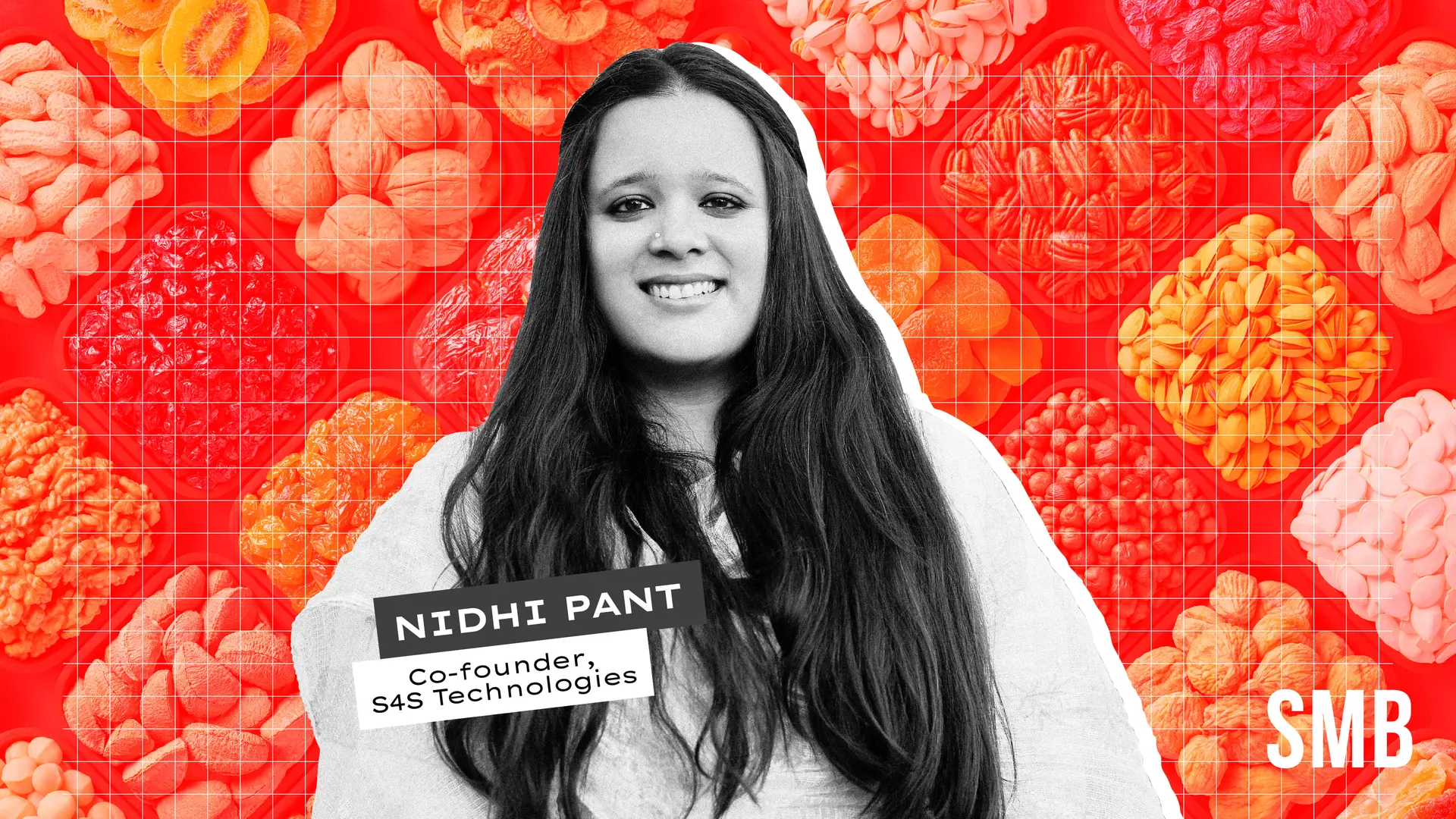

Sustainability today is not just good practice, it is actually smart business, and Science for Society (S4S) Technologies is carving a niche at the intersection of sustainability and MSME segment by empowering farmers to turn their surplus produce to specialty food ingredients for large food and beverage (F&B) companies.
The problem statement is simple. Farmers go to the Mandi or market every morning to sell their fresh produce, but by evening, whatever remains unsold is often discarded—especially perishable crops like spinach and tomato, which have a lower shelf life.
“We also saw that if during the season, when prices of their produce are extremely low, farmers would not harvest it because the labour cost of harvesting was very high. So, they would throw it on the field,” said Nidhi Pant, Co-founder of S4S Technologies.
In a fireside chat at MSME Sparks 2025, Pant retraced the company’s steps. “When you grow the produce, you are also investing your water, land, labour, and money. But when this produce gets wasted, then it's not only an economic loss for the farmer but it is also an environmental threat to all of us, and this led to the foundation of S4S.”
Today, S4S helps farmers to set up small factories on their farms to process this surplus produce that previously was thrown away. Pant noted that many of these farmers are women.
“For the longest time, if you see a photo of a farmer, it was always a male figure, but once you actually look into who is working on the farm, it's the women who are working on these farmers and taking care of their households.” S4S has trained about 800 women entrepreneurs and over 20,000 farmers since inception.

However, the creation of this ecosystem was not without challenges. One such obstacle was access to electricity, especially in rural areas, to power these small factories. Instead of looking at this as a hurdle, S4S realised the potential this poses for introducing renewable energy into this space. “Renewable energy was not just an add-on, but is at the core of our model,” Pant said.
Another challenge was to bring about collaboration within the ecosystem. The company learnt over time that communicating with their farmer partners was not a one-way conversation where they delegate information but instead, a two-way street. “You have to speak their language,” and take them through the steps one by one and make their participation as simple as possible.
The third and the most important challenge was that of financing. S4S realised that these farmers were new to credit and their women entrepreneurs had never taken loans before. Initially, S4S began rolling out micro finance solutions with a 38% interest and they saw many women deciding to withdraw from the program as their earnings were being used to pay back EMIs they had taken.
S4S went back to the drawing board and began scouring for more options. It began working with non-banking finance companies (NBFCs) and managed to bring down the interest rate to between 15-18%. But this was still not a viable option for its farmer partners. Four to five years later, the banks entered this space.
Today, the State Bank of India (SBI) is the company’s largest partner, and funds all of its micro entrepreneurs along with regional rural banks. “They saw an ecosystem which means that there was an off-taker, they knew we were there to handhold them, they knew that there is government support that is coming and that we are able to leverage subsidies.”
The company’s emergence in India’s MSME space comes at a crucial time when global supply chains are getting disrupted with a lot of international attention on China plus one strategy and S4S’ operations places them in a sweet spot that unlocks a large customer base.
“Change is always hard but when it’s a good change, it takes and the outcome is always stellar,” Pant noted.
Edited by Megha Reddy