


Sustainable parenthood: How PyaraBaby is giving baby products a second life
Founded in 2022 and based in Panchkula, PyaraBaby is an online marketplace connecting over 23,800 parents across India to buy and sell pre-loved and new baby products.


When a baby is born in an Indian family, the relatives come together and shower the newborn with new toys, clothes, and expensive gifts like cribs. However, much to the parents’ pity, the baby grows up quickly, and all the products become obsolete within months, with the child now in need of new clothes and accessories.
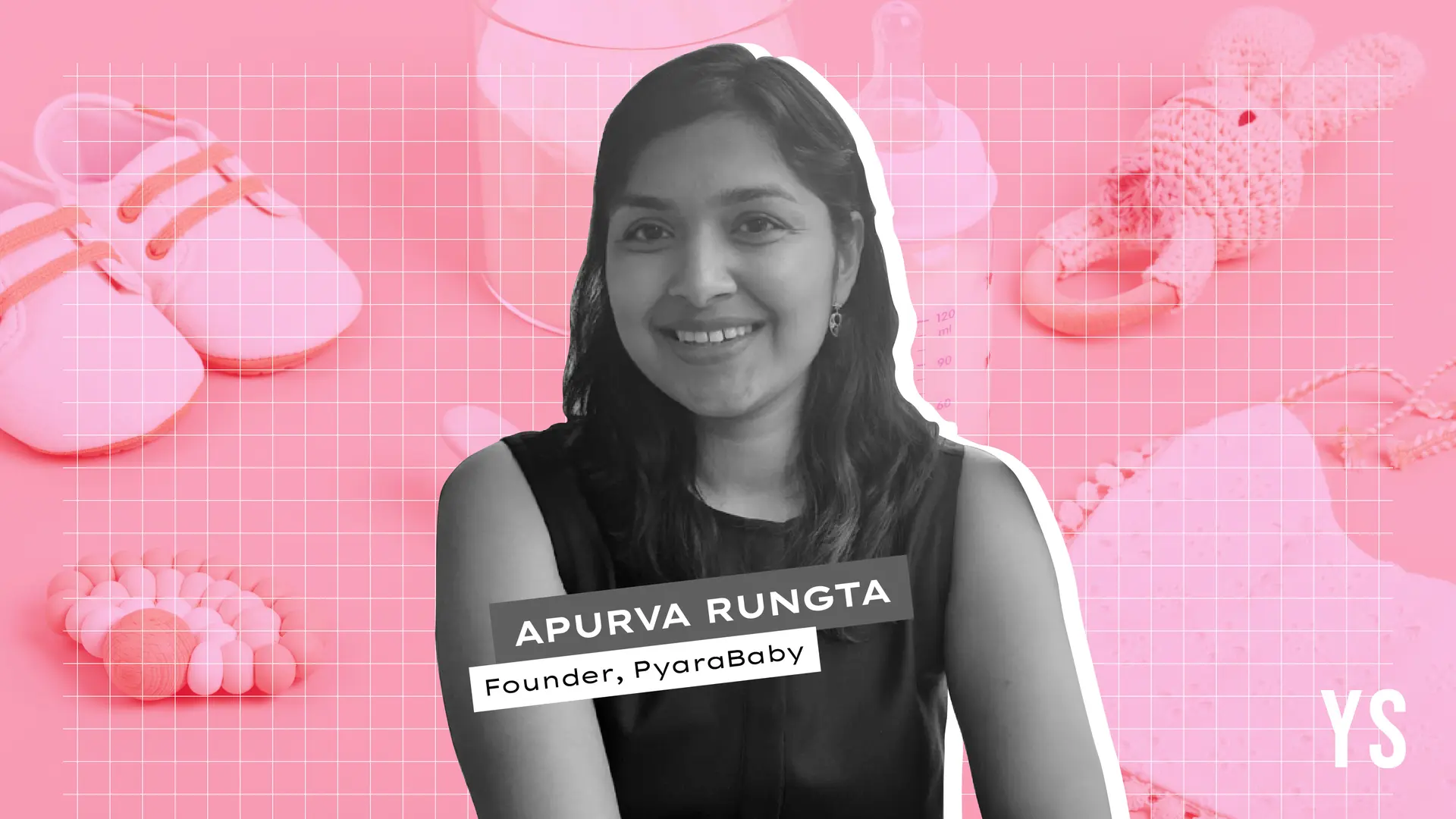
Apurva Rungta experienced the limited lifetime value of baby products when she became a mother.
"While packing my daughter’s barely-used cradle, I realised it had been used only 10-15 times despite costing Rs 9,000. I thought—why not sell it, free up space, and help another parent get a quality product at a fair price?” Rungta, Founder, PyaraBaby tells SMBStory.
Reselling the cradle became more than just a way to recover money or space. “Listing it online and selling it not only gave me back the room in my house but also confirmed that there’s a genuine market for pre-owned baby products in India,” she says.
This realisation planted the seed for what would evolve into PyaraBaby, a marketplace for preloved baby essentials.
Based in Panchkula, Haryana and founded in 2022, PyaraBaby functions as an online marketplace that connects parents across India to buy and sell both pre-loved and new baby products. The platform’s range spans clothing, cribs, toys, maternity gear, feeding accessories, handcrafted items, personalised storybooks, and pregnancy guides.
Sellers can list gently used products with clear descriptions and prices, while buyers are supported with nationwide delivery and after-sales assistance in case of defects or damage. Logistics are centrally managed, and shipping costs are shared between seller and buyer to keep transactions cost-effective.
By August 2025, it had registered 23,844 customers and more than 11,500 sellers. It has about 9,500 SKUs, varying widely, from cotton mittens priced at Rs 50 to cradles worth Rs 37,000, allowing households across income levels to participate.
The founder’s journey
Rungta was raised in a business-oriented family, where her father, a first-generation entrepreneur, established Chemical Resources, a company specialising in nutraceuticals and plant-based extracts. “Watching him innovate and persevere made entrepreneurship feel less like a career option and more like a natural part of life,” Rungta reflects.
She completed her Master’s in Intellectual Property Rights from King’s College London, and in 2015, joined her father’s company in a marketing role.
Her true calling came only after motherhood in 2021. “Every parent faces the same cycle—you buy expensive products, use them briefly, and then they sit unused at home. Creating a platform where parents could sell and buy from each other not only saves money but also extends the lifecycle of these products,” Rungta says. With her husband’s encouragement, she began shaping the idea into what became PyaraBaby, choosing the name as it felt natural and relatable.
"After launching the website, I sold that cradle for Rs 4,500, which let me reinvest in something else for my daughter, free up space, and support a more sustainable lifestyle," she says.
Building scale
PyaraBaby generates revenue through multiple channels: it charges a commission on transactions between buyers and sellers, offers premium listings to boost product visibility, sells new branded baby products, and fulfils B2B bulk orders for businesses and institutions.
PyaraBaby’s revenue increased from Rs 1.26 lakh in 2022–23 to Rs 5.56 lakh in 2023–24. By August 2025, the company had already recorded Rs 2.62 lakh, bringing cumulative revenue to Rs 9.44 lakh.
The platform’s GMV (gross merchandise value) grew from Rs 11.2 lakh in 2022–23 to Rs 39.8 lakh in 2023–24, with an additional Rs 18.8 lakh added in 2024–25 (till August), taking the cumulative GMV close to Rs 70 lakh.
The highlight was a single-day sale worth Rs 70,000. “It was a reminder that even with a small team and limited resources, results could be meaningful,” she says.
Alongside the marketplace, PyaraBaby also engages with parents through community-driven initiatives such as live sales, contests, social media interaction, and expert-led sessions on parenting and sustainability.
Trust and team
However, it hasn’t always been smooth sailing.
The platform’s first order—a baby bather—was delivered in poor condition. Apurva immediately refunded the customer and added a gift coupon. The same buyer later returned to purchase a cradle. “That experience reinforced my belief that transparent service builds long-term trust,” she says.
Today, PyaraBaby operates with a team of seven, six of whom are women and five of them mothers. Apurva deliberately shaped the team this way. “I wanted a group that could relate to what parents go through. Empathy, integrity, and dedication were just as important as skills,” she explains.
Website traffic has also grown significantly, climbing from just a couple of thousand daily visitors in its early months to between 9,000 and 10,000 per day.
The initial challenge for PyaraBaby was onboarding sellers and ensuring product quality, while also finalising shipping and commission structures. Managing shipments across India, high RTO rates, damaged products, and costly volumetric shipping added to the operational complexity.

House of Bindu, started by an auto-rickshaw-driver-turned-entrepreneur, is now a Rs 570-crore FMCG brand
“Convincing sellers, managing shipments, and handling returns was tough, but turning these challenges into successful sales made it all worthwhile,” the founder notes.
COD orders and high RTO rates remain a challenge, which PyaraBaby is addressing by optimising shipping and promoting digital payments. The brand has partnered with logistics providers—ShipMozo and Bigship—and payment gateways, and is complying with Indian ecommerce and data regulations to ensure smooth operations.
Looking forward
Bootstrapped with Rs 1 lakh from personal savings, PyaraBaby plans to raise external funds in the future. “Our goal is to achieve profitability in the next three years. I would consider external capital, but only if it comes with partners who can contribute more than funding—expertise, networks, and perspective,” she says.
The platform also looks to expand to handcrafted products sourced from Indian artisans, growing sales through Instagram Live sessions, and experimenting with physical pop-ups
The brand competes with players including Bengaluru-based Chub Chub, Mumbai-based PreHugged, The Share Bear, and Noida-based Tiny Things, among others.
For Rungta, the larger vision goes beyond numbers. “Every parent deserves access to safe and affordable products for their children. What we are building is not just a resale marketplace but a way to make parenting more practical and sustainable in India,” she says.
Edited by Kanishk Singh