


How EFFI combines art, education, and action to tackle human-wildlife conflict
The Elephant Family Foundation India started its work with an art fundraiser showcasing hundreds of hand painted elephant sculptures designed by renowned artists in Mumbai. Seven years later, it's building a more sustainable future for both elephants and the people living alongside them.


In 2018, a large-scale public art event showcased hundreds of hand-painted elephant sculptures on the roads of Mumbai. Called the Elephant Parade India, the open exhibit was created by leading Indian and indigenous artists, and organised as part of a campaign to raise awareness about elephant conservation.
The event also marked the launch of the Elephant Family Foundation India (EFFI) - a non-profit that has since evolved into a committed player in funding and supporting grassroots wildlife conservation across the country.
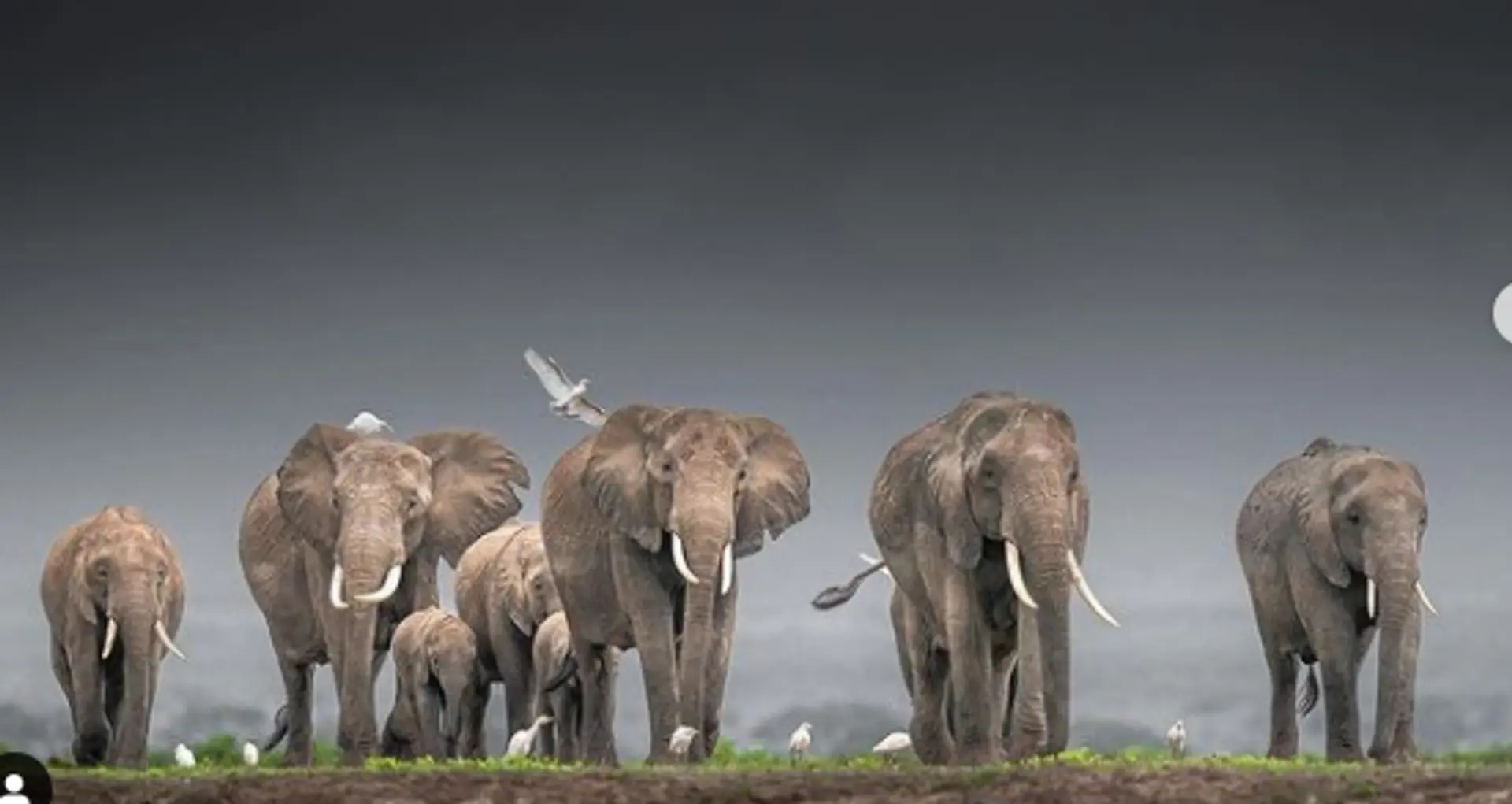
Unlike tigers which have benefitted from high-profile campaigns and dedicated, relatively contained reserves, elephants are highly migratory, moving across vast landscapes that intersect with human settlements. However, developmental projects like highways, railways, and large-scale infrastructure rarely account for elephant corridors or migratory routes.
Founded in 2017, the EFFI, decided to address these gaps by focussing on two major areas - human-animal conflict and education.
With the proceeds it made from that inaugural parade, EFFI began funnelling funds into grassroots conservation work, strategically vetted and chosen to maximise on-the-ground impact. “We see ourselves as a bridge,” explains Farah Siddique, founding member and director of EFFI, “connecting people and communities who care about wildlife but don’t know where or how to channel that concern, to the people who are working in the field tirelessly.”
Conservation grounded in local realities
EFFI’s model is built around supporting scientists, researchers, and grassroots NGOs that are longstanding in local conservation landscapes. These include organisations like the Holematthi Nature Foundation in Karnataka and the Dakshin Foundation which work across ecologically sensitive regions in India.
One of HNF’s standout projects, funded by EFFI, focuses on offering fuel-efficient cookstoves to forest-fringe communities in Karnataka. These stoves are designed with technical support from Technology Informatics Design Endeavour, a Bengaluru-based non-profit organisation, which focuses on leveraging technology to promote sustainable development.
By reducing the need for firewood by up to 90%, the stoves use locally available materials like mud, bricks, steel molds, and chimney pipes. As the stoves are capable of utilising agro-waste as fuel, they significantly reduce the reliance on forest sourced firewood, cutting down on deforestation while improving the quality of life for communities living near critical elephant corridors.
This also cuts down the need for women venturing into the forest for firewood.
Similarly, the Dakshin Foundation, another key partner, has produced a national-level policy document on human-elephant coexistence, supported by EFFI. The document offers guidelines for equitable conservation, emphasising the need for shared responsibility and mutual benefit.
“Every region in India has different challenges,” says Siddique. “You can’t apply the same conservation logic everywhere. That’s why we work with people who know the ground intimately.”
A focus on education and evidence
“We always come back to the question - how do we make our work evidence-based and create long-term change?” says Siddique.
One of EFFI’s programmes, Coexistence Fellowship Programme, trains early-career conservationists in research, policy, and practice related to human-wildlife interactions. Twelve fellows have already benefited from this initiative, gaining not just funding, but mentorship and field experience.
Alongside science, education and storytelling have been central to the foundation’s approach. Siddique reveals that later this year, EFFI will launch a children’s book on wildlife conservation, aimed at readers aged five to eight. The book, to be distributed free to schools across India, is part of a larger effort to build empathy for wildlife from an early age,” she says. “If a child comes home sensitised to elephant conservation, they end up sensitising the whole household.”
EFFI is also planning school visits, art-based workshops, and collaborative storytelling sessions with naturalists and conservationists - all of which tap into the foundation’s roots in art and public engagement.
Navigating the development vs conservation paradigm
In India’s conservation landscape, elephants remain among the most vulnerable species, largely because of habitat loss, infrastructure expansion, and poorly planned development projects.
According to government data, more than 530 elephants died between 2014 and 2023 due to collisions with trains and electrocution.
“While development is inevitable, we ask, can it be done sustainably? Can it include forest communities in the process?” says Siddique. “Once a forest is cleared, there’s no going back. The damage is irreversible.”
She says they like to keep EFFI’s response to these questions pragmatic. By prioritising community-based programmes with measurable short-term goals, the foundation ensures its impact is both visible and scalable. “If you give someone a solar cooker and they stop collecting firewood from protected forests, you’ve made a tangible difference—to the forest, to the elephants, and to that family’s daily life,” she says.
Funding decisions are made by a panel of conservation experts who assess not only the credibility of partner organisations but also the long-term sustainability and replicability of their models. Site visits, contextual knowledge, and trust are important in this evaluation process, says Siddique.
As EFFI steps into its next phase, the foundation is looking at new avenues—an art exhibition in Mumbai, more partnerships with smaller conservation groups, and potentially an Indian edition of the famed Elephant Ball, an iconic event that raises funds for conservation work globally.
But the emphasis remains local, deliberate, and community-driven. “We don’t believe in parachute funding,” says Siddique. “We don’t want to be funded by corporations that are destroying forests with one hand and writing cheques with the other. Conservation cannot be whitewashed. It has to be ethical, rooted, and accountable.”
Edited by Jyoti Narayan