



How mental healthcare can be cognisant of caste trauma
Caste is a psychic wound passed on in silences and survival strategies. The trauma of caste is embedded in the body, nervous systems, and family dynamics. This Dalit History Month, we look at why caste-informed mental health justice is the need of the hour.

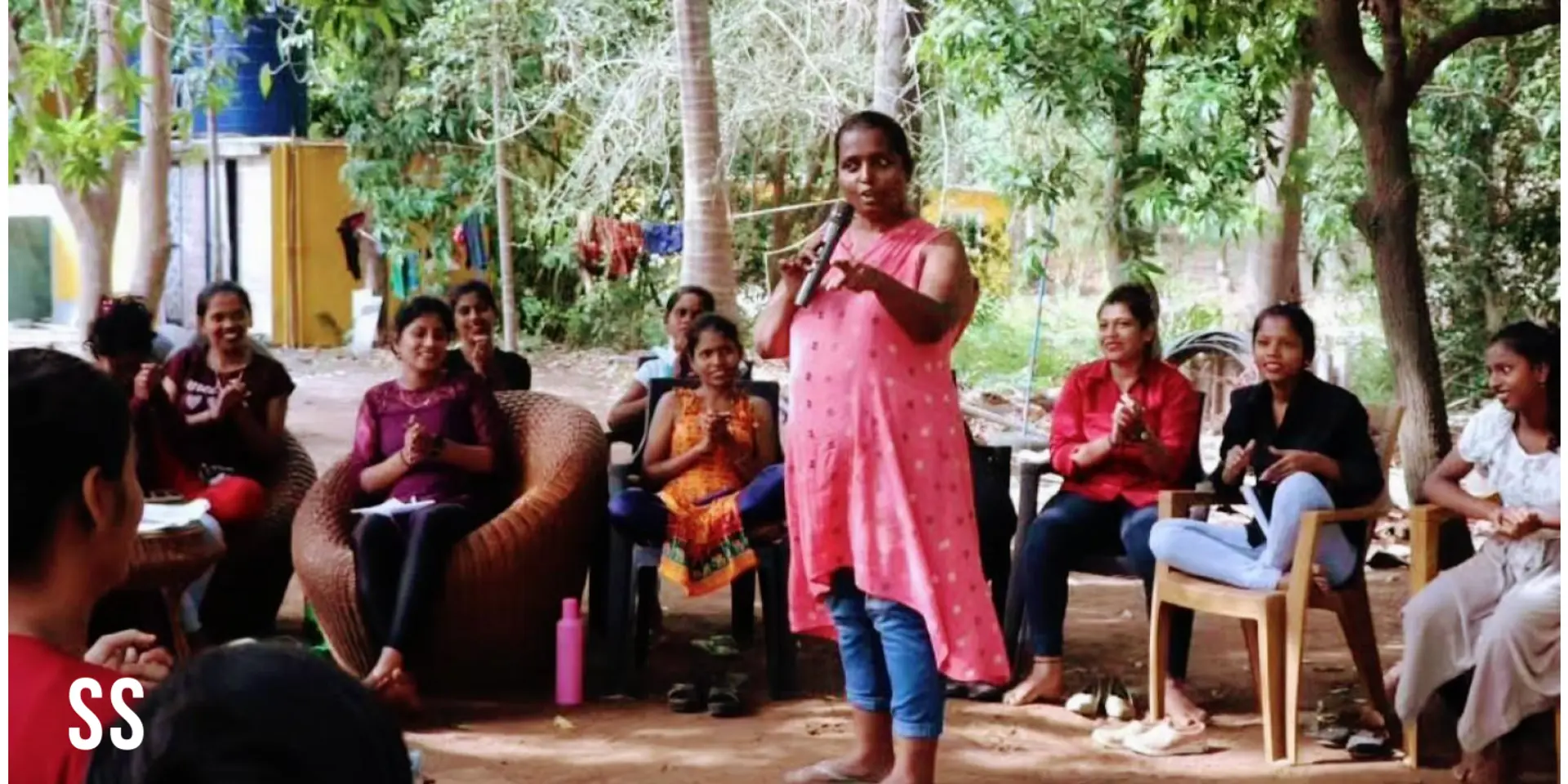

Twenty-eight-year-old Aswini Jeyaprakash seems to be ‘thriving’ by all tangible metrics.
In college, she studied English literature. As an AI specialist from Thenkasi, Tamil Nadu, she builds intelligent systems for a living. She loves collecting postcards, and, more recently, she’s found a new interest in surfing.
But all the life she’s built cannot erase the trauma of caste that’s “clinging to my bones,” says Jeyaprakash.
“It’s like being homeless in a room full of heirs. I might share a roof with them (people with caste privilege), but never their language, or their ease. The confidence they exude is inherited,” she says.
Jeyaprakash’s emotional state illustrates the cognitive load she’s been carrying all her life, as she finds her confidence waiting to slip at the slightest hint—a side glance, a murmur, or even silence at times.
New-age discourse around the mental health of marginalised communities is just beginning to account for the fact that caste-based discrimination doesn’t just live in systems; it is lodged deep within bodies, minds, and family histories.
Preethi Shanmugapriya, a Dalit occupational therapist, also from Thenkasi, who, along with Jeyaprakash, co-founded Milir, a mental health service for marginalised communities, explains, “Imagine yourself constantly navigating spaces—schools, workplaces, relationships—in a state of chronic alertness, anticipating judgement or exclusion.
“It's exhausting!” she says.
How caste trauma passes down through generations
Shanmugapriya, like Jeyaprakash, was born to parents who were graduates and had government jobs. Her father worked as an accountant and her mother was a clerical staff at a bank.
In many ways, their commitment to secure government jobs felt like their only route to autonomy and self-determination. Community members believed it would give them ‘dignity’, along with a stable livelihood.
Despite this idea, in Shanmugapriya’s own family, her distant aunts and uncles had internalised shame and inadequacy of caste so deeply that they resigned themselves to daily wage work. They believed this was the only life they could afford, as lack of access to education and employment played an undeniable role.
“Within our community, my parents were perceived to be ‘better off’ or ‘more progressive’ than the others,” says Shanmugapriya.
The flipside to this was that children, especially those from Shanmugapriya’s generation, were actively dissuaded from aspiring for anything other than government service; arts, sports, even mental health careers were considered off limits.
Contrary to what Shanmugapriya’s family and many others from Dalit communities believed, a government job did bring stability, but equality? Not quite.
Jeyaprakash’s parents also had government jobs, but that didn't deter discrimination at the workplace.
“The microaggressions they endured became dinner-table talk,” she says. “They always spoke about it with humour—detached, in passing and seemingly unmoved.”
The first time Jeyaprakash heard the word ‘caste’ was in class 8, when a classmate turned PT (physical training) period into a game of guessing each other’s community backgrounds. It was much later that she came to know that her friend’s parents (who came from a dominant caste), saw that their child was hanging out with Jeyaprakash, and wanted to confirm their suspicion.
"One of the other students in the group said I came from a ‘cheri’ (slum in Tamil). I was 12 years old, and I left feeling a pit in my stomach," says Jeyaprakash.
Malvika Raj of Patna grew up witnessing similar incidents—some even worse—before she found healing and resistance in art, particularly Madhubani art.
Raj’s father, despite being a police official, lost a good posting to a colleague belonging to a dominant caste and had to frequently put his job on the line to save Dalit families from getting falsely implicated in crimes.
As a student, Raj endured casteist taunts from her government school teachers—mocked for simply showing up, told that she didn’t belong in art class, and repeatedly abandoned by romantic partners.
The cumulative impact left deep scars, eroding her ability to trust in love or belonging.
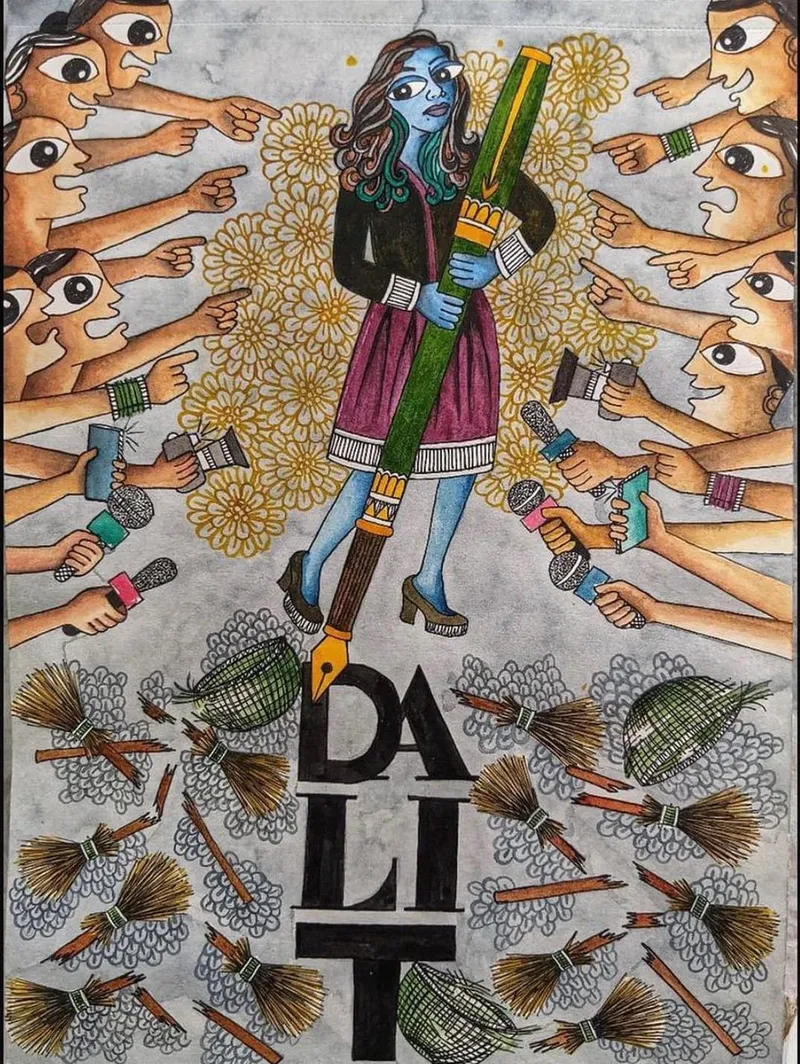
Moving away from the Madhubani art form’s conventional mythological narratives, Raj began painting in the Godna style, once reserved for Dalit ritual art, centering on themes of empowerment and figures like Babasaheb Ambedkar, Savitribai Phule, and Phoolan Devi.
Moving away from the Madhubani art form’s conventional mythological narratives, Raj began painting in the Godna style, once reserved for Dalit ritual art, centring on figures like Babasaheb Ambedkar, Savitribai Phule, and Phoolan Devi.
“I finally felt seen and proud,” she says.
The need for culturally-informed therapy
Caste and trauma-informed therapy acknowledges that, in order to survive the daily onslaught of dehumanisation or deprivation, older generations of historically oppressed communities (with fewer resources), often developed emotional numbness— not by choice, but as a defence mechanism.
“When vulnerability was equated with danger or weakness, emotions like sadness, fear or sensitivity were suppressed,” says Shanmugapriya.
A rising integrative approach to mental healthcare believes that when this trauma isn’t acknowledged and processed, it becomes embedded in the body, the nervous system, and family dynamics. This leads to emotional suppression, normalisation of pain and suffering, chronic anxiety, over-functioning, mistrust and emotional unavailability in communities that have faced systemic oppression.
“Most often than not, children raised in these environments may not experience direct violence but inherit emotional neglect, high expectations to suppress emotions, cues to be tough, grateful, obedient, and guilty for feeling sad or dissatisfied,” says Shanmugapriya.
And the cycle continues—layered with confusion, identity issues, and often guilt for feeling bad in the face of everything the parents ‘sacrificed’, she adds.
Shanmugapriya and Jeyaprakash had knowledge of globally recognised liberatory approaches such as decolonial psychology (which examines how colonisation shaped mental health systems and continues to marginalise people), intersectional therapy (which integrates race, caste, gender, sexuality, ability into therapeutic frameworks) and healing justice (which sees healing as political, and focuses on trauma recovery + systemic change).
And yet, last April, when they decided to build a discourse around the intersection of caste and mental health under Milir (which means ‘to shine’ in Tamil), they first had to confront a lot of fear and uncertainty within themselves, as it meant identifying themselves as Dalits in their social and professional spheres.
“In many families, children are asked to change their caste names so that they are not outed for their identities. Whether it is while finding homes for rent, getting jobs, or socialising in a diverse group, they carry the cognitive load of expecting discrimination,” elaborates Shanmugapriya.
She worried if her disclosure would affect the clients she got or attract undue scrutiny.
Even as they sought professional help to cope with their own fears, the duo realised that therapy spaces were extremely unprepared to handle these complexities. Trauma-informed therapy is also extremely unaffordable, they found.
“I met therapists who called themselves 'anti-caste affirmative' in their bios, but openly stated their caste names—something that can be deeply triggering for someone seeking help for caste trauma,” says Shanmugapriya.
Jeyaprakash, on the other hand, found her therapist well-meaning but unaware. “She would casually mention her own dominant caste every now and then, and draw parallels between us in our sessions,” she says.
These experiences instantly stripped away any sense of safety and trust they had in mainstream mental health mechanisms. They have has since been working on developing programmes on unlearning privilege—aimed at guiding allies from dominant caste identities toward deeper awareness and more sensitive support.
Asserting the need for culturally grounded models of care, Deepa Pawar, Founder of Anubhuti Trust, says, “What we often call mental illness in our communities is in fact a response to generations of systemic oppression—criminalisation, exclusion, and structural neglect—that have left deep marks on our collective psyche.”
Anubhuti Trust, a Thane-based NGO providing mental justice to youth from marginalised communities, has integrated advocacy, community healing practices, and systemic accountability in its programmes, ensuring that care is accessible, relevant, and builds capacities within the communities they serve.
“When sitting with a marginalised person, we need to know how to nuance our practice to mental health in their context,” says a therapist working at Hyderabad-based mental health service Pause for Perspective, in an Instagram post.
“Mental health professionals need to really understand that being ‘anti-caste’ is not a qualification but a necessity, much like how being queer-affirmative or anti-patriarchal is.
“For us, social justice has to be a stance. It cannot be any other way."
Edited by Swetha Kannan