


How Samakhya is converting waste wool into climate solutions, empowering pastoral communities
Samakhya Sustainable Alternatives is a social enterprise that produces superior insulation materials from coarse wool for the construction industry. In this process, it has impacted the lives of pastoral communities in remote Rajasthan villages.

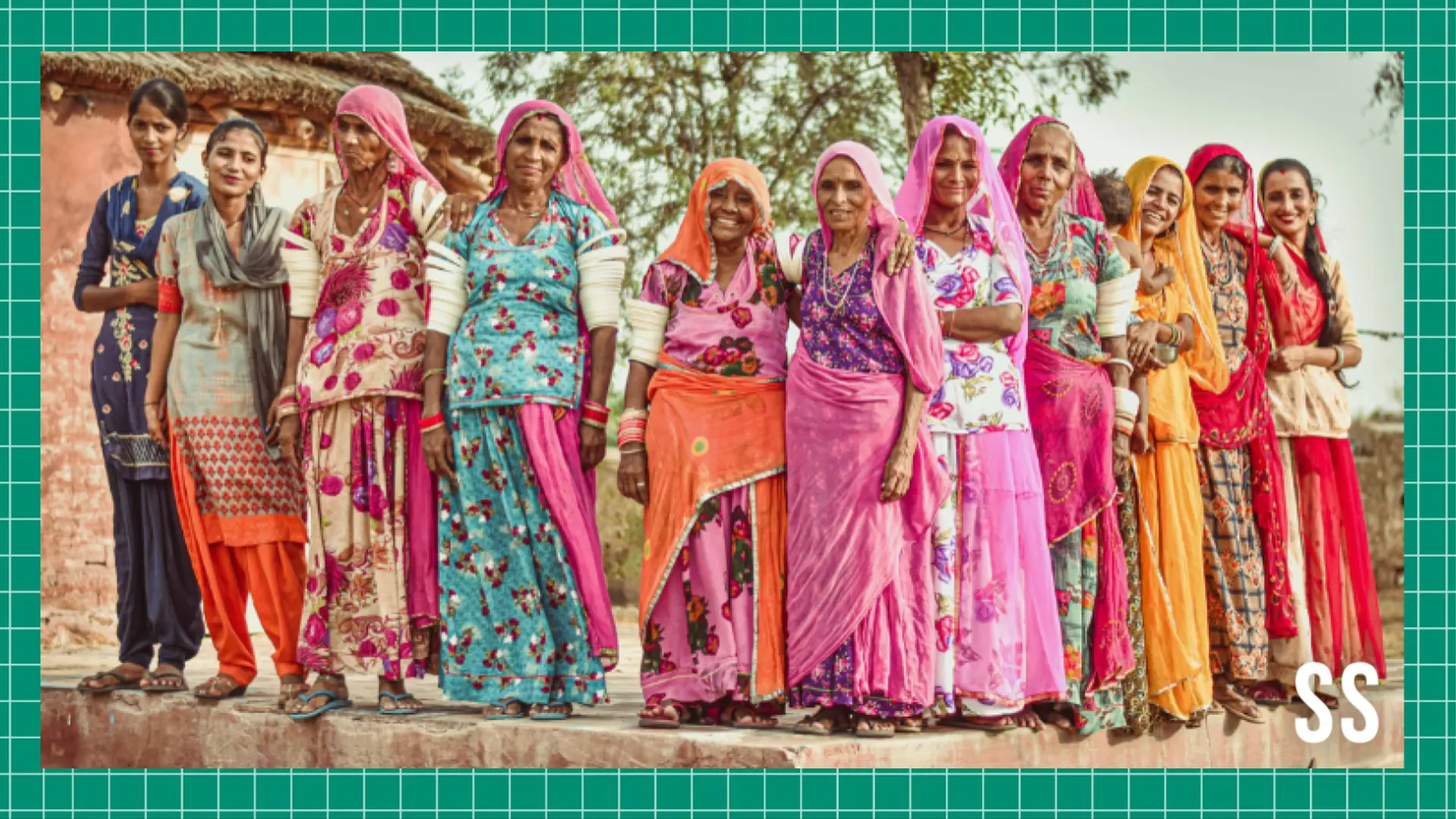

In the arid landscape of Rajasthan, just 40 kilometres from the India-Pakistan border, what began as a mission to help women artisans has evolved into a social enterprise transforming rural livelihoods and providing sustainable solutions to the construction industry.
Samakhya Innovative Solutions, led by Prerna Agarwal, Shwetambara Ujjain, and Danish Choudhary, is finding value in coarse sheep wool that pastoral communities have been discarding for ages.

It has revived sheep rearing as a profitable enterprise for over 500 pastoral families in the region, and provides employment for 35 women at its processing centres.
The search for impact led Agarwal from her stints in advertising and development to entrepreneurship. After years of selling consumer products, she felt that the impact she was searching for was missing.
“I’ve always been a big fan of communication and how you can change and impact human behaviour simply through words, photos and stories. After working in advertising, I felt I had learned some skills. Could I use them to bring in positive change in society?” she says.
This existential question led her to Urmul Seemant Samiti, a rural development organisation, and to Bajju, a remote village tucked away in the Thar desert, 100 km from Bikaner.
For someone who had been a Delhi person all through, the transition was dramatic. “I had never been to a village before that in my life,” she admits.
Discovering the real problem
Agarwal initially decided to help market artisanal products created by rural women. Her urban perspective was simple—to create an online market for beautiful products and watch it take off. However, the reality was far more complex. She discovered the lack of a market was a symptom of a much larger problem. Understanding the interconnected nature of rural livelihoods in the process was equally important.
While working with women artisans, she noticed they spent a significant time tending to sheep.
Despite owning sheep, families were struggling financially—and, during the pandemic, some of them even abandoned their animals because they couldn’t afford fodder or water.
"Why are they not able to earn through these animals? Why is there no market for the fibre? Desi wool used to be one of the most important products which communities used to sell at some point of time. Why has that economy crashed?" Agarwal wondered.
Turning weakness into strength
The local wool produced was considered too coarse for traditional textile applications, and the pastoralists were receiving less than Rs 20 a kilogram for the fibre.
This is where Samakhya’s innovation emerged.
“Can we flip this problem statement? Can the coarseness of this fibre be its strength rather than its weakness?” Agarwal pondered.
Research revealed that coarse wool excels at insulation.
“The coarser it is, the better it is at insulating from heat or cold temperatures. Or even at acoustics,” says Agarwal, adding, “The construction industry accounts for almost 40% of global CO2 emissions. And 20% of the overall pollution that a building generates over its lifetime comes from the materials used in it.”
This insight led to Samakhya’s breakthrough product: sustainable wool insulation for the construction industry.
According to Agarwal, wool insulation offers a natural alternative to carcinogenic glass wool, rock wool, polystyrofoam, and thermofoam. “Laboratory testing showed that it is 70% more effective insulation to these buildings as compared to the existing materials.”
Building an ecosystem
In 2022, Agarwal and two colleagues founded Samakhya as a for-profit enterprise also focused on social impact. They developed what they call the ‘Magra model"’ to organise the previously fragmented pastoral supply chain.
Central to their approach are Magra Pashupalak Centres that provide crucial infrastructure for pastoralists with shearing services, healthcare for sheep, and links with grazing lands and water resources.
“We started with just one village, Narayankura. When we piloted the idea, we had just 50 pastoralists. Today, we work with around 500 pastoralists across multiple villages, with plans to reach 1,000 this year,” says Agarwal.
These centres are run by micro-entrepreneurs who own the centre or the land and provide shearing services along with local NGO support. Samkhya ensures buyback of all the produce collected at these centres.
Once collected, the wool moves to Samakhya’s fibre processing unit led by 35 women where they sort it on the basis of quality.
The best grade is used for carpets. The B grade fibre, which otherwise would have been thrown away, becomes insulation material—insulation rolls and felt sheets for the construction industry.
Agarwal says this coarse wool fibre is regenerative and can replace existing carcinogenic glass wool, rock wool, polystyrofoam and thermofoam and is a green alternative. This 100% natural fibre is also fire-resistant, she adds.
“The felt sheets produced can replace PET panels in interior spaces. This fibre actively absorbs volatile organic compounds and pollutants from the air to create cleaner indoor air as compared to the plastics we use,” she explains.
In a successful pilot project, Samakhya installed 100 mm thermal insulation panels at a residential school in Spiti, Himachal Pradesh.
“Outside the temperature was hitting minus 20 and inside it was between 5 to 11 degrees,” says Agarwal.
Overall, she notes that Samakhya’s material reduces the energy footprint from 15 to 20% in a given space.
Samakhya’s wool insulation has been used in government primary schools, World Peace Center, Munjal Community Center, and Shree Brijmohan Munjal Auditorium, and RM Institute. Major corporations like Infosys have also begun exploring this material.
Samakhya’s client base includes architects working specifically in green buildings, and companies conscious of their SDG goals and want to use better, greener materials for their construction needs and reduce their energy footprint.
The journey hasn’t been easy. While everyone wants a green solution, Agarwal points out that few people want to take on the initial risks of trying it out.
“People look at cost in a very restrictive perspective without understanding the operational cost. We are bringing in material from interior areas, paying fair wages, and increasing the income of the pastoralists. So, the price of the end product is slightly higher than the plastics that are rampantly used,” she says.
Though it’s not yet profitable, Agarwal believes the venture’s trajectory is promising.
Support from partners has been crucial in Samakhya’s progress. For instance, Social Alpha, a leading venture development platform, provided a crucial financial ecosystem network, helping Samakhya establish sales channels and connect with architects and professionals from the construction industry.
“Samakhya is a remarkable example of grassroots innovation powered by science, design, and deep empathy. Working in pastoralist villages along the Indo-Pak border in Rajasthan, the team is enabling economic empowerment through material innovation and decentralised supply chains,” says Shruti Parija, Director, Climate and Sustainability, Social Alpha.
“By converting locally available sheep wool into natural insulation material for the built environment, Samakhya is not only creating new livelihood opportunities for pastoralists but also offering a sustainable alternative to conventional, high-energy construction materials,” she adds.
Social impact
Micro entrepreneurs like Kayam Deenji have seen their income increase from Rs 1.8 lakh to almost Rs 5 lakh per year from fibre-related activities.
“Pastorialists now have a regular income. They don’t have to travel 100-150 km to sell their wool. They also have access to nutrition and veterinary care. The solar-based shearing machine ensures quicker shearing of sheep,” explains Agarwal.
The women have also become active contributors to their household. A woman weaving magra rolls takes home Rs 8,000-10,000 a month.
“By introducing new technologies, creating new ideas, and innovating on the ground, we are reinvigorating the aspiration of the community. We are seeing more participation of youth in community meetings,” she says.
Agarwal wants to take the idea across the country and create localised insulation solutions. The solution, she believes, also holds good for international markets, where innovation for herders can change their futures.
Edited by Swetha Kannan