


Taking a step towards ensuring digital accessibility
A national working group has proposed a draft curriculum to integrate digital accessibility into undergraduate tech and design programs.

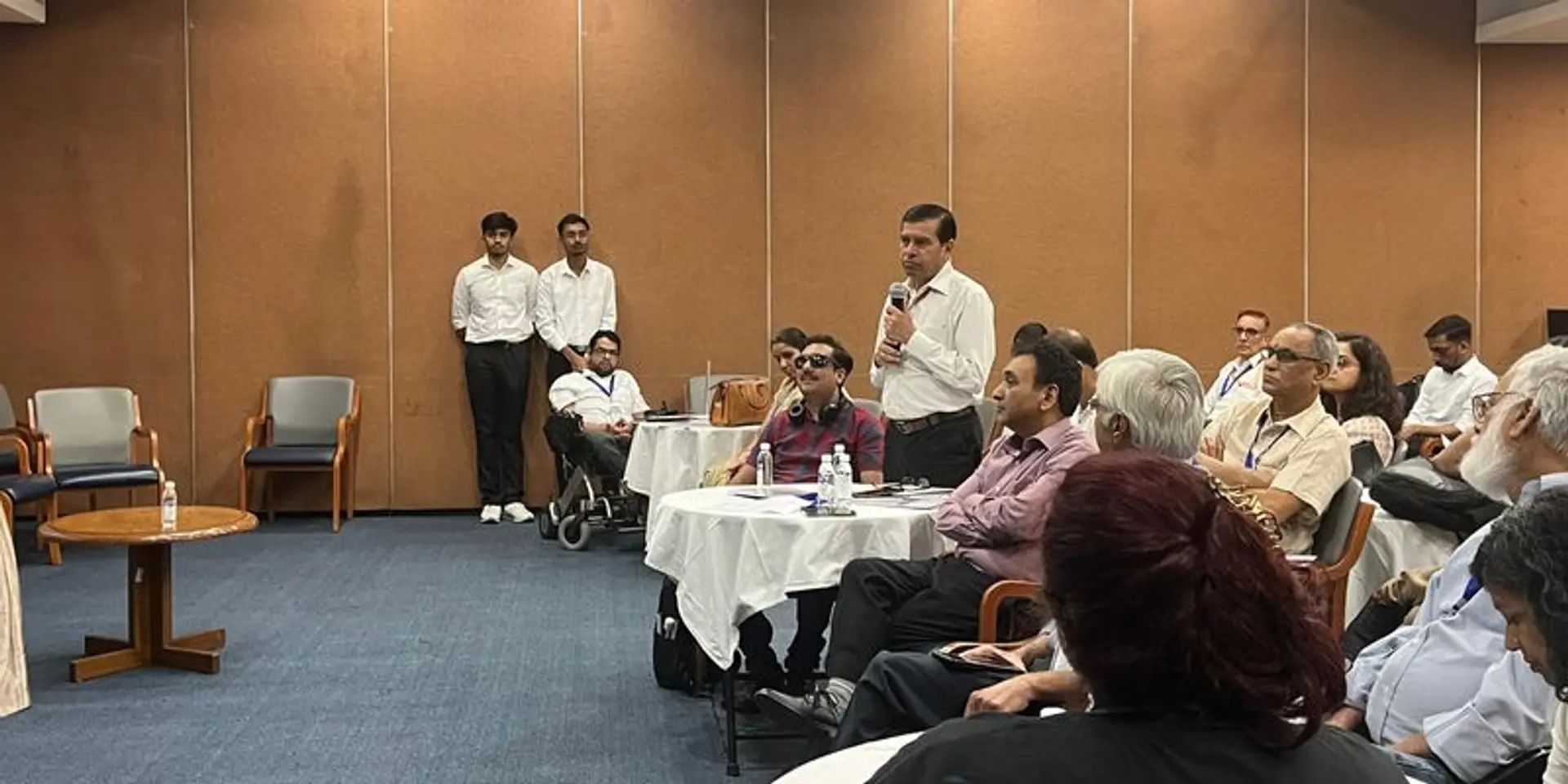

The Inclusive India Summit, held at the India International Centre, New Delhi, organised on Global Accessibility Awareness Day (GAAD) 2025 on Thursday, unveiled a draft curriculum to teach digital accessibility in undergraduate computer science and design courses. The initiative aims to ensure accessibility becomes a core part of how future technologists and designers are trained in India.
The event was organised by the Department of Empowerment of Persons with Disabilities (Divyangjan), SBI Foundation (the CSR arm of the State Bank of India), and the National Association for the Blind. It was organised in collaboration with the Association of People with Disability (APD) and Mission Accessibility (Dhananjay Sanjogta Foundation).
The event conducted in hybrid mode brought together academic leaders, accessibility professionals, and disability rights advocates from across the country.
According to a press release, the proposed curriculum is a response to a longstanding gap: while digital services have expanded rapidly in India, most platforms remain difficult to navigate for persons with disabilities.
A 2023 audit by the Centre for Internet and Society found that 98% of leading Indian websites do not meet global accessibility standards. Globally, the picture is no better; WebAIM’s 2023 analysis of the top one million homepages found accessibility errors on 96.3% of them. Experts at the summit agreed that the problem lies upstream, in how technologists and designers are trained.
The curriculum, developed over several months by a national working group—including contributors from the International Institute of Information Technology, Bengaluru; Design Beku; Mission Accessibility; Centre for Development of Advanced Computing (C-DAC), India; the Xavier’s Resource Center for the Visually Challenged (XRCVC); Artilabs; and BMS College of Engineering, Bengaluru—is designed to be modular, adaptable, and grounded in Indian contexts. It introduces students to accessibility principles, web standards like WCAG, assistive technologies, universal design, and disability rights law.
CP Gurnani, former CEO, Tech Mahindra, and a speaker at the summit, said, “India’s digital economy can’t afford to treat accessibility as an afterthought. Embedding it into how we educate our technologists is not just timely—it’s essential. This curriculum is a step toward building digital solutions that are truly inclusive, by design.”
“We have policy and precedent. What’s missing is implementation capacity. This curriculum ensures that we’re not just fixing what’s broken—we’re teaching how to build it right from the start,” said Amar Jain, lawyer and Co-founder of Mission Accessibility, who also led the Supreme Court petition.
The national consultation on Digital Accessibility Inclusion was chaired by Rajesh Aggarwal, Secretary, DEPwD, and saw participation from the University Grants Commission (UGC), the Ministry of Electronics and Information Technology (MeitY), Ministry of Housing and Urban Affairs (MOHUA), Ministry of Education, IIT Delhi, IIIT Delhi & IIT Bombay.
It focused on how the curriculum was designed to equip students with both conceptual and practical skills to build accessible digital products. It covered disability rights, accessibility laws, and technical standards like WCAG 2.2, along with hands-on training using screen readers, audit tools like Axe and WAVE, and real-world user testing. The discussion saw a strong emphasis on designing in collaboration with persons with disabilities, particularly in the Indian context.
Participants also discussed the need to address accessibility in emerging technologies like AI/ML, AR/VR, and Internet of Things (IoT). They highlighted how the curriculum connects academic learning to career opportunities through certifications like the Certified Professional in Accessibility Core Competencies (CPACC).
Inclusive hiring practices were also highlighted as essential, ensuring equal access to jobs by removing barriers in recruitment and workplace systems.
The draft curriculum is now open for public consultation and will soon be submitted to key academic regulators.
The emphasis on accessibility by design closely aligns with the Yes to Access project by APD, which advocates for systemic change in how accessibility is integrated into public infrastructure and digital services. A key innovation under this initiative is the Yes to Access app—India’s first AI-powered tool for conducting accessibility audits—which was featured during the summit’s panel discussion on ‘Inclusive Mainstream Technologies’.