



How Krivi.ai is creating new pathways for autism support
Born from the lived experience of its founders, Krivi.ai addresses critical gaps in autism care by offering a comprehensive, data-driven, and collaborative approach to autism management.

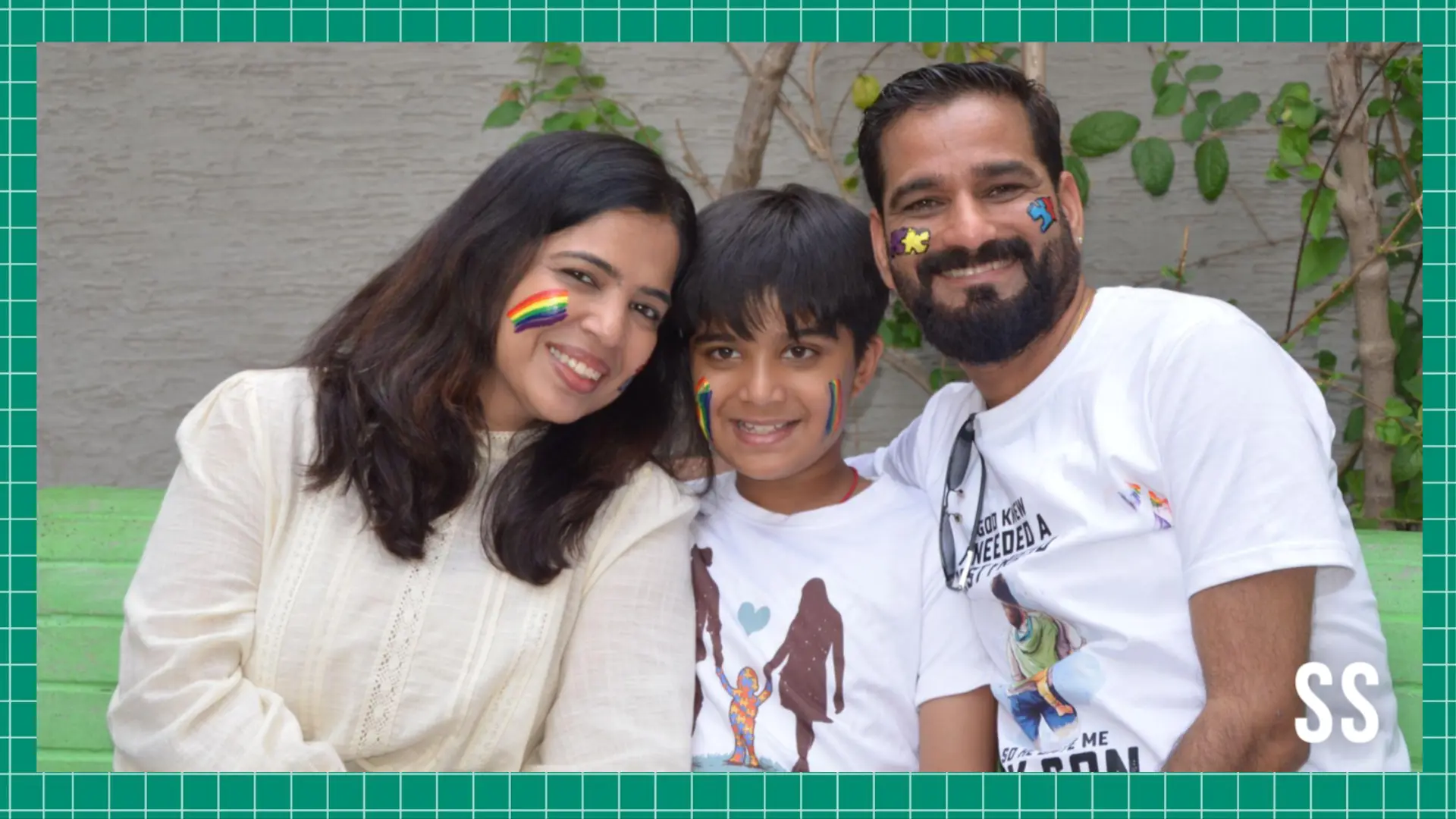

In 2015, Shivendra Upadhyay and Bibha Kumari received the diagnosis that their son was on the autism spectrum. Then came a gamut of emotions the parents had to traverse—denial, anger, bargaining, and eventually striving for a perceived “normality.”
“Why us? Did we cause this? Would our child ever belong? We attempted to fit our child into pre-defined moulds, unknowingly stifling their inherent uniqueness in a quest for conformity,” Upadhyay tells SocialStory.
Accepting and embracing the experience
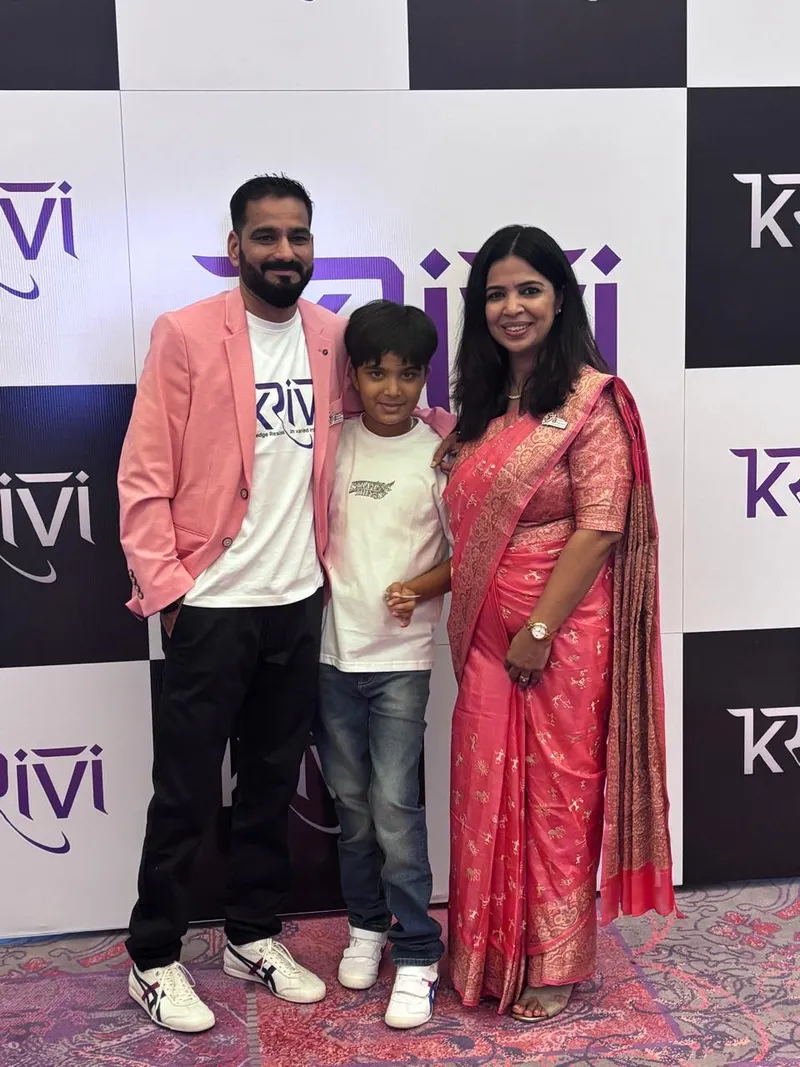
Shivendra Upadhyay and Bibha Kumari with their son
Accepting and embracing the entirety of the experience, Upadhyay says, empowered the parents to walk in unison with their child. This newfound perspective catalysed action and laid the foundation for Twinklez Centre for Autism, an early intervention centre that empowers 400 children with autism in Bengaluru.
Recently, the couple launched Krivi.ai, a mobile application designed to transform the special needs support ecosystem by offering a comprehensive, data-driven, and collaborative approach to autism management.
Upadhyay’s corporate journey encompasses working at HCL, Oracle, Prysm, and EnterpriseDB, while Kumari, an engineer, had stints in Reliance Communications, TCS, Dell EMC, Capgemini, and Accenture, before transitioning into social entrepreneurship.
“Running Twinklezz provided invaluable first-hand insight into operational and collaborative complexities within this space. Our interactions with parents consistently mirrored our own experiences of the unique challenges. Similarly, our therapists often highlighted administrative and logistical burdens that consumed valuable time better spent on the children's development,” he explains.
The most significant challenge the duo observed was a lack of seamless "collaboration" among the individuals dedicated to supporting a child with special needs. Despite sharing a common goal, formal interaction between these stakeholders was often absent. Consequently, there was a limited understanding of how each person's efforts impacted the objectives of others.
“Current assessment methods presented another key area for improvement. In our experience, a typical assessment consumed a considerable 1.5 to 2 hours, with a significant portion of this time dedicated to completing forms,” he adds.
He also points out that parents often struggled to recall specific observations when faced with questions during the assessment. Accessibility to these crucial assessments in remote locations also remained a significant hurdle.
Addressing critical challenges in autism care
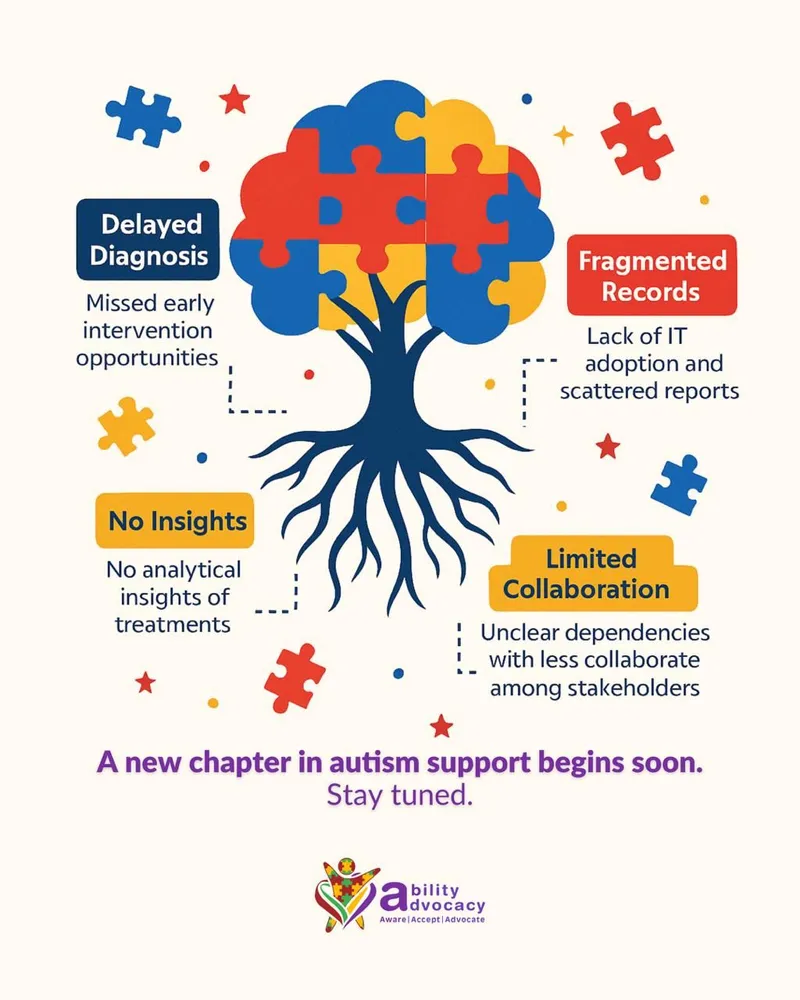
Problem that Krivi.ai is addressing
Leveraging their expertise in IT, the duo began exploring technological solutions to alleviate these shared pain points for therapy centres, parents, and therapists. That's where Ability Advocacy, and from it, krivi.ai was born.
Hosted securely on Microsoft Azure, Krivi.ai acts as a centralised hub connecting parents, therapy centres, therapists, educators, and researchers. It provides a collaboration platform, called ‘Circle’, an electronic health record, and autonomous DIY assessments.
Key tools include standardised assessments include Vineland Social Maturity Scale (VSMS), Indian Scale for Assessment of Autism (ISAA), and INCLEN (assessment tool for diagnosing autism spectrum disorder in children).
These enable professionals to evaluate developmental milestones accurately. Therapists can set individualised goals for each child, assign relevant stakeholders, and collaborate effectively through a unified platform. Parents and caregivers are kept in the loop through intuitive web interfaces and guided processes.
A core strength of the platform is its AI-driven analytics and reporting module, which transforms therapy and test data into actionable insights. This empowers families and professionals to make informed decisions and track progress in real time.
To ensure data privacy and collaboration, users can securely upload medical reports and control access permissions, making it easy to share relevant documents with therapists while maintaining confidentiality.
India has an estimated 18 million people diagnosed with autism, yet awareness and support remain limited. Upadhyay emphasises that they are committed to driving campaigns that nurture a society where individuals of all abilities are truly understood, embraced, and supported.
“One of our most powerful initiatives, Parenting Journeys, thoughtfully shares the heartfelt experiences of parents raising children with autism and other neurodiverse conditions. These stories offer an intimate look into their path—from the initial realisation to the emotional journey of acceptance—highlighting the approaches that have made their lives more navigable,” he says.
Since the launch of Krivi.ai, the founders have received an overwhelmingly positive response from clinicians, educators, and therapy centres.
“We are actively incorporating feedback to refine our offerings, ensuring that professionals can leverage the platform to its fullest potential. As we move forward, we are excited to deepen collaborations, expand our impact, and continue driving meaningful change in the autism care ecosystem,” he says.
At present, Krivi.ai is offered free of charge to therapy centres and parents who wish to participate as beta users. For the next few months, the focus will be on enhancing the application based on real-world usage before transitioning to paid subscription plans, which will include B2C, B2B and B2B2C models, and corporate and institutional partnerships.
Krivi.ai's long-term vision is to scale globally and create a unified digital ecosystem for autism care, integrating clinicians, educators, therapy centres, families, and individuals across different regions.
For this, the founders focus on strategic partnerships with international healthcare institutions, advocacy groups, and research organisations. It will also include localised adaptation, including regional language support, collaborative networks that allow professionals to share knowledge, best practices, and interventional strategies in real-time.
“Awareness-driven storytelling, using initiatives like Parenting Journeys and Unseen Strengths to reshape autism narratives globally and foster acceptance will also be an important part of our journey,” Upadhyay says.
For parents of children with autism, the duo’s pragmatic advice comes from their lived experiences and challenges.
"The road ahead may not be without its twists and turns," they acknowledge, "but when guided by acceptance, it becomes a journey of learning, discovery, and meaningful progress. You'll uncover strategies that work, moments of unexpected joy, and a newfound resilience that will empower both you and your child."
Through Krivi.ai, they want to ensure that no family navigates this journey alone—creating a world where autism management is more connected, accessible, and empowering for all involved.
Edited by Suman Singh