



This multimedia movement is transforming India’s conversation around desire
Agents of Ishq, founded by Paromita Vohra, uses videos, comics, podcasts, and articles to create a platform for sex education that is both culturally relevant and emotionally resonant.

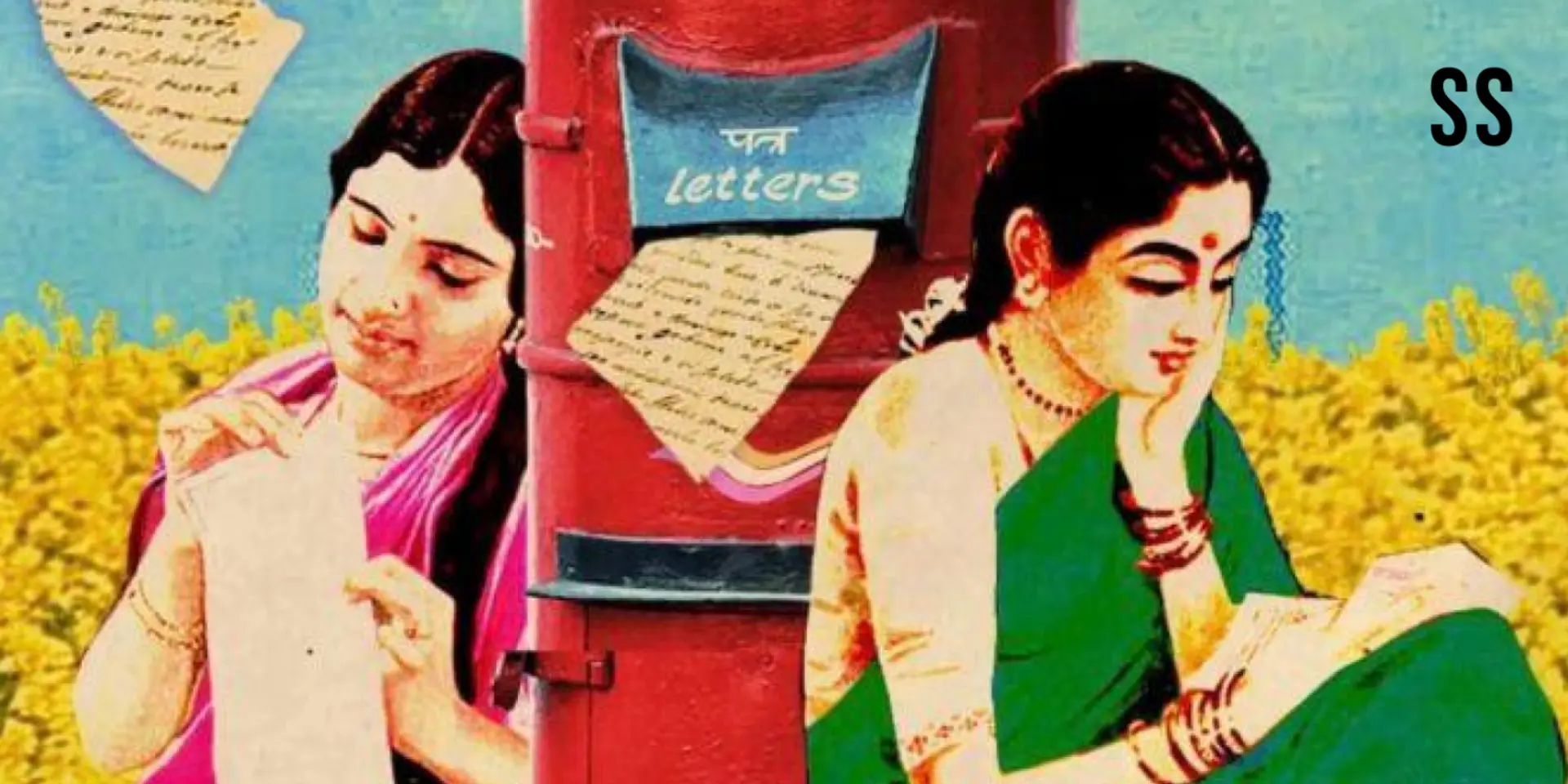

About a decade ago, filmmaker and writer Paromita Vohra found herself on the lookout for “a language for sexuality that was Indian, contextual, affectionate, and pleasurable—one that would create a dynamic sense of autonomy to overcome fear and shame around the subject.”
“We were talking more openly about sexual violence,” she says, “but these conversations quickly became strongly protectionist and cast sex itself only in the shadow of danger—not as something that could be joyful, curious, or simply a part of life.”
It was also a time when influencer models or performative activism hadn’t hijacked the internet.
In 2015, Vohra started Agents of Ishq (AOI)—a pioneering arts-based initiative that utilises various media forms of engagement such as videos, comics, podcasts, and articles—to present comprehensive sex education and narratives around intimacy and relationships.
Drawing from her background in feminist filmmaking and collaborations with organisations like Bumble and Majlis Law, a Mumbai-based legal and cultural resource centre that focuses on women’s rights, Vohra’s vision was to create content that was rooted in Indian cultural contexts and personal experiences.
Finding the perfect middle ground
In a country where the mere mention of sex in public discourse could trigger social shaming or moral policing, AOI set out to create room for alternative viewpoints and empower individuals to question the status quo by sharing their stories anonymously.
Today, AOI’s content is developed in collaboration with educators, health professionals, activists, and youth groups across India. They have partnered with more than 82 organisations to create impactful work that has become a gold standard in communications about sex and sexuality.
These collaborations have resulted in award-winning projects (Aika to the Baika: Police Complaint Lavani, a Marathi-language Lavani music video; #GrownUpGirls—videos on young women’s experiences of adulthood created in collaboration with CREA's SELF Academy).
AOI creates materials for comprehensive sexuality education aimed at general audiences as well as trainers, educators, and organisations working with youngsters and women. They have over a 100 collaborations to their credit since they launched, and most of their work blends research, advocacy, and creative expression.
One of AOI's particularly significant partnerships with the YP Foundation worked with young men to explore masculinity, vulnerability, and sexuality.
Manak Matiyani, former executive director of YP Foundation, explains how their approach offered a radical departure from conventional NGO-led interventions, which often relied on rigid, curriculum-driven models. “Most sexuality education for men has been about telling them what not to do,” says Matiyani. “It’s a consent-first, ‘no means no’ approach, but young men are asking more nuanced questions—like, how do I know if my partner is having fun?”
AOI’s style—rooted in storytelling, embodied metaphors, and emotional nuance—created space for precisely those questions.
Together, they conducted a “sensory metaphors” workshop, inviting participants to engage with abstract emotions through tangible, playful prompts. This led to an unexpected easing of tension, where young men began opening up about shame, confusion, heartbreak, and even moments of tenderness—subjects not often associated with masculinised spaces.
It was also a rare intervention that recognised how straight men’s sexuality is often ignored or flattened in mainstream sex ed—either treated with suspicion or left unexamined, says Matiyani. “Most sexuality conversations either focus on queer men or position straight men as probable perpetrators. AOI’s model opened space for young, cis-het men to talk about sex without being reduced to stereotypes,” he notes.
AOI’s “pleasure-first” approach is a model that departs from even progressive, rights-based frameworks. “Rights are important, but pleasure-first is rights-plus-fun,” adds Matiyani.

“We believe that if you give people room to reflect, they will find a way to make sense of their experiences, and these become a form of shared community wisdom," says Paromita Vohra, Founder, Agents of Ishq.
The platform refuses to be didactic in the way it crafts an atmosphere of openness, fun and affirmation. “Sex education in India has historically been punitive,” Vohra points out. “It tells you what not to do. It positions sex as something to be afraid of, or ashamed of, rather than something to be curious about.”
Its storytelling strategy has a distinctly Indian flavour—not just linguistically, but emotionally. The language is multilingual, and the metaphors, local. There’s a cultural stickiness to the way it communicates. A comic about abortion and love; a young girl’s story about saving her Sidney Sheldon books from her mother; an essay reflecting Shah Rukh Khan’s romantic archetypes. The content is carefully crafted to be playful and grounded, as opposed to flippant or moralistic.
Community engagement through personal stories
This approach not only invited a diverse range of personal experiences but also allowed the community to take ownership of the conversation. They posed open-ended questions, inviting people to share their stories. In response, they received a flood of narratives—both long and short—from across urban and rural India, each reflecting a deep yearning for expression.
By tapping into these voices, AOI has created a platform where individuals feel seen, heard, and validated in their complexities. The stories were raw and diverse, reflecting the nuances of desire, identity, and relationships that are often left unspoken.
“And so, Agents of Ishq didn’t find the need to educate in the traditional sense,” says Vohra. “We told stories. Ordinary ones. Sometimes messy, often beautiful, and always anchored in the textures of Indian life—whether of a young woman from Pune writing about her first kiss on a motorbike, or a trans man in Mumbai navigating desire with dysphoria,” she says.
They used cartoons, songs, dance, paintings, and memes to reimagine these stories; a model of engagement that pushed boundaries without confrontation.
AOI’s contributors are anonymous, which is central to the authenticity of the platform. It allows people to say what they feel, not what they’re supposed to say, says Vohra.
Anonymity, in this context, functions as a kind of cultural leeway. It allows users to bypass societal shame while reflecting on deeply personal experiences. This also steers AOI away from the trappings of Western sex education frameworks, which often assume a kind of individualist autonomy that doesn’t always translate to Indian social realities.
“In India, everything is about something—your family, your community, your caste location, your gender role. The western idea that you ‘own your body’ is not just abstract here; it can be alienating," she adds.
Vohra, a documentarian by training, brings a finely honed sensibility for the everyday, for how the political is embedded in the personal. Through AOI, she and her five-member team translate themes of body and sexuality into multimedia fragments that feel lived-in rather than top-down. For example, zines about masturbation, Marathi poems about heartbreak; Instagram reels about consent set to film songs.
By steering clear of corporate “positivity,” they are able to function with a rare optimism and a belief that people are capable of desire and dignity at the same time. “We don’t believe there is one right answer,” Vohra says. “We believe that if you give people room to reflect, they will find a way to make sense of their experiences, and these become a form of shared community wisdom.”
Over the years, AOI has amassed a fiercely loyal following, especially among young Indians. The platform’s content travels from WhatsApp forwards to college corridors, from small-town phones to elite classrooms.
AOI’s work doesn’t erase the uncomfortable questions—it holds them gently. Whether it’s caste, class, disability, or queerness, the platform doesn't homogenise “Indian sexuality” into an urban, English-speaking liberal fantasy. Rather, it gathers voices that might never have otherwise been given space.
In one such story, a Dalit woman anonymously reflected on the entanglements of sexual desire and caste hierarchy in her relationship. “That story wasn’t about binaries, but asserted an entire philosophy of love as fundamental to politics. These are hard-won insights people acquire from their own mistakes, hurts and risks,” says Vohra.
“That’s what the platform is for.”
Agents of Ishq isn’t out to scandalise or sanitise sex—it wants to integrate it into the humdrum of Indian life. By creating a space that doesn’t assume the worst of people, it allows them to see themselves more clearly—not as sinners or victims or enlightened rebels, but as full, complex beings making meaning out of all kinds of muddled feelings.
“We wanted to create something that didn’t tell people who to be,” says Vohra, “but gave them space to imagine who they could become.”
Edited by Affirunisa Kankudti