



How building playgrounds has turned into a movement of hope in Chhattisgarh’s Dantewada
Maidan Cup—an initiative by Sachin Tendulkar Foundation and Mann Deshi Foundation, with support from district authorities, the government, and local communities—is converting 50 barren plots into playgrounds across 50 villages in Dantewada.

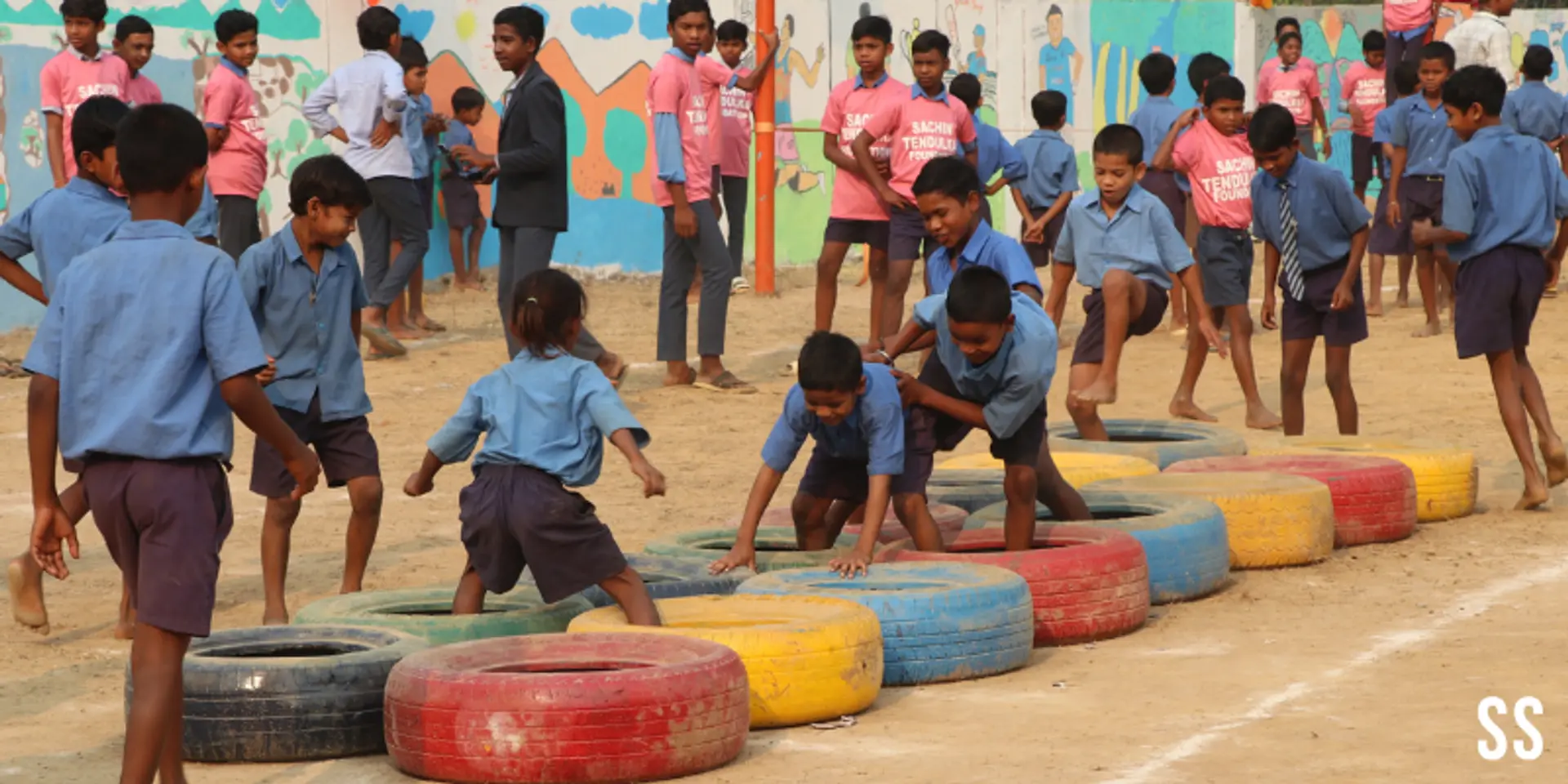

Chhindnar, a remote village in Chhattisgarh’s Dantewada district, has seen something extraordinary this year. A barren land behind a government school has been transformed into a vibrant playground with a volleyball court, a running track, a long jump pit, and colourful murals painted by children.
It’s a development story worth emulating—of a grassroots movement that’s changing how communities think about sports, education, and potential.
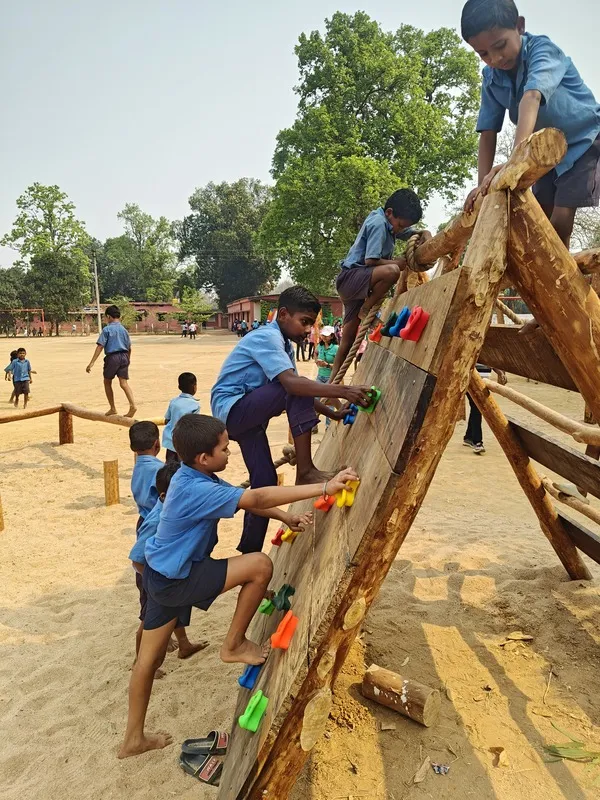
The Maidan Cup initiative is converting 50 barren plots into playgrounds across 50 villages in Dantewada.
The Maidan Cup initiative, a collaboration between the Sachin Tendulkar Foundation and the Mann Deshi Foundation, with support from district authorities and the Chhattisgarh government, is converting 50 barren plots into playgrounds across 50 villages in Dantewada.
A departure from the usual top-down models, the Maidan Cup seeks to be inclusive. Here, villagers are building playgrounds for their children, and the results are expected to be far-reaching.
Making sports accessible
The origin of the Maidan Cup can be traced to the Travel Coach Program initiated by Mann Deshi Foundation, which trained government school teachers across India to become certified sports coaches across Maharashtra.
Prabhat Sinha, CEO of Community Programmes at Mann Deshi Foundation, shares some impressive and inspiring stories.
Reshma, a former buffalo hoarder, now runs marathons globally, and Kajal, once a sugarcane cutter, plays field hockey for India’s senior national team, earning Rs 45,000-50,000 a month as her family's primary breadwinner.
As the project expanded to other states, such as Chhattisgarh, it confronted a harsh reality. Over 65-70% of schools in India lacked proper playgrounds. Even if they existed, they were located far away, inaccessible to the children who needed them most.
“We were doing amazing things in training teachers to be sports coaches, but many didn’t have a playground,” says Sinha.
With a population of roughly 3 lakh—70% of whom are tribal—Dantewada has long been associated with conflict and underdevelopment due to its complex legacy of Maoist insurgency.
Many questions arose. How do you build a replicable model for community-built playgrounds? How do you teach 70-80 villagers to replicate them in their villages?
The solution was ingenious and simple. Divya Shinde, Project Lead, Maidan Cup, devised a 185-page manual that worked like an IKEA booklet. Modules that could be replicated were created.
She elaborates, “Any size ground could accommodate our designs—from large grounds with 400-metre tracks to smaller ones with 35-metre tracks for younger children.”
“It had to be so simple that even a 12- or 13-year-old could read the booklet and build a playground,” adds Sinha.
Each playground includes a long jump pit, a climbing wall; a slackline; a track; kho kho, kabaddi, and volleyball facilities; and a jungle gym. About 70% of the grounds have facilities for discus throw and football.
These are built using local materials and cost just Rs 3 lakh to Rs 4 lakh per facility.
Building more than playgrounds
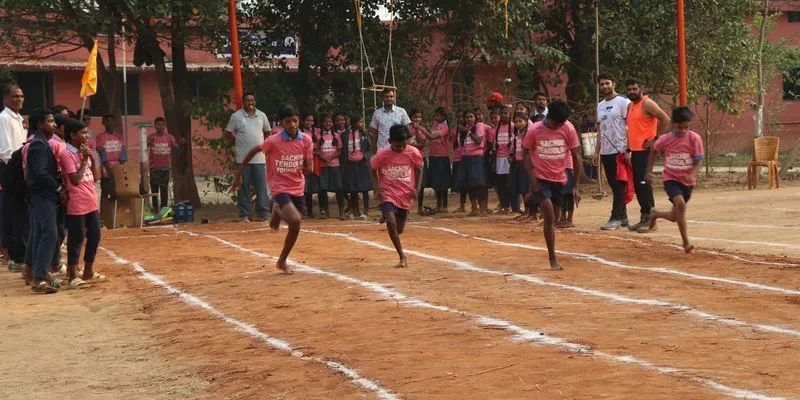
Each playground now attracts 100 to 200 children every day—even during summer vacations when schools remain shut.
The construction process turned into a community event. In Chhindnar, residents from nearby villages joined in, not just to help, but to learn techniques they could replicate in their communities. While adults laid tracks and installed equipment, children brought the space to life with colourful murals on school walls.
"This was happening for the first time, people coming together to build playgrounds for children in such circumstances,” says Sinha.
District Collector Kunal Dudawat acknowledges the region’s challenges while emphasising its potential. “Till recently, we have been victims of left-wing extremism. But contrary to that perception, our population, particularly our tribal population, is very much athletics-oriented and there is good athleticism among the youth.”
He continues, “If we talk about running or climbing a mountain, then no one can beat the local population. Despite having such good athleticism, we did not get good athletes or sportsmen. There is potential within the entire Bastar region and Dantewada.”
Previous efforts in the district had failed, and the government-constructed mini-stadiums were left unused and fell into disrepair, largely due to a lack of community ownership and ongoing maintenance.
“With the Maidan Cup, and the community participating in it, there is maintenance and also emotional attachment. With the investment and support from the Mann Deshi Foundation, the administration, and the Sachin Tendulkar Foundation, it became easy for us to replicate the model and scale it up significantly,” notes Dudawat.
The game is on
Six months into the initiative, 15 playgrounds have been completed, with another 35 to come up after the monsoon. Each playground now attracts 100 to 200 children every day—even during summer vacations when schools remain shut.
Dudawat describes the transformation he has witnessed: “The first thing is the priceless smile that we see on the children’s faces. Secondly, the number of children who are participating in the villages has increased tremendously, even during the summer vacation.
“We are excited for schools to reopen and for the children to see new additions in the schools.”
Bhumika, a student at Chhindnar school, had watched the construction with curiosity. When Shinde explained that her school ground would be transformed into a proper playing facility, she was excited.
“We have never thought about making our team or competing further because we never found the facility.
But now that the ground is made, I have the confidence to make my kho-kho and kabaddi teams,” she says.
For Bhumika's parents and others, the fact that every inch of the playground was built by their community created a crucial sense of safety. They now allow their daughters to play freely on the grounds they had helped paint.
A social movement in the making
In a region long marked by conflict, the Maidan Cup model has helped build a sense of community ownership. According to Sinha, village sarpanches now report that these playgrounds have evolved into vibrant social hubs where young people come together to play, connect, and dream of a better future.
Dudawat believes it also aligns with government efforts such as the Bastar Olympics.
"Bastar Olympics started last year in the Bastar division, in which competitions are held at the village, block, and division levels. While there were opportunities to compete, we could not provide the grounds. The Maidan Cup initiative, which is of the people, for the people, by the people, will enable them to learn more sports,” he explains.
The Sachin Tendulkar Foundation’s involvement brings both credibility and resources. When Sinha pitched the idea to Dr Anjali Tendulkar and Sara Tendulkar (directors), they were quick to provide funding alongside government support.
“Dantewada was chosen as the starting point for the Maidan Cup because it truly reflects the challenges and the untapped potential of the region. Many children here have grown up without access to proper playgrounds, missing spaces that foster confidence, teamwork, and ambition,” points out Sara Tendulkar.
“Through Sachin Tendulkar Foundation’s and Mann Deshi’s Travel Coach programme, where we train government school teachers to spot rural talent, we recognised Dantewada as a key area. The enthusiasm and commitment from the community, along with the support from the district administration and Mann Deshi’s community-driven approach, made it possible for us to expand the Maidan Cup initiative,” she adds.
Interestingly, the Maidan Cup initiative includes a competitive element.
The best playground in each district wins additional facilities—Chhindnar and Kasoli villages have earned a skateboarding park.
"People are competing for the best ground. It’s a small impetus to make sure everyone’s building well and fully involved in this movement,” says Shinde.
The objectives of the Maidan Cup are focused: in the current phase, it will build 50 playgrounds, directly impacting over 10,000 children. It hopes to see a 40% rise in girls’ participation in sports.
Sinha shares that Mann Deshi Foundation also plans to hire two coaches in areas where these playgrounds are located to train the children.
The programme’s low cost and high community engagement has attracted attention from other districts. There are plans to extend the Maidan Cup to Raigarh and Jashpur as well.
Edited by Swetha Kannan