


“People just stepped up”: How Priyali Sur raised Rs 1.7 lakh to vaccinate marginalised girls against cervical cancer
In June, Delhi journalist and gender rights advocate Priyali Sur raised Rs 1.7 lakh in just 25 days — not through corporate grants, but by crowdfunding and running a half marathon to support cervical cancer vaccinations for girls from marginalised and displaced communities.

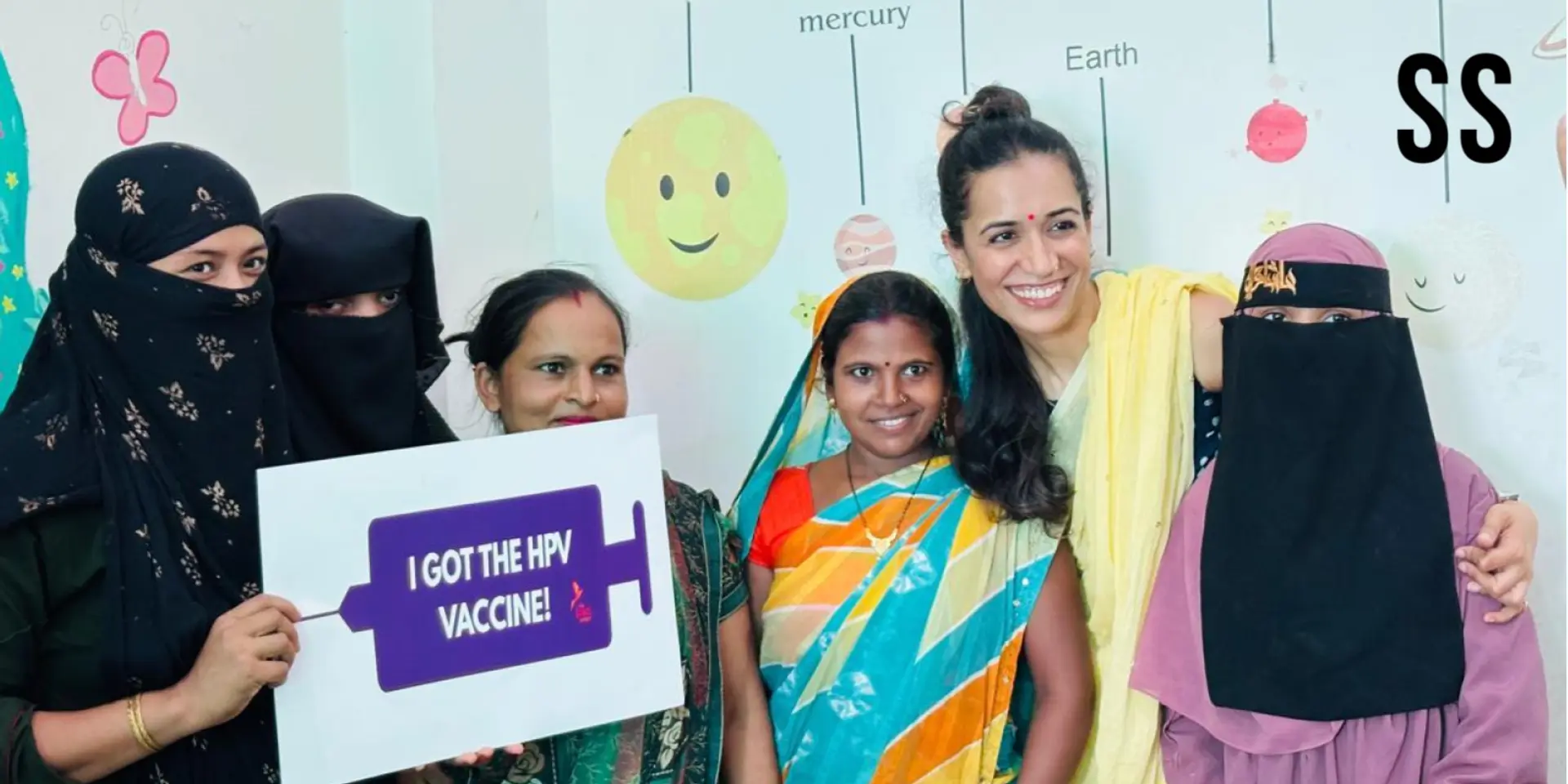

In June 2025, journalist and gender rights advocate Priyali Sur raised Rs 1.7 lakh in just 25 days — not through institutional funding or CSR grants, but through individual contributions, collective goodwill, and by quite literally going the distance for a cause that is both deeply personal to her and vital to the country’s gender rights movement: access to cervical cancer vaccines.
The funds, raised through her NGO, The Azadi Project, helped vaccinate girls from marginalised, displaced, and refugee communities across India.
Sur, who lost her mother to stomach cancer last April, noticed that even as cervical cancer became part of the public healthcare system, certain marginalised groups in India had zero access to resources.
“Firstly, because the cost of the vaccine is extremely high. The cheapest — Cervavac — itself comes at Rs 2,000 to Rs 2,500 per dose. If you're a woman who's 15 years and above, you will need three doses. No way can a woman from a marginalised community — a rag picker or someone whose husband is a daily wage labourer — afford almost Rs 8000 for a vaccine,” she says.
Cervical cancer is one of the most preventable forms of cancer, and yet the second most common cancer among Indian women, with nearly 1,23,000 new cases annually, and 77,000 deaths, according to GLOBOCAN 2020. While the Indian government has introduced Cervavac into the national immunisation programme, access remains patchy, especially for communities that are undocumented or politically unrecognised—a focus group The Azadi Project works with.
“The population with which we wanted to conduct this vaccination drive— displaced, migrant, and refugee women—did not have access to the government programme,” says Sur.
But for Sur, the decision was also personal, which toughened her resolve. “I lost my mum to cancer last April. June is her birthday month. It’s also mine. I wanted to do something that was meaningful.”
She turned to crowdfunding but not without setting out on a half marathon to raise awareness and garner support. “I said, because this is so personally important to me, I'm going to run a marathon—or rather a half marathon. Oh God, I don't think I can ever run a full marathon, that's 42 kilometres,” she laughs.
Sur announced the campaign on June 5, and the half marathon was on June 21, which meant she had 15 days of practice to run that. It also became a great tool to raise awareness, because people were glad to see a personal story, an arc,” she says.
As she trained, Priyali posted regular updates on social media not just about her runs but also on how much had been raised and how many girls could be vaccinated.
“Asking somebody for Rs 6,000 to support a girl may not be a small amount. And yet, we had so many people. They gave Rs 6,000, Rs 12,000, Rs 18,000. Others who could not afford as much gave Rs 2,000, Rs 1,500. Sometimes students came forward to give Rs 200 or Rs 300. All of it added up to the bigger bucket,” she says.
The campaign garnered not just money but solidarity. “It showed that individually, people believe in a cause. They want to connect, and feel like they are investing in something meaningful to them.”
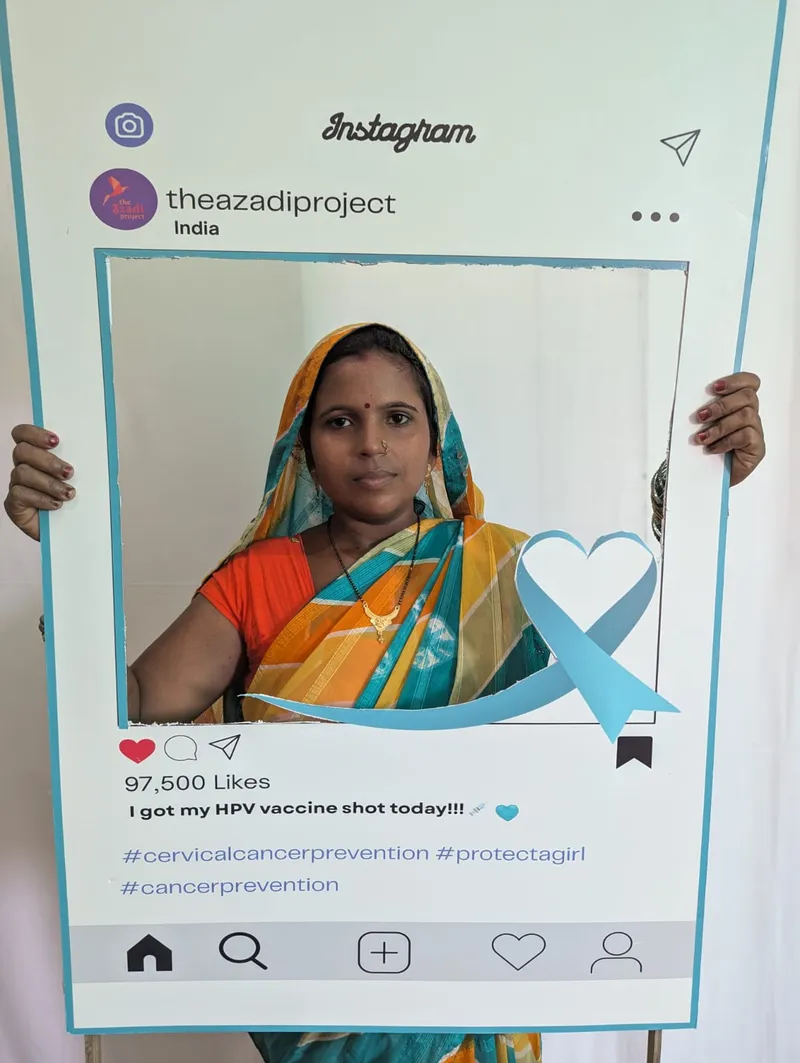
Many women in the community are married to men much older than them, who have had multiple partners. They have less agency — whether it is financial, sexual, or in any aspect of life, says Sur.
While individuals contributed generously, larger funders still stayed away. “Unfortunately, when it comes to corporates or big philanthropies, they have to work under a political regime — or a social regime — where there is a constant worry about whether their licenses will get cancelled.”
A large health organisation doing cervical cancer work even reached out to say they’d love to help — but eventually backed off. “They said, ‘If it’s for the community you're working with, we can't do anything. We have to be answerable to the authorities.’ That was really disappointing, but then, that reflected the reality.”
Since its introduction, India’s FCRA (Foreign Contribution Regulation Act) over 20,000 NGOs have lost their licenses. Sur notes, “Every now and then, in the work that we do, we are constantly faced with that reality. But it also shows why what we do is extremely important.”
Though there was no formal data-gathering exercise, Sur explains their decision-making came from years of deep listening. “Based on the conversations and counselling sessions we’ve had with the women in these communities for over two years now, we kind of understand the social structure.”
“Many women are married to men much older than them, who have had multiple partners. They have less agency — whether it is financial, sexual, or in any aspect of life. That makes them extremely vulnerable.”
Additionally, many girls in the community marry very early. “Since the cervical cancer vaccine is supposed to be most effective (providing 90% protection) before you're sexually active, we wanted to make sure we could reach girls before that.”
The campaign’s success offers lessons in both resourcefulness and the glaring limitations of current funding systems. “I’d definitely want more corporates and more philanthropic organisations to really look at grassroots organisations — even if it's 50 girls or 100 girls. Not everything has to be one lakh girls,” says Sur.
“Smaller non-profits doing the groundwork cannot get that kind of funding to scale. If they can't scale, does that mean they can’t make small, incremental changes?” she adds.
She also calls for a shift in how decisions are made. “I wish there could be a decentralised way in which philanthropic organisations and corporates aren’t accountable to the political regime of their times. That way, they could invest in causes that may not align with the current government, but still matter.”
Until then, individuals — not institutions — will continue to fill the gap. “Most people who want to do grassroots work are putting in their own money. Or the money of their families and friends. That’s the sad reality in India.”
Edited by Affirunisa Kankudti