



Her struggles with English led this Meghalaya woman to start a school in a remote village
Genavafa Behphat’s struggle with learning English and the lack of quality education inspired her to return to Nongshken, Meghalaya and start Dew Drop Academy, giving local children the skills she once longed for herself.

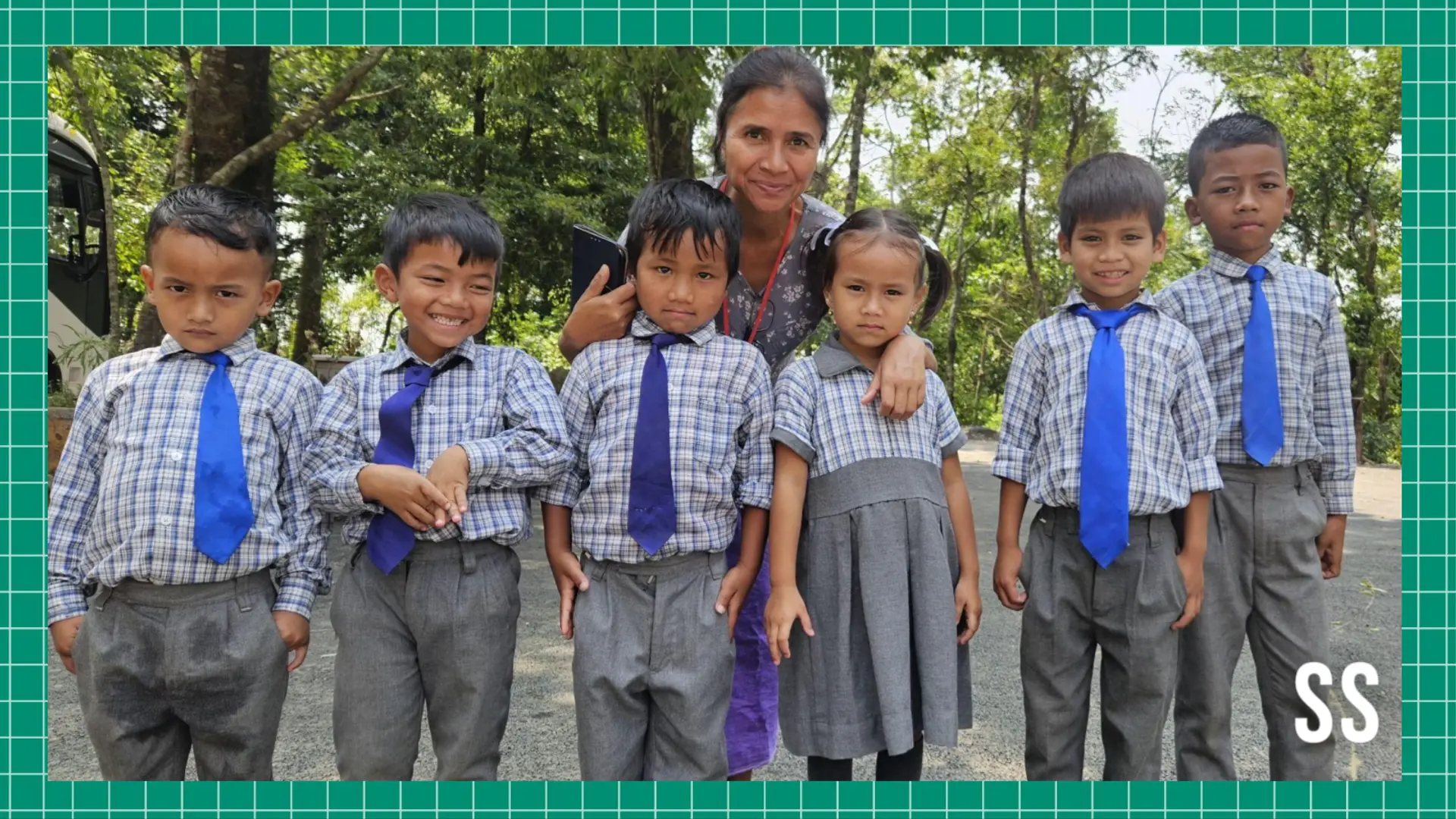

Three kilometres from Nongshken, a remote village in Meghalaya’s East Khasi hills bordering Bangladesh, a small school in the middle of a forest is offering hope to 241 students from marginalised communities.
Started by Genavafa Behphat in 2019, the Dew Drop Academy is part of the Sunbird Trust’s School Transformation Programme (STP), which focuses on all round development of partner schools in conflict areas.
Dew Drop’s evolution is a reflection of how Behphat surmounted her struggles with education and, in the process, transformed the lives of hundreds of rural children.
Patience and persistence
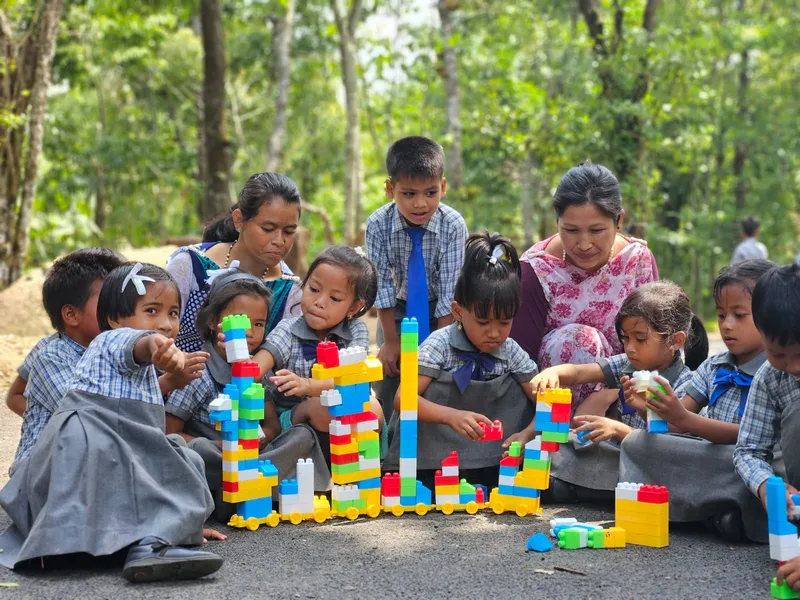
Children at play at the Dew Drop Academy
Growing up with 10 siblings, Behphat moved to Shillong after finishing school in her village. However, she was not prepared for the leap.
“The education system in the village was all about learning by rote. When I joined St Mary’s College in Shillong, I found it difficult because I did not know how to speak English,” she recalls.
She dropped the Political Science Honours course and decided to stick to “general” subjects as she struggled to cope with the language barrier.
The challenges continued. When she landed her first job at Nazareth Hospital in 2000, the administrator questioned aloud: "How can a BA girl not understand and speak English?"
But Behphat didn’t give up. She bought English reading material, listened carefully to taxi conversations, and slowly but persistently learned the language while continuing her work as a ward attendant.
"I never felt shy. In one or two years, I got promoted to the reception because I was willing to try,” she tells SocialStory.
For five years, the hospital became Behphat’s training ground. She absorbed English and confidence, worked with doctors and nurses from different backgrounds, and learned to navigate computers.
She left in 2005 with dreams of cracking the UPSC exams, but reality hit hard when she learned coaching classes came at an exorbitant cost of an average of Rs 50,000 a year, plus expensive books. Also, her rote-learning background left her unprepared for analytical thinking.
Undeterred, she decided to take up a teaching job at an English-medium school in Shillong’s Seven Mile area. Her days were long and gruelling, starting at 6 am and extending to evening classes. However, her persistence paid off, and she says she was praised by the principal as the best speaker among the staff.
In 2009, she transitioned to social work with organisations like WISE and Guwahati Social Forum. She travelled across states, organised training sessions, and worked with grassroots communities, giving her fresh perspectives on the impact of education.
"As I travelled and walked around, my roots always hit me back. Why didn't I get these opportunities when I was young, when I could do a lot of things?” she would ponder.
Education at the centre of empowerment
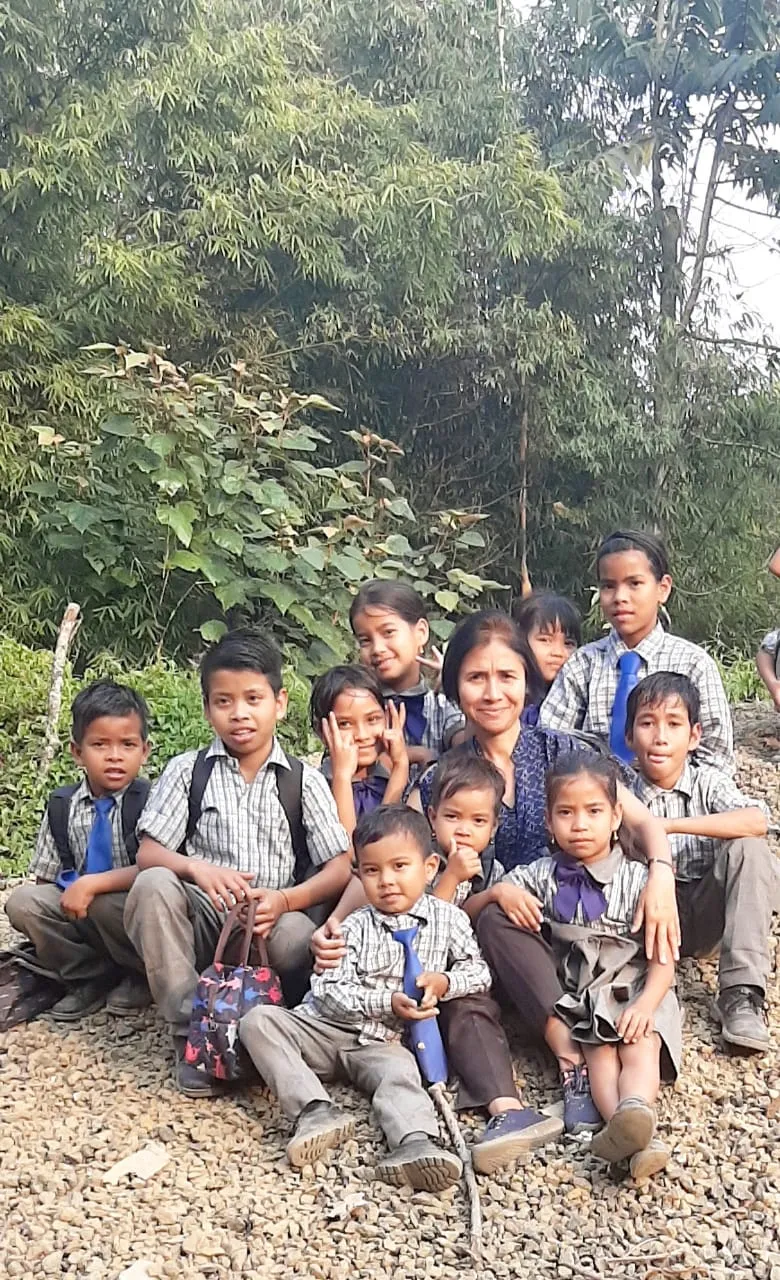
Genavafa Behphat with the students
By 2013, the idea of starting her own organisation took root. However, it took her four years to return to Shillong and register the Foundation for Empowerment and Inclusive Development, focusing on education.
“There were many schools in our village and the surrounding villages. I thought I shouldn't start any school, but at least help children learn English so that when they go to Shillong, they won't suffer the way I did,” she explains.
Her first initiative was weekend English classes for students from Grades 8-10, charging Rs 200 for a three-month course. The response was encouraging, but Behphat was struck by how things remained the same—students still struggled with basic English and learned by rote.
Alongside taking classes, she networked with government departments to organise youth programmes. She also bagged a grant of Rs 1.5 lakh to build a community library centre.
Organisations from Delhi and Hyderabad pitched in with books, and Behphat worked hard to set up libraries in schools, organising reading sessions every Friday.
After one and a half years, she was frustrated with this system as meaningful change still seemed elusive. In 2019, she thought the best way forward was to start her school.
Quality education for children
Dew Drop Academy had modest beginnings, with Behphat taking lessons for 15 students—from nursery to grade one—in her family home. The community library, a 13x7 feet room, became one classroom. A family storeroom was converted into another classroom. Children sat on mats on the floor; there were no benches yet.
Her sister and cousin both joined as teachers after graduating, for a monthly salary of Rs 1,000. The fee structure was deliberately affordable: Rs 250 per child, with discounts for siblings. This was necessary to achieve Behphat’s vision of providing quality education for children whose families couldn't afford Shillong's boarding schools or other English schools in nearby towns.
During the COVID-19 pandemic, it received support from the Sunbird Trust, which became a turning point for the school. By the time the schools reopened, it had grown to enrol 80 students. Sunbird helped Behphat construct a school building on agricultural land donated by her mother. The neighbouring farms gave land for road access, asking her to pay “whatever you can, whenever you can.”
Carving a road through the hills and building a school on a basic bamboo structure were no easy tasks. Behphat borrowed money and bought an old van. Her brother became the driver, and the school provided transport at just Rs 10 per child.
In 2022, the Sunbird Trust funded an extension of the school building. A tar road was also laid, and Behphat bought a used school bus with money donated by Mumbai-based NGO Caring Friends.
“Since I didn’t take any salary, I worked part-time jobs as a nodal officer and as a training consultant for NGOs. I had to survive and also support the education of my two nieces. Sunbird was ready to support my salary, and I started focusing on the school full-time from 2023,” Behphat says.
Challenges and way forward
The journey has seen its fair share of challenges. Many parents struggle to pay the modest fees, given the seasonal nature of their income. Sometimes, they can afford to pay only at the end of the year. The school’s location makes it vulnerable to storms and rain. The vehicles are old and require frequent maintenance.
Dew Drop Academy follows the state syllabus and serves students from Grades 1-7 from villages as far as seven kilometres away. It has recruited 12 teachers from different villages to provide local support networks.
“The children are smart and intelligent. There's a focus on students. But in terms of spoken English, a majority of parents don’t speak it. We are trying to have WhatsApp groups,” she says. Parents, who once couldn't help with homework, now actively engage through WhatsApp groups, asking teachers for guidance and sharing notes when children are absent.
But there is also a fear among parents, notes Behphat. “Will the school continue?”
“With support from the Sunbird Trust and Caring Friends, we have bought new land to further extend the school. We are also hoping to access government schemes for this,” she adds.
Behphat also wants to introduce a computer lab, a science lab, and music classes.
Though the tuition fees of Rs 250 a month and a one-time admission fee of Rs 1,000 are modest, some parents still can’t afford it. To address this, Behphat plans to help parents avail of state scholarships to ensure continuity in education.
The Dew Drop Academy operates under Sunbird Trust’s School Transformation Programme that provides financial access through sponsorships, infrastructure development, and capacity building with on-site team members and community mobilisation.
“Our team member, Mridula, works with Genavefa and the teachers, introducing new pedagogical practices, building curiosity-based activities, and implementing processes and structures to improve operational efficiency,” says Ravi K, Operations Lead, Sunbird Trust.
With the Dew Drop Academy, Behphat is looking out for not just children’s education, but is also instilling in them the confidence to dream big.
Edited by Kanishk Singh