



How upcycling textile waste is empowering these Mumbai women
Sustainable fashion brand UNIREC’s Project Sundri is an upcycling initiative run by self‑help group members—many of whom had never earned an income before.

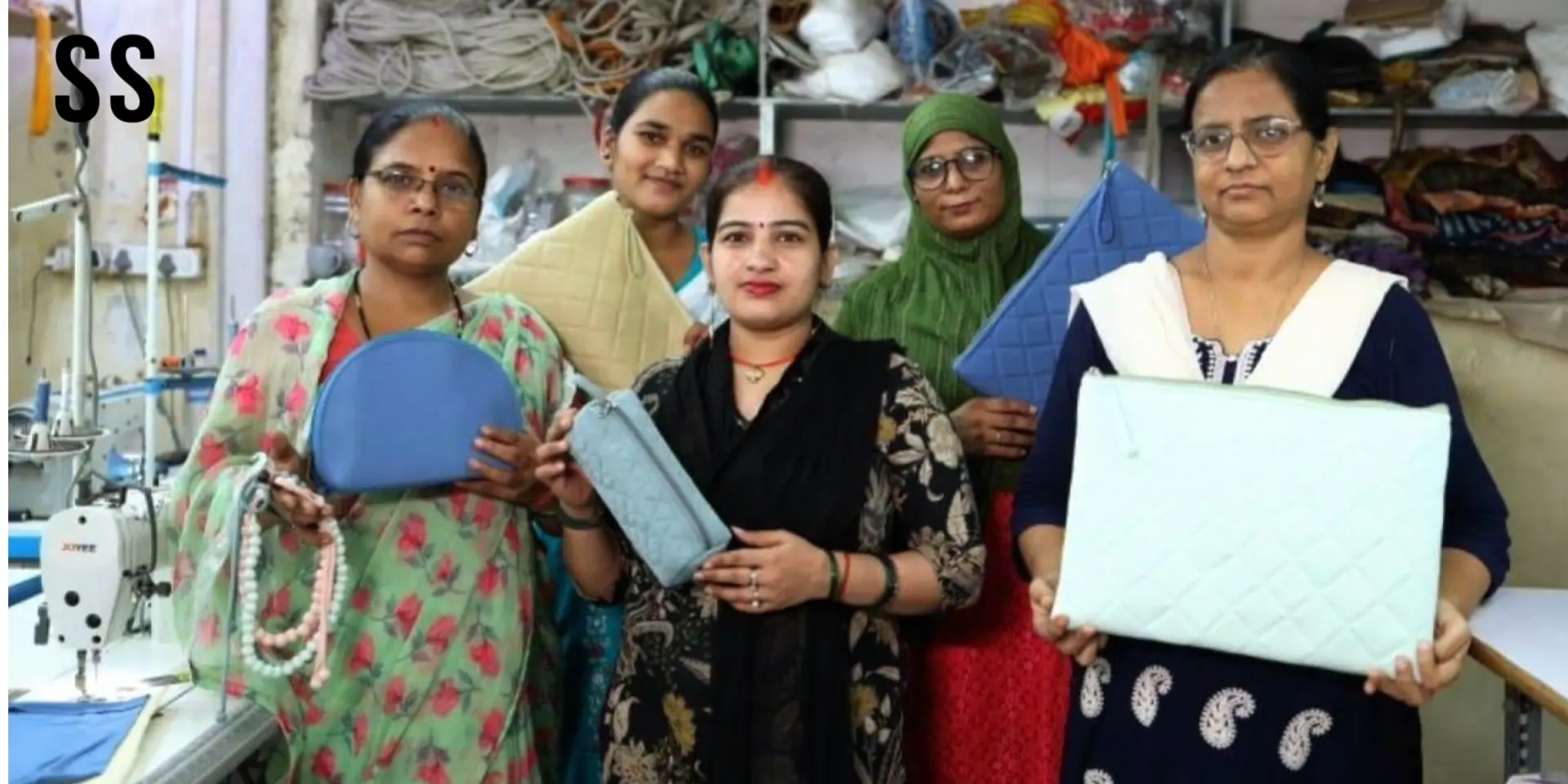

In 2022, India generated nearly a billion kilograms of textile waste—most of it dumped in landfills, incinerated, or exported. But in a workshop tucked inside Mumbai’s suburbs, scrap fabric and discarded garments are finding new purpose—thanks to Project Sundri, a women-led upcycling initiative by UNIREC, a sustainable clothing brand built on circular fashion principles.
What sets the project apart isn’t just its use of post-consumer and pre-consumer waste but the labour behind it—self-help groups (SHGs) of women, many of whom are first-time earners crafting products that now sit alongside mainstream brands.
The project is named after Founder Kapil Bhatia’s grandmother, Sundri, who, decades ago, would repurpose army uniform scraps into utility items for their watchman or milkman. “She used to create beautiful stories out of leftover fabric,” recalls Bhatia. “It just took me back to my childhood, and I said, why can’t we do this now?”
Project Sundri was launched in Mumbai in 2024 as a collaboration with SHGs in the city. Starting with 10 women, the project is now expanding to include 30 more, all of whom stitch with the precision and consistency required to compete in the open market.
But it’s not charity that drives the model, says Bhatia. “People want value before they think about empathy. So we had to ask ourselves, is our t-shirt as good as anything else in the market? Does it look and feel the same?”
UNIREC’s broader model is rooted in GRS (Global Recycled Standard) certified fabrics. The garments are made from recycled PET bottles, sourced from facilities across Surat, Tamil Nadu, and other hubs. After being worn for a few years, customers are encouraged to return used products in exchange for discount vouchers. This is how a closed-loop lifecycle is formed.
Returned garments are then washed at industrial laundries, quality-checked, and will be passed on to Project Sundri’s SHGs for upcycling. They are then repurposed into high-quality utility items that are neither inferior in craftsmanship nor aesthetic.
For the women behind the products, the impact is lifechanging.
Komal, a Project Sundri artisan, was once unsure if she could contribute financially at home. Now, she helps pay her son’s school fees. Sarita, another member, says, “I used to work for others with no recognition. Now my name is on a product. That gives me pride.”
Each product sold features a QR code linking to the story of the woman who made it. “They are the real heroes,” says Bhatia. “They deserve to be known.”
The women are trained by masters at UNIREC’s partner factory units, where they learn to stitch both garments and utility products. From laptop sleeves and pouches to earrings and scrunchies, each item is crafted from leftover fabrics, which are either pre-consumer waste from UNIREC’s own cutting rooms or post-consumer waste from customer returns.
Yet, the constraints of informal labour persist. Most women can work only three to five hours a day, once their domestic responsibilities are done. “They want to work more, but they simply can’t. That’s a reality we can’t control,” admits Bhatia.
To address this, UNIREC is exploring how to maximise productivity within limited hours by training women in mass production techniques and efficient workflows. Wages are piece-rated, but efforts are on to ensure women earn at least Rs 10,000 a month—above the current average of Rs 7,000 - 8,000. “We’re trying to make sure that in even four hours, they earn a fair wage,” says Bhatia.
This concern stems from a deep awareness of how tokenism can easily creep into empowerment narratives. Bhatia acknowledges that the informal garment sector has a systemic problem. “So we’re building checks from the beginning to ensure this doesn’t become a box-ticking exercise.”
As Project Sundri scales up, UNIREC is looking to integrate it into corporate CSR frameworks. The model is already routed through a registered NGO that oversees the SHGs, allowing for audit trails and transparency in CSR utilisation.
“We want to tell companies, don’t just tick your CSR box, use it meaningfully,” says Bhatia. “Give your team members these products. Tell the story behind them, and that would create visibility and dignity.”
Still, the social audit mechanisms for impact remain informal. While the brand adheres to GRS-certified sourcing, there’s no third-party verification of social outcomes—yet.
UNIREC’s pivot from niche sustainability to “everyday fashion” with a sustainable soul signals an important shift. “We realised empathy doesn’t get you customers,” Bhatia says. “So our products have to be good first, and sustainable second.”
Project Sundri embodies this ethos. Its products are made to stand beside any other brand’s offering. The difference is what comes after. “We want people to buy a product because they love it,” Bhatia says. “And then discover the story behind it."
Edited by Affirunisa Kankudti