



CanKids puts education at the centre of cancer care for children
Each year, thousands of children in India are forced to pause their education while undergoing cancer treatment far from home. CanKids KidsCan is working to change that—through schools, shelters, and support systems built around the child, not just the illness.


Baby Nisha was two years old when she was brought from her hometown Medinipur, West Bengal to AIIMS Bhubaneswar. Following months of misdiagnosis and worsening paralysis, she couldn’t even sit up by the time she reached AIIMS.
Like many low-income families navigating childhood cancer in India, Nisha’s had given up their home and income to treat her. What remained was hope.
Fortunately, at CanKids’ ‘Home Away From Home’ in Bhubaneswar, a supportive accommodation programme for children undergoing cancer treatment and their families—especially those who travel from distant towns or rural areas—baby Nisha found an ecosystem of nourishment and care. Slowly, with nutritional support, counselling, and rehabilitation, she was feeling better again.
In India, an estimated 76,000 children develop cancer each year according to a peer reviewed analysis. Families are uprooted from small towns and villages to metro cities for treatment, and children spend months or even years away from school, home and play. CanKids KidsCan, a pan-India NGO working across 141 hospitals, has been addressing this rupture—not just medically, but emotionally, socially, and educationally as well.
“Our mission is to protect every child’s right to health, education, childhood, and to be heard,” says Latha Mani, CanKids’ Regional Head for South India. “And education often falls through the cracks.”
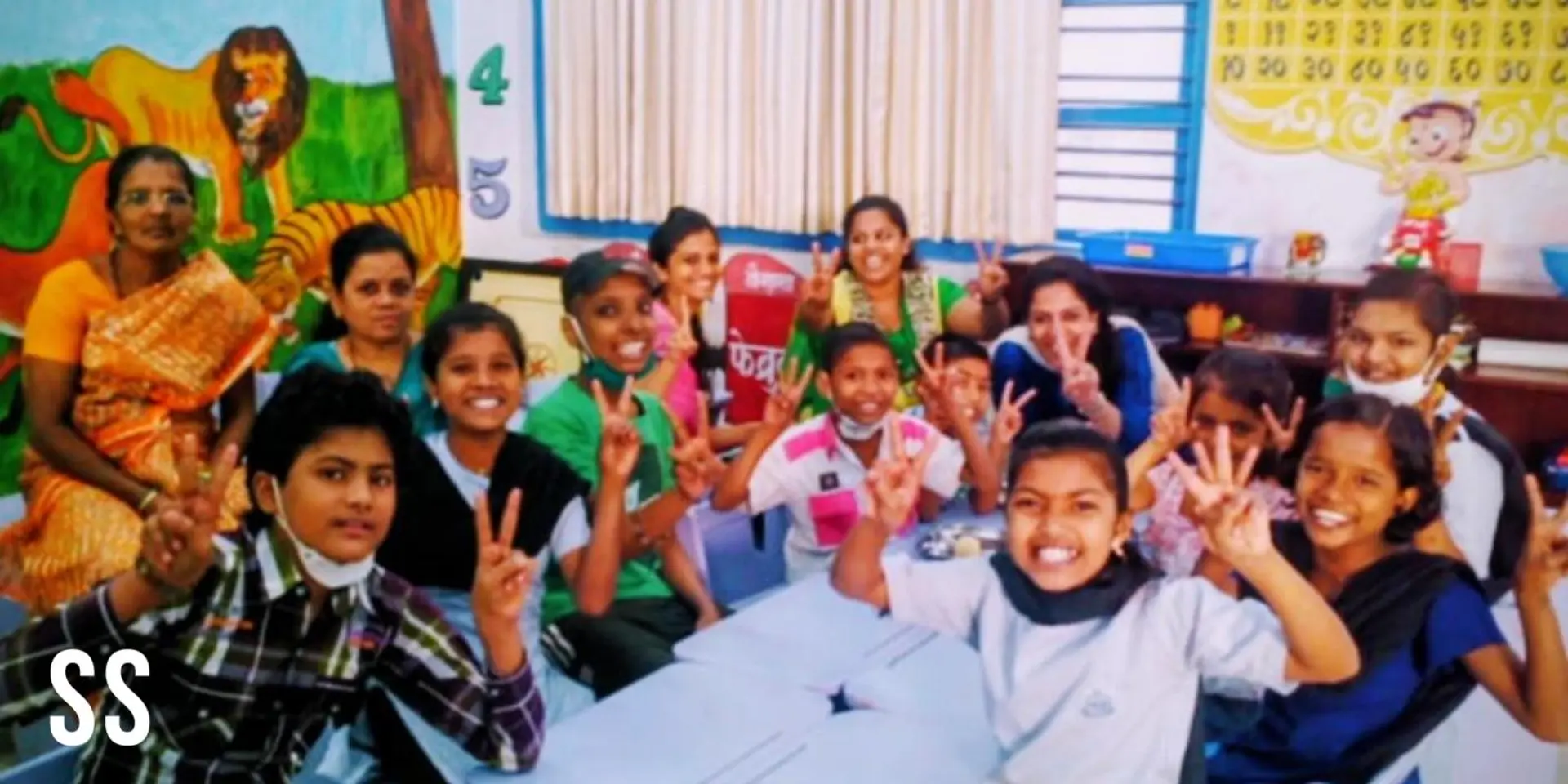
Nowhere is this more evident than in Chennai, where children from across the south converge for cancer treatment at government and private hospitals. Here, CanKids runs one of its three ‘Canshalas’—schools for children undergoing cancer treatment—out of its office in T. Nagar (a neighbourhood in the city), in partnership with the Tamil Nadu Education Department. Unlike its two Canshalas in Mumbai, run in collaboration with the city’s municipal corporation, the Chennai school is the first to have a formal MoU with the state education board.
“Children often come in the middle of an academic year. Their treatment lasts six months to a year, sometimes more. Parents never expect they’ll stay that long, and don’t bring transfer certificates. The child’s education simply stops,” says Mani. “Once treatment ends, they return home to find their friends have moved on to the next class. Some feel too ashamed to go back.”
The Chennai Canshala ensures they don’t have to choose between survival and school. Launched in 2022 after a year-long effort to identify a safe, hygienic location, the school operates as an extension of the nearby Lendalayampet Model Higher Secondary School. Children are officially registered there, but attend daily classes at the Canshala’s T. Nagar facility. Teachers are B.Ed and M.Ed qualified, and classes are structured around each child’s health status and academic level.
The facilities—three smart classrooms, a teacher for every level, activity-based learning—are designed to be child-friendly and flexible. On days children are too unwell to travel, a few CanKids educators conduct bedside classes in hospitals. “We start with craft and storytelling to ease them in,” says Mani. “Education has to be non-intimidating. These children have already been through enough.”
One such student, a boy now in Class 8, was diagnosed with a rare muscle cancer. Even during chemotherapy, he insisted on studying. Today, he has authored multiple e-books and scored among the top in his class. His latest book—chronicling his cancer journey—was released last month by the Tamil Nadu Education Minister as part of Survivors Month.
But Canshalas are just one part of a larger web of support. CanKids’ ‘Home Away From Home’ programme runs 13 shelters across India for children and families who travel for treatment. In Chennai, the facility accommodates 24 families at a time, providing not just accommodation and meals but also a semblance of routine, with schooling, nutritious food, and community support. Staff includes dietitians, psychologists, and patient navigators—often parents of cancer survivors themselves—trained to guide families new to the journey of cancer care.
“We do everything from helping families register in government hospitals to organising scholarships, diagnostic aid, and nutritional care,” says Mani.
Every child is assigned a unique CanKids ID and monitored through a central database to ensure continuity of support. The NGO also offers scholarships of up to Rs 25,000 per year and tablets preloaded with educational software for children from remote areas.
Recently, a girl from rural Tamil Nadu had to discontinue school following a leg amputation. CanKids is now helping her enrol in a nearby community college, through its network of partner NGOs. Another teenager, initially denied re-admission to Class 12 school due to poor attendance during treatment, was reinstated after CanKids intervened via local education officials.
The model is now expanding. Inspired by the success of the Canshalas in Chennai and Mumbai, CanKids has signed an MoU with the Karnataka government to set up a school for children with cancer and their siblings in Bengaluru. The school will be the first of its kind in Karnataka.
Additionally, in partnership with Flipkart Foundation, CanKids recently launched Nutrition for Hope, a programme to provide children with fortified meals during cancer treatment.
Malnutrition remains a significant barrier to recovery, especially among children from economically weaker backgrounds.
“Our children come from all socioeconomic backgrounds, but many from government hospitals are from low-income families,” says Mani. “We see them arrive malnourished, scared, unaware. Slowly, we build trust. And through trust, we attempt to give them back their childhood experiences of normalcy.”
Edited by Swetha Kannan