



Breaking the cycle: How India Vision Foundation is transforming lives in prison and beyond
Kiran Bedi, India’s first female IPS officer, started the India Vision Foundation in 1994 after receiving the Ramon Magsaysay Award. For the past 31 years, it has been transforming lives inside prisons and beyond, through a number of impactful interventions.

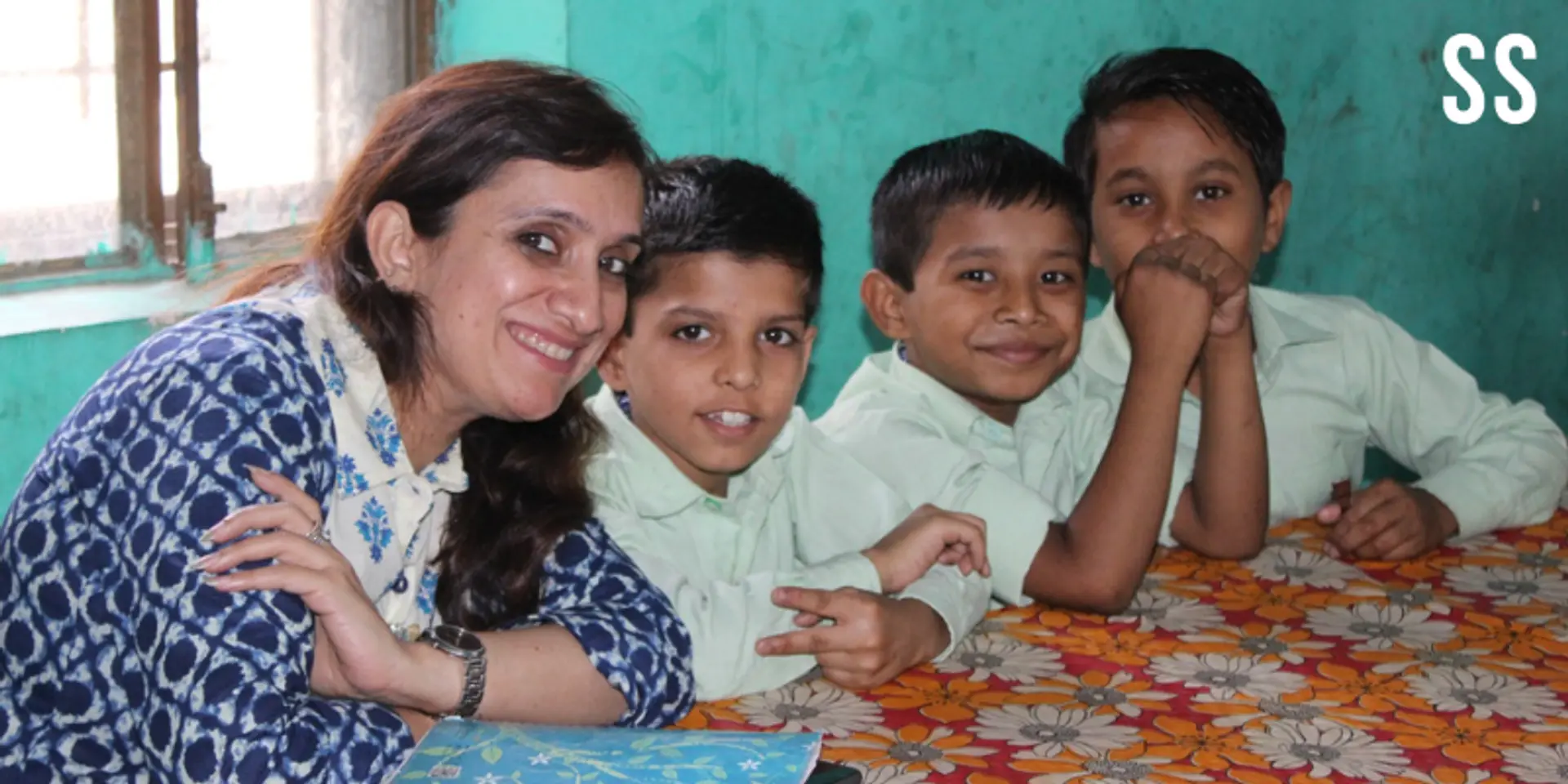

In 1993, when Kiran Bedi served as the Inspector General of Prisons at the Delhi prisons, she discovered a scenario that would change the course of prison reform in India forever. Walking through the corridors of Tihar jail, she found young children living behind bars—not as inmates, but as victims of circumstance. The children, living with their incarcerated mothers, had never seen the world beyond the concrete walls.
Raised in female wards, they recognised only women and were confused when they encountered a male visitor. Without toys or play areas, they created their own games, mimicking the harsh life and behaviours they observed around them.
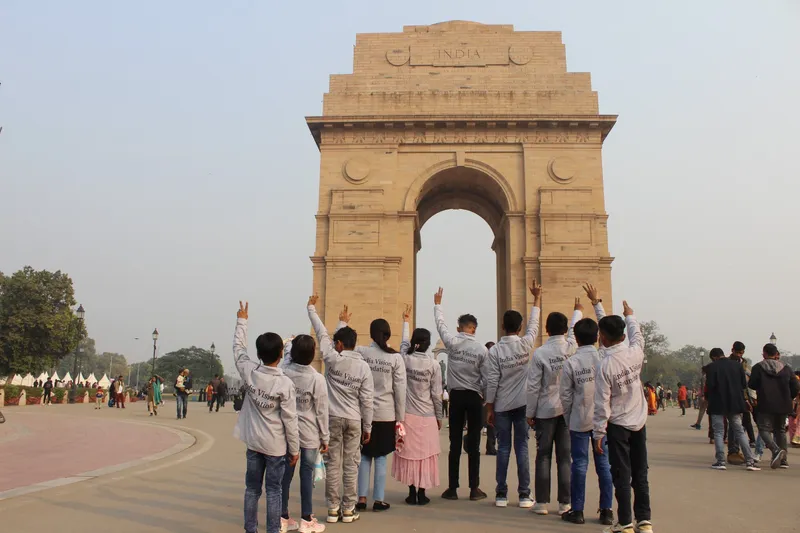
Children from the CVF Programme
Bedi's first intervention was to establish a crèche inside Tihar prison in 1993, the first of its kind in India. The daycare centre, operating from 10 am to 4 pm, created a safe, nurturing space for children aged 0-6 within the prison walls.The impact was immediate. Children who had never seen the outside world now received education, celebrated birthdays, and were taken on exposure trips.
This marked the beginning of a series of changes that focused on rehabilitation and overall wellbeing of prisoners.In 1994, when Bedi won the Ramon Magsaysay Award, recognised partly for her pioneering work in Tihar jail, she faced a dilemma familiar to many government officials. As they moved onto other positions, their initiatives would come to a standstill.
Determined to institutionalise prison reforms, she used the award money to establish the India Vision Foundation in 1994 to carry forward her work inside prisons through reformation, and outside through rehabilitation and reintegration.
“One of the unique programmes of India Vision Foundation is working with children of prisoners. We believe in a "cradle to career" model as it’s important to save these children from becoming victims of their parents' incarceration,” says Monica Dhawan, social worker and Director of India Vision Foundation.
Programmes for inmates and their families
India Vision Foundation runs five life-change programmes for inmates and their families. Its Inside Prison programme operates on the "4S Model"—Shiksha (Education), Sanskar (Values), Swasthya (Health), and Skills.
"Imparting skills will never change anybody's mindset. It has to be a holistic approach. We first work with education, then values, then health, and then skills,” Dhawan explains.
Operating in over 20-25 prisons across Delhi, Haryana, Uttar Pradesh, Uttarakhand, and Maharashtra, the programme reaches more than 3 lakh beneficiaries annually.
The Early Childhood Care Programme, Bedi’s first initiative, has creches in prisons across Faridabad, Gurugram, Ghaziabad, Greater Noida, Yerwada, and Ayodhya.
Children are divided into two categories: 0-3 is Balwadi, and 3-6 is nursery. The curriculum is customised specially for creches inside prison settings.
The initiative was so successful that in 2006, the RD Upadhyay judgment mandated that every prison should have a crèche for children.
Children of Vulnerable Families Programme
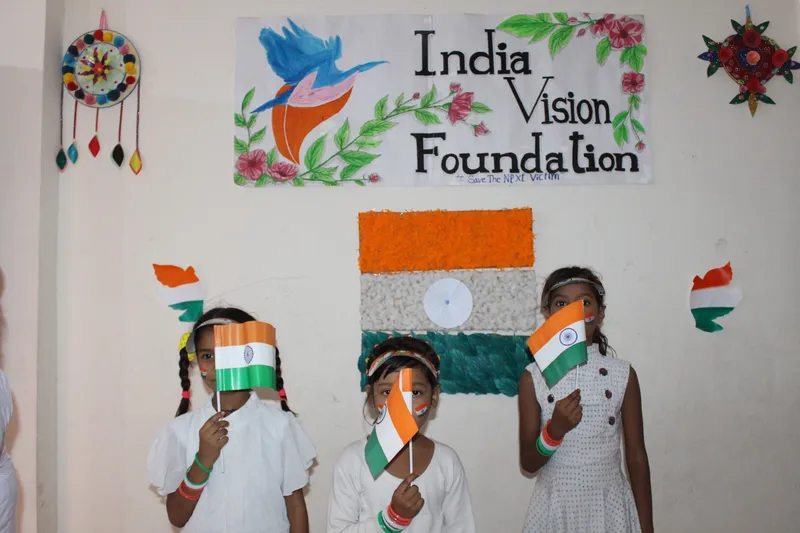
Up to the age of six, children of incarcerated mothers can live with them inside the prison. But what happens after they cross that age limit?
This question led to the foundation's most significant evolution and the launch of its Children of Vulnerable Families Program.
In 1995, when the first batch of children reached the age limit, desperate mothers approached Bedi with nowhere to send their children.
The solution came through collaboration. A missionary school approached Bedi offering an empty hostel. Soon, institutions like Assisi Convent in Noida began providing residential facilities, while the Foundation acted as guardians. The children met their mothers once in a quarter while continuing to receive education and care.
However, this “hostel model” came with its own set of challenges.
“We found that the children staying in the hostel were not able to cope when reunited with their families. We also found that mothers were not taking full responsibility, thinking we would do so. Some women remarried and gave birth to many children, and thought we would take care of them, too,” Dhawan explains.
Additionally, the hostels were not registered under the Child Welfare Committee (CWC), and that would have legal implications.
When the Covid-19 pandemic struck and the children had to return to their families, the Foundation was forced to reimagine this programme, fundamentally. “Now, if a mother is inside, and there’s no one to take care of the child outside, we help the mother enroll the child with CWC that has its own hostels,” Dhawan says. In other cases, maternal or paternal caregivers who have been given the authority look after children after they leave prison.
The foundation currently takes care of 300 children from the age of six by focusing on education and psycho-social support.
“We take care of all the financials, school fees, and remedial classes, which means a 12-year commitment for every child. Social worker counsellors play the role of “bhaiya” and “didi” who listen to them and understand them,” she adds.
In addition, the Foundation also runs a community centre in Bawana, a resettlement area in Delhi, which houses most of the inmates from Tihar after release. Identified as a crime-prone community, many go to prison from here.
“Over 100 children engage in various activities, remedial classes, and we have regular workshops with parents and alumni,” Dhawan says.
Over 450 alumni have now graduated from the programme, and remarkably, 100% have stayed away from crime.
Today, these children work in corporations, have families of their own, and have broken the cycle of intergenerational crime.
Dhawan shares an instance that paints a grim picture of children living inside prisons, and how timely intervention has helped.
A young girl was born inside a district prison while her mother was serving her sentence. With no relatives to care for her, fellow inmates stepped in, becoming her “mausis” and “buas.” She grew up entirely within the prison walls, nurtured by the women around her.“When the local prison superintendent, who was male visited the female ward for the first time, the three-year-old began crying uncontrollably. She had never seen a man before. The social worker explained this to the superintendent, who then made efforts to gently befriend her, helping her feel comfortable,” shares Dhawan.
Her limited world meant she had never seen animals beyond the stray cats that roamed the prison. When shown a picture of a dog, she asked what it looked like. This prompted the Foundation to arrange an exposure visit to the zoo, where she could finally see animals and people outside the prison environment.
Today, the young girl is in Class 10, living with her mother under the Foundation’s family support programme. She is performing well academically, and remains closely connected with the team through regular home visits.
Training, rehabilitation and reintegration
The fourth programme involves sensitisation of training of prison officers from the highest rank (superintendent) to the lowest rank (warders) who interact with prisoners on a daily basis.
“We organise an online training programme called Samvad every first Saturday of the month where we give warders across India a platform for their voices to be heard,” says Dhawan.
The fifth programme, Rehabilitation and Reintegration, is at a nascent stage.
Over the years, the Foundation understood that its model of reformation inside prison in collaboration with prison administration was working well towards change. But once the inmate was released, reintegration into society was much harder. The program aims to work towards this goal. Apart from these, it also runs Project Sakaar, sewing and computer skills training so that they earn a livelihood once they are released.
Despite over three decades of work, Dhawan identifies a persistent challenge: social stigma. "Civil society doesn't accept them, they don't understand the concept of prisoners or under-trials. For them, anyone who went to jail is a criminal. The concept of under-trial versus convict is not known to civil society,” she points out.
The other challenges include raising CSR funds in the initial stages, and getting the right team to work on the diverse programmes.
With a team of 30, the Foundation works with volunteers and experts and has also collaborated with universities for its programmes. Bedi continues to guide the organisation by being a mentor.
“Going forward, we would be happy to train like-minded organisations by sharing our experiences and best practices so that the results are far-reaching. The inside prison programme is almost on auto pilot now but we need more partnerships to drive the Children of Vulnerable Families and Rehabilitation and Reintegration Programmes,” Dhawan says.
(The story has been updated to correct a typo.)
Edited by Megha Reddy