



Whose revival is it anyway? The unequal story of citizen environmentalism
Across Bengaluru, Gurugram, and Chennai, citizens have revived lakes, forests, and coastlines. But behind these stories lies an unsettling uneasy question—who benefits from this work and whose lives get displaced in the process?


In 2006, Usha Rajagopalan found herself staring at the slow death of Puttenahalli lake from her fifth-floor apartment in JP Nagar, Bengaluru.
The writer had just lost her father, and recalls how every time she saw the shrinking lake, she felt she was letting him down.
Rajagopalan grew up watching her father, a conservator of forests in Kerala, rescue injured or orphaned animals and bring them home so his children could nurse them until they were ready to be released into the wild.
“So, years later, when I saw this water body, I knew I had to do something, if not, there would be no lake very soon,” she says.
The beginnings of revival
In 2010, Rajagopalan gathered a few neighbours and formed the Puttenahalli Neighbourhood Lake Improvement Trust (PNLIT). By 2011, they had signed an MoU with the BBMP, Bengaluru’s municipal body, to maintain the 10-acre lake.
Weekends turned into rituals of collective labour. “The father digging, the mother pulling out weeds, the children piling it into the wheelbarrow,” Rajagopalan remembers. “They learnt so much by getting their hands dirty.”
Saplings grew into shade trees, treated water from apartment sewage plants refilled the basin, and by 2015, Puttenahalli was brimming with life. Migratory birds returned, perched on wooden stumps volunteers had planted. The story was so impressive that more than 30 citizen lake groups sprouted across Bengaluru.
Ordinary residents had beaten apathy and turned a stagnant pool into a living ecosystem.
The inconvenient side to a revival story
But revival was just the beginning.
At the lake’s edges, another story was unfolding. For decades, slum families had lived in makeshift homes on the lake bund. They were informal workers—domestic staff, gardeners, security guards—servicing the very apartments whose residents fought for the lake’s future.
For Rajagopalan and her group, the contradiction was wrenching. “The biggest challenge for us is genuinely the encroachment,” she admits. “There is also a limit to how much a citizen group can do.”
"We told the authorities rehabilitation has to be humane, in decent housing, not in tin sheds. We also educated the children of the community,” she says.
But beyond petitioning officials, their options were limited.
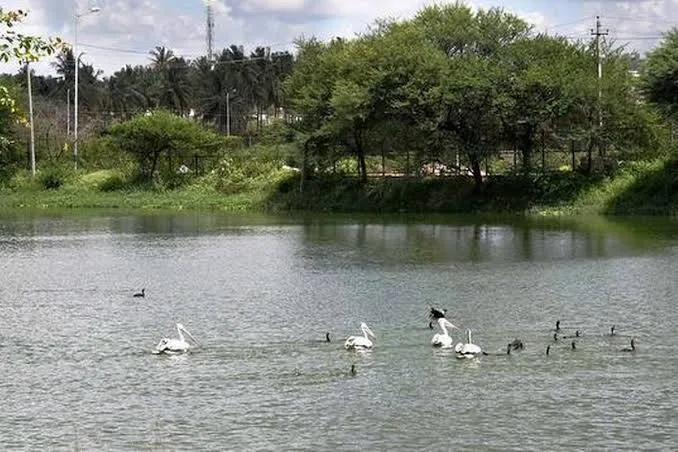
Saplings grew into shade trees, treated water from apartment sewage plants refilled the basin, and by 2015, Puttenahalli was brimming with life.
Citizen environmentalism in India is often hailed as an embodiment of civic responsibility. It also exposes the uneven currency of participation, where in some places, privilege enables people to plant and protect; in others, precarity forces families to fight for homes and survival.
In every case, the question remains—revival for whom, and at what cost?
When it comes to Puttenahalli Lake, local civic activist Isaac Arul Selva says, “The people living on its banks have been there for many years before the residents came.”
“Typically, these movements are led by dominant caste and upper-class citizens. They talk about migratory birds and biodiversity, which is a noble idea. But they don’t take into account the lives of these so-called ‘encroachers’ or them as equal citizens of a city like Bengaluru,” he adds.
In 2013, authorities earmarked land 8 km away for resettlement, building temporary sheds. But the settlers rejected them. They wanted concrete houses or individual plots.
According to Selva, “they were temporary, ramshackle sheds, which they obviously rejected.”
The families petitioned the High Court, and hearings dragged on. By 2020, no relocation had taken place. A house collapse during heavy monsoon rains made the neglect visible for a fleeting news cycle. But solutions never came.
Selva argues the "ideal" option was never on the table. “The fairest resettlement would be to create staff quarters for them inside those very apartments where they work.”
From mines to forest: The Aravalli experiment
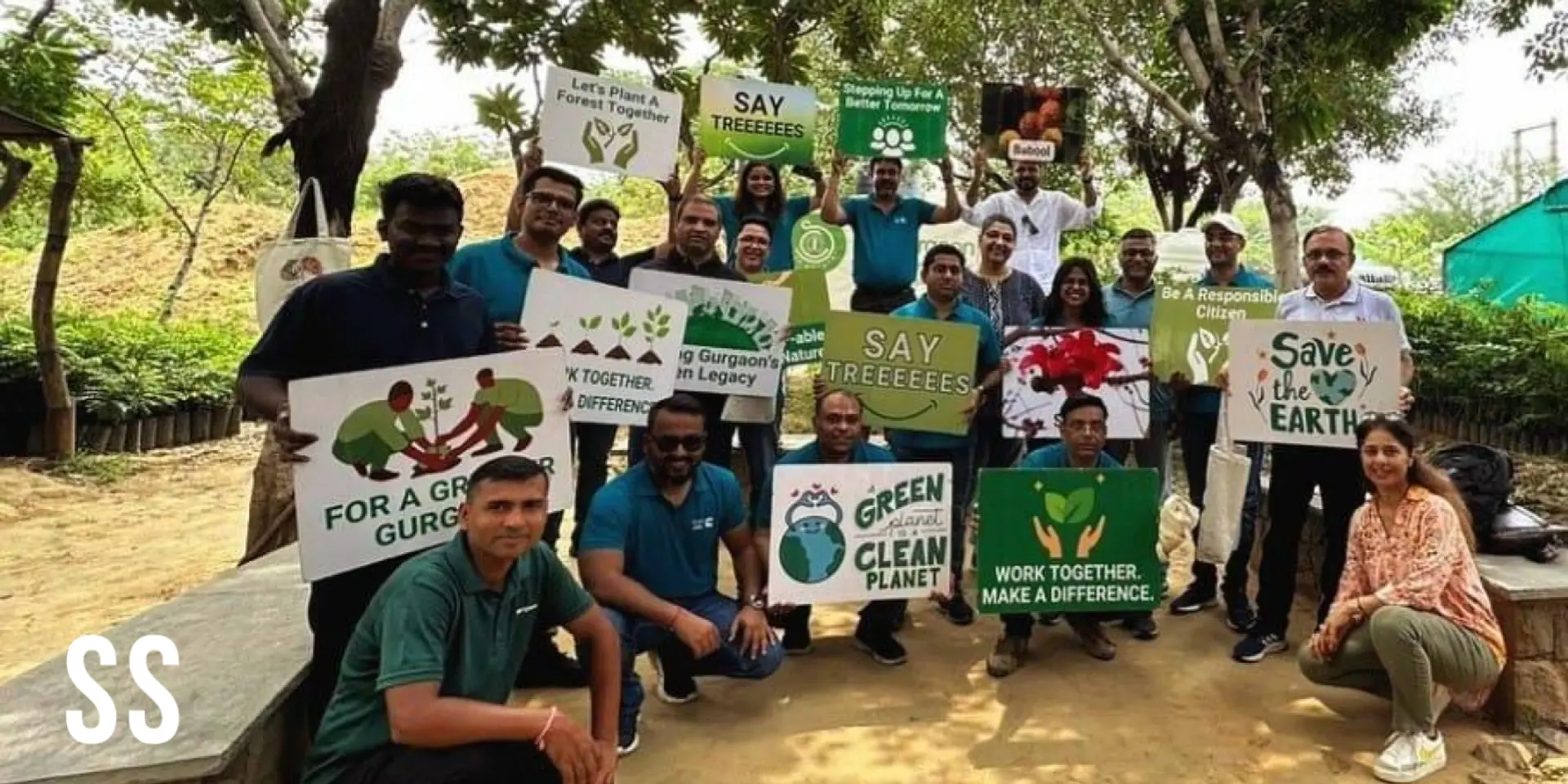
A thousand kilometres north, another reclamation story was unfolding—this time on the scarred slopes of the Aravallis in Gurugram. By 2009, a 380-acre patch of land had been hollowed out by decades of mining, stone-crushing, and dumping.
That year, the citizen collective ‘iamgurgaon’ invited ecological restoration expert Vijay Dhasmana to imagine a forest where only Prosopis juliflora, a hardy invasive shrub, survived.
“We were dealing with a mined site,” says Dhasmana. “One of the important strategies was planting. But planting was also our way of mobilising people. They came with their children, planted, and donated money. We slowly built trust."
It started small—sapling drives drew families with schoolgoing children and donations. Corporates soon turned it into CSR experiments.
But this wasn’t just restoration—it was rewilding. Using historical records, Dhasmana and volunteers collected seeds of native flora and planted them in clusters to mimic natural forest succession. Treated water from nearby plants irrigated the saplings. Slowly, the soil healed, microbes revived, birds returned.
By 2020, the Aravalli Biodiversity Park harboured more than 300 native plant species, and in 2022, was recognised as India’s first OECM (Other Effective Area-based Conservation Measure) site under the UN Convention on Biological Diversity.
Politics in the park
Sustaining momentum remained a challenge. “Volunteering has its own life cycle,” Dhasmana says. “It does fizzle out. You have to keep creating events, keep making it meaningful. Otherwise, people just come, do their thing, and leave.” The biggest battles, though, were political. A city commissioner wanted a wellness centre and spa inside the park. “We had to storm his office,” Dhasmana recalls. “Twenty of us went, we challenged him. The next day, the newspapers said the commissioner had retreated.”
Not all fights were won. Dumping of construction debris and encroachments continued. In 2018, a proposed six-lane expressway by the National Highways Authority through the park was stopped after more than 1,200 citizens marched in protest.
“Citizens can monitor. They can volunteer. But responsibility cannot be shifted to people. At the end of the day, governance has to be accountable,” says Dhasmana.
Survival as mobilisation: Ennore’s fight
If Bengaluru’s Puttenahalli and Gurugram’s Aravalli showcase the power and blind spots of privileged citizen action, Ennore in north Chennai offers a stark contrast. Here, mobilisation is driven by fishing families themselves, because their very survival is at stake.
“These are people surviving day to day—fishermen and farmers whose earnings have collapsed, whose children wake through the night with burning eyes and nausea from toxic air and water,” says activist Ali Basha, who has spent years educating communities in Ennore, a region still reeling from the 2023 CPCL oil spill that contaminated 20 square kilometres of rivers, creeks, and shoreline.
At first, local residents were hesitant. “They were skeptical, believed the administration’s promises, and only much later when the damage was undeniable did they mobilise,” says Basha.
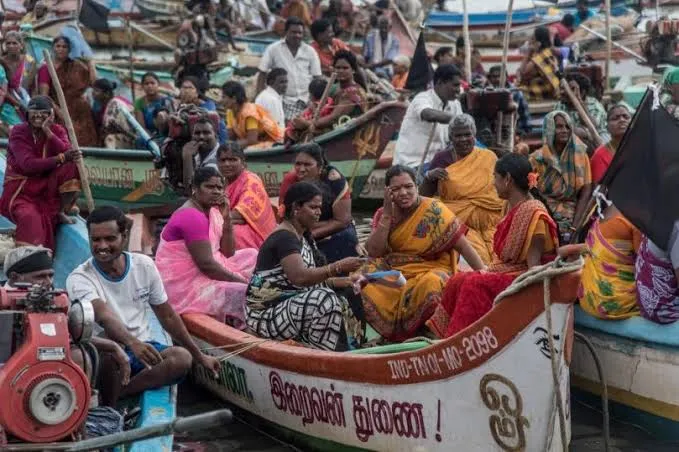
In Ennore, fishermen and farmers' earnings have collapsed, their children wake through the night with burning eyes and nausea from toxic air and water, says local activist Ali Basha
It wasn’t apathy but precarity. “When you lack disposable income, energy, or resources, it becomes harder to think about the long-term.”
Local authorities exploited this, offering short-term relief like small cash payouts, temporary jobs, even sports kits for children. For families struggling for their next meal, such offers can be persuasive. But the trade-off was devastating; it meant polluted creeks, vanishing fish, and families left sick and unsafe.
“People here are desperate—for food, for their children’s education, for safe homes,” Basha says. “Talking about lofty environmental goals doesn’t cut it. And that is understandable.”
Instead, Basha shifted focus to children, conducting workshops that blend art, life skills, and awareness. The aim is to build self-esteem and a stronger sense of identity, so that tomorrow’s adults resist being lured by short-term compensation.
“They will know better,” he says, “to fight for the protection of their land, livelihoods, and homes, or in other words, the systemic marginalisation of their communities.”
And while Ennore’s struggle is rooted in survival, it has not been isolated, says Basha. “It is research students and IT professionals from the cities who volunteer their time and resources that keep our movement going strong, in a situation where government or CSR support is impossible.”
The unequal currency of revival
What ties Bengaluru’s Puttenahalli, Gurugram’s Aravalli, and Chennai’s Ennore is not just their green afterlife, but the politics of how they got there.
They show the power of mobilisation. Citizens can beat bureaucracy, mobilise funds, and revive ecologies.
They also expose the blind spots. At Puttenahalli, informal workers were written out of the script. In Gurugram, encroachments were mostly affluent gardens and illegal dumping, not shanties. In Ennore, vulnerability itself became the lever through which corporations bought time.
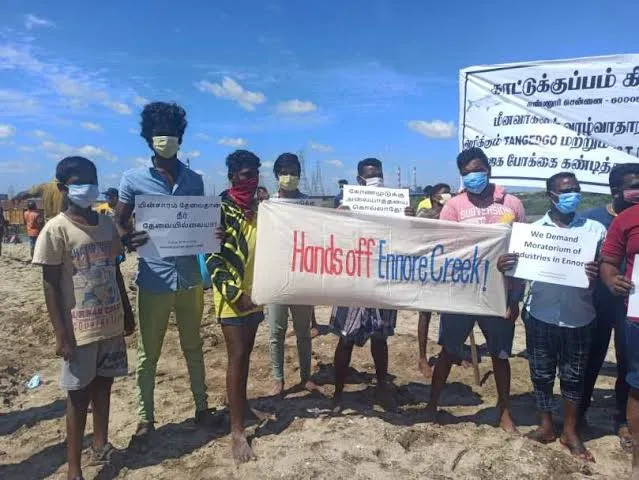
Fishermen from eight villages—including Nettukuppam, Periyakuppam, and Chinnakuppam around Ennore—organised protests demanding inclusion in state compensation for losses after the oil spill.
India’s citizen-led environmentalism is rewriting urban ecologies. But it also forces us to confront uncomfortable questions. Who gets to be the citizen at the centre of these movements? Who gets displaced in the process?
Studies shine light on watershed restoration projects in rural India, wherein marginalised groups—due to caste, gender, or land ownership—often get excluded from benefits like water access and infrastructure.
As Rajagopalan recalls neighbours cheering as diverted rainwater flowed into the Puttenahalli lake, the excitement is palpable. But for the families still clinging to its bund, the rain brings only fear. “Social justice and ecological justice rarely go hand in hand,” says Selva.
Activists insist that the success of these movements depends on citizen stamina, which waxes and wanes, and the benevolence of whichever official happens to be in office.
“Protect Aravallis legally first, save them from land diversion,” Dhasmana warns. Selva echoes the same urgency in a different register: “Invisibilising people is not the solution.”
Edited by Megha Reddy