



‘Compassion is within us. We just have to spark it’: Vivek Oberoi on cultivating social change
Actor Vivek Oberoi reflects on his journey in social impact, empowering people to become agents of change, and why he believes compassion must be reignited in today’s world.

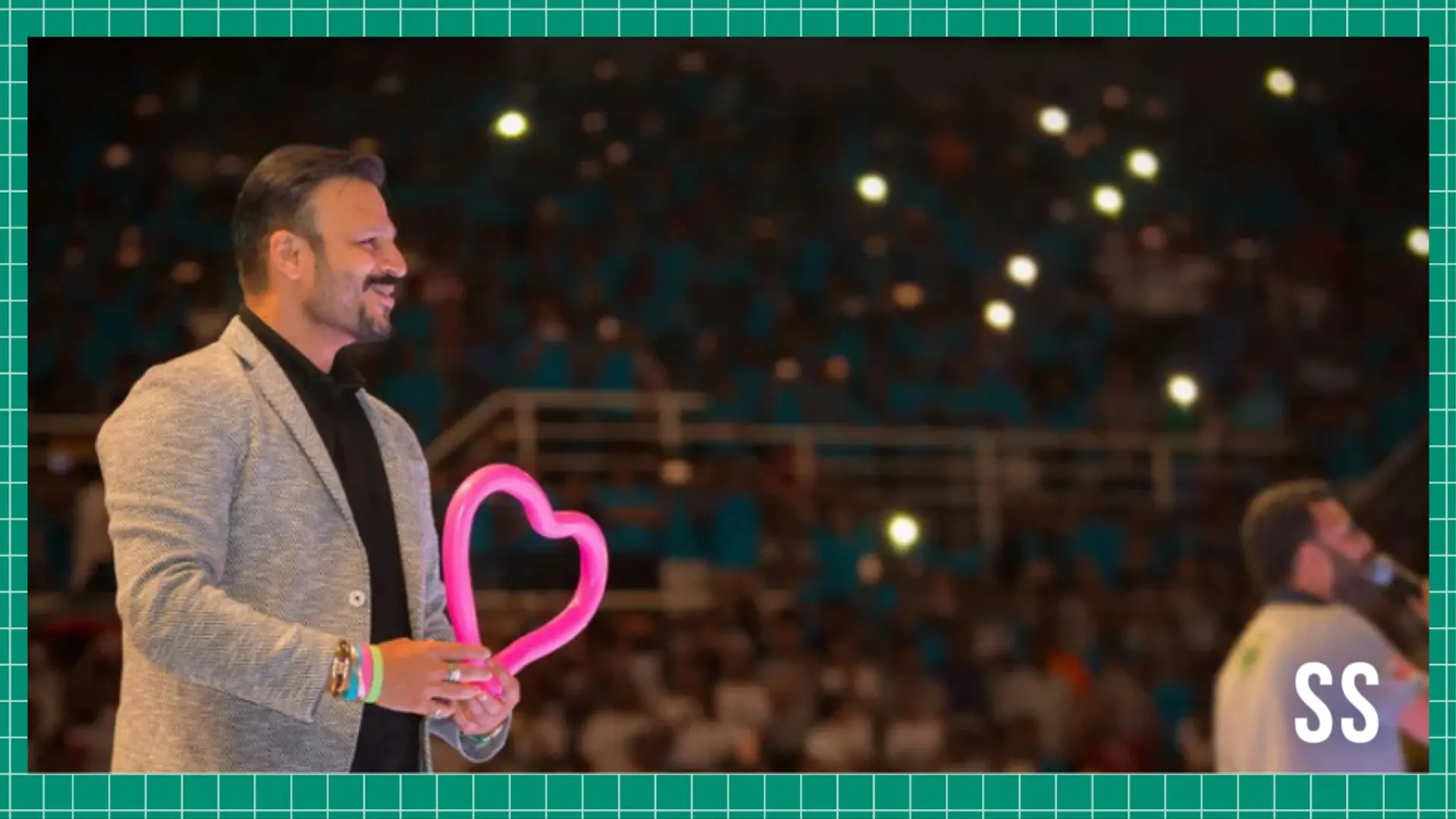

“I’m very silent about what I do, unless the cause needs attention. I don’t believe in chest thumping,” says actor-businessman-philanthropist Vivek Oberoi. This quiet approach has characterised Oberoi’s long journey in social impact, spanning initiatives in cancer care for children, girls’ empowerment, education, and more.
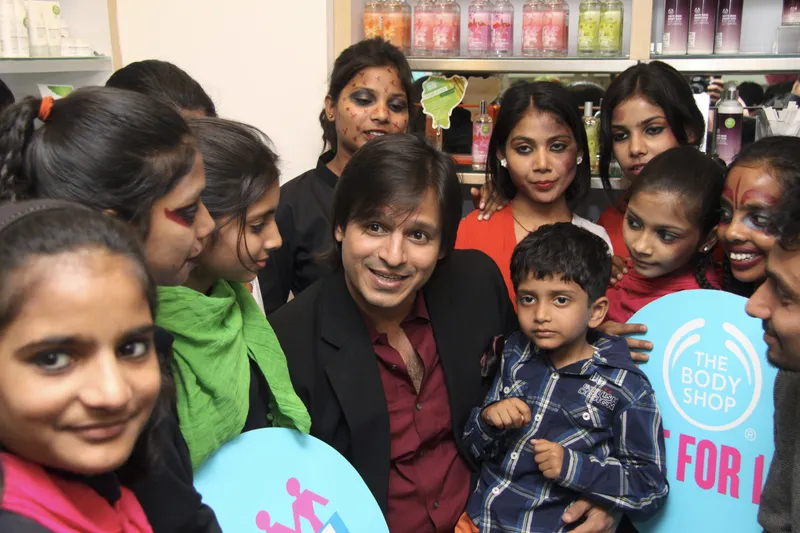
Vivek Oberoi with children
His philanthropic journey began at home, inspired by the everyday actions of his parents, Yashodara and Suresh Oberoi. His mother’s work with palliative care patients provided the first lesson in compassionate giving. For 35 years, she met people in their final stages in hospitals, offering not just material support but human connection.
He shares a memory. “A young boy called my mother saying he wouldn’t make it through the night and he was scared. I watched my mother provide comfort through his final hours.”
The true essence of giving
This experience left a profound impact on the young Oberoi.
"That taught me the true essence of philanthropy, rather than writing a cheque. Writing a cheque is the simplest thing. It's very transactional. It's important, that's how the wheels turn. But the way she approached it changed the way I started looking at what philanthropy should be like,” he reflects.
His father was equally formative in his approach, hosting children from nearby bastis (slums) in their home, feeding them and teaching them on days that he wasn’t shooting. “Suddenly, it became a movement,” Oberoi says. These fundamental principles would shape his work with a strong philosophy.
"There shouldn't be any arrogance in giving, there shouldn't be any sense of ego in giving,” he emphasises.
A hospital visit that changed everything
A defining moment in Oberoi's philanthropic journey came during a difficult period in his personal life. Upset about various challenges, he accompanied his mother to a hospital's pediatric wing. What he encountered there provided two life-changing realisations.
"The first realisation was that my problems aren't really problems," he says. "When I see a very small child fighting against cancer—a kid who should not know about cancer and should be playing carefree in a playground in school, is sitting in a hospital going through chemotherapy. My problems suddenly looked very small and petty."
Despite him bringing no toys or gifts, the children were simply excited to see him. "They were so happy to see me. They wanted to take pictures even in that state. That inspired me. Every free day that I had, I would start going there, reading stories to them, performing for them, having fun with them in the ward,” he remembers. He would go back feeling that he had contributed something that day.
This response revealed what he describes as the "strange connotation of selfishness in selflessness”—the profound personal fulfillment that comes from genuine service.
From this hospital experience grew Oberoi's initiative with the Cancer Patients’ Aid Association (CPAA), beginning in 2002. What started with toy banks, sanitised toys that children could borrow and return, grew into a comprehensive support system for childhood cancer care.
When he received a call about Sahara, a six-month-old baby with leukemia, Oberoi agreed to pay for her treatment. The cost was substantial but he did not hesitate.
"When I held the six-month-old baby with bloodshot eyes in my arms (she was undergoing treatment), something shifted in my head. We had to save this kid," Oberoi recalls.
His intervention worked, with doctors and hospitals eventually reducing costs and waiving fees in support of the effort.
Today, Sahara is a young adult full of life, and she sends videos to Oberoi of what she's doing.
This one incident led to building what Oberoi describes as “an integrated network that sustains each other’, reaching more than 250,000 children since 2002.
Empowering girls in Vrindavan
While his cancer care work was gaining momentum, Oberoi was developing another major initiative: Project Devi, focused on girls' education and empowerment in Vrindavan.
The project targets girls "being pushed into child labour" or facing other forms of exploitation. The focus, Oberoi says, was to pull them "out of that kind of story" and take them "towards empowerment through education."
"Girls who were on the streets are now learning and doing well. Many of them have gone onto successful careers, turned entrepreneurs, some of them have received scholarships for international universities,” he says.
Over the last decade and a half, Project Devi has impacted more than 14,000 girls. Besides CPAA and Devi, his ONE Foundation works with Project Banyan for the rehabilitation and reintegration of mentally ill and homeless women; and Lighting a Billion Lives that provides solar lamps and lanterns to rural communities.
In 2004, Project Hope was founded for relief, rehabilitation and reconstruction of villages following the tsunami.
Oberoi also serves as the global ambassador of Ekal Vidyalaya USA, a non-profit movement focused on the integrated development of rural and tribal areas in India and Nepal, primarily operating one-teacher schools (Ekal Vidyalayas) to bring education to remote villages. He is also honorary ambassador of the Social Justice Ministry, and an anti-tobacco ambassador at the World Health Organisation.
The art of letting go
Being “involved” also means letting go for Oberoi. And, removing himself from the organisations he helped establish is deliberate.
For Project Hope, he launched an innovative governance model with local women serving as “ministers” and younger women serving as “shadow ministers” and a younger council of bahus and betis ( daughters-in-law and daughters) who would all work together.
“The primary healthcare facility, the school, adult education centres, technology for better and sustainable fishing are still working,” he shares.
“I believe in spark it, enable it, empower it, and then let it be! But I do come in when help is needed - new capital, new vision, any kind of crisis management things that warrant my help.”
"Scaling a non-profit is very difficult. There's always asking fatigue and giving fatigue. You are constantly asking and people are constantly tired of giving, and it's the same pool of people,” he admits.
Oberoi has now evolved toward what he calls "social impact for-profit initiatives." He co-founded DoBe with Anubhuti Sharma (a communications specialist) to focus on creating "civic empathy and stakeholdership" rather than depend on traditional charity models.
"How do you involve people? How do you make them feel? Rather than lecturing them that 'you must do this,' how do you inspire them?" he asks.
Through DoBe, he approaches corporations with a fundamental question: "What do you want your identity to be? Beyond what you are doing, and beyond a photo op, where have you really created impact?"
His model involves designing comprehensive impact strategies that "plug and play with the best people in the job—“the really good NGOs, the foundations who are always looking for money. But instead of looking for money, they get a consulting fee to execute a whole project."
This approach creates accountability through "reporting, with actual milestones, achievements, responsibility, and answerability. “
Building compassion for the future
Oberoi is now in talks with Nobel Peace laureate Kailash Satyarthi to collaborate with his "Global Compassion Movement.” The Satyarthi Movement for Global Compassion (SMGC) unites people and institutions across diverse walks of life, students, leaders, grassroots activists, and global influencers, bound by the conviction that compassion holds the power to transform the world.
“It's already in 250 schools. But how do we take it to every school in the world and not just make it about India? How do we build compassion in a time of conflict? All we see is war, death, fighting, anger… If we build compassion, do we make a better society? Do we make better people? Do we make a better world for all of us?” elaborates Oberoi.
What does India need from its change makers to build a more equitable society?
Oberoi believes India has a strong cultural foundation for compassionate action, recalling his own childhood experience during the Latur earthquake. “We were just kids then, no school was organising it, and there was no structure. A group of friends would simply show up and say, ‘Let’s go and help.’ Villagers who had almost nothing themselves would offer us a place to sleep or share their food, saying, ‘You’ve come to help us, we’ll cook for you too.’”
He argues that this spirit still exists but lies dormant: “Life has become so busy that we no longer pause to think. Compassion is within us, we just need to spark it.”
Edited by Affirunisa Kankudti