



How Makkala Jagriti is transforming early childhood in Karnataka’s HD Kote
Bengaluru-based NGO Makkala Jagriti, with government support, is transforming 403 anganwadis in HD Kote, a taluk in Mysuru, through its Early Childhood Care and Education (ECCE) programme.

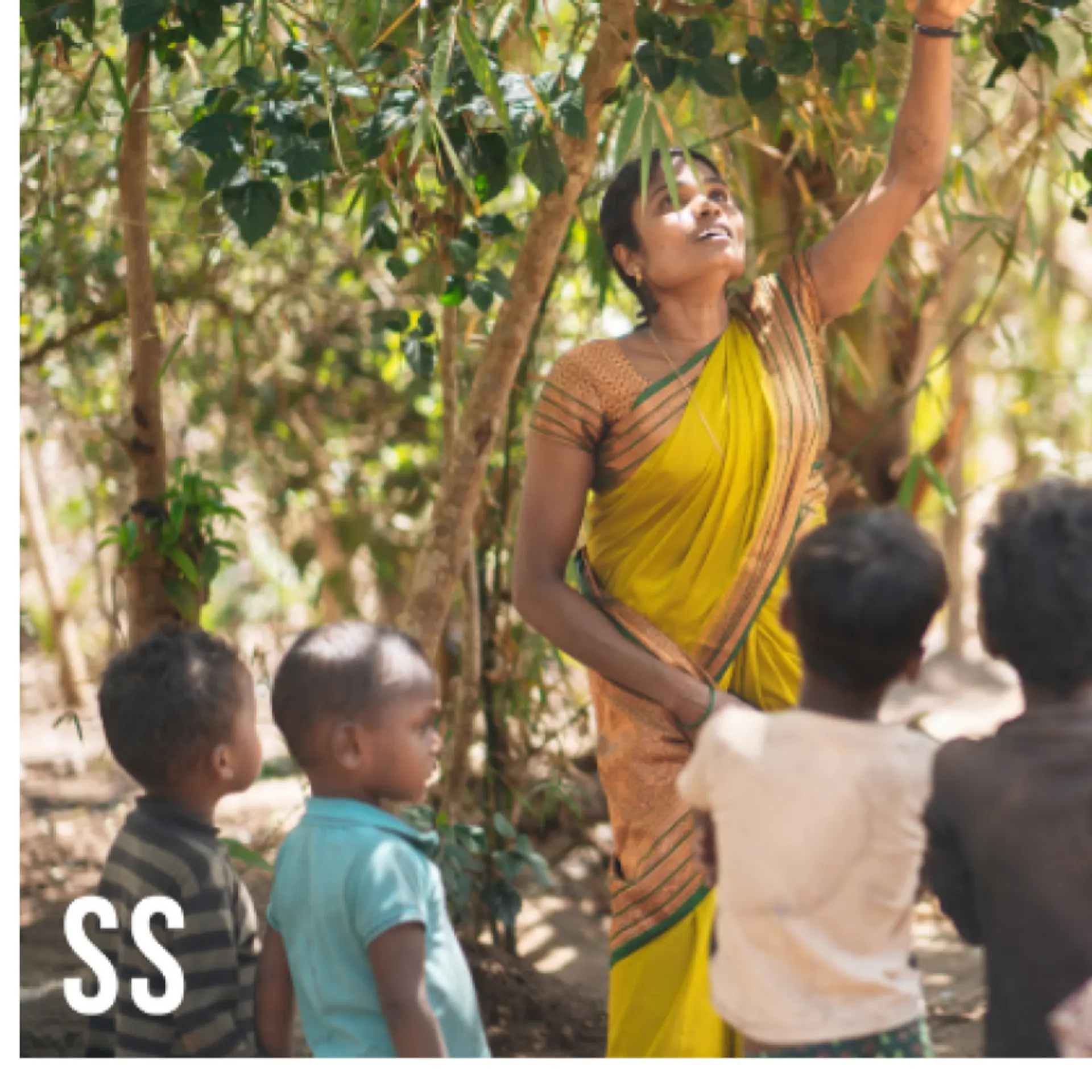

In Heggadadevankote (HD Kote) taluk—one of the least urbanised regions and home to a significant tribal population in Karnataka’s Mysuru district—anganwadi workers faced challenges in attracting children to the anganwadi centres, as many parents were unaware of their full benefits.
The staff had limited access to training and support, and over time, the centres became more associated with nutrition services rather than early childhood education and care.
The taluk has 408 anganwadis, serving 3 to 6-year-olds. However, community engagement with these centres was limited on the ground.
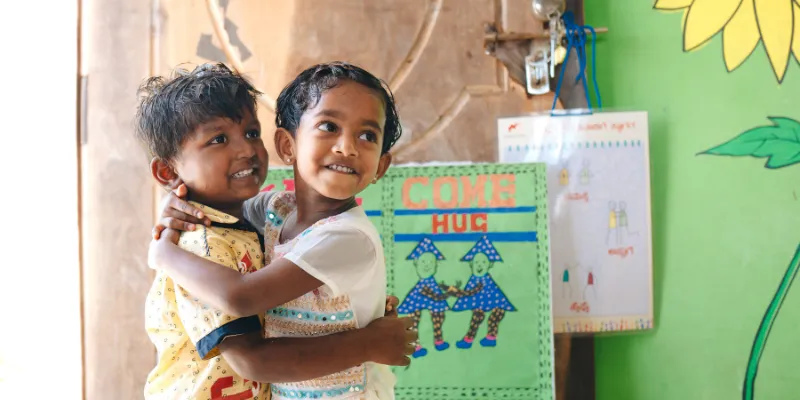
Welcoming each other at the anganwadi
While anganwadi workers carried out their duties, their exposure to pre-school-specific training was limited. Of the 25 days of government training provided, only two days focused specifically on early learning, primarily covering storytelling and basic activities. Topics such as play-based learning, child development, and the foundational role of the early years in education were not part of the core curriculum.
A few months ago, when Shashikala, a resident of the village in the taluk, was asked to take over teaching students after the anganwadi teacher retired, she was reluctant to do so—she had no training, and she didn’t understand how she could contribute.
Today, Shashikala visits homes in her village, encouraging parents to send their children to the anganwadi. She plans her day meticulously, making sure all domains of learning and activity are covered. She gives special attention to children who need help. This turnaround in mindset happened because she was given the knowledge, awareness, and a sense of purpose.
Less than two years ago, Makkala Jagriti—a Bengaluru-based NGO with 22 years of experience in education—started working with the government to change this scenario with its Early Childhood Care and Education (ECCE) programme. It has brought about a fundamental shift in how communities understand early learning and childhood.
“We saw an opportunity to support existing efforts by working with anganwadis as key spaces for transformation in early childhood learning,” says Amrutha Murali, who leads the ECCE programme in HD Kote.
When Makkala Jagriti stepped in, officials—from the deputy director to the child development project officer—responded positively, expressing interest in exploring how these social indicators could be improved.
From workers to teachers
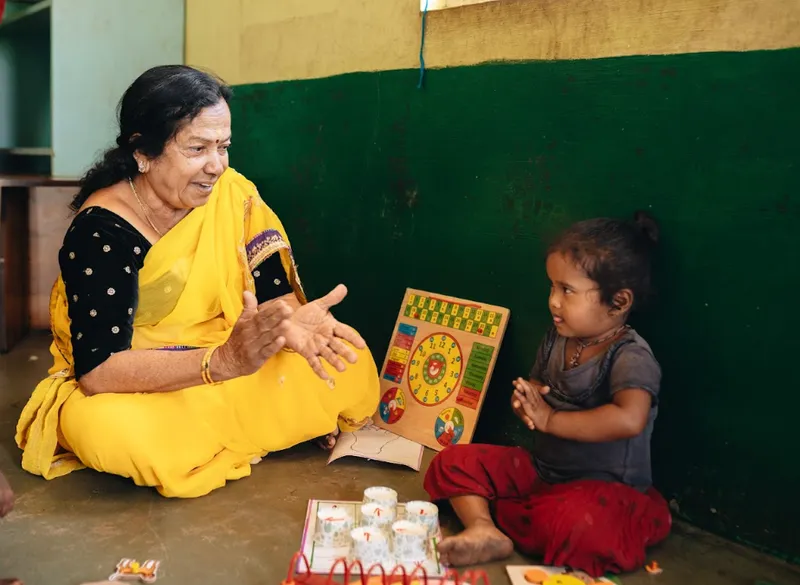
From "workers" to teachers
According to Sunayana Chatrapathy, CEO of Makkala Jagriti, its 15-member team on the ground approaches training women in an experiential format. The first session focuses on identity.
She explains, "Our aim was to change the concept of anganwadi worker to anganwadi teacher. We give them a badge. Through storytelling and simple exercises about brain development, teachers learn how their role can change a child's entire life trajectory.”
"I've had teachers say, 'All these years I've been called a worker. Suddenly, when you're calling me a teacher, I feel empowered.' It is such a pivotal, strong sense of self that we build,” she elaborates.
Through these training sessions, teachers learn to create low-cost learning materials from locally available resources. In honey-gathering communities, for instance, teachers make beehives from dandelion seeds for children to play with.
While most pre-school programmes limit learning to the alphabet or singing a few songs, Makkala Jagriti’s programmes aim to make the children school-ready, which means preparing the child to sit in a classroom, understand instructions, teach them how to hold a pencil, use a book, or go to the toilet by themselves.
The team also works with parents via meetings, home visits, and by sharing videos and activities on how to interact with children.
“The intention is to create a conducive home environment, where the child continues to learn. Parents are asked to encourage children in sorting onions and potatoes, smelling different things, talking, sharing stories, singing songs and having conversations,” points out Chatrapathy.
All these have led to an increase in enrolment rates and regularity, and children are not dropping out in the middle.
Involving the community
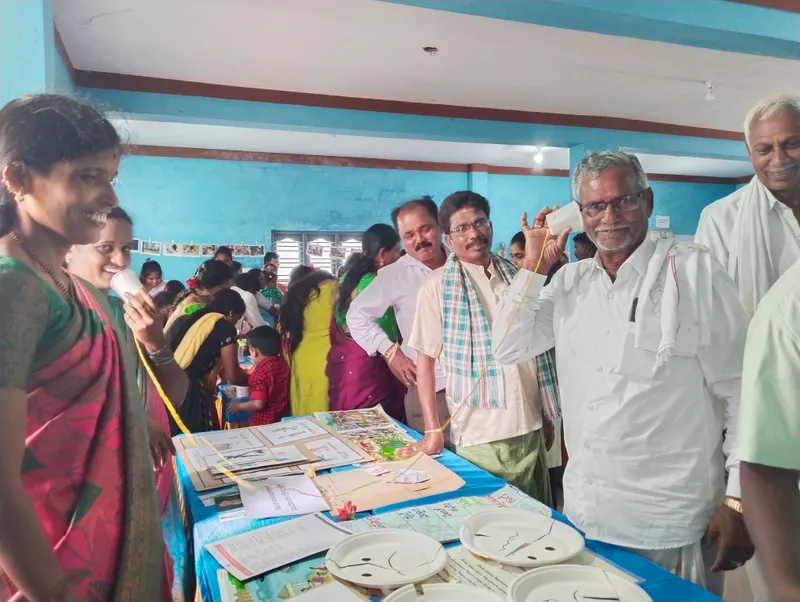
A glimpse from an anganwadi habba
An innovative aspect of this programme is the Anganwadi Habba, which celebrates the potential of anganwadi workers.
HD Kote has 13 administrative circles, where the team organises an interactive day at each centre for community members, panchayat leaders, and development officers to experience early learning firsthand.
One demonstration uses a brain board to talk about positive and negative influences. When discussing negative influences, such as scolding or hitting a child, participants press a button, and the red bulbs glow in the brain image. It's a visual representation of harm. Then they explore positive influences: quality time with children, regular anganwadi attendance, and exposure to language and numbers, and surely the lights change.
When awareness bridges the gap, something remarkable happens: parents go to their anganwadi, asking teachers, "What activity do you do?" Teachers, in turn, do more activities to showcase their work.
"It's a beautiful, sustainable concept that we are seeing emerge. It doesn't require an additional monitoring system. The community is owning the anganwadi's path and progression,” Murali notes.
Working within the system
Unlike many NGO programmes that operate parallel to government systems, Makkala Jagriti works within it, meeting with Child Development Project officers, district directors, and supervisors to make pre-school learning a regular agenda item.
"Suddenly, there is a language; a narrative around pre-school learning that's building,” Murali observes.
The Child Development Project Officer heading HD Kote taluk regularly meets supervisors to discuss what teachers are doing and how learning outcomes can improve.
A four-year HCL Foundation grant supports Makkala Jagriti's work in HD Kote, but the team's vision extends far beyond one taluk. It sees this as a proof point, evidence that quality early childhood education is possible even in the most remote, under-resourced settings.
"We want to ideally scale this across not only Karnataka but also other states. But within HD Kote, all our focus and energies are around—how does this function with us out of the picture? How does this become a practice? How does this become a habit? Who are the key actors who need to be on board for this to sustain without us two years hence?” says Murali.
Anvitha and Myna from a tribal hamlet attend the anganwadi every day happily. Vijith, once hooked to screens, is now a curious learner. Teachers like Sharada from Doddabargi have transformed their centres into vibrant spaces of joyful learning after training and mentoring.
“One thing that drives us every day is our belief that children everywhere have immense potential, and all they need is exposure and opportunities. We are driven by the philosophy that where you are born should not limit how far you go,” concludes Chatrapathy.
Edited by Suman Singh