


Meet the grassroots leaders reclaiming power and justice in rural India
Across India’s margins, meet the leaders, writers, and organisers who have built movements that challenge caste, patriarchy, and exclusion—not just through protest, but through everyday transformation.

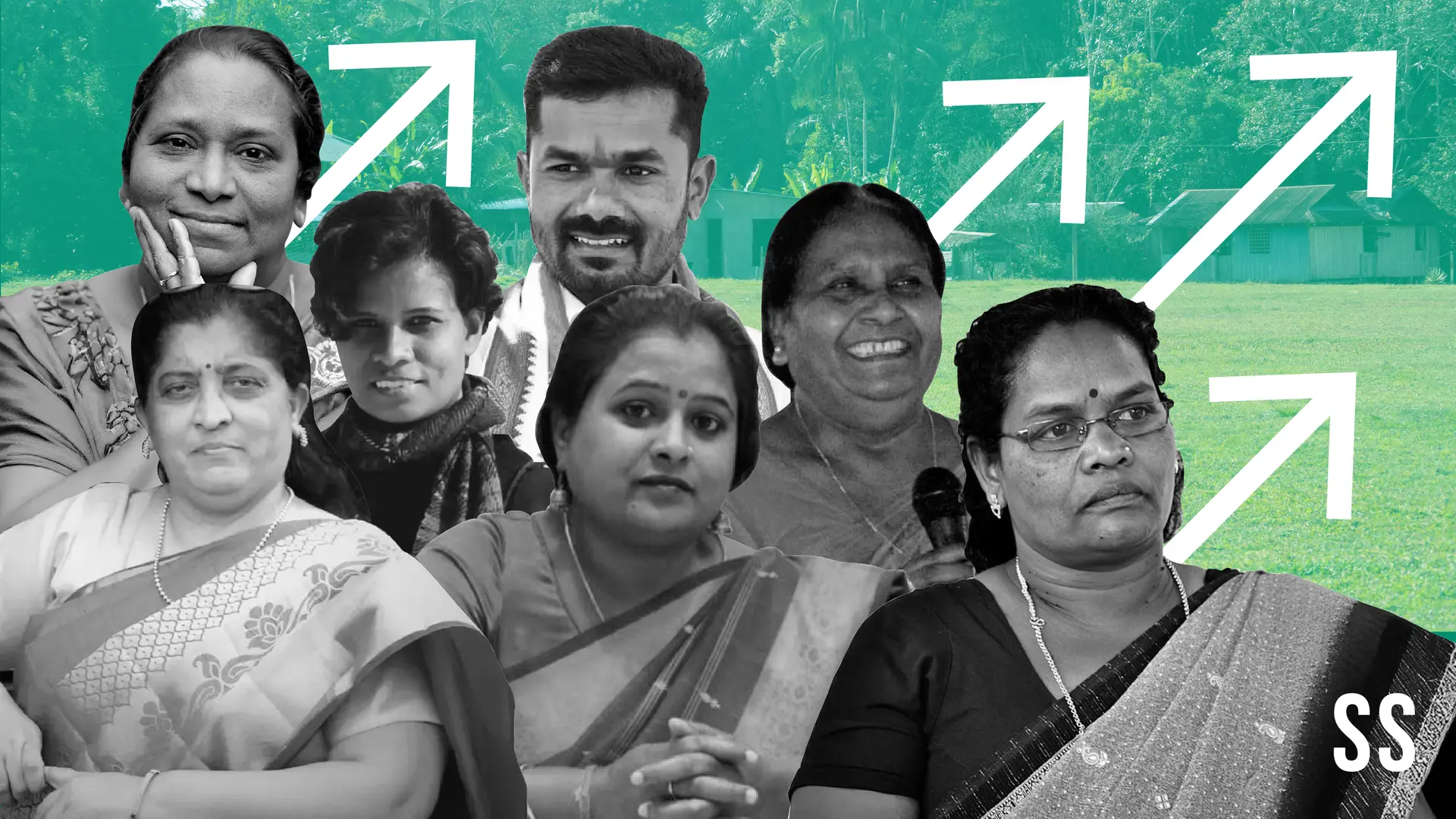

Ruth Manorama, Feminist Leader and Movement Builder, Bengaluru
Born in Chennai and trained in social work, Ruth Manorama has spent over four decades building one of India’s most powerful Dalit feminist movements.
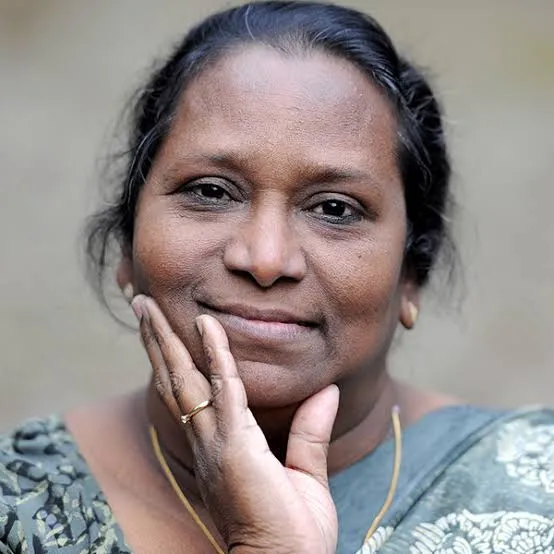
Ruth Manorama
Her journey began in the 1970s while working with women in urban slums, where she witnessed how caste and gender oppression intertwined.
She went on to found Women’s Voice, a grassroots organisation in Bengaluru fighting for land, housing, and labour rights, and later co-founded the National Federation of Dalit Women, a pioneering network that gave Dalit women a collective political voice in India.
A tireless organiser, Manorama helped shape the 1995 Beijing Women’s Conference and continues to centre the struggles of domestic workers, landless women, and the urban poor.
Guided by her belief that “justice cannot be fragmented,” her work through Women’s Voice and allied networks remains focused on collective leadership, land reform, and restoring dignity to Dalit women’s lives.
CK Janu, Adivasi and Land Rights Advocate, Kerala
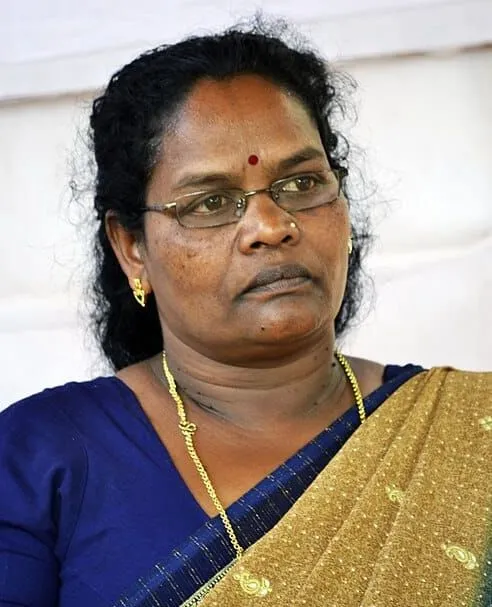
CK Janu
Born in the hills of Wayanad, C.K. Janu taught herself to read and write before becoming one of Kerala’s most fearless Adivasi voices.
In 1992, she co-founded the Adivasi Gothra Maha Sabha, igniting a statewide movement for land rights and dignity for tribal communities long pushed to the margins.
Her 2001 hut-building protest outside the Kerala Secretariat — kudil ketti samaram — became a symbol of resistance, followed by the 2003 Muthanga land occupation, which exposed the state’s violent response to Adivasi assertion.
Janu has long argued that token welfare means little without political power and accountability.
In 2016, she launched the Janadhipathya Rashtriya Party, later breaking ties with the NDA over neglect of tribal concerns. Now learning English to speak directly to those in power, Janu continues to reclaim space for her people — in forests, in politics, and in history.
Jacinta Kerketta, Adivasi Poet, Journalist, and Activist, Jharkhand
Born in the forests of Khudaposh in Jharkhand’s West Singhbhum district, Jacinta Kerketta, a poet, journalist, and activist from the Oraon Adivasi community, has turned words into a weapon of resistance.
Trained in mass communication at St. Xavier’s College, Ranchi, she uses reportage and poetry to confront erasure — documenting how land, language, and dignity are stripped from her people. Her journalism has appeared in Dainik Jagran, The Wire (Hindi), and Rural India Online.
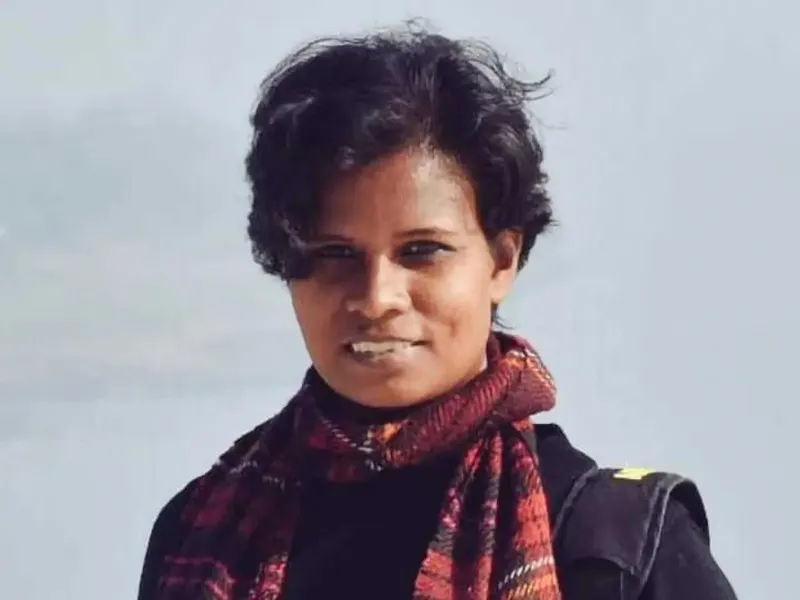
Jacinta Kerketta
Her poetry collections, Angor and Jadon Ki Zameen (Land of the Roots), speak of lost languages, scorched forests, and the endurance of women who bear the weight of violence and displacement. Critics describe Angor as raw and unflinching, resisting the appropriation of land and life.
In 2024, she refused a children’s literature award co-sponsored by USAID and Room to Read, citing solidarity with children in Palestine and questioning the ethics of institutions linked to the arms industry. She had earlier declined an India Today literary prize over the state’s silence on atrocities in Manipur.
For Kerketta, art, ethics, and activism are inseparable. Her writing demands that Adivasi stories be told by Adivasis — grounded in land, memory, and resistance.
Masanagari Narsamma & Algole Narsamma, Founders, Sangham Community Radio, Telangana
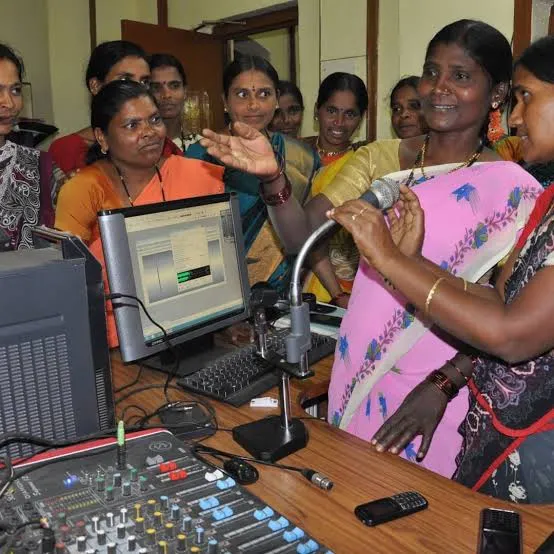
In the dusty lanes of Telangana’s rural interiors, Masanagari Narsamma and Algole Narsamma have turned airwaves into tools of justice. These Dalit women co-run Sangham Radio, one of India’s few community radio stations operated entirely by rural women.
They broadcast folk songs, health tips, and community debates that cut across caste and gender silences — challenging both media exclusion and social stigma. Their programmes address issues such as maternal health, sanitation, and land rights, giving voice to stories that rarely reach mainstream radio.
For their listeners, the broadcast is more than information — it’s legitimacy. When people hear their own language and stories on air, resistance becomes audible. Sangham Radio’s daily signal is an act of assertion: an insistence that Dalit women must be the narrators of their own lives.
Varsha Deshpande, Gender Rights Activist, Maharashtra
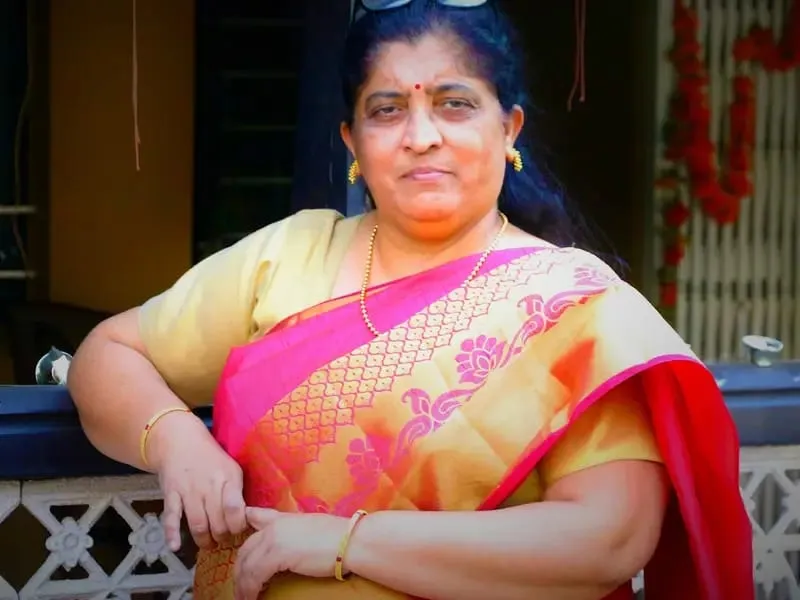
Varsha Deshpande
In Maharashtra’s small towns and villages, Varsha Deshpande has built one of India’s most enduring grassroots movements for gender and caste justice. A lawyer turned activist, she founded the Dalit Mahila Vikas Mandal in 1990 to empower Dalit and marginalised women through legal literacy, livelihood training, and collective strength.
Over the decades, her campaigns have challenged child marriage, exposed sex-selective abortion networks, and fought for women’s right to property and dignity. Deshpande’s work bridges the personal and the political — taking feminist ideals to the panchayat and the police station alike.
In 2025, her lifelong advocacy was recognised globally when she received the UN Population Award, honouring her fight to ensure that equality and choice reach even the most neglected corners of India.
Kavita Devi, Meera Jatav, and Shalini Joshi, Media Activists, Uttar Pradesh
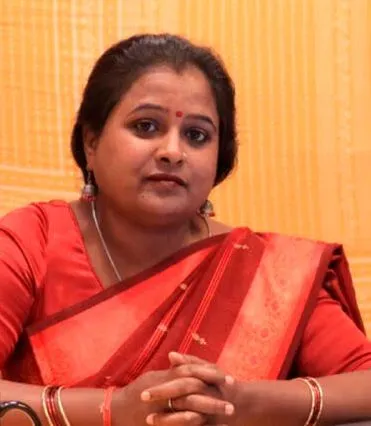
Kavita Devi
From the heart of Bundelkhand to thousands of screens, Kavita Devi, Meera Jatav, and Shalini Joshi have rewritten the rules of Indian journalism. The trio co-founded Khabar Lahariya, the country’s only all-women, rural-run news network — bold, bilingual, and hyperlocal.
Born in a Dalit farming family in Kunjan Purwa, Kavita Devi began with Mahila Dakia, a two-page newsletter by and for rural women, before co-founding Khabar Lahariya. Now its Editor-in-Chief and CEO of Chambal Media, Devi leads digital storytelling workshops that have trained hundreds of women in mobile journalism.
Meera Jatav, who joined soon after its inception, has been the network’s backbone through its digital leap — mentoring young reporters and expanding its reach across Uttar Pradesh, Bihar, and Madhya Pradesh. Shalini Joshi, part of its founding team, helped shape the editorial ethos that makes Khabar Lahariya sharp, inclusive, and fearless.
Today, the collective boasts over 40 women reporters — most from Dalit, Adivasi, and Muslim communities — producing hard-hitting investigations and viral digital stories that challenge the mainstream gaze.
Fathima Burnad Natesan, Dalit Feminist Scholar and Rural Development Leader, Tamil Nadu
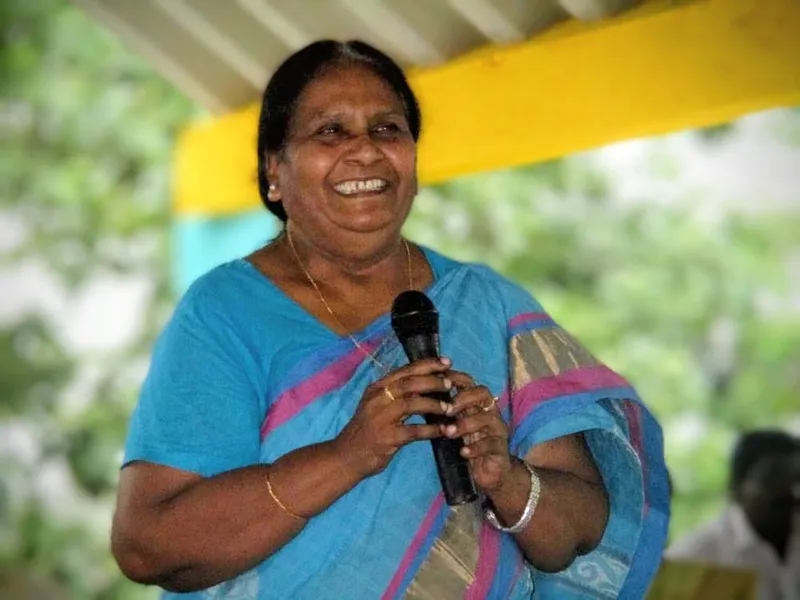
Fathima Burnad Natesan
In Tamil Nadu, Fathima Burnad Natesan has redefined land ownership and equality for Dalit women farmers. A feminist and social activist, she founded the Society for Rural Education and Development (SRED) in 1979, which works with Dalit women agricultural labourers in Ranipet district to secure land ownership, collective farming rights, and climate resilience.
Her movement flips the power dynamic: women who once tilled others’ land now own and cultivate their own. A fierce advocate of intersectional justice, Burnad blends feminism, caste critique, and ecological sustainability — challenging both patriarchal land systems and tokenistic development models.
In her view, true empowerment begins when Dalit women control resources, not just wages. Through SRED’s cooperatives, training, and advocacy, she continues to turn Tamil Nadu’s rural margins into frontlines of transformation — one field at a time.
Vedma Bhojju, Social and Tribal Rights Activist, Telangana
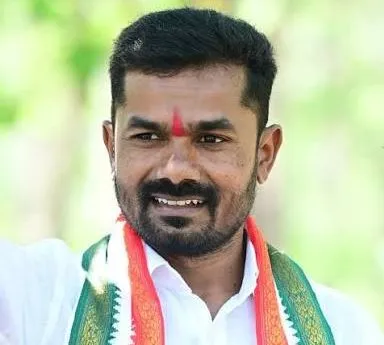
Vedma Bhojju
From a tribal hamlet in Telangana’s Adilabad region, Vedma Bhojju emerged from the Gond community to become a strong Adivasi voice in state politics. With an MA and LLB, he first mobilised through the Adivasi Students’ Association and later the rights group Thudum Debba (Adivasi Rights Struggle Committee).
In December 2023, he won the Khanapur (ST) constituency on an INC ticket, defeating his BRS rival by 4,702 votes. In the Assembly, he has pushed for forest land rights, road connectivity, school access, and welfare delivery in the agency areas.
Bhojju has been outspoken in defending tribal autonomy — joining voices that opposed a proposed “tiger corridor” threatening 339 tribal villages.
A rising leader, he blends grassroots mobilisation with formal politics — a bridge between forest communities and the legislature.
Edited by Jyoti Narayan