



Karthik Vaidyanathan of Varnam stays away from buzzwords like ‘sustainability’. His focus? Artisan wages and craft survival.
Karthik Vaidyanathan of Varnam Craft Collective is keen on keeping the craft economy of Channapatna alive and ensuring fair wages to artisans without succumbing to cliches such as ‘sustainability’ and ‘slow fashion’. His approach to craft survival is creating products that are also functional.

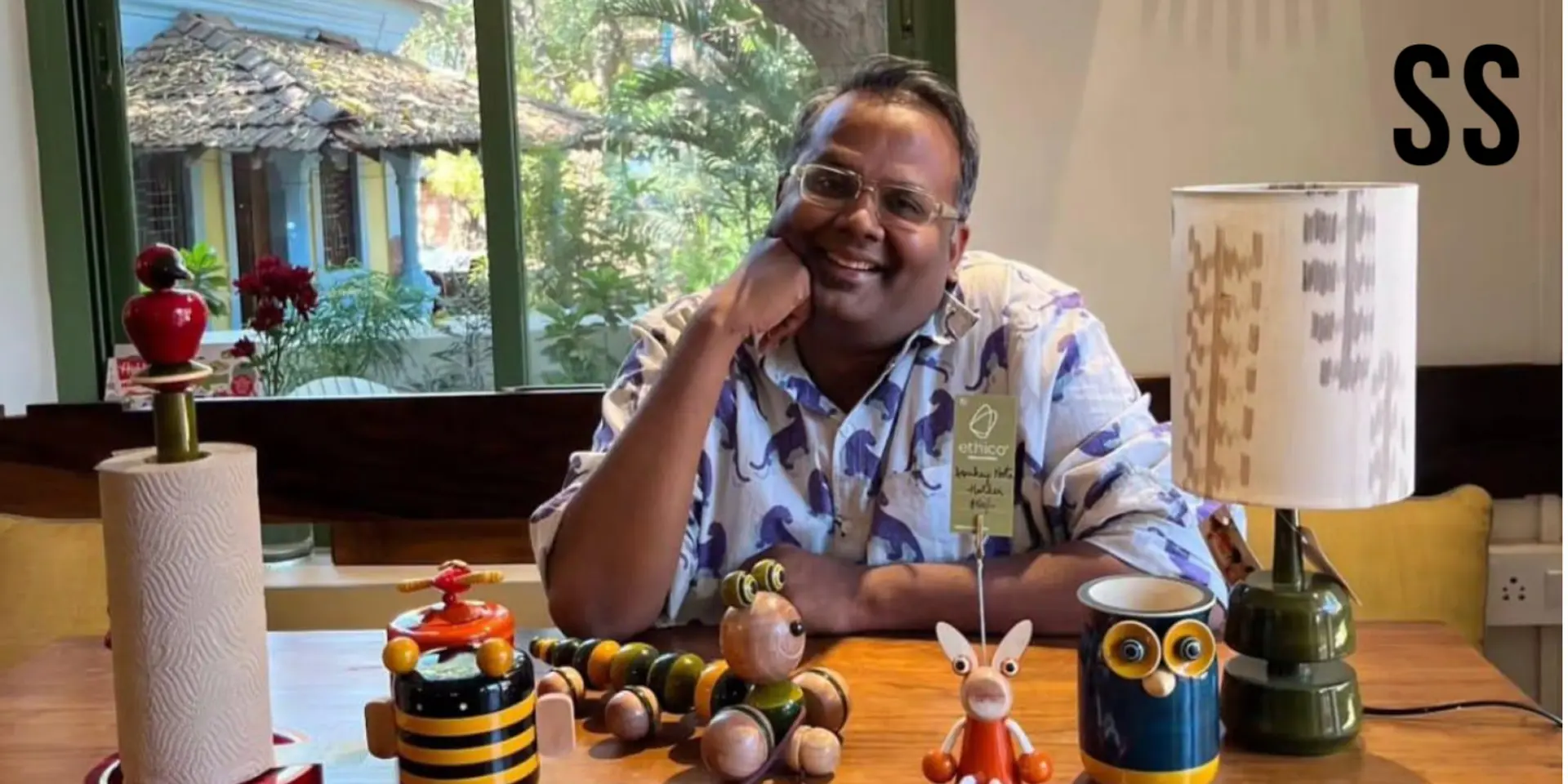

In an industry saturated with marketing buzzwords such as ‘sustainability’, Karthik Vaidyanathan, Founder of Varnam Craft Collective, would rather talk about rent and the price of lacquer. Or how many artisans he can keep on payroll this month.
“I don’t believe in sustainability or slow fashion,” Vaidyanathan says flatly. “I only believe in sustained livelihoods and survival of the craft.”
From his base in Bengaluru, Varnam’s founder has spent 14 years building an enterprise that resists the ‘sustainability’ packaging and rhetoric entirely—Varnam is a design-driven, artisan-first model that exists for one thing only: ensuring the people turning the lathe at Channapatna earn better, steadier wages.
A craft that refuses to romanticise itself
Channapatna, a town in Karnataka, is known for its 200-year-old tradition of making lacquered wooden toys. It once housed several hundred families working the lathe. Today, the number has dwindled drastically.
Though the craft form earned a GI (geographical indication) tag in 2006, little has changed for the artisans.
“Things haven’t really improved,” Vaidyanathan tells SocialStory. “There’s a lot on paper, but nothing at the grassroots. More and more artisans are leaving the craft—and new people don’t want to enter it.”
The problem isn’t just economic. “Craft is manual labour. Everywhere, people want easy work that pays more. That’s true in tech, it’s true in design schools, and it’s true here,” he says.
When Vaidyanathan started Varnam in 2011, he realised quickly that saving an entire cluster would be both far-fetched and impractical. So he focused on depth.
“We decided to work with a handful of artisans we could support consistently,” he says.
In a market where intermediaries often take the lion’s share, Varnam is quietly changing the dynamics and making sure artisans earn a fair livelihood and a greater share of profits.
Two units, now run by artisans themselves, were set up with capital from Varnam. “We invested in the space and paid the rent, so that the artisans could focus on the work. Each unit is run by artisans—not middlemen. They pay the wages to others in their team.”
Keeping the lights on
To ensure wages are regular, Varnam had to control one thing most craft enterprises outsource: sales. That is why it opened its own stores in Bengaluru, Mysuru, and recently Goa.
“If the work depends on someone else’s orders, it becomes seasonal. By selling directly, we ensure there’s never a dearth of work,” says Vaidyanathan.
Stability, he says, keeps artisans from walking away—though many still do after marriage, especially women.
“A lot of the girls we trained are first-generation artisans. After marriage, their husbands tell them to stop working.”
The craft itself is changing. Unlike weaves or metalwork with centuries-deep lineage, Channapatna’s toy craft only came into its own only in the 1970s, as a “new-age” form. Without centuries of inherited techniques or strong lines of apprenticeship, much of the skill risks being lost. Constant reinvention and design innovation are the only ways to keep the craft alive.
Vaidyanathan’s answer to craft survival is designs that are also functional.
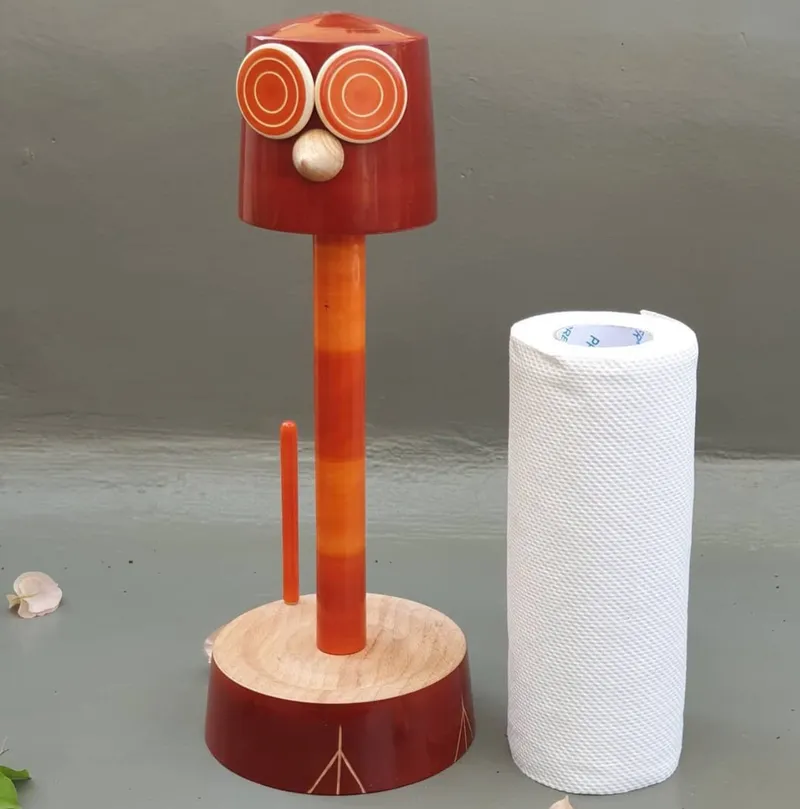
Karthik Vaidyanathan's approach to craft survival is creating products that are also functional.
"From year one, our focus has been functionality. Unless it’s functional, people won’t use it,” he says. “We’ve made salt and pepper shakers, towel holders, lamps—things that fit into modern homes.”
And that’s why he dismisses ‘statement pieces’ that win design awards but do nothing for an artisan’s weekly income.
“Say a chandelier,” he laughs. “A chandelier won’t sustain anyone’s livelihood. If an artisan can make 500 colour-pencil boxes, that money goes much further.”
This practical approach to craft, he believes, comes from his engineering background—as opposed to what a design school might teach. Before founding Varnam, Vaidyanathan spent nearly two decades in advertising and brand strategy, working with multinational agencies.
“That training helps,” he says. “It keeps me grounded. I understand cost, time, process, and how to run a business.”
Understanding grassroots before commerciality
This unwillingness to play by the rules of the market extends to how he approaches funding as well.
“I’ve continued working in the corporate sector so I could push the envelope without thinking commercially,” he says. “The moment CSR or donor money comes in, you start talking in (terms of) metrics.
That’s when you stop listening to your intuition.”
His measure of success is tangible: 300 artisan families now work directly with Varnam across 13 clusters in Karnataka, working on Channapatna craft, Bidri work, block printing, crochet, ceramics and embroidery.
If you include dyers, wood suppliers, and colour-makers, the number would swell past 600, he says.
Every collaboration, he insists, is driven by the same principle of continuity. “You can’t do this work for a quick buck. Artisans are human. If you don’t treat them with respect, they’ll leave you. And when they leave, their knowledge leaves too.”
What works and what doesn't
Vaidyanathan is candid about what works and what doesn’t work in the crafts sector.
GI tags don’t mean anything on the ground, he says. “Maybe they prevent someone in Bengaluru from calling their product a Channapatna toy, but it doesn’t increase sales or wages. Consumers don’t buy because of a GI tag. They buy if it’s useful.”
He’s equally blunt about the ‘sustainability’ jargon.
“Who are we kidding? Just because you buy fabric from a weaver doesn’t make it slow fashion. These are marketing gimmicks.”
Varnam’s ongoing travelling exhibition, Snugglewalas, the brand’s first of its kind, showcases work across 12 crafts, including Kashmir’s enamel art, Rajasthan’s block print, and Tamil Nadu’s Lambadi embroidery.
The exhibition’s aim is to showcase Varnam’s solidarity towards all these artisan clusters, with the same intention to help them survive and reach more markets.
Varnam’s core has been about handlooms and handicrafts in the broadest sense, he says—about connecting traditional techniques and communities through design.
“Design in India is seen for its size—the bigger the chandelier, the better,” he says. “But when I make a small toy cow, no one says, ‘Look at that curve.’ There’s so much engineering in it—the same form repeated across 12 characters, distinguished only by colour and detail. That’s innovation too.”
The showcase was on in Bengaluru until earlier this week. The next leg of Snugglewalas is scheduled for Hyderabad in November.
The long game
Despite all the acclaim that he has received, Vaidyanathan is sceptical of hype. “People who come into craft for short-term gains never succeed,” he says. “You have to be in it for the long haul.”
His artisans decide their prices. There’s no negotiation. “They know their costs—material, labour, hours. We pay what they ask. The designs are ours, but the price is theirs.”
This approach has paid off in loyalty. Many of Varnam’s craftspeople have stayed for over a decade. “We can’t change the fact that the work is hard. But we can make sure it’s dignified, regular and fair.”
In a sector crowded with workshops touting ‘ethical craft’ and sepia-tinted branding around ‘craft revival’, Vaidyanathan’s honesty is almost subversive. He is stubbornly fixated on rent, fair wages, and the unglamorous business of keeping crafts alive.
“At the end of the day, if my artisans are earning better this month than they did last month, that’s all that matters.”
Edited by Swetha Kannan