



How More than Play’s mother-coaches are championing change in Delhi’s slums
With its unique sport-for-development model, More than Play has impacted over 800 children and 40 youth and mother volunteers across four slum communities in New Delhi.

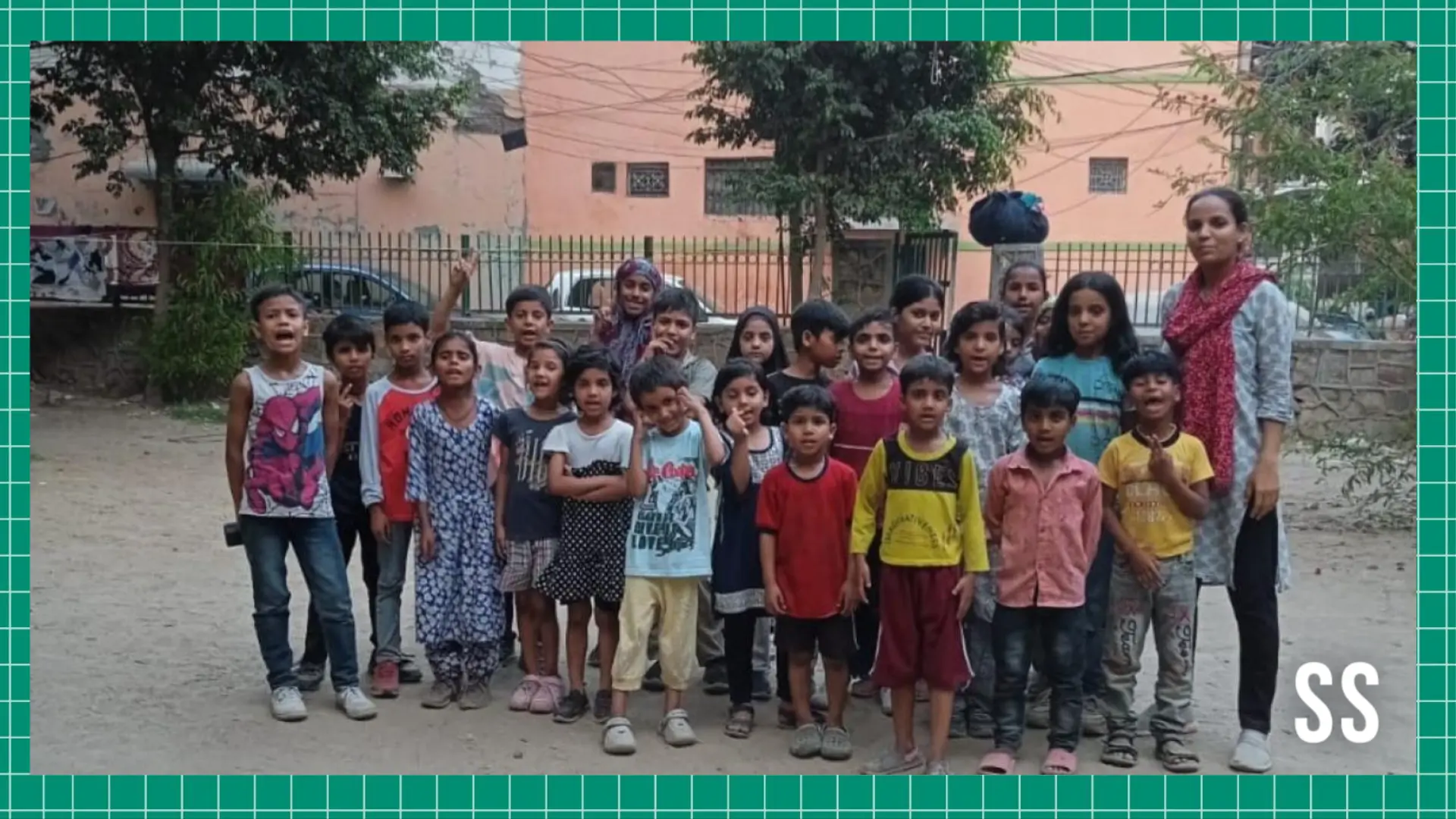

Rajni had never played football in her life. Educated only till the sixth standard, she took up cooking jobs and rarely ventured from her home in Aali Village, on the outskirts of Delhi.
Today, she leads eight sessions a month, teaching children from nearby slums football and essential life skills.
Rajni is one of 20 ‘community sports coaches’ from More than Play, a sport-for-development programme operating across four of New Delhi's most disadvantaged neighbourhoods.
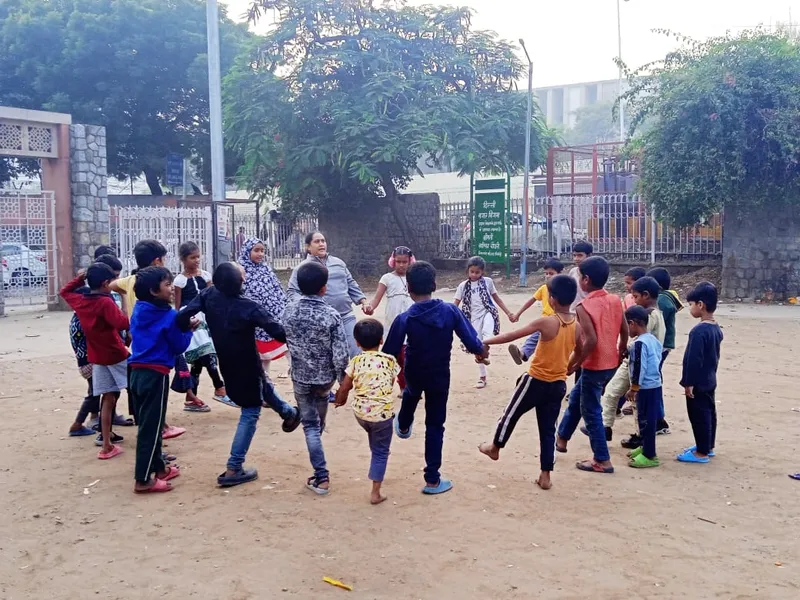
Mothers are at the heart of More than Play's sport-for-development programme
An initiative of the Khelo Tennis India Foundation, founded by Jaideep Bhatia, More than Play places mothers, volunteers, and youth at the centre of its approach to empower slum communities in Delhi’s Hazrat Nizamuddin, Aali Village, Sarai Kale Khan, and Kusumpur Pahari.
At the Aali Village Centre, the mothers pose happily in their white More than Play T-shirts. They are eager to tell me how their lives have changed since they became ‘mother-coaches’.
Usha’s voice is confident, but her words reveal how hard her battle has been. Married at 15, she continued studying and passed her 12th standard. When her son enrolled himself at More than Play, its local coordinator suggested she become a mother volunteer.
Her husband supported her but she remained cautious. After the five-day training, something changed in her. She learned to play and to train, and with it came the confidence she always dreamed of.
“Earlier, I didn’t even have the courage to step out. Now I travel alone,” she says.
Usha runs two sessions a week now, teaching children warm-ups, football basics, and new games.
The transformation isn’t just in the children. While her son prepares for NIT, Usha too is working to improve her English.
She is rewriting her life story.
Betting on mothers
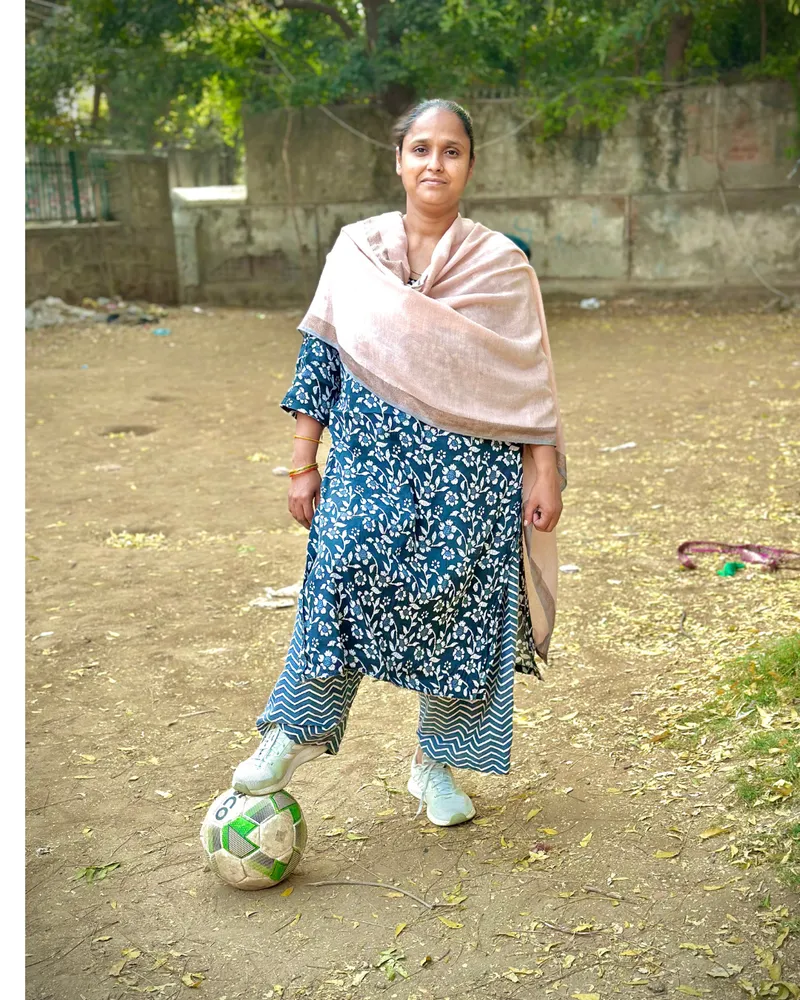
Farida, a mother volunteer
Bhatia did not set out to create a programme run by mothers in the beginning. A tennis coach since the age of 18, he had spent decades building Team Tennis, a coaching initiative across 15,000 children and 40 locations, which has produced 10 Davis Cup and Fed Cup champions.
But something lingered at the back of his mind.
“For every one national champion, we probably had 50 to 60 children who just wanted to have fun and play, not really engage with sport beyond that at a competitive level,” he reflects.
In 2014, he sold his stake in Team Tennis and moved into social impact work, Magic Bus Foundation, JSW, Ashoka University, in fundraising roles. In 2018, he set up the Khelo Tennis India Foundation.
More than Play launched in October 2023 initially focused on young people in Nizamuddin Basti. At the time, his programme manager, Mohammed Hammad, made an unexpected suggestion: “What if we look at mothers as volunteers, as sports coaches?”
“I firmly believe that a sports culture starts at home. Mothers will be able to push their children more than anybody else. The most important thing is about getting girls out there,” says Bhatia.
But there was a challenge. “They were unfit and had never played sports before. Our model was that volunteers must have basic education, at least graduated high school. None of the mums had that,” he says.
He made them an offer: “If you agree to move towards your education and finish your school, I’m happy to work with you.”
They all said yes.
Fast forward to today. One mother has completed high school and her first year of college. All women have enrolled themselves in educational programmes. And the mother-coaches have become the backbone of More Than Play that reaches over 800 children across four slum communities in Delhi.
“This is now a core part of our model. They have got the ‘magic cap’ of a coach, the ‘jadu ki topi’ as we say,” says Bhatia with pride.
More Than Play makes sure children and youth have access to sports and play through development sessions. It also ensures the right to education through sessions at its centres, better health and hygiene in the communities. It also trains youth and mothers as community sports coaches and leaders. Thirty-five children play football in Aali Village, 32 children are learning cricket and 10 children pickleball at the Nizamuddin basti. The football groups in Sarai Kale Khan and Kusumpur Pahari have 18 and 20 children, respectively.
The programme targets children aged 7 to 16, youth 17+ and mothers who are over 25 years. So far, it has impacted 803 children.
When her 13-year-old daughter started playing with More than Play, Anita received a message that mothers could join too. She was interested but scared.
Not used to stepping out of the house often, Anita was at first “disturbed by all the noise outside.” She wanted to quit, but somehow she persisted. She ran her first training session recently and wants to do more.
There are traces of a new-found confidence in her. “I want to learn something for my children. I want to learn something for myself,” she says.
The boy who became the bridge
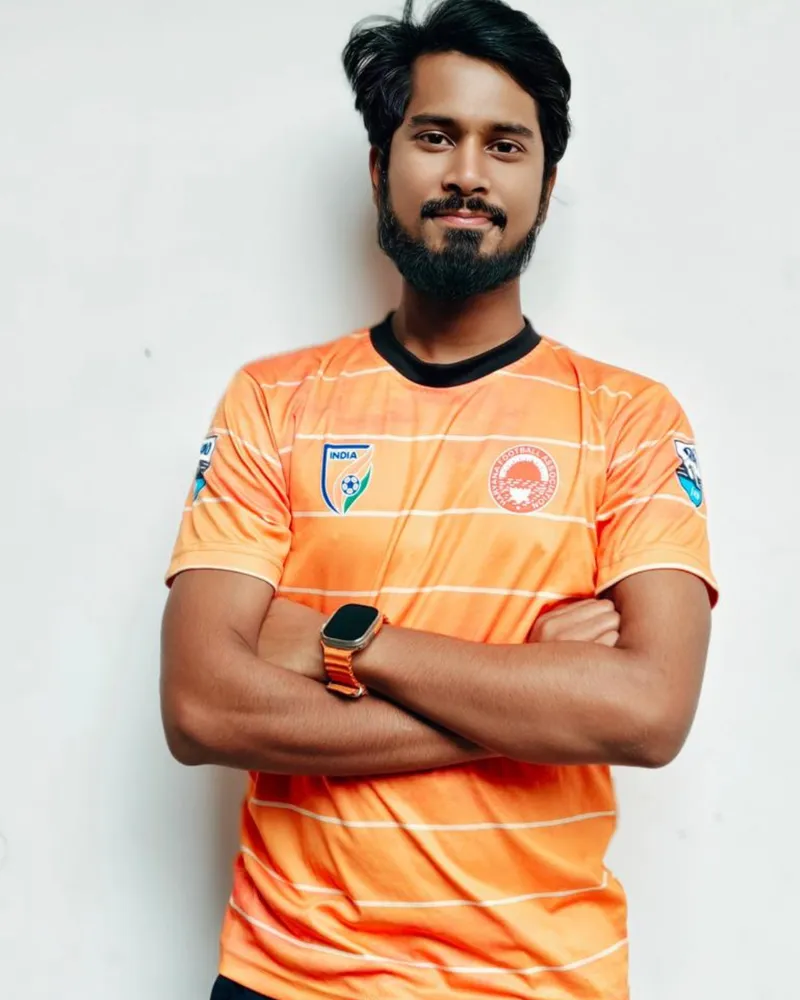
Jagdish Kumar, Programme Manager at Aali Village
To understand More than Play is also to understand Jagdish Kumar and how his life was transformed through sport.
At 27, Kumar is a programme manager for More than Play at Aali Village, heading operations, training volunteers, overseeing the computer centre, education programmes, ground sessions, life skills training, and even a kitchen garden on the terrace.
Born in Aali Village, Kumar grew up seeing domestic violence at home. This shaped the young boy into an angry adolescent who used abusive language and was heading down what he recalls as a “dangerous path”.
The turning point came in 2008 when Gaurang Mohan, a representative of Magic Bus India Foundation noticed children playing football with a torn ball in Aali Village. He returned with a proper ball and an offer: structured play sessions that incorporated life skills and proper football techniques.
Kumar played with them from 2008 to 2010 but his aggression had not completely worn off. Another mentor introduced him to older children, and this helped channel his energy. In 2012, Kumar became a community youth leader with Magic Bus, and he learned life, beyond football.
At 18, he also got his first paid job with Kutumb Foundation, at Rs 400 a session. Through the Wimbledon Foundation Program, Kumar met Bhatia who became his coach, though neither of them knew they would work together years later. In the intervening years, Kumar earned coaching licences, and became an accredited coach with Coaches Across Continents.
And, life came full circle when he was recommended to More than Play.
Mothers for the win
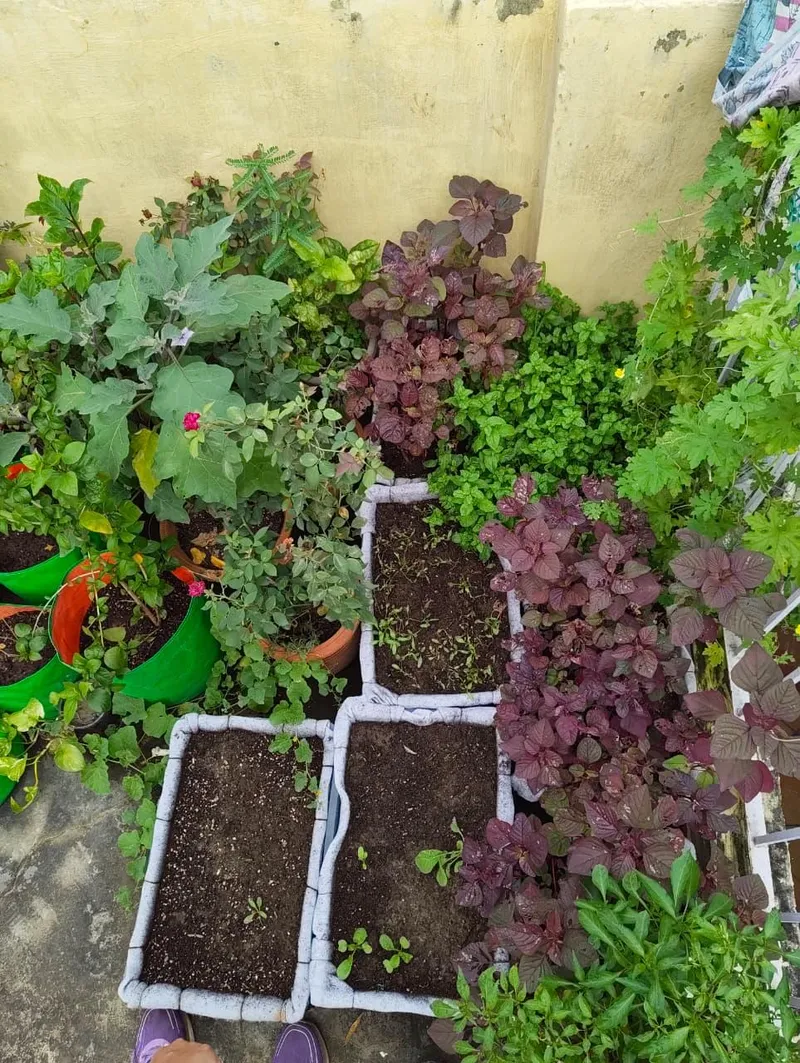
The kitchen garden at one of the centres
But coaching mothers was entirely new to Kumar.
“In Nizamuddin, I encountered women as old as 55 years, I wondered: How will I make them run? I had coached men across all age groups but never women, especially older women,” he says.
But he soon learned that mothers are not less.
“Aag laga sakti hai,” he says.
This literally translates to ‘they can set fire’, meaning they can do wonders.
Shabnam, who learned football from scratch after joining More than Play is now a trainer at Aali. She has played at the Delhi Women’s Championship and is part of the city’s football clubs. Along with the other mothers, she teaches sports and life skills, and counsels children on education and health.
The mothers serve as a bridge between the programme and the community and make door-to-door visits to mobilise new participants. They are also paid a stipend of Rs 3,000 a month. The young people and mothers are also mentors for children, and conduct weekly sessions based on well-researched, activity-based curriculums developed with its technical training partner, Coaches Across Continents.
More than just play
At the Aali Village Centre, young children are busy with their homework or learning on desktop computers before they leave for school. Sandeep, an eighth grade student, shows me how fast he can type, up to 90 words per minute.
“I got a lot of equipment to play from More than Play. Shabnam didi teaches us football while the mothers teach the younger children. I want to train hard and become a football player,” he says.
Shabnam says there is a lot of change in the children. They talk to each other politely, and know how to handle things on the ground.
Bhatia’s management style is deliberately hands-off.
“I am not involved day-to-day. I just empower them and allow them to take charge. It’s a platform for them to really set up and lead. They are their own bosses and their own CEOs,” he explains.
Kumar and the mothers take me to the rooftop of the centre and show off their small kitchen garden that grows spinach, coriander, brinjal and tomatoes. This is being replicated at all centres of More than Play so that the communities can take control of their own nutrition.
At the centres, you will also see women trained in tailoring through a partnership with the USHA Silai School. Children are also enrolled in the digital literacy initiative where they can access computers throughout the day.
The results are encouraging.
A young girl is showing promise in golf. Cricket players who study at DPS and Modern School through the EWS quota are being supported to attend academies, while also working as peer leaders. Attendance is regular at most centres, and children are being guided by mothers who understand their struggles.
Funding comes primarily through Bhatia’s tennis network, former students and their families. Max India Foundation, DMI Finance, and the Good Earth family are the three key funders.
More than Play is targeting 1,000 children and 50+ community sports coaches this year while also exploring more livelihood partnerships.
But the real goal isn’t creating champions.
“Play is the foundation. It allows us to mobilise children, moms, and young people. Then for young people, it has to be about education. They must finish at least high school, that’s the bare minimum,” says Bhatia.
After two years, he assesses where they are. “I think we are heading towards impact, more at an outcome stage now. We see regularity, moms are starting to take control over their lives, investing in themselves, and wanting to study.”
Edited by Swetha Kannan