


How this weekend street school is bringing the hope of education to Delhi’s slums
Started in 2015, Pehchaan-The Street School is a 800-strong volunteer-led organisation that provides education and life skills to children through weekend classes in Delhi’s slums.

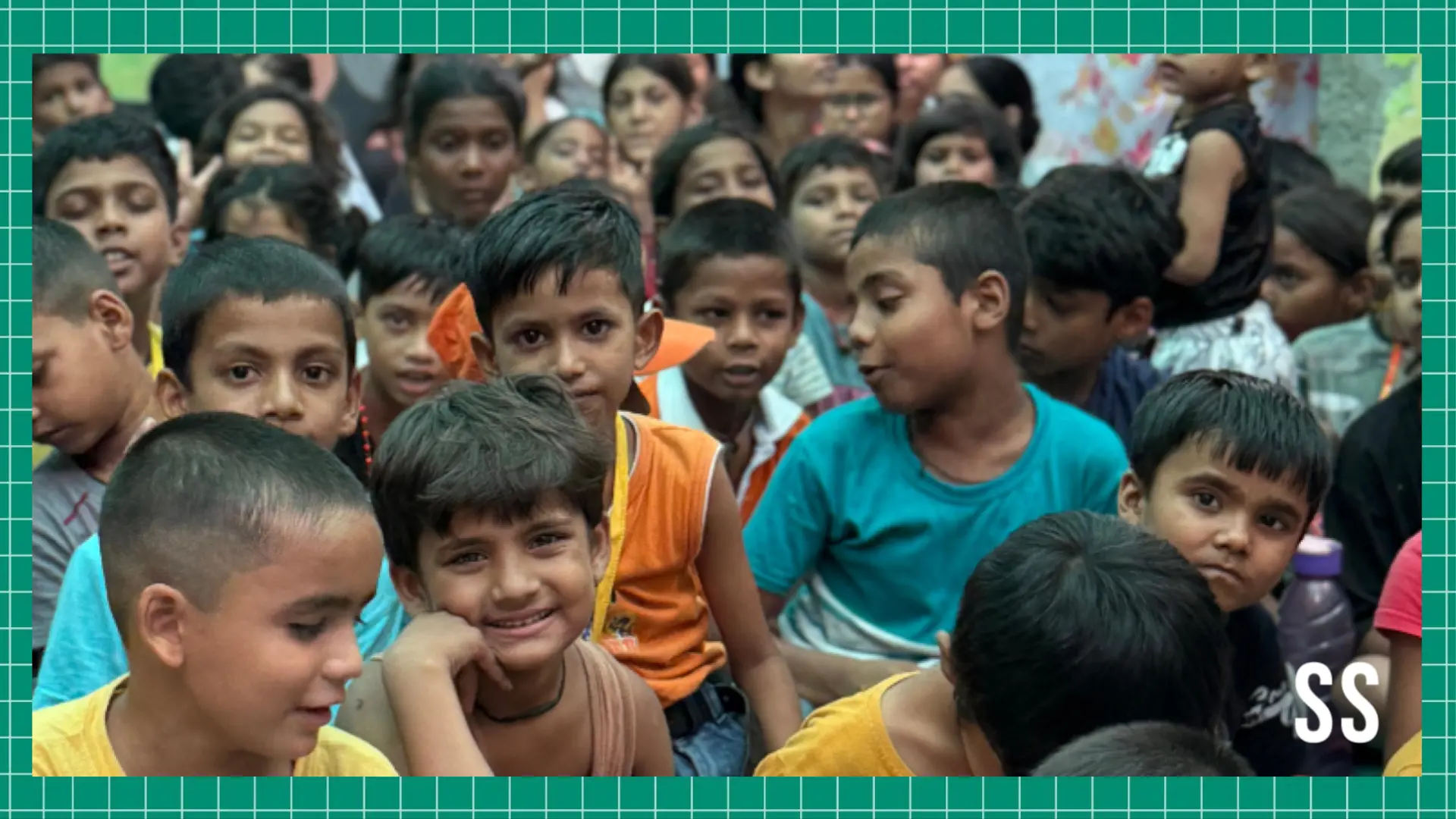

A short walk from the Indraprastha metro station leads to Anna Nagar, a slum cluster in Central Delhi. Home to over 10,000 people, the settlement is a maze of narrow lanes and cramped shanties. Open drains run along the pathways, and during the monsoon, waterlogging and the risk of disease pose a persistent threat to its residents.
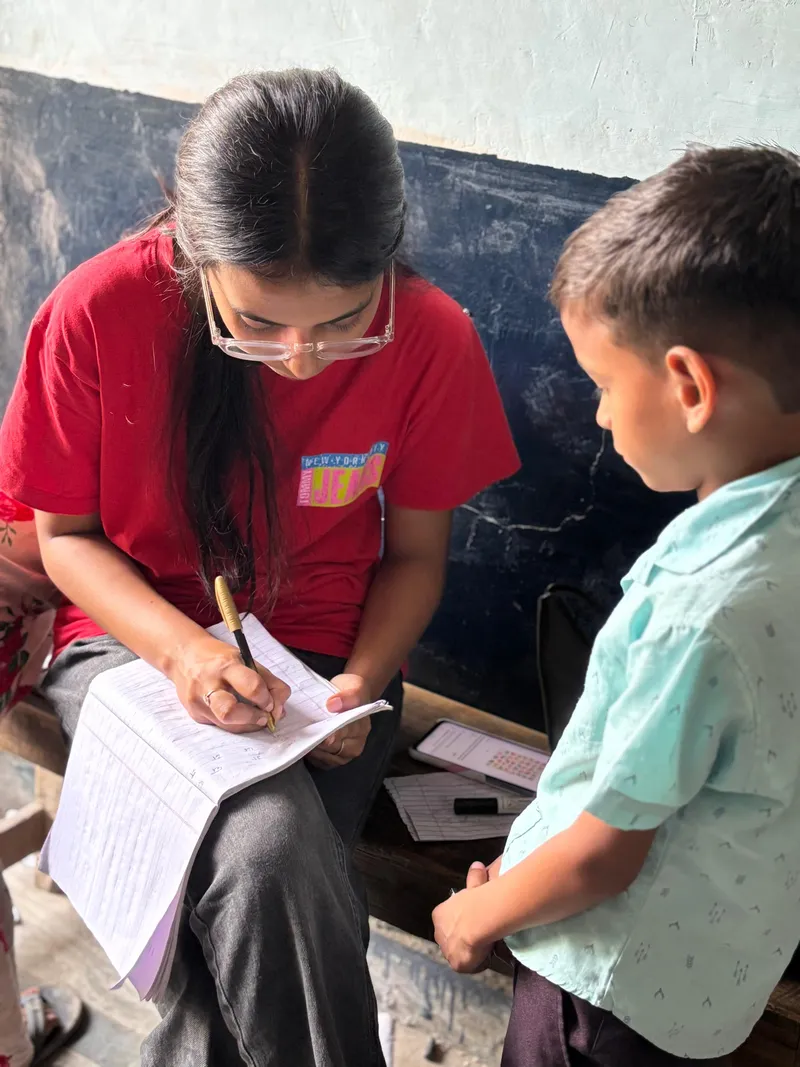
A volunteer teaching a child at Pehchaan-The Street School
But come rain or shine, every weekend, a small temple within the slum turns into a classroom for over 250 children. The classes are run by Pehchaan–The Street School, a volunteer-led organisation working to provide education to children from marginalised communities in Delhi’s slums.
This is its first centre, started 10 years ago. The street school concept has now expanded to 10 centres with 800 volunteers impacting 1,600 children in slums in GTB Nagar, Mukherjee Nagar, Noida Sector 35, Sunder Nursery, Rohini, Dilshad Garden, Kamla Ngar, Indraprastha Metro Station, Gol Gumbad and IIT Metro Station.
It’s 3pm on a Saturday evening and the temple premises are already full of children and volunteer teachers, and the teaching has begun.
Footwear is neatly lined up on one side as everyone settles on the floor — one volunteer for every two or three children.
Other volunteers move around, making sure every corner of the temple space is effectively utilised or water bottles are passed on to beat the September humidity.
I sit on the floor too, trying not to draw attention. I’m not here to teach, but to observe how the street school session unfolds, beginning with academic lessons and followed by sessions on basic psychology and emotional well-being.
The beginning of Pehchaan-The Street School
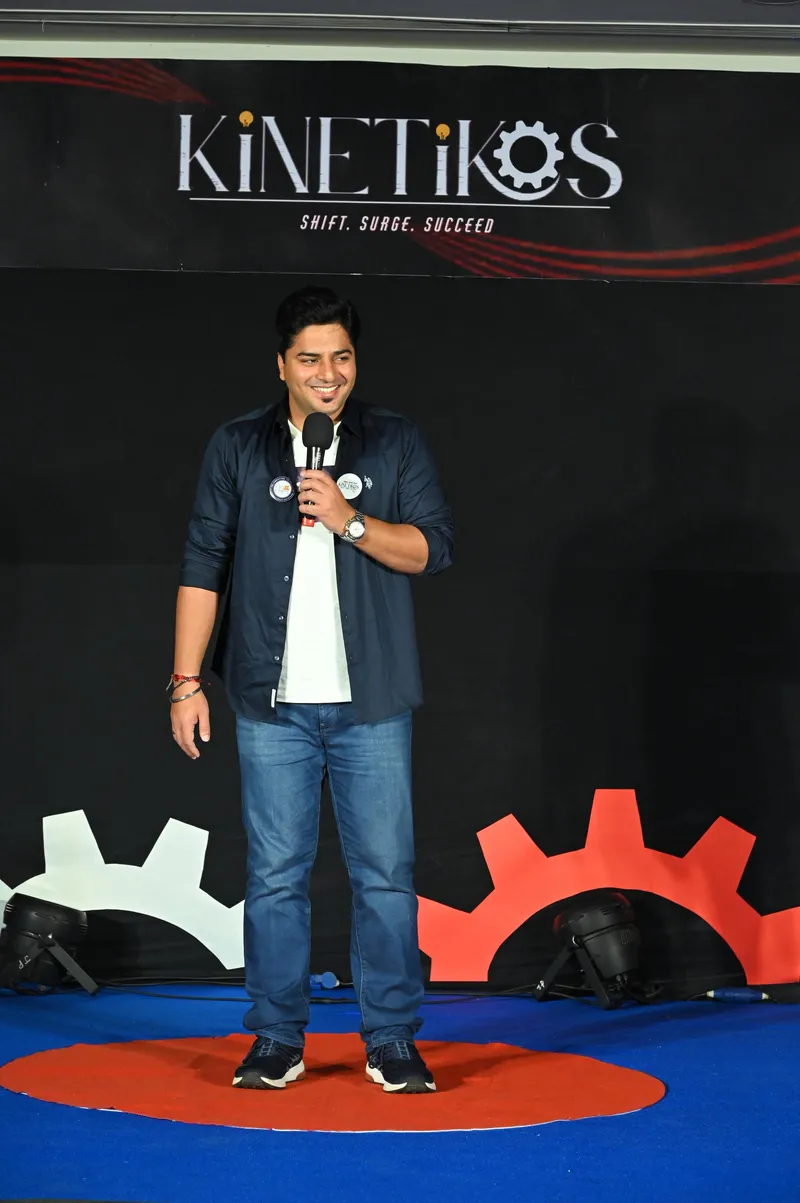
Akash Tandon
After graduating in 2015, Akash Tandon and his friends volunteered for various causes. From Anna Hazare's anti-corruption movement to protests after the 2012 Delhi gang rape, they were in the thick of it.
While travelling through central Delhi, something caught their attention. Adjacent to the WHO building, a massive four-story structure, sat a sprawling slum.
"We visited the place just out of curiosity. How can a slum be just 50 metres adjacent to WHO's building?” Tandon recalls.
They decided to visit. What they found shocked them.
There were no roads, or electricity. There was a single common tap. There were no health facilities, not even a single dispensary. And this wasn't in some remote corner of India, this was Anna Nagar, a slum in the heart of the capital.
"Within a 1 km radius, you'll find Delhi's CM's office, within 1.5 km, Delhi's commissioner and Delhi Police Headquarters. And, within 2 km, India Gate. Within 2.5 km, Rashtrapati Bhavan. Within 5 km, embassies of almost all countries. This is Central Delhi,” Tandon explains.
The group of friends had no answers, and what they saw on their way back left them feeling more helpless. They saw children swimming in the open drainage. When asked why, they had no answer. They did not know that the water was toxic.
That moment became Pehchaan's founding principle.
"We realised that whatever you do as a social group, the day you stop contributing, the whole initiative ends. But with education, even if you tell somebody something once, that knowledge will stay with that person forever,” he rightly points out.
They decided to teach on weekends, just for a few hours. It started with five children and within the first month, 35 students showed up. The temple gave them a space and by the end of the first year, 100 students were attending classes every weekend.
Where volunteers come in droves
Diya, a BA student at Delhi University sits cross-legged, solving Math problems with her students. Despite the crowded space, and the noise, the children are in rapt attention.
“In the beginning some kids came only for the chocolates,” she laughs. “I had to integrate teaching with that motivation, which also was a learning experience for me. I had to figure out who I am teaching, how quickly they respond and pick up the concept.
Akash, another volunteer teacher, a Master’s student, teaches Math, English and EVS to fifth-graders. Shweta started as a teaching intern and is now involved in project management.
“Here I have learned the stories behind the students. We have seen their struggles,” she says.
Pehchaan’s volunteer base consists of students from IITs and IIMs, and professionals from across India. Teams work remotely on PR, graphic design, content, and social media. It collaborates with Delhi University, Ashoka University, Amity University, and OP Jindal University.
Beyond academics, Pehchaan has expanded into psychology sessions, health camps, dental check-ups, and vocational training. As more Pehchaan students reach 10th, 11th, and 12th grades, it is developing counselling programmes for their pathways for higher learning.
Consistent, continuous, learning
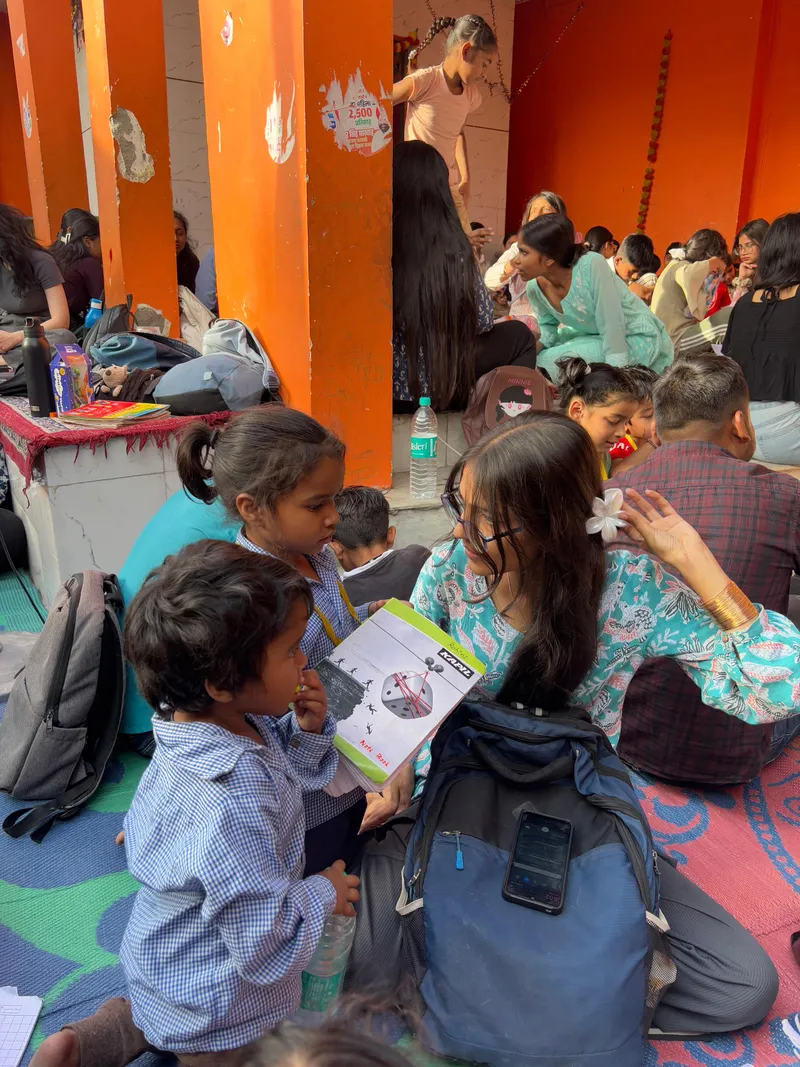
A teaching session in progress
For the students of Pehchaan, this weekend school fills a gap.
"Families, friends or neighbours aren’t educated, so they don’t have moral support. Even if they want to do something, there's nobody to guide them,” says Tandon.
The curriculum is topic-based rather than syllabus-driven. For each grade and subject, Pehchaan has identified core concepts, for example, 15 essential English topics for third-graders. Throughout the year, volunteers keep teaching these topics until students master them.
The objective is consistent, continuous learning.
The student-to-teacher ratio is 1:4 or 1:5, small enough for individual attention. Every student gets an ID card. Attendance is marked. It's structured like conventional schooling but delivered in an entirely unconventional way.
Deepak is one of the stories of transformation of this weekend learning initiative. We sit on the steps of the temple as he tells me his story. An old lady from a nearby shanty offers us tea.
When Deepak was in the third grade, he came across something unusual happening near his home.
“I saw some people teaching near my house. So, I joined too. There were few children at the time,” he recollects
Pehchaan drew him into its fold and he became a regular attendee during weekends, which continued till he passed the 12th grade.
"There were many students who were studying with me. But they left their studies after 10th or 12th," he observes. But the guidance helped him structure his learning process. “I became completely focused on studies. There were no distractions. Though money was tight at home, my family encouraged me to study.” he says. After scoring well in his 12th standard boards, Deepak secured admission to a BCom Honours course. He now wants to do an MBA.
As Pehchaan expanded beyond Anna Nagar and needed more space, communities stepped in. A gurudwara in Dilshad Garden empties its parking lot every weekend for classes. A masjid in Sunder Nursery invited the group inside after noticing students studying in the adjoining park, where mosquitoes swarmed during the monsoon.
"It's been two and a half years since we are taking classes inside the Masjid. So we celebrate Diwali in the Masjid. We celebrate Eid there. We have celebrated Christmas in the Gurudwara,” he says.
Education has helped change mindsets. Tandon says mothers who have big dreams for their children now know it’s possible.
Every weekend, a line forms at 2.30pm and students wait patiently. They sit for two-and-a-half hours without complaint, and clean the space themselves. The school is a part of who they are, and who they want to be. What they have learnt, stays with them forever.
Funding is a challenge
The school teaches children from kindergarten to 12th grade, and is open to everyone. But consistency and resources are a challenge.
"Every time you come here, you might find somebody who needs something. If I buy two notebooks for 1,600 students, that's 3,200 notebooks,” Tandon explains.
The crowdfunding model helps. "The more people get to know you, the more people will come and fund you. But donors often contribute once, then ask next time, "What happened to the money from last month?" he shares.
Corporate CSR funding doesn’t help. "Most companies have so many criteria. They'll ask for Aadhaar cards, for results. How do you show impact? Companies want documentation, fancy PPTs, they will fund organisations with polished presentations, not groups getting their shoes dirty on the ground,” says Tandon.
Some also ask, 'Every school is free, they are giving free education, why are you required?'
So, Pehchaan plans to scale cautiously and only until the level they are able to manage. According to Tandon, as the team grows, centres can expand. Until then, they will focus on improving, digitalisation for tracking attendance, better curriculum implementation, new psychology sessions, and vocational options.
But for Deepak, Hrithik, Pushkar, and hundreds of children from Delhi’s slums, Pehchaan is more than just a weekend school, it’s a safe space—of stability, learning, and belonging in an otherwise uncertain world.
Edited by Affirunisa Kankudti