



How Vimal Kumar is breaking the manual scavenging cycle through community-led transformation
Drawing from his lived experiences, Vimal Kumar founded the Movement for Scavenger Community (MSC) in 2009 to empower members of the community through educational programmes, leadership development, entrepreneurship support, and advocacy and policy change.

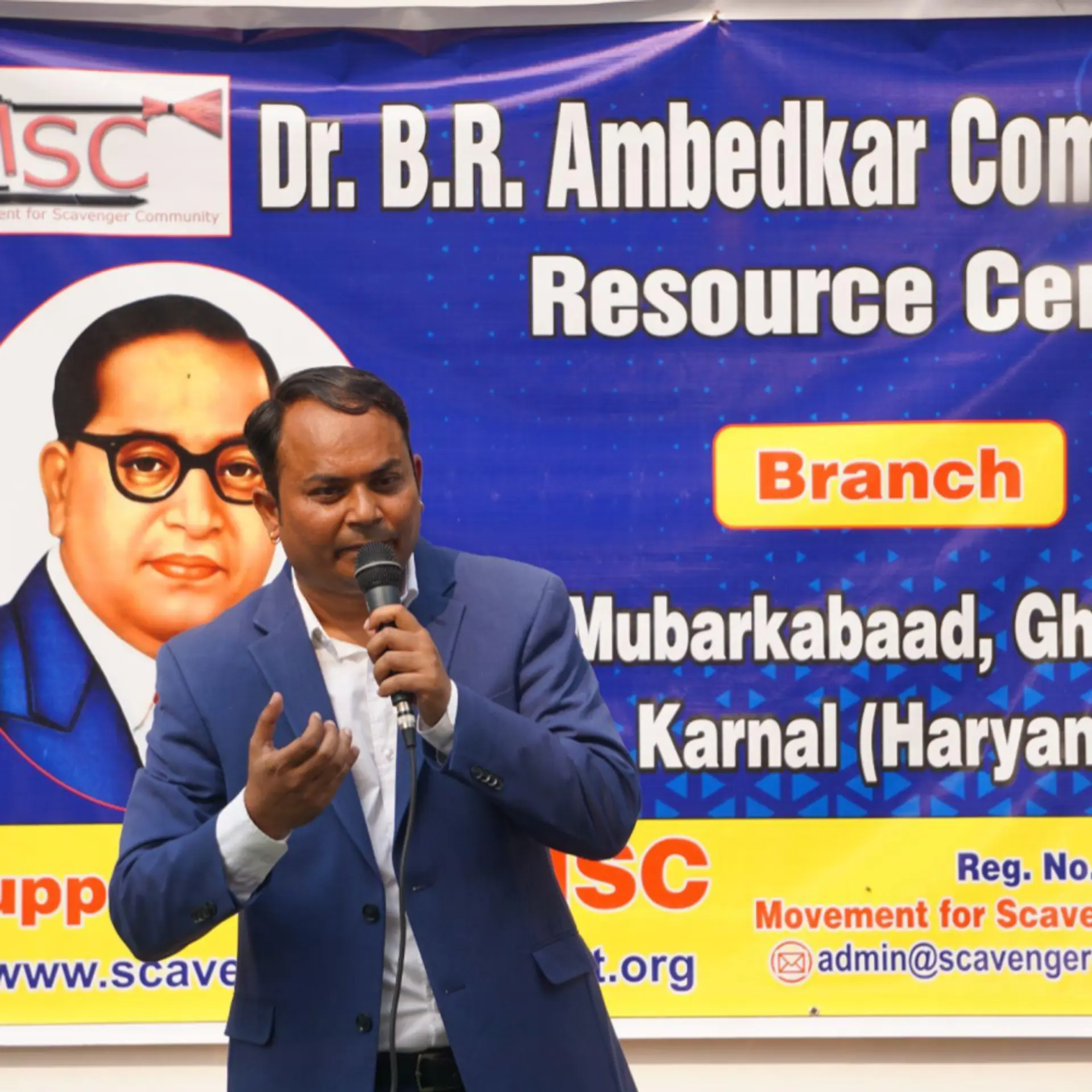

In 2009, when Vimal Kumar took the bold step of formally registering the Movement for Scavenger Community (MSC) as a non-profit, he faced scorn and derision.
At every stage, people tried to belittle his efforts. “When I decided to register what had started as a movement to confront and eradicate manual scavenging, I was told, ‘You people are meant for cleaning. What will you do with an organisation? That’s not for you,” he recalls.
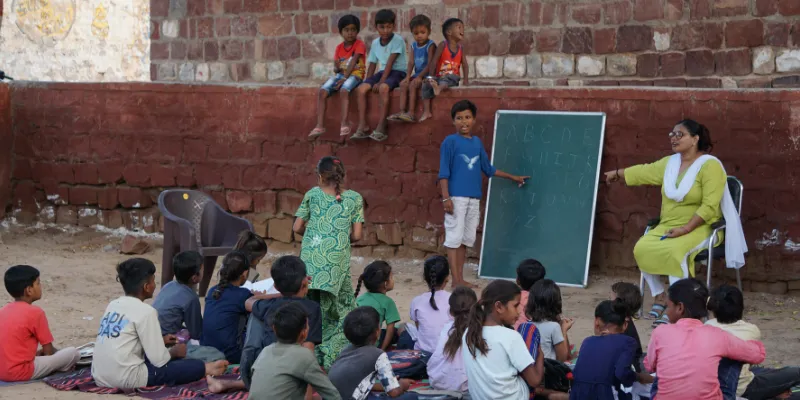
A class in progress
Separated by dignity and opportunity
For Kumar, however, the movement was deeply personal. Born into the manual scavenging community, his lived experiences had shown him from a young age the crushing weight of caste-based discrimination and the indignity of a practice that, though banned on paper, still thrived across many states in India.
Growing up on the fringes of Ladwa city in Haryana’s Kurukshetra district, Kumar witnessed his community being separated not just by walls and roads, but by dignity and opportunity.
The bastis were pushed to the margins, their homes relegated to cleaning work, while on the other side were lives untouched by stigma.
“My mother worked as a cleaner in a school and she took me along because there was no one to take care of me at home. I sat in the classroom, uncomfortable with what I wore and how I was treated. I was bullied endlessly,” Kumar remembers.
By class 9, this exclusion had fostered a spirit of innovation in him. While his community was not allowed to use the playground during regular school hours, they took to playing cricket in the scorching sun when the others stayed away due to the heat.
Kumar formed a cricket team from his community and began teaching children in his slum for two hours every evening, helping them with their homework. "At that time, I was not aware of what an NGO or trust was. I just feel like we should do something for our community,” he says.
Keeping education as the focus kept him going. Kumar completed his matriculation, senior secondary, and graduation, along with some part-time jobs supporting his education and family. After completing his Master’s in Social Work in 2006, he began working with various organisations to gain experience.
“I realised that while there were many organisations working for Dalits or marginalised communities, the actual impact wasn’t reaching us. There was no change in my community. People sitting in Delhi were talking about our people without any understanding of what we were going through. But they had funds and connections,” he explains.
A movement that changes lives
Before starting MSC in 2009, Kumar visited 15 states across India to understand the plight of sanitation workers.
“The languages and cultures may be different, but the situation was the same. There was no respect or dignity,” he says.
This led to the creation of the Movement for Scavenger Community (MSC), an idea without funds or support. A few people from different states are coming together to start a movement.
In January 2012, MSC started its first community resource centre in Ladwa, the Dr BR Ambedkar Community Resource Centre. By the time the pandemic hit, they were running eight centres. The pandemic hit the community brutally, but MSC rebuilt its initiatives from the ground up.
It currently organises leadership building workshops where teachers, volunteers, and students from different backgrounds come together to discuss ideas, challenges, and solutions, and build an ecosystem to support each other.
Today, it operates six centres in Rajasthan, Haryana, Madhya Pradesh, Assam, and Jammu & Kashmir, with plans to establish 10 centres across multiple states within months.
Since its inception, MSC has impacted a total of 5 lakh people from the community. These interventions have led to remarkable stories of transformation.
Kumar’s childhood friend, who had dropped out after graduation, was distributing alcohol for political parties in slums. Over two years, they convinced him to change course. He went on to complete an MPhil from Bharathidasan University and joined TISS for a PhD. Another community member who was cleaning streets with his mother after graduation also got admission to TISS Mumbai, completed his master's degree, and is now living a good life.
A young girl who joined their centre when she was eight years old recently completed her law degree and became a lawyer. This year, she's part of their fellowship programme to support her community.
Raising awareness for change
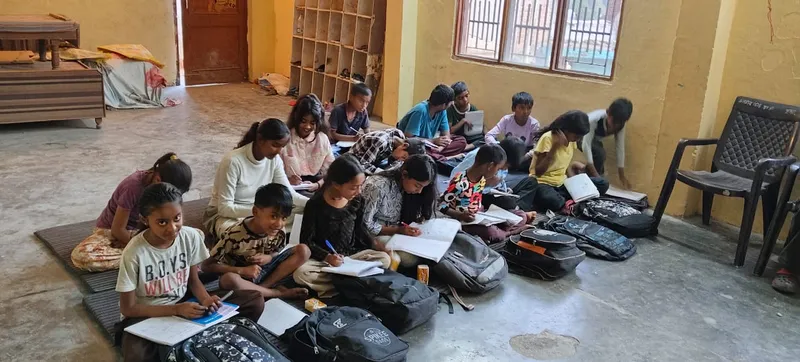
Children at the centre
India first banned manual scavenging in 1993 with the Employment of Manual Scavenging and Construction of Dry Latrines (Prohibition) Act.
In 2013, the Prohibition of Employment as Manual Scavengers and their Rehabilitation Act (2013) was passed, making manual scavenging a prohibited activity. In 2023, the Ministry of Social Justice and Empowerment with the Ministry of Housing and Urban Affairs launched the National Action for Mechanised Sanitation Ecosystem (NAMASTE) scheme.
Despite these laws, the situation on the ground is different, avers Kumar.
“Every day, we hear news of deaths of sanitation workers. Some of them don’t even appear in the media. Manual scavenging still exists. The laws are not powerful enough to stop this practice,” says Kumar.
"When humans are cheaper than machines, why would people buy machines? And you can treat humans as slaves. Machines can't be slaves,” he asks.
According to Kumar, permanent municipal sanitation workers used to earn Rs 40,000-50,000 per month. Now, most of them work under contractors for Rs 10,000-12,000. Some contractors often even keep the workers' ATM cards, deciding when and how much salary to release.
Despite his academic credentials (he holds a PhD), and his grassroots experience, Kumar remains excluded from policy-making processes.
"They will talk to sanitation workers but they don't want Vimal Kumar's opinion on that policy,” he says, with a tinge of sadness.
He now uses academia as a platform for change, writing research papers and presenting at universities to raise awareness about caste-based violence and manual scavenging.
Extending his initiatives beyond sanitation workers, Kumar has launched the Education and Training Foundation to work across communities.
As MSC continues to focus on bringing change at the ground level, one thing is clear. “Education is the only way. Babasaheb Ambedkar always emphasised education as the primary instrument for achieving social justice and transformation. Without education, you have no choice,” he reiterates.
Edited by Megha Reddy