


Why leadership infrastructure is important to power India’s social sector—from grassroots to scale
India Leaders for Social Sector (ILSS) has partnered with Harish and Bina Shah Foundation to launch the Harish and Bina Shah Centre for Talent and Leadership. The founders speak to SocialStory on how it can empower leaders in the sector.

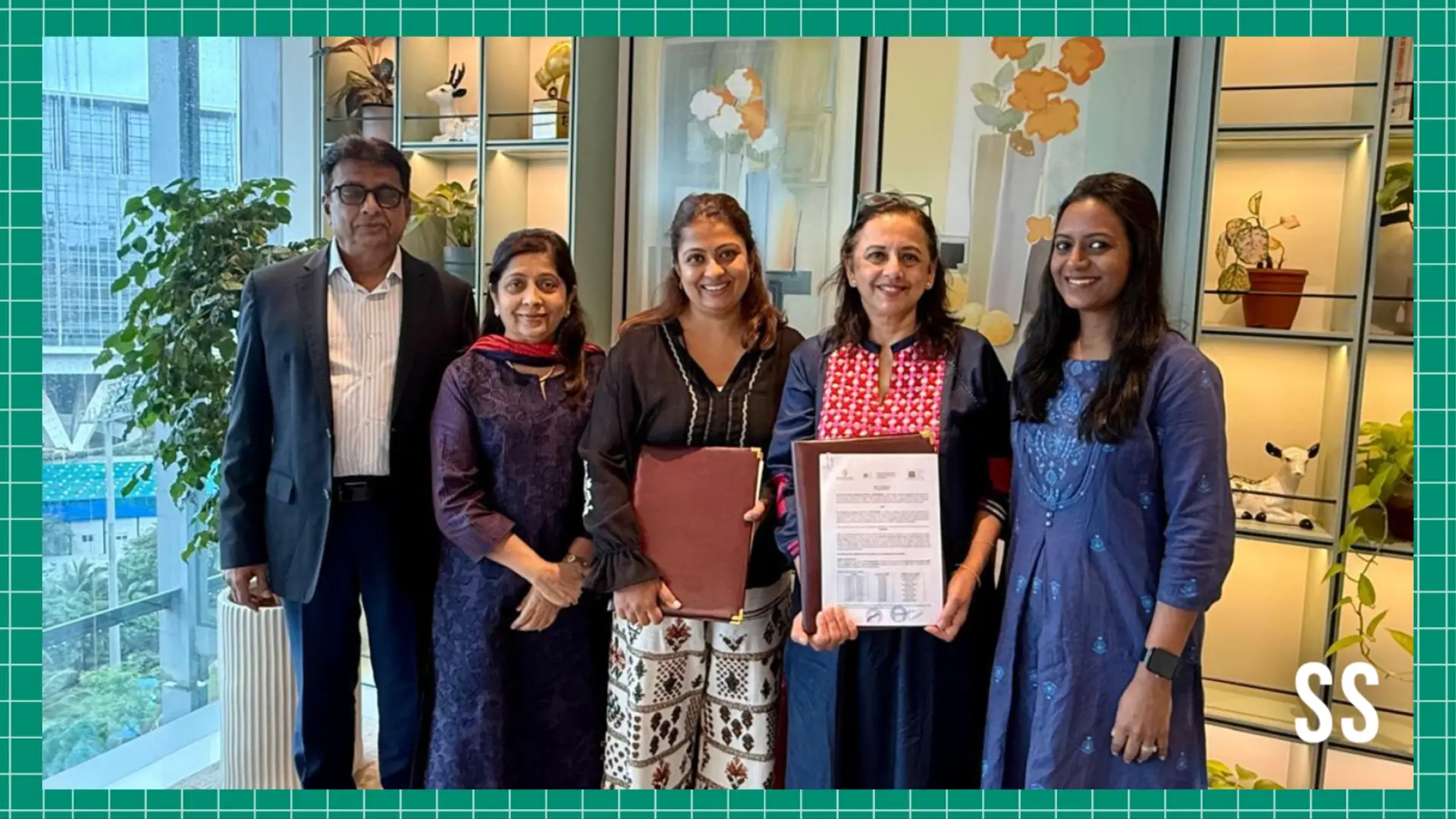

Despite the rapid growth of CSR and philanthropy, India’s changemakers often lack the expertise, mentorship, and strategic capacity needed to scale solutions effectively and sustainably.
To address the non-profit sector’s most pressing challenge—a persistent shortage of skilled leadership—the India Leaders for Social Sector (ILSS), in partnership with the Harish and Bina Shah Foundation, launched the Harish and Bina Shah Centre for Talent and Leadership in August.
ILSS, a leadership and capacity-building organisation, nurtures talent, skills, and vision within India’s development ecosystem to drive scalable and sustainable social impact. The Harish and Bina Shah Foundation, since its inception in 2010, has supported diverse causes ranging from public health, empowering vulnerable communities, to governance matters.
Going beyond conventional training, the new centre aims to build a leadership ecosystem that will drive India’s social transformation—from grassroots initiatives to national impact. By 2030, it plans to directly empower over 1,000 leaders through a unique convergence of learning, mentorship, and community engagement.
The centre will focus on strategic interventions in talent and leadership for the social sector through a three-pronged approach—learning and development, strengthening communities, and building voice.
These include the ILSS Flagship Leadership Program for senior leaders from the corporate and business to learn and actively engage in the social sector; the ILSS Emerging Women’s Leadership Program for mid-career women from the social sector to advance their leadership and create further impact; The India Women’s Leadership Conference to foster dialogue; and Building Voice, the ILSS magazine that provides thought leadership on sector insights and learnings.
In an interview with SocialStory, Anu Prasad, Founder of ILSS, and Harish Shah and Bina Shah of Harish and Bina Shah Foundation, talk about the partnership, CSR funding, and the leadership gap in India’s social sector.
Edited excerpts:
SocialStory (SS): We have so many non-profits in India doing brilliant work, but still, there is this blind spot when it comes to leadership. Why do you think so?
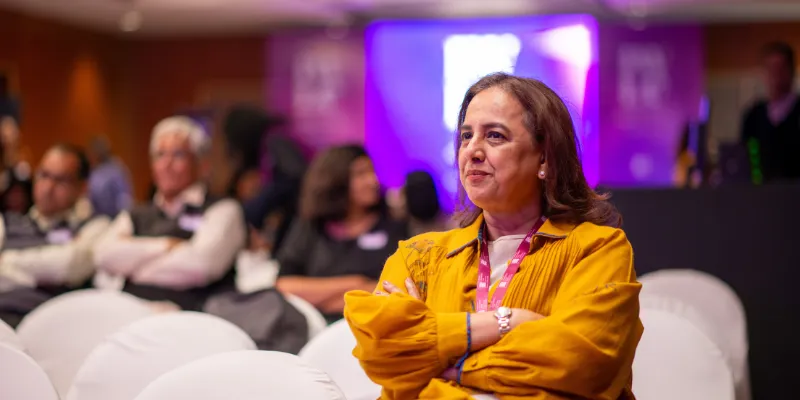
Anu Prasad
Anu Prasad (AP): If you look at the history of the social impact sector, while playing a vital role, it has always had a scale issue. You will find many organisations, where we should have really focused beyond the charismatic founder. Where is the bench, the board, and the strategy?
Fortunately, with CSR and an evolved philanthropy coming into this space, there's a lot of funding coming in. You may be doing great work, but if you are not working at a certain scale, you are not moving the needle on any parameters.
I like to think what the IIMs did for the private sector, bringing in management practices and theories, is what we are trying to do for the social impact sector—building the management and institutions, not just the charismatic leaders.
SS: How did synergies sync between ILSS and Harish and Bina Shah Foundation?
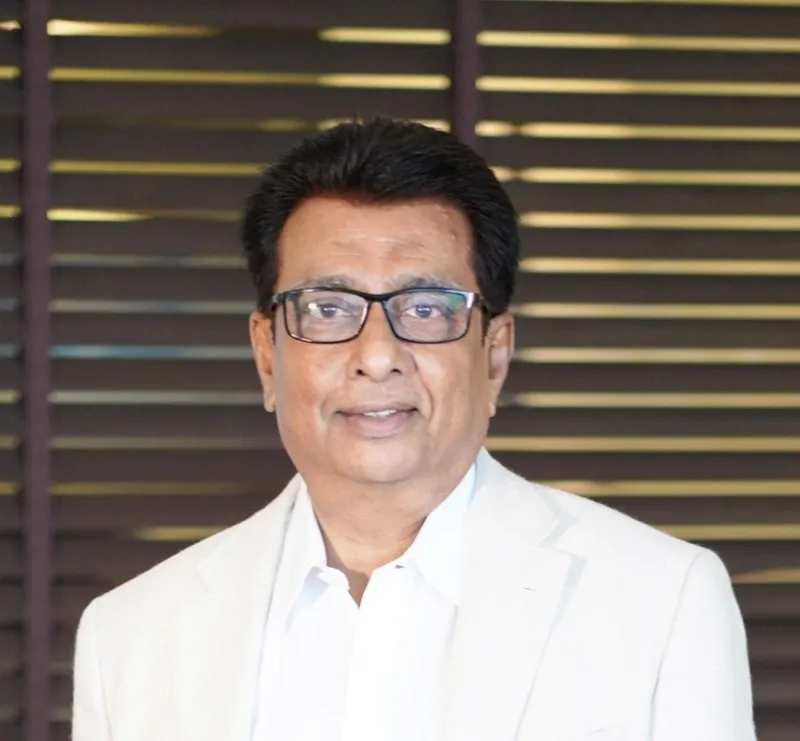
Harish Shah
Harish Shah (HS): ILSS is not just an individual intervention, but it's more systemic and institutionalised. Rather than being reactive, it's trying to target multiple levels. From our side, we are patient capitalists. This is not programmatic, where you give this, and now you have a tabulation saying this is what has happened. It's a wide push towards developing leaders, because it is the starting point of any organisation.
You don't want one-trick ponies. You really want to create a whole community of leaders where people not only learn from the teachers but also learn from each other and share experiences. It's about systematically creating a community of leaders, because no leader is ever born; leaders are made.
AP: We want to shape the thinking in the sector. The centre, even for funders, if you want to bring systems change at an ecosystem level, you have to make some key strategic investments. These are long-term investments in a sector.
SS: How do you envision partnerships with funders and organisations at the grassroots level?
AP: Ours is a long-term partnership aligned with the building of the ecosystem of the sector.
Our world revolves around the non-profit founder and their team. We have worked with 500 to 600 of them now, and many of our learnings come from their daily angst and needs. We have even entered areas of digital, AI, fundraising, and board governance. But at the heart of everything that ILSS does is leadership—personal leadership, personal growth, and leadership for the sector.
SS: What kind of leadership qualities do changemakers need?
Bina Shah (BS): A lot of these leaders were born out of the feeling of doing good. They may be very charismatic people, but just that alone is not enough. That's why we say it's important to train these people, because they also need to have certain qualities that exist in the corporate world. Neither works alone. It has to be a hybrid model, where you have certain systems and strategic thinking you adopt from the corporate world, but it has to be based on your values and on being empathetic.
For leaders, it's important to learn the techniques of using their head and heart together. There is no one answer. Along with corporate tools, the leaders need to prioritise resilience and empathy. Well-being matters a lot.
HS: Every enterprise must have a profit motive, but how do you translate profit? Is it just the bottom line of a balance sheet or something more, and beyond that? This is where the slight diversion happens. In the social sector, the principles of building an institution are not very different, but the final objective has a more holistic aspiration. Both learn from each other in that sense.
SS: What gaps do you see in the sector, and how can the centre help?
AP: We are looking for leaders who have had a successful career in the private sector and are looking for more purpose in their lives.
Many people we seek in the talent space are in their late 40s to early to mid-50s, because they have about 20 more years of active giving to do. They have strong skill sets—compliance, strategy, people management, scale, and HR—that are leverageable and transferable.
But we also want them to understand that it's not hierarchy on this side. People in the social impact sector are not working for any bonus; they are working because they are passionate about a cause. You have to realise that here it's consensus-building leadership. We want these corporate leaders to have humility, learnability, and listenability.
The one thing social sector leaders need, like everyone else, is adaptability. The world is shifting under our feet today. Funding is going in a very different direction. How open are you to learning, unlearning, and learning from your peers? How adaptable are you? How quickly can you start understanding AI and digital? Those who learn fast and adapt faster will succeed.
HS: If you have a strong leader, the organisation immediately becomes an extended image of that leader. If you have a good leader, your organisation will be good, your programs will be good, and your impact will be good. It all begins at the embryonic level of who the leader is. Foundations like ours, specifically, focus more on this part than just the programmatic.
Please don't only look at the number of how many, like 100,000 children went to school. Look at the organisation. What is the succession plan? How nicely are they meeting their budgets? What kind of people are they hiring? It's the entire gamut of a good team. Once you have a good team, the result is most probably going to be good.
SS: How do we build a more compassionate but effective social sector?
BS: First of all, funders need to realise the importance of funding the leaders. Even the leaders need to know what they are signing up for. It's not just wanting to do good in society. You need to understand that you are really getting into tough areas, whether you come from a corporate world or otherwise.
With training, leaders get a better understanding and are better equipped. Funders also need to recognise that they need to fund people and structures, because a good leader will take the organisation much further and be there long-term.
SS: Looking ahead, how do you see the centre changing the way the world sees India's social sector?
AP: It’s like doing a PhD. Every 100 kilometres, there's a different language and a different culture. It's a very tough environment. Leaders feel burnt out because everything is a struggle—compliance with CSR, raising money, and hiring talent.
We will succeed when the act of investing in leadership and capacity building is no longer an afterthought, but a central, non-negotiable part of every organisation.
India can show how a sector should develop by focusing on leadership and capacity building, where corporate leaders and social sector leaders come together.
HS: As good human beings who follow the laws of nature, society, and personal laws, it's extremely important to share and care for people. This is the example we need to set. One of the things the government did brilliantly was make the 2% CSR law, because it has kick-started the movement about giving. But it doesn't stop there. The feeling within you grows, and we also change as people as we understand and become more empathetic.
When we visited the Educate Girls camps and saw little girls in ponytails, wearing a uniform and going to school, it was more joy than anything else. Educate Girls has a charismatic founder who is investing in not just her leadership team but the next level of rural leaders. There is so much to learn.
Edited by Suman Singh