



This AI platform is redefining problem-solving in the development sector
Apurva.ai is a not-for-profit organisation that helps the development sector listen, learn, and act better.

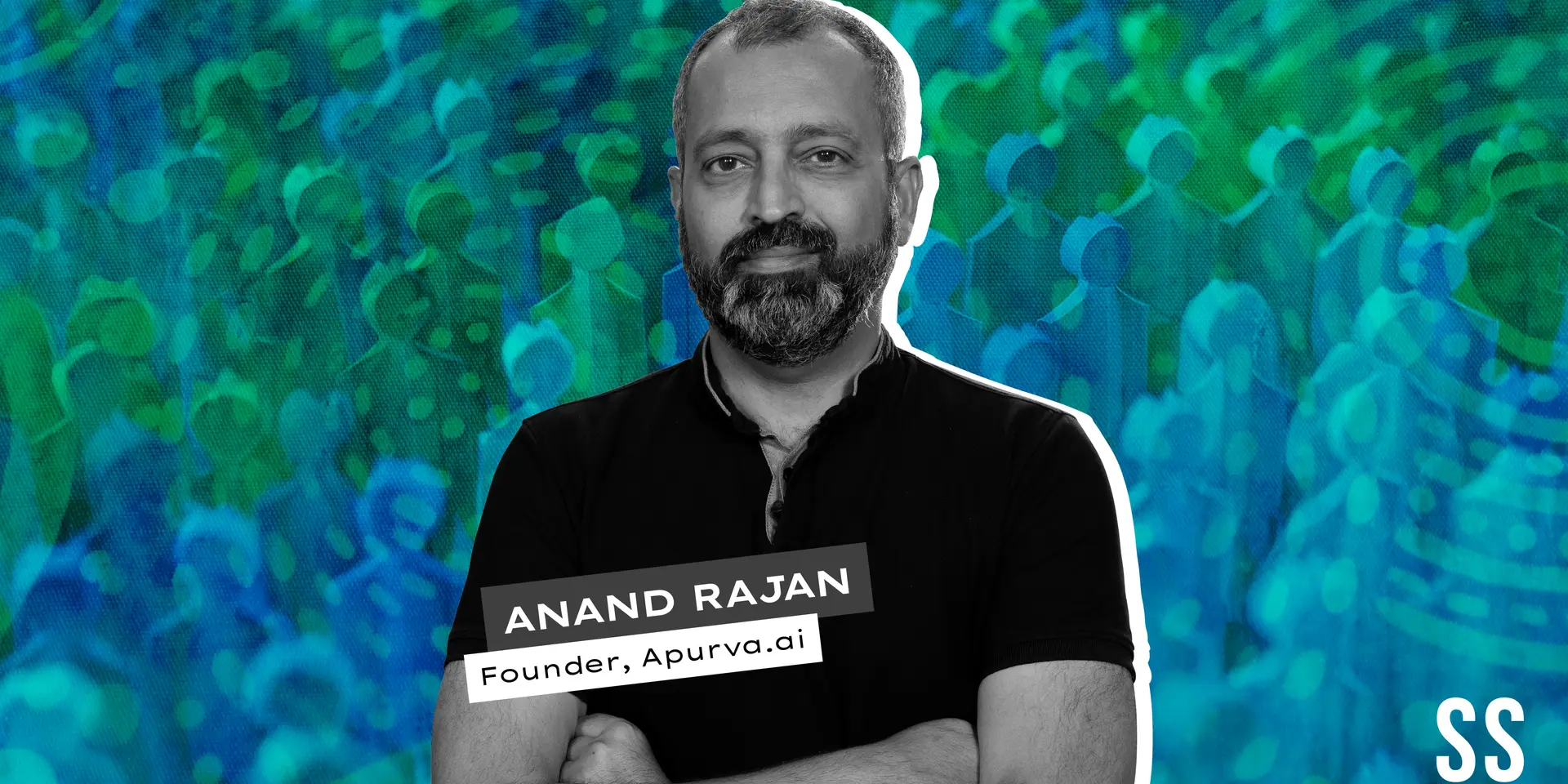

After returning from the US in 2006, Anand Rajan joined IBM Labs in India, and on a whim, started farming near Hosur. During this time, while being involved at the grassroots level, he saw what worked, and mostly, what didn’t.
“I was pulled by two polarities. Being in the corporate world, I saw how things work most predictably in terms of planning and design. On the other hand, I tried to apply principles of risk-taking, lean problem-solving, building capacity, and working with people. But nothing was working,” he explains.
The importance of collective wisdom
Rajan’s farming experience eventually led him to start Apurva.AI, a platform that works with organisations globally to reimagine how the development sector solves complex problems.
The answer, he discovered, wasn't in better top-down solutions. It was in learning to listen at scale.
The question, How do we tackle complex problems, and why are the problems in the development sector so complex led Rajan to spend a couple of years working with organisations through different lenses. These included implementers on ground, policymakers, funders, and others trying to solve problems.
With mentorship from Nandan Nilekani and Rohini Nilekani Philanthropic Initiatives, Apurva aims to address what it calls the “collective wisdom gap.”
Rajan explains that complex issues like agriculture and livelihoods are shaped by many interconnected factors—climate, skills, financial access, and local conditions. Because every place is different, one-size-fits-all solutions or broad state policies rarely work. Public systems, he says, need to combine top-down support with bottom-up understanding.
At the heart of the platform is a simple belief: the people closest to the problem are the ones most motivated to solve it. Their collective wisdom should guide the entire ecosystem. Technology can help capture these voices at scale—clearly, authentically—and connect them with changemakers, enablers, and investors who can support action.
Apurva.ai’s first major real-world test came through a prototype developed for the Government of India to understand the needs of the farming community. “A very interesting Joint Secretary we spoke to said, ‘We always look at the community as the last mile. What if you put them as the first mile?’” recalls Rajan. “That was our starting point—if you can listen, you can generate actionable insights.”
He continues: “The next step was to ask: since farmers themselves are the custodians of so much knowledge on the ground, can this also become an innovation infrastructure? What if we bring together hundreds or thousands of organic farmers who already have innovations? Can their innovations unlock more innovations and create value for the larger ecosystem?”
This thinking led to the initiative to build an organic and natural farming knowledge infrastructure, shaped by the voices of farmers in Tamil Nadu, and accessible to the people of Tamil Nadu. “And from there,” Rajan says, “many more such initiatives followed.”
Listen, learn, and act
As Apurva works in diverse domains, it brings together data, interaction, and insights through a simple framework called Listen, Learn, and Act.
It mirrors how people naturally engage with the world—noticing, understanding, and responding. Each step strengthens the next, helping reveal patterns, connections, and hidden gaps.
Listen: Understanding any problem begins with listening to people’s real experiences. Apurva gathers insights directly from communities, their challenges, needs, and everyday realities. Even small shifts on the ground can point to larger systemic changes. By capturing authentic voices, Apurva ensures that lived experience shapes broader understanding.
Learn: Apurva then adds knowledge from the wider ecosystem that includes organisations, institutions, governments, funders, and experts. When community insights are combined with institutional knowledge, new patterns surface. Hidden linkages become visible, creating a more complete picture of the issue.
Act: With these interconnected insights, Apurva shapes solutions that fit diverse contexts and community needs. Each action generates fresh learning, which flows back into the next round of discovery.
This has led to a suite of products:
Apurva Lens that brings together community knowledge and ecosystem learnings to uncover shared wisdom.
Apurva Compass amplifies community voices to understand real ground conditions and shape better action.
Apurva Thread turns lived experiences and hidden knowledge into clear, actionable insights across themes.
Apurva Atlas * (launching soon) that helps people explore and learn from the ecosystem’s growing knowledge to solve problems more effectively.
Measuring impact
Apurva.ai looks at impact through two lenses—efficiency and effectiveness.
As Rajan explains: “For anything to stick, I as an individual organisation have to see value. I have to be able to do more for less. That's a business case I have to solve. If you can do this, then there is incentive for us to collaborate and come together.”
“For you to tackle problems at a deeper capacity, you have to analyse and go deeper, the efficiency side. But for me to really understand the why behind a problem, I have to connect with others. I have to see the bigger picture, that’s the effectiveness,” he adds.
He is clear about the stage they are in: “We are at a very early stage. It would be extremely unfair to say that we have created impact… I would say we are in the output phase now,” he admits.
These results suggest the approach is working:
Apurva Thread helped SELCO Foundation capture meaningful insights from all internal and external discussions. Apurva acted like an active listener, offering insights alongside the team. Apurva Lens helped bring together decades of existing knowledge in one place.
Ashoka'-New Longevity Project in Brazil is using Apurva to reframe how society thinks about ageing, not from a health deficit lens but from a value creation perspective, bringing older people's wisdom to the centre of conversations. They have tested it in Brazil, Spain, and India, building a global ecosystem.
“Apurva is an AI-enabled sensing infrastructure that listens to everyone, learns from everyone, and then makes that collective wisdom available back to individuals so they can act with clarity toward shared goals. It’s not just about providing AI; it’s about unlocking actionable insights that enable people to solve social challenges at scale,” says Nandan Nilekani.
Apurva's mission is to enable 750 organisations globally to unlock the collective wisdom of their ecosystems, with a focus on the Global South, specifically India, Africa, and Latin America.
(The story has been updated to reflect the change in names of Apurv.ai's suite of products.)
Edited by Megha Reddy