



Inside Tamil Nadu’s climate playbook: Supriya Sahu on AI, data, and community-led conservation
Recently honoured with the UN’s Champions of the Earth award, Supriya Sahu has been at the forefront of Tamil Nadu’s climate and conservation initiatives. The IAS officer reflects on how technology, data, and community participation are reshaping environmental governance.

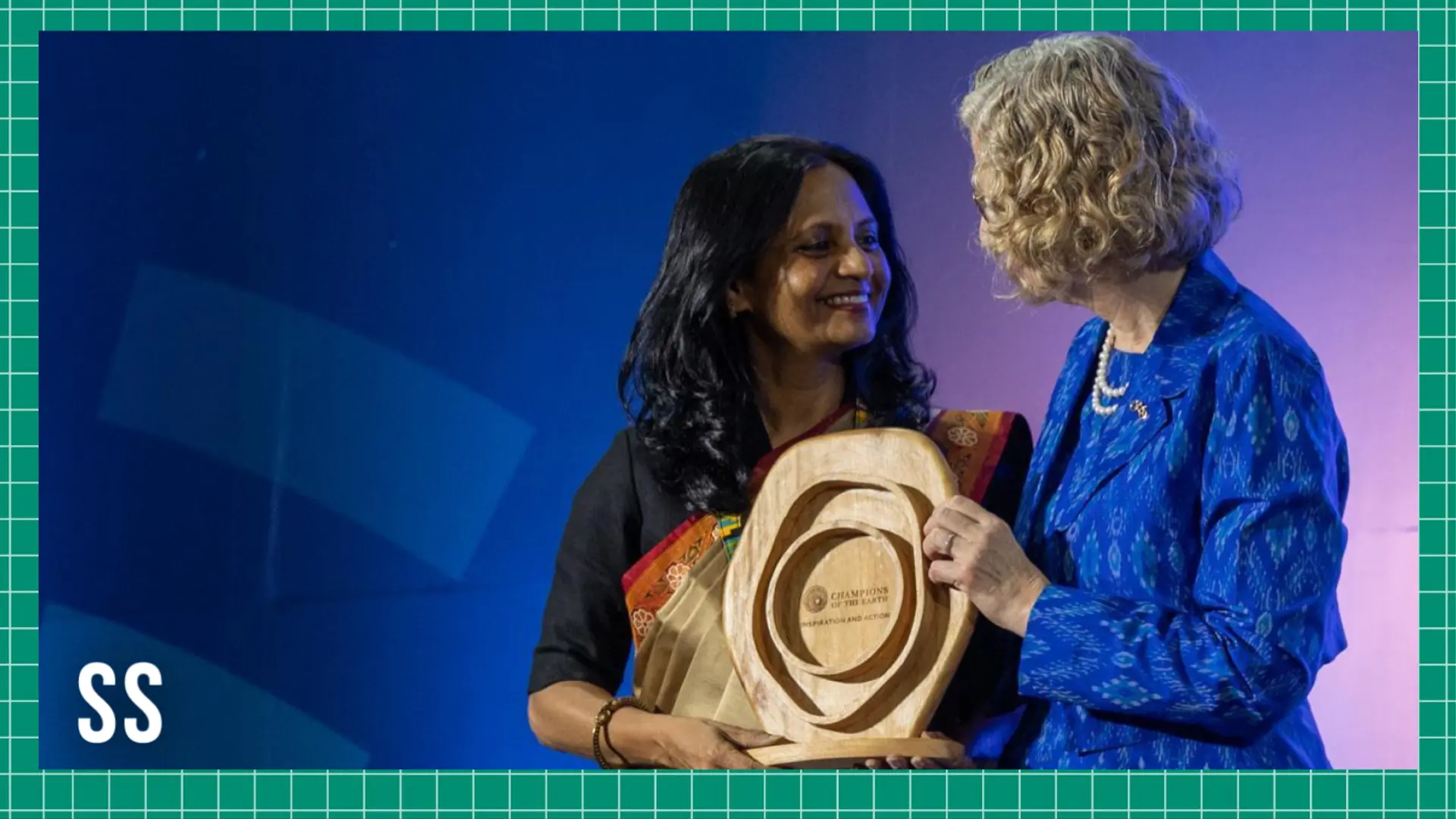

This month, Supriya Sahu, Tamil Nadu’s Additional Chief Secretary for Environment Climate Change and Forests, was honoured with the Champions of the Earth award, the United Nation’s highest recognition for environmental leadership, instituted by the UN Environment Programme (UNEP).
“It’s truly humbling. To get the highest environmental honour brings a sense of gratitude, but also the fact you feel very grounded and feel grounded and humbled,” she told SocialStory.
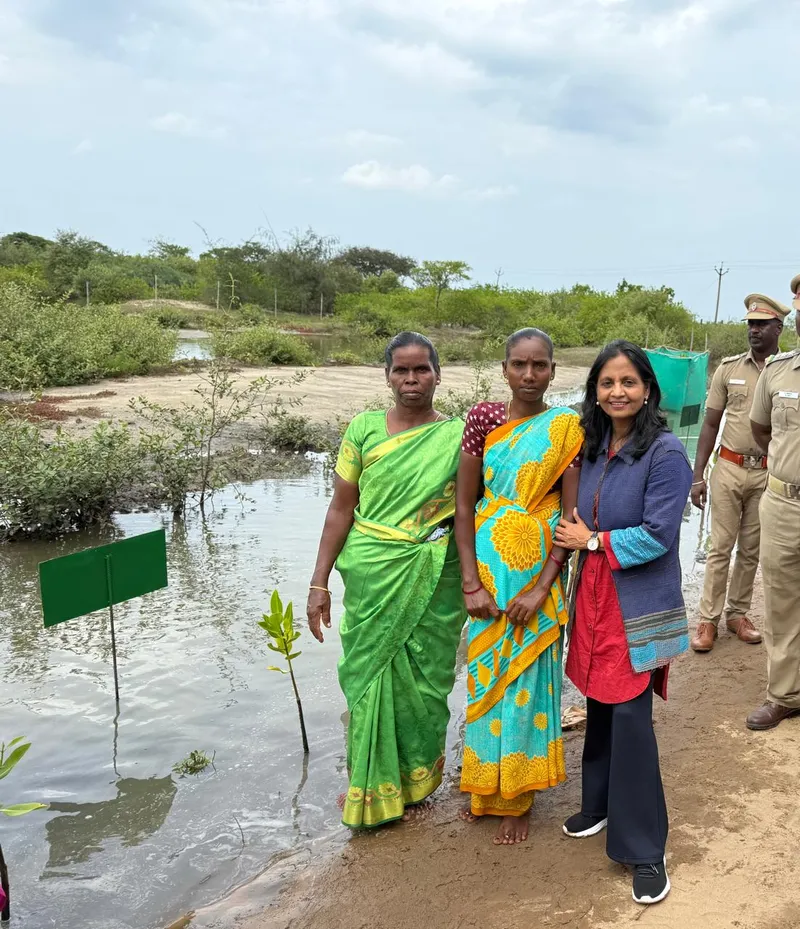
A 1991-batch Indian Administrative Service (IAS) officer of the Tamil Nadu cadre, Sahu has been at the forefront of many climate and sustainability initiatives.
In 2021, she was appointed as the Additional Chief Secretary, Department of Environment, Climate Change & Forests, Government of Tamil Nadu, and focused on sectors she has deeply been invested in.
From the outset, Sahu focused on charting new pathways for conservation, with particular attention to areas that had received limited policy focus.
Speaking to SocialStory, Supriya Sahu reflects on deploying AI to reduce human–wildlife conflict, embedding data-led governance in environmental conservation, the evolution of Trek Tamil Nadu, and more.
Edited excerpts:
SocialStory (SS): The Tamil Nadu Forest Department has just launched another AI-powered Command and Control Centre using 46 AI-enabled thermal cameras to detect wildlife movement early and warn people with real-time alerts. How does this system change the way conflict is anticipated? How can AI help in environmental conservation and protection?
Supriya Sahu (SS): Climate change is making a very big impact on how the human-wildlife conflict is actually taking a new dimension.
With invasives occupying forest areas, wildlife is not getting enough food. This needs to be tackled on an emergency basis, because, if you remove invasives, you are able to establish native vegetation and bring grasses back.
In Sathyamangalam and Mudumalai, we have cleared 34,000 hectares of lantana and senna spectabilis. We can see how the grass is coming back. But it is a continuous battle. Also, high heat or flash floods and non-availability of water are changing the seasonal patterns which the wildlife was used to at some point of time.
Because of these factors, traditional methods like manual monitoring are not working. With change in demography and people becoming more mobile, fringe areas of the forest face issues regarding garbage management, composting, etc.
Now, with technology available, we have launched AI on the railway track in Madukkarai and introduced thermal cameras in Gudalur to monitor and alert elephants straying into human habitation in real-time.
SS: The Marine Elite Force, to bolster wildlife protection, brings members of the fishing community into a formal marine protection system. What happens on ground when conservation becomes something done with the communities rather than for them?
Sahu: If you talk to the watchers who are on our Marine Conservation Force, they all come from a beautiful local fishing village. When I asked them how they feel about getting into this marine force, the group of 11 young people, while compensated for their work, said they feel inspired to protect the sea and learn something new.
When the community gets involved, communication becomes easier. They tell their communities how illegal fishing can have an adverse impact on turtles and the entire ecosystem, and other important things.
SS: How important is data-led governance in environmental conservation going to be at scale as we move to the future?
Sahu: When you do things at a massive scale and expand pilot programmes, if you do not have the evidence and data, how do you make sure that you are going in the right direction?
For example, the mangroves expansion in Tamil Nadu has been geotagged. Tomorrow, if we want to do a carbon credits programme for the local community, we would require the baseline data of the entire saplings planted and more.
Data is important to bring benefits to the government and to the community. In a climate programme, you need to have data to be able to reap the benefits. Climate dividends cannot be accessed without data points. Apart from these, other co-benefits of using data include transparency, credibility, better planning and policy-making.
SS: In the last few years, what kind of shift have you seen in the way citizens and industries respond to environmental regulation?
Sahu: Let me give you examples. We introduced a system called the Green Rating of Industries. It’s the first rating of its kind where the pollution control board and government are issuing a certificate giving you a number and a rating for following sustainability practices or circularity in their industries.
Through the Kurunkadu initiative, we are empowering industries to convert unused land into micro-forests with native species provided by the forest department. We have also registered more than 20 village mangrove councils.
SS: The Kozhikamuthi Mahout Village places mahouts at the centre of conservation. Why was it important to focus on dignity, housing, and well-being as part of a forest policy?
Sahu: Dignity should be a very integral part of sustainable policy. These people look after the elephants for generations and it’s important to recognise their efforts. It’s crucial because when someone dedicates their entire life, how do you make sure they are recognised and valued for their work? For many of them, it was their first flight, first visit to Chennai, and abroad.
SS: Trek Tamil Nadu is also another movement that has a strong participation from women. What does women's leadership bring to community-based conservation?
Sahu: The first thing it brings is knowledge. There is often an assumption that only men understand ecology and natural systems, but women know much more. They are closely connected to every grass, leaf, animal, and insect in their surroundings. They do most of the work, and through this, their interaction with nature is far deeper. With even a little training, their ability to absorb and apply knowledge is remarkably fast.
When a woman earns, her income goes directly into the family—supporting her children’s education and health. These are among the most critical investments we can make.
Bringing women into the Trek Tamil Nadu movement has significantly raised our profile. We are grateful to them; the feedback we receive consistently highlights their knowledge, authority, and deep commitment to the programme.
SS: What have the past few years taught you about leadership in environmental governance?
Sahu: My personal learnings centre around three key areas. First, strong political commitment is essential for the state to deliver—this commitment enables policy decisions as well as the allocation of financial resources.
Second, once policy and funding are in place, the real challenge lies in implementation. This requires a highly committed bureaucracy and a robust framework. We worked closely with district collectors and DFOs, creating a dynamic synergy across every mission.
Third, sustained support from local citizens and communities is critical. Their involvement and encouragement constantly nudge the system to stay the course.
Edited by Megha Reddy