



Beyond assumptions: What persons with disabilities wish you understood
On International Day of Persons with Disabilities, individuals with disabilities share the one thing about their life or experience that they wish people understood better.

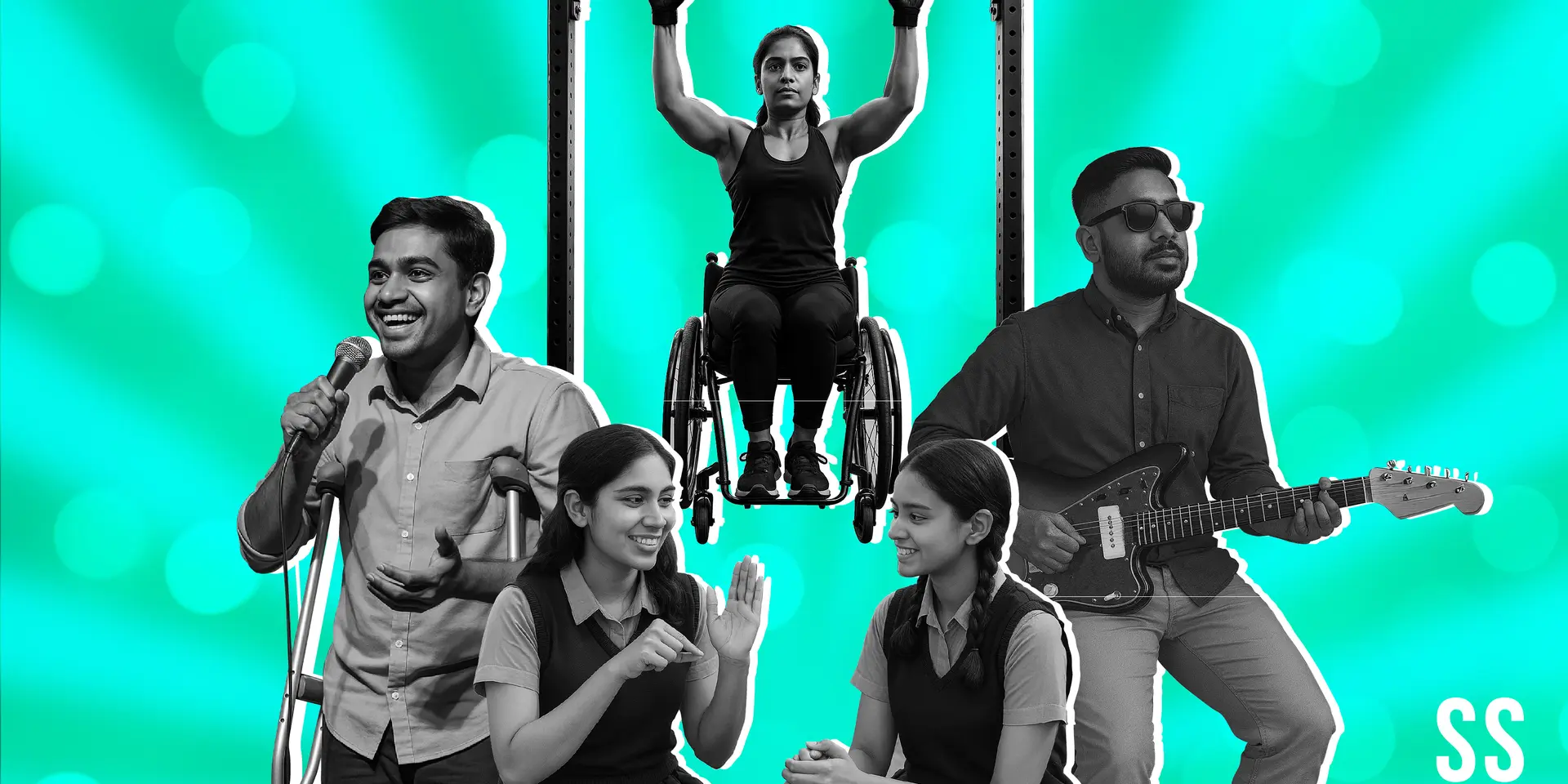

For millions of people living with disabilities in India, daily life is a struggle. A struggle with systems and processes. And often they have to deal with mindset barriers that are the toughest to break.
Despite these struggles, persons with disabilities continue to rise above them—excelling in their careers, raising families, travelling, competing in sports, and building communities.
While their resilience and determination must be acknowledged and celebrated, how many of us actually listen to what they want? Too often, the conversations are led by policymakers and experts and they focus on the challenges. While these are important, sometimes we forget to listen to the people at the centre of it all.
What are their dreams and ambitions? How can we better understand their experiences and aspirations? And why is it important to see them for their strengths, and not their disabilities?
On International Day of persons with Disabilities, we asked people of varying disabilities—including locomotor challenges, visual impairment, hearing impairment, dyspraxia, multiple sclerosis, and others—one simple, human question: What’s one thing about your life or experience that you wish people understood better?
Here are their thoughts as told to Social Story:
Disability doesn’t mean incompetence
Sukanya Gupta, Co-founder, Carely, a support service for children with disabilities
“I wish people understood that being disabled doesn’t make you incompetent. So much of my life changes the moment I say, ‘I’m deaf.’ I grew up with progressive hearing loss and am pretty much completely deaf now.
“Back when I was job hunting, my resume always worked for me. I’d get a lot of calls, and whenever I actually got to interview, I got the job. But the problem was getting through that first call, because the moment I mentioned I’m deaf, they would just hang up.
“Even after building Carely, I saw the same thing. Parents would talk to me normally, appreciate the work we do, and treat me like any other professional. But the moment I mention my disability, they’d ask, ‘Oh, then how will you help me?’
“I don’t sound deaf, so people behave normally until I say it."
Belief is important
Puneet Singh Singhal, Founder of Billion Strong, an identity and empowerment organisation to unite and amplify the voices of persons with disabilities
“I wish people understood that sometimes the hardest part isn’t my body or my brain, it’s having to constantly explain myself.It would mean so much if, just once in a while, someone simply believed me when I say, “This is hard for me today,” and didn’t ask me to prove it.”
Different needs exist
Sweta Mantri, writer, standup comic, and disability inclusion enabler
“The one thing I want people to understand about the disability experience is that we are done with the ‘victim’ narrative. It’s 2025. Different needs exist. The only thing that needs to go extinct is the idea that one kind of need is ‘normal’ and others are ‘special’. Our needs are human needs, and we deserve to meet them with dignity.”
“We are complete human beings”
Nipun Malhotra, Director, Policy & Programs | Lead, Disability Rights & Inclusion, The Quantum Hub
“One thing I wish people understood better about my life and about the lives of persons with disabilities is that we are complete human beings with the same hopes, ambitions and desires as anyone else. Far too often, conversations around disability are narrowed to education or employment, but our lives extend well beyond these domains.
“Like everyone else, we want to attend a concert with friends, go out for a meal, spend time in a park with family, and participate in the everyday rhythms of society. True inclusion requires acknowledging our social and emotional needs, not just our physiological ones. It means seeing us in our entirety not solely through the challenges we navigate, but through the fullness of our experiences and aspirations.”
Difficult to negotiate around body-mind
Shafali Chadha, education and communications professional
“One thing I wish people understood about my life is how time-consuming and emotionally draining it is to constantly negotiate around my body–mind. People want you to perform pain for them so you can be their object of charity or so they can subject you to radical dismissal.
“Since I’ve an invisible and rare disorder, I often mask my pain with functionality. I’m never the ‘right kind’ of disabled person in their imagination.
“I wish people understood how violent it feels to ask for an accommodation that allows me to function humanly but then it is treated like a burden or a deal breaker in jobs, friendships, even relationships. It makes me sick. And yes, it makes me cry. But I don’t have the luxury to opt out; I have responsibilities, I have ambitions, I have a family to support.
“My disability is not really that much of a burden but the world’s refusal to make space for me definitely is.”
Urgent action towards better sensitisation of diverse needs
Smitha Sadasivan, disability rights practitioner
“What people should have understood from my life and experience better is that accessibility and inclusive accommodations are everybody’s needs irrespective of disability for a harmonious coexistence. But it’s sad to note that the deep-rooted stigma continues to strike on our face with environmental, cultural and communicational barriers.
“I think this calls for an urgent action towards better sensitisation of diverse needs of humanity, meaningful participation. and inclusion of persons with disabilities in the society. and tread towards celebrating human diversity.”
Towards a society that sees strengths, not disability
Sheetal Lembhe, who won a gold at the National Abilympics
“As a person with hearing impairment, I wish for a world where people don’t get irritated when we ask them to repeat something, where sign language is respected like any other language, and where public spaces like schools, hospitals, workplaces become accessible for us to express ourselves freely.
“I dream of a society where we are seen for our strengths, not our disability, and where inclusion is not just a policy, but a feeling we experience every day.”
‘I don’t want sympathy, I want opportunity’
Mohammed Kashif Khan, who won a gold at the National Abilympics
"I was born with 100% hearing and speech impairment, but that has never stopped me from expressing myself. I just do it differently through pastry, chocolate work, and sugar craft. People often assume that a person who cannot speak cannot lead, create, or innovate. But my work speaks louder than any words ever could.
“What I want people to understand is this: I don’t want sympathy, I want opportunity. I want my skill to be seen before my disability. I want people to know that every cake I make, every dessert I design, has hours of discipline behind it not despite my disability, but because of my determination to grow.”
Blindness isn’t a barrier, hesitation is
Yumnam Naresh Singh, Gold Medallist, National Abilympics
“I wish people understood that trust is the bridge between who I am and who I can become. People see my blindness, but they rarely see my ability. Losing my sight didn’t weaken me, it strengthened my intuition, my touch, and my resolve.
“What I need is not doubt, but trust in my skill and dignity. Massage is my art. If I could tell the world one thing, it would be this: my blindness isn’t my barrier, your hesitation is. Trust me, and I will show you what I can truly achieve.”
"Just talk to me like a person"
Vaibhav Vadile, Senior Associate - Compliance Operations, Amazon India, and honorary Communications Director on Amazon’s PwD Employee-led Group’s board
“If I could make people understand just one thing, it would be that my life isn't defined by hardship; it's defined by humanity. A person with a disability like mine often experiences two extremes—the uplifting support that genuinely helps me thrive, or the cold, outright discrimination from those who genuinely believe I don’t belong.
“Every time I meet someone new, the first task isn’t the conversation itself, but knocking down the assumptions they have already made. I wish people could finally see that I’m not some puzzle to solve or a symbol of struggle, even if I get around in a wheelchair. I simply move and operate in the world differently.
“I want to be loved, I want to succeed, and I want to laugh just like you do. The real difficulty isn't navigating the physical world; it's navigating the emotional barriers people put up. Just talk to me like a person; that's all I'm asking for.”
Edited by Swetha Kannan