



With surging gold prices, who pays the social cost?
As gold prices in India surge, SocialStory examines whether there are ripple social effects beyond the market. Through conversations with gold buyers, jewellers, and financial experts, we trace how tradition, aspiration, and economics are being reshaped.

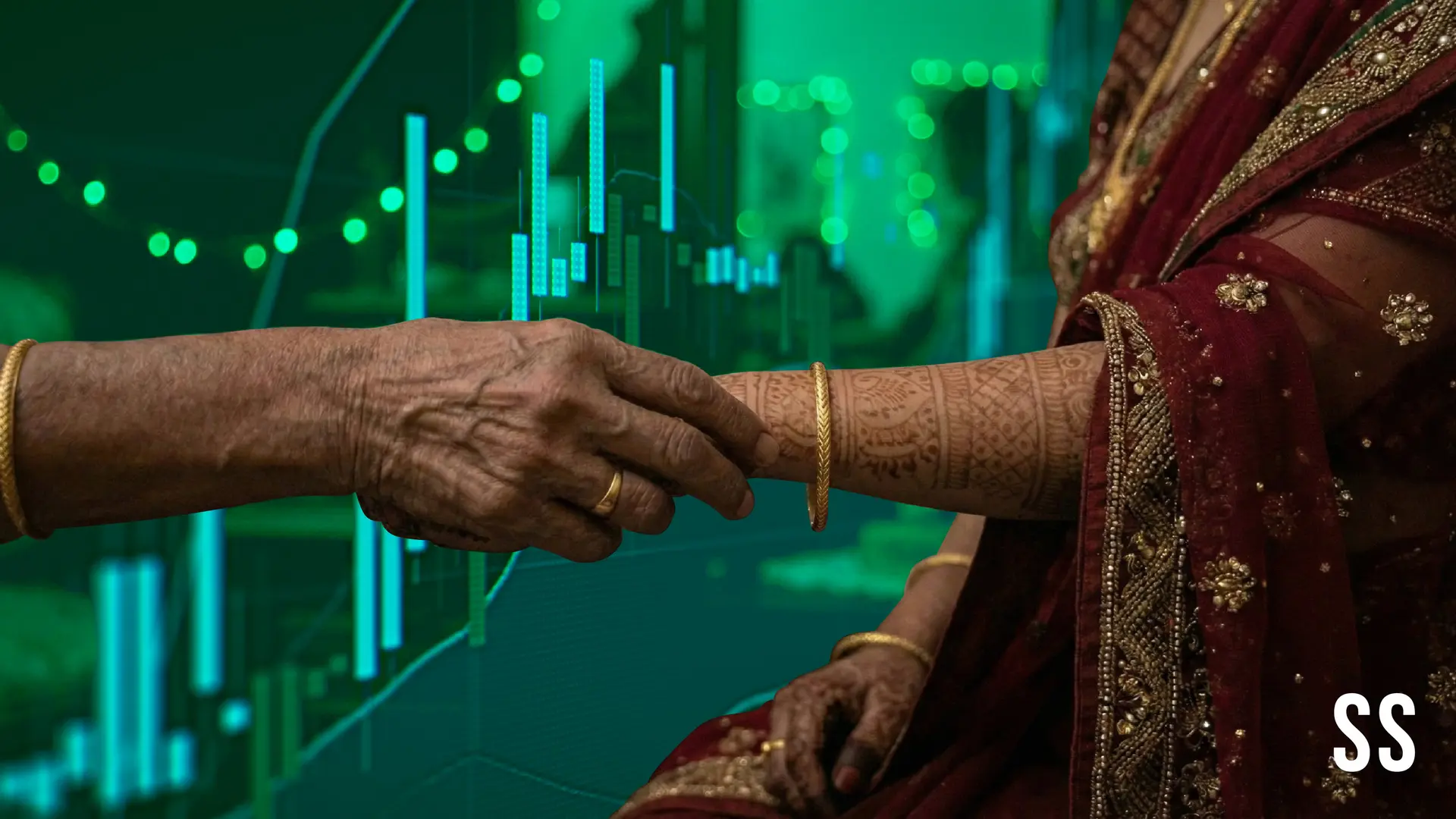

As gold prices continue to soar, the impact is no longer confined to markets and jewellers. What was once a commodity discussed in investment columns and trade reports is now shaping conversations among common people.
Gold in India crossed Rs 1,40,000 per 10 grams (22 carat) last week, up from Rs 1,24,550 on December 31, 2025.
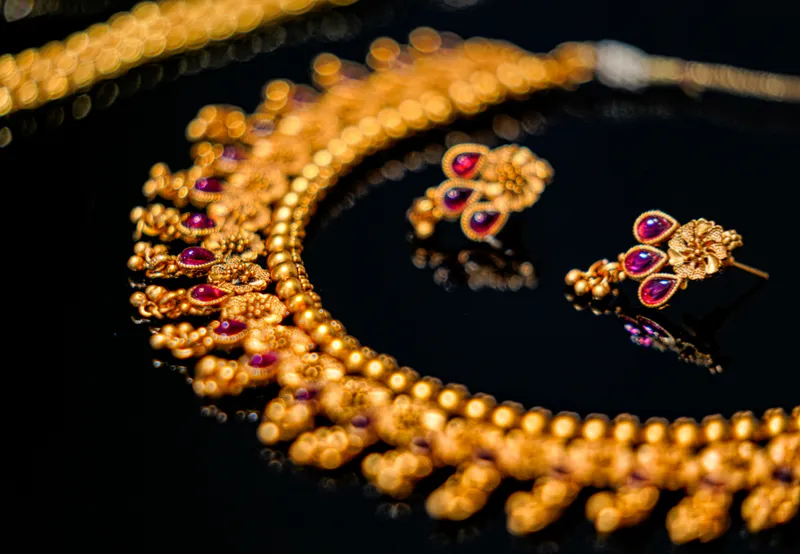
Gold prices crossed Rs 1,60,000 (24 carat) per 10 gm last week. Photo by Vaibhav Nagare on Unsplash
Analysts point to a combination of factors, including global economic uncertainty, inflationary pressures, currency fluctuations, and continued demand from Indian households for weddings and festivals.
For many families, the spike has turned gold—a symbol of stability—into a source of anxiety. An Uber ride to the airport unexpectedly turned into a moment of reflection on what those rising numbers really mean.
Abdul*, a 27-year-old cab driver from Kerala, spoke about working more than 12 hours a day to save for his wedding. Gold prices, he said, have climbed so steeply that he has had to persuade his fiancée that a four-sovereign (32 gm) chain is all he can afford.
There was no complaint in his voice. It was just a quiet acceptance of a burden many young people like him now carry, where social expectations are weighed in grams of gold.
The rapid rise has been stark. In just 21 days, gold prices jumped to levels beyond the reach of many households.
Srinidhi*, who is getting married next month, describes her recent experience of buying gold and how foresightful her middle-class parents were in saving gold for her wedding. But the shopping experience still left her feeling shocked.
“The cost of just two bangles came up to nearly Rs 4 lakh. This would have been completely beyond our reach if my parents hadn’t invested in gold coins over the years,” she says.
For Srinidhi, the shock went beyond the numbers. The experience, she adds, left her feeling “numb” and wondering whether gold, long considered an inherited asset and a form of security for women in India, is slowly slipping out of reach for the very people it was meant to protect.
“While I am privileged to have parents like mine, I couldn’t help but overhear a young girl opting for a silver chain for her thaali (wedding chain), instead of gold, because her parents couldn’t afford it. The pain in her voice was heartbreaking, the divide is real,” she adds.
While families can opt for a “no-gold” wedding, for most people, it is read as a slight on their status, or their ability to hold wealth, or their commitment to long-held traditions. Gold remains a visible marker of security, respectability, and success in India.
For Sonakshi Arora, a Delhi-based public relations professional getting married later this year, buying gold has become unavoidable.
“In Indian families, gold is not seen as optional for weddings. It is both an emotional and cultural expectation. We also felt that waiting longer could make it even more expensive, so it seemed better to go ahead rather than keep postponing the purchase,” she says.
To manage the gold purchase, Arora and her family cut back on smaller but important expenses like electronics and other non-essential items. For some upcoming purchases, they may need to rely on loans—something that wasn't part of the original plan.
Arora’s story resonates with a deeper anxiety. Years ago, her mother had to sell all her gold to keep the household running. "That stayed with me emotionally. Now, years later, we are in a slightly better position to invest in gold again, which makes it feel meaningful and reassuring," she says.
This sense of unease is playing out across families, even among those not directly involved in bridal shopping. Grusha Khanna from Delhi says that the unprecedented surge in gold prices has cast a shadow of pragmatism over her brother’s wedding.
“With market rates fluctuating daily, the simple act of choosing jewellery for our new sister-in-law has become a complex calculation,” she says. They have planned to gift her 20 grams, which has shifted the budget.
Suja*, an engineer from Thiruvananthapuram, whose parents both work blue-collar jobs, says that she had to convince her extended family that the trend was to wear heavy fashion jewellery at weddings.
“This was to cover the fact that I could only afford my thaali and a small neck piece in gold. My relatives still don’t understand that my parents had sold the only gold they had to fund my education,” she says.
For Prema C, a 75-year-old Chennai resident, buying gold for her daughter’s wedding was once a given. Like many Indian mothers, she began saving early, seeing gold not just as jewellery but as a security for her daughter’s future.
Her daughter’s wedding comes at a time when soaring gold prices have made that certainty falter. “Times have changed,” Prema says. “The cost of running a family is much higher now.” Despite years of saving, rising daily and healthcare expenses have made large gold purchases feel daunting.
“I want to give my daughter the best,” she adds, “but I also have to think about managing everything else.”
Why families still buy
For some, however, the relationship with gold extends well beyond weddings.
Mallika Biswas, a homemaker in Asansol, West Bengal, recently bought gold jewellery and coins for family occasions—one for a wedding, another for her grandson's rice ceremony.
“In Bengal, we follow the same rituals for the rice ceremony as in a wedding, only the bride/groom is missing! So, it's a big deal, and gold is an acceptable gift,” she explains.
For Biswas, gold serves multiple purposes. “I see them as assets, often treating them as how others treat property purchases,” she says. Her gold jewellery pieces are usually heritage or antique items that can be passed down as heirlooms—something that gives gold an advantage over other investments. “What does gold give you that other assets don't? Wearability. A chance to pass it on to my children,” she adds.
This sentiment is echoed by Anjana*, an IT professional from Tamil Nadu, who bought physical gold in September 2025 and digital gold in December. “It’s a sense of security only a South Indian woman can understand,” she says. She consciously cut back on buying a fitness watch and impulse shopping for clothes to make this purchase. Looking back, she says, she feels she should have bought more when she could afford it rather than have waited.
When gold is more than metal
Shipra Sharma Bhutani, an entrepreneur, felt the pinch of rising gold prices when she decided to reward her son for scoring in the 97th percentile in the CAT exam. “Whatever budget I had turned three times costlier,” she says.
For Sharma, the strain goes beyond her family. “The ultimate sufferer is the customer like me or others planning a wedding,” she says. At a recent wedding in her extended family, the solution was stark: “Collectively we had to decide to sell old gold and then buy new ones.”
Yet her faith in gold remains intact. “In India, gold is much more than just an ornament or an investment. It is prestige… a woman associates it with her self-respect,” she says, recalling how generations measured wealth in tolas.
Still, she admits the shift is unsettling. “This is not just affecting finances, but also the emotional and traditional thought process. It’s all rewired and disturbed because of the high prices.”
An industry in transition
KM Jaleel, whose family has been in the gold business since 1935, runs KAM Jewellery in Vadakkencherry in Kerala’s Palakkad district. He states that gold is not just a precious metal anymore.
“It has become a precious metal that is not easily accessible to the common people,” says Jaleel, who is also the general secretary of the All Kerala Gold and Silver Merchants Association.
“The jewellery trade itself is undergoing dramatic change. “Many small dealers are struggling now due to the appreciation of the gold price. Many corporates are struggling too,” Jaleel explains.
The social implications run deeper. "Buying gold for weddings has reduced a lot. Things have started to change. The new generation prefers to rent jewellery for their weddings,” he notes.
Goldsmiths, too, are being forced to leave their work as demand shifts toward machine-manufactured jewellery.
Jaleel sees the generational divide daily. “If a girl is asked to buy a new iPhone 17 or gold, she will definitely say that the mobile is enough. Our social thinking has changed,” he points out.
“In the past, only 22-carat gold was standard. Now, we have 18-carat and 14-carat in our shop. The new generation prefers it because of its convenience and different strength properties,” he says.
The future of gold
The retail sector is responding with measured changes. Parag Shah, CEO of KISNA Diamond & Gold Jewellery, describes a market that remains resilient but more considered.
“At Kisna, our customers are making more intentional choices, gravitating toward lightweight jewellery that aligns with their personal style and budgets,” he says.
"Demand for 18-karat and 14-karat gold has picked up, reflecting preferences that balance purity with affordability. “The emphasis has shifted from gold weight to design, craftsmanship, and styling. Rising gold prices have shaped how families approach wedding jewellery purchases, while the role of gold in bridal wear remains firmly intact,” Shah explains.
Families are increasingly opting for lighter, well-designed pieces that preserve the traditional bridal aesthetic while allowing better control over budgets.
“What we are seeing is redistribution rather than reduction. Families are making more considered choices, selecting pieces that align with their budgets, preferences, and long-term value expectations,” Shah notes.
The industry is also seeing structural changes in payment methods. Installment plans offered by Kisna continue to see steady traction among wedding buyers and traditional savers who prefer a disciplined approach. Meanwhile, Buy Now Pay Later (BNPL) options are seeing growing interest among younger buyers, especially Gen Z, for lighter and everyday jewellery.
The most significant shift is generational. “Older buyers continue to view jewellery as a family legacy and a long-term store of value, deeply rooted in tradition, inheritance, and continuity. Younger buyers are engaging with jewellery through a more contemporary lens. For them, it is lifestyle-driven and expressive, while also being seen as a liquid and practical asset,” Shah observes.
Yet, despite all the changes, gold's fundamental appeal as a financial anchor endures. “Gold continues to be regarded as a dependable financial anchor by customers. While purchasing patterns have evolved, confidence in gold as a stable store of value remains firmly intact, particularly in uncertain economic environments,” Shah says.
Shaji Varghese, CEO of Muthoot FinCorp, notes that the gold loan sector is experiencing a clear structural shift. "Demand has grown steadily over the last 12 to 24 months, driven by need-based, cash-flow-backed borrowing rather than distress-led usage. Gold loans are no longer perceived as a last-resort credit option. Instead, they have evolved into a mainstream financing solution."
Working capital needs of MSMEs and agriculture have emerged as the two largest demand drivers, followed by usage for healthcare expenses, education needs, and key family milestones.
“Overall, gold-backed lending continues to strengthen financial inclusion, improve household resilience, and enable small businesses to integrate more effectively into the formal economy,” Varghese says.
Jaleel urges the government to reduce the 3% GST on gold coins, raw gold, and jewellery to 1.5%, arguing that this would make gold more affordable and accessible. He also calls for a reduction in import duty and more flexible EMI options for gold purchases.
(*Some names have been changed to protect their identities.)
(With inputs from Saranya Chakrapani)
Edited by Megha Reddy