



How The Istri Project is helping ironing vendors switch from coal to LPG and increase their income
For years, roadside ironing vendors have worked through smoke and soot from coal-fired irons, impacting their health and earnings. The Istri Project by Udhyam Vyapaar, under the Udhyam Learning Foundation, helps them switch to LPG—cutting costs, cleaning the air they breathe, and boosting income.

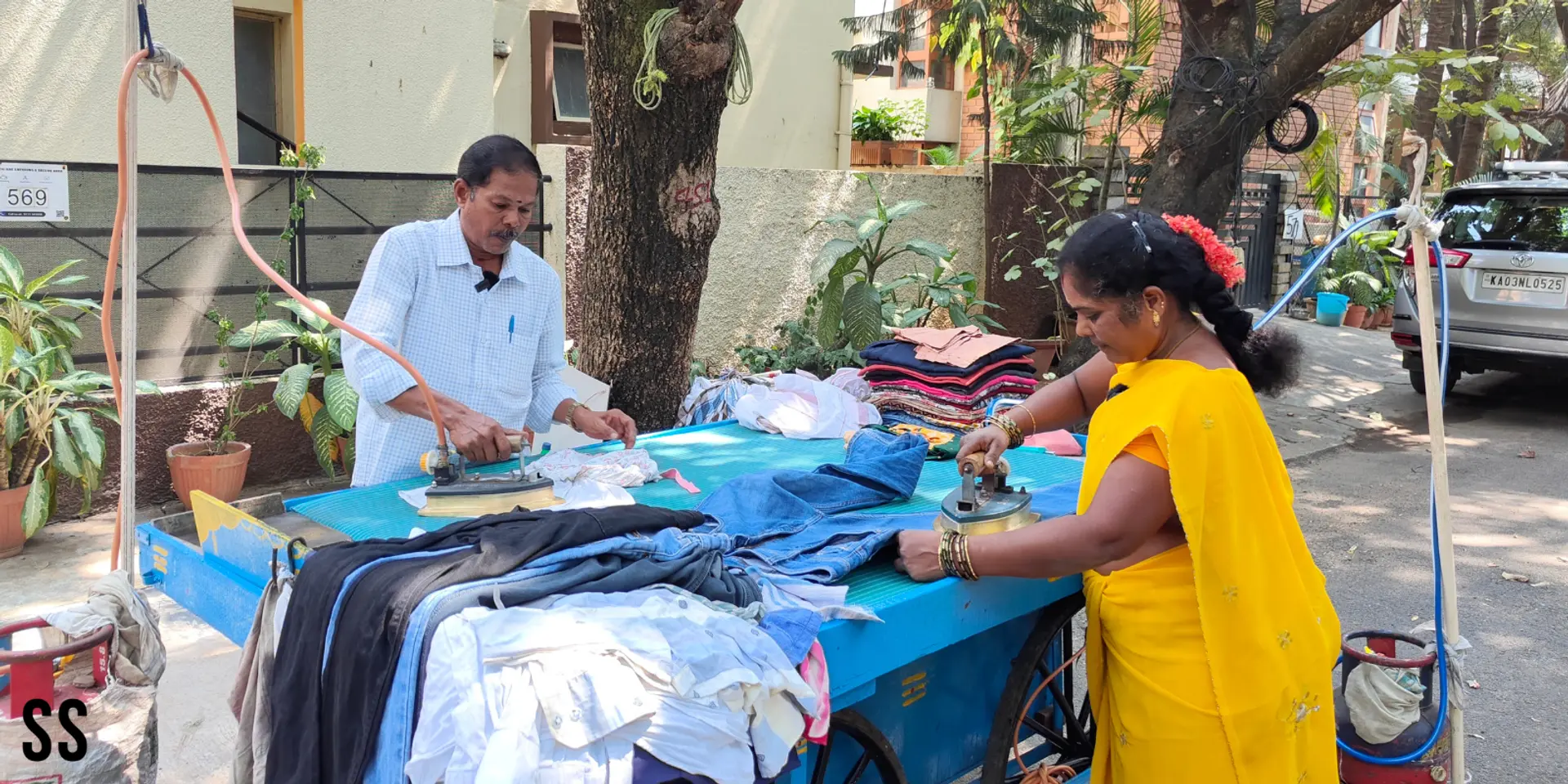

Every morning, lakhs of istriwalas (ironing vendors) across the country have followed a similar ritual: fill their heavy iron box with burning coal, wait an hour for it to heat up, press the clothes until lunchtime, and then repeat the entire process for the second shift.
They lose two hours every day to smoke and soot, and on waiting.
“Imagine opening your laptop every morning and spending an hour preparing it before you start work. Then, do it again after lunch. That has been the reality for India’s ironing vendors for generations. They are so used to it, they don’t even complain,” explains Krishnan Ranganathan, Co-founder, Udhyam Learning Foundation and Director- Udhyam Vyapaar.
This is what the Istri Project aims to change.
The Istri Project, an initiative of Udhyam Vyapaar, a vertical of Udhyam Learning Foundation, is helping ironing vendors switch from coal to LPG-based iron boxes at subsidised prices.
With LPG-based iron boxes, ironing vendors in Delhi, Jaipur, Bengaluru, Chennai and Hyderabad have reduced fuel costs by nearly half, increased productivity by up to two hours a day, and earned more income than before, says Ranganathan.
This switch helps them move to a cleaner unit, reducing impact on their health and the environment, he adds.
Udhyam Learning Foundation launched its Vyapaar programme in 2018 to help India’s nano-entrepreneurs, those earning less than Rs 30,000 a month, to increase their income. In rural areas, many were making as little as Rs 3,000 monthly.
Nano-entrepreneurs include street vendors, chaiwalas, mobile repairers and istriwalas struggling at the bottom of India’s economic pyramid.
The impactful switch
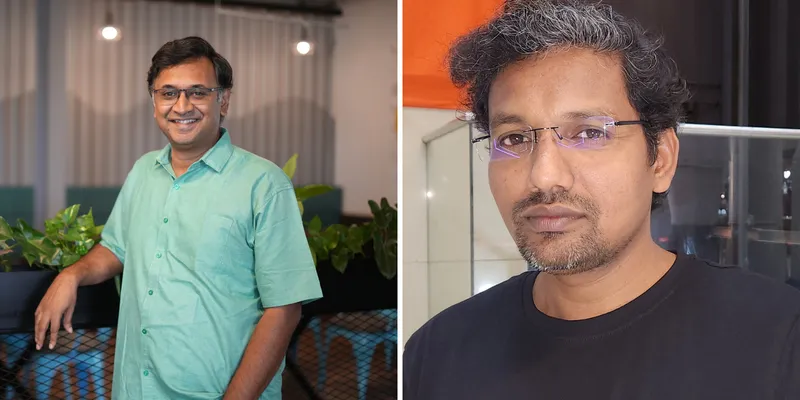
Krishnan Ranganathan, Co-founder, Udhyam Learning Foundation; and Cyril Joseph, Program Head, The Istri Project
In 2018, when Vyapaar decided to focus on ironing vendors, they realised LPG-powered iron boxes had been commercially available since 2009, and yet nobody was using them.
The Vyapaar team decided to pilot the initiative with four istriwalas in Bengaluru.
“All four of them used it for a few days and gave very positive feedback. We expanded it to 20 people. After a month, none of them wanted to go back to coal. That’s when the team realised we had found a product-market fit,” says Ranganathan.
They also monitored the vendors’ income levels over the next few months and found that they are able to earn Rs 50,000 more in a year by switching to LPG boxes.
As the project expanded in Bengaluru, the Covid-19 pandemic struck. For a year, the project came to a halt, before picking up in 2021.
Over the last six years, Udhyam Vyapaar has scaled The Istri Project from one city to five cities, enabling over 8,300 ironing vendors to make the switch to LPG iron boxes. Ironing vendors supported by the initiative have seen an average income uplift of 25%, alongside the elimination of over 6,000 tonnes of CO₂ emissions yearly, says Ranganathan
Convincing the ironing vendors was one thing, but to get LPG boxes into their hands was a bigger challenge.
“We had first to convince the manufacturers to start producing them and then work with the retailers to stock more and make sure they were available in every neighbourhood we entered,” says Ranganathan.
Many istriwalas didn’t even know that such a product existed. Those who had heard of it were unfamiliar with new technology and had fears of gas cylinders bursting and safety concerns. Trust had to be built one demonstration at a time, one conversation at a time.
The LPG iron box costs Rs 6,000-8,000, a massive sum for someone earning barely enough to feed their family. Udhyam worked to create subsidy mechanisms, loan structures, and flexible payment plans. The LPG box paid for itself through increased income within months. But bridging that initial financial gap was crucial.
The hidden barrier
Along the way, Udhyam discovered another barrier they hadn’t anticipated: after-sales service.
Istriwalas would buy the LPG boxes, use them for a few weeks, then encounter a minor maintenance issue. With no one to call and no spare parts available, they would reluctantly return to coal.
Without robust after-sales support, the entire project would fail. Udhyam designed and implemented after-sales service networks in every city they were present in.
Different models emerged organically: in some cities, retail shops became service centres; in others, enterprising istriwalas learned to repair boxes and stocked spare parts, creating an additional income stream for themselves while helping their neighbours.
“In Chennai, after setting up the transition from coal to LPG, we conducted a follow-up survey three months post-implementation. The results were encouraging—97% of the beneficiaries had continued using LPG. This retention rate was an outstanding success for us. Only about 3% had either returned to coal or could not be tracked due to missing data,” says Ranganathan.
Vijaykumar, a long-time ironing vendor from Chennai, made the shift after a demo of the LPG iron box.
“I had always used coal. After knowing more about the LPG box, trying it out, and using the subsidy offered for buying it, I switched. Moreover, the price of coal has increased, and it takes more time to fire up the box. Now I can iron up to 150 clothes for 8-9 hours a day, and this has helped,” he says.
Regional challenges
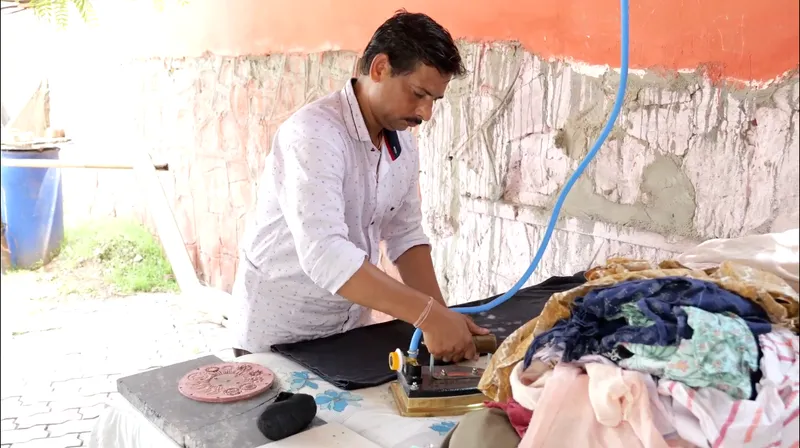
An ironing vendor from Jaipur
As the project scaled from southern India to northern India, the team encountered regional challenges.
In Delhi and Jaipur, the iron boxes available were heavier and bulkier than those used in the south. The ironing vendors weren’t keen on brass boxes and preferred cast metal.
Udhyam worked with manufacturers to adapt the product to the needs of the northern market. But an even more surprising challenge emerged: seasonality.
“During winter in Delhi, we found some istriwalas switching back to coal. The coal boxes gave them warmth in the cold. The demand for ironing also drops in winter—people wear fewer clothes. “When winter ends, they return to LPG,” says Cyril Joseph, Program Head, The Istri Project.
“We are watching to see if this pattern stabilises or if we need to provide additional support to keep them on LPG year-round,” he adds.
Maya Devi, a resident of Vikaspuri in Delhi, has been ironing clothes since her marriage in 1992. Now she works along with her daughter-in-law.
A few months ago, she became the first in her neighbourhood to switch from a coal press to LPG after seeing a message in a local group.
“I was hesitant at first, but now I wouldn’t want to go back. This is the best,” she says. LPG, she explains, is “three times” cheaper than coal, saves time, and frees her from smoke, sparks, and stains.
“With coal, everything revolved around the burning fire. I couldn’t even eat or drink water on time. Now, I can just switch it off and step away.”
Earlier, she spent nearly Rs 6,000 a month on coal; now, she spends around Rs 1,000 on gas. “The Rs 5,000 I save, I deposit in the bank or invest somewhere. The money is safe,” says Devi.
Through her income from ironing over the years, she has educated her children, paid for their weddings, and supported her son’s career as a tattoo artist.
A network of partnerships
Udhyam operates The Istri Project through an ecosystem of diverse partners. In Bengaluru and Chennai, it has worked with sanghas, small unions of istriwalas, to spread awareness and organise demonstrations.
In Delhi, Udhyam has partnered with Ayesha Foundation, which implements the programme using contract employees, with Udhyam providing knowledge and guidance. In Hyderabad, Rotary International took ownership, conducting over 300 conversions from coal to LPG with minimal involvement from Udhyam staff.
In Bengaluru, it partnered with SIDBI (Small Industries Development Bank of India) in 2024 to work with around 200 istriwalas.
Udhyam is also engaging with gas agencies like IOCL, BPCL, and HPCL as strategic partners. “They have infrastructure in every corner of the country. They already deliver gas cylinders. This product is directly related to their business. We are piloting collaborations in Madurai. If it works, it could dramatically accelerate our scale,” says Joseph.
In some rural areas, panchayats have come forward to help vendors in their villages..
Ranganathan shares that The Istri Project has enabled vendors across five cities achieve a cumulative income uplift of Rs 100 crore as of September 2025.
However, despite the progress, this has been the most difficult project for Udhyam to raise funds for.
“We have the impact data. We have third-party validation showing a 27% average income increase. We are working with people who need us most—earning Rs 3,000 a month in rural areas, Rs 10,000-15,000 in cities. The cost-effectiveness is proven. But attracting consistent funding has been surprisingly challenging,” says Ranganathan.
For six years, Udhyam has scaled the Istri Project city by city—raising funds for a specific location, deploying teams or partner organisations, running awareness campaigns, and managing conversions. But the approach is resource-intensive, geographically constrained, and there are millions more istriwalas to reach.
Edited by Swetha Kannan