


These Lighthouses guide disadvantaged urban youth with mentorship and employment
The Lighthouse Communities Foundation runs 50 Lighthouses, designed as community spaces, in six states, offering career-readiness support, mentorship, and employer networks to youth.

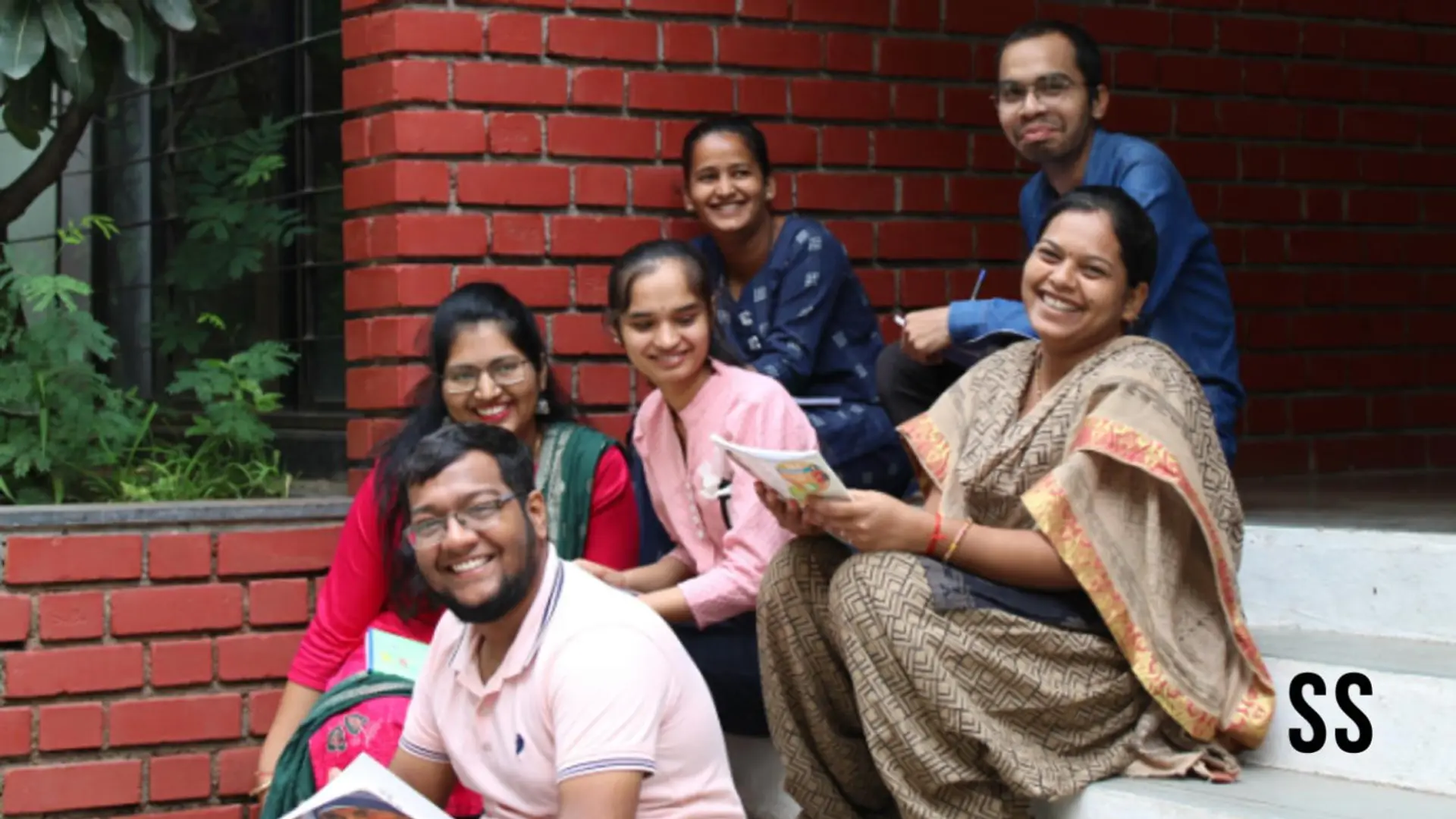

In 2011, as Pune expanded into a bustling urban hub, it grappled with a set of challenges. Significant parts of its population included young people on the margins, cut off from opportunities because they lacked access, guidance, and the right networks.
To address this, a group of corporate leaders led by Ganesh Natarajan and Ruchi Mathur started the Pune City Connect Development Foundation.
Natarajan, an industry stalwart, has held leadership roles at companies such as Aptech and Zensar Technologies. While Mathur, after stints in advertising and marketing, moved into social work. She worked with CRY before heading CSR at Zensar.
Both became absorbed by the concept of agency building—equipping every individual to make informed life choices.
Pathways for meaningful work
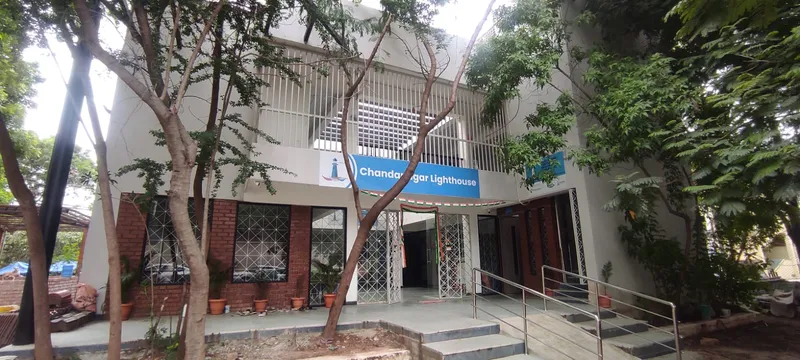
A Lighthouse centre
In response, the foundation, in partnership with the Pune Municipal Corporation, set up Digital Empowerment Centres to give youth access to computers and basic digital skills. While technology was a gateway to growth, the youth needed direction, confidence, and pathways for meaningful work.
This insight evolved into the Lighthouse Communities Foundation, a public-private partnership (PPP) model that focuses on agency-building, vocational skills, employability, and livelihoods.
The first ‘Lighthouse’, as the centre was called, opened in 2016 under an MoU with the Pune Municipal Corporation as part of Pune’s Smart City Projects. Since then, it has expanded into a six-state initiative, impacting over 2.4 lakh people so far.
Anuja Kishore, CEO of Lighthouse Communities Foundation, points out that one of the drawbacks of the skills initiatives in India was that they were not giving enough importance to young people's choices and were mainly led by industry demand.
The diagnosis was simple: nobody was talking to young people about what careers actually looked like. They saw the unglamorous aspects of trades but not the opportunities. Industries needed skilled people, and youth needed jobs, but the conversation between them was missing.
Run in partnership with state governments and government bodies, the Lighthouses offer a practical solution allowing young people to make informed choices and stay committed.
Kishore explains how the PPP model, the only one of this kind in the country, was designed.
The government identified underutilised public buildings, renovated and refurbished them, equipped them with furniture and computers, and offered the spaces rent-free to operate as Lighthouses.
Architects then stepped in to reimagine these otherwise uninspiring structures, transforming them into bright, welcoming, and aspirational spaces, places young people would actually want to walk into, learn, and spend time in.
“Every Lighthouse would serve a catchment area of 2-3 kilometres with a target audience of anyone between the ages of 15 and 35 years. These could include anyone who’s not had a formal school or college education,” explains Kishore.
The demographics are specific: family income averaging Rs 3 lakh to 4 lakh annually, the bottom strata of urban poor. Sixty percent of participants are women.
The organisation works with a network of volunteers and partners with small NGOs to map the communities and get people to enrol in the programme.
Building trust
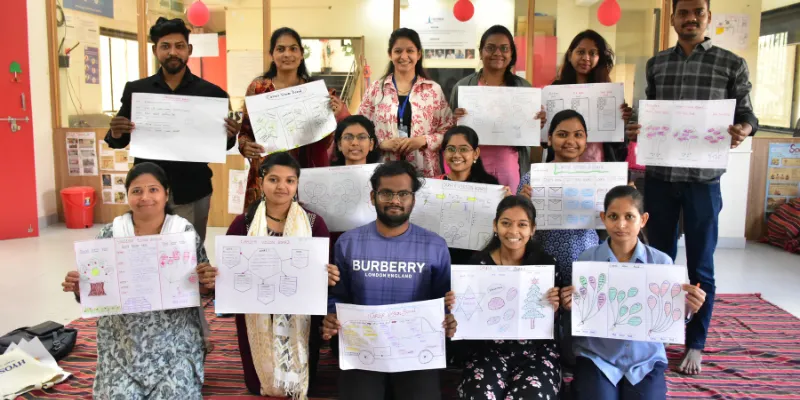
Career Vision Board activity as part of the Foundation Course
Kishore says initially there was scepticism around the model. Why would someone leave their job and enrol in a skill centre?
"There were huge challenges in building trust and credibility. We said, if somebody wants to get placed, we will get them placed, but we are not going to force-fit anybody. We are here to career prep you first,” she says.
The programme begins with career preparation, after which the youth are supported with soft skills, digital skills, entrepreneurship skills, and then linked with livelihood opportunities.
The first 100 hours are spent in 'foundation' groups where agency building happens. This is coupled with spoken English classes. Participants also receive detailed career counselling using handbooks and toolkits for careers in healthcare, banking, graphic design, and other fields. The programme covers over 30 courses.
After counselling, the journey of vocational training and placement starts.
Each Lighthouse has six to seven staff members managing the entire journey from community mobilisation and skilling to job placement. There are facilitators and counsellors running foundation courses, staff tracking attendance and conducting pre-tests and post-tests, and people ensuring every participant has a properly formatted resume.
“We have 7,500 employers offering jobs. Thirty per cent are Tier I companies, and 70% comprise MSMEs and SMEs. Our effort is that 70% should go into formal sector employment and 30% choose entrepreneurship. 45,000 young people have been placed in jobs so far,” elaborates Kishore.
The foundation has established partnerships with 16 government bodies across Delhi, Uttar Pradesh, Rajasthan, Telangana, Odisha, and Maharashtra, and has 50 Lighthouses in these states. While the government provides the capex, the private sector provides high-quality training.
Scaling hasn’t been easy, Kishore admits. Expansion is often slowed by regional differences in needs, infrastructure, and local partnerships. Another ongoing challenge is fundraising. Nearly 70% of the organisation’s support comes through CSR contributions and family philanthropies such as the Michael & Susan Dell Foundation. It is also part of The Nudge/Institute’s Accelerator.
What is most heartening, however, is the way the community circles back. Today, nearly 20% of the staff are former students from its Lighthouses, and more than 50 of them are working as interns, helping mobilise their own communities and guiding the next cohort forward.
Changing lives
Kaushaliya, 42, from Pune’s MHADA Colony, a sweeper, barely made Rs 7,000–8,000 a month. Married at the age of 10 and educated only till Class 2, she couldn’t read well, count money easily, or use a phone. The turning point came when she accompanied her son to the Lighthouse centre and asked if she could enrol too.
She signed up for the foundation course and a fashion design programme, discovering a natural talent for tailoring.
Kaushaliya started with a borrowed sewing machine, which she carried up six floors every day to a room. She sewed late into the night. Slowly, orders began to grow.
Today, she runs her own tailoring shop, which she proudly calls a “boutique”. She works at her boutique after finishing her morning shift as a sweeper.
She stitches blouses for premium clients and sources saris from Surat. She speaks basic English with customers and runs her work with discipline.
Kaushaliya’s income has now nearly tripled. She now mentors other women and trains girls in stitching. She saves Rs 500 a day, invests in gold, has bought an electric scooter on loan, and has Rs 2 lakh in savings.
Sangamesh, a resident of Janta Vasahat, a locality in Pune, is the only child of a fruit seller. The 24-year-old always had an aptitude for maths and logic, but felt lost during the pandemic when learning moved online.
As luck would have it, he found a Lighthouse pamphlet in an auto-rickshaw and enrolled himself in the foundation course, followed by a computer engineering skills course.
Though he was initially overwhelmed by coding languages, he stuck with it under a mentor’s guidance.
After multiple interviews and rejections, Sangamesh finally found a breakthrough as a trainer. Then he landed a job at Vodafone. Mock interviews, project work, and constant feedback helped him build technical confidence and workplace communication.
Sangamesh now earns Rs 40,000 a month. He supports his parents and also saves 40% of his income. He upgrades his skills online, mentors peers, and dreams of working at a global tech company.
The foundation wants to touch the lives of many more young people like Kaushaliya and Sangamesh. The next big milestone for the foundation is serving 1 million young people in the country by 2030.
“We want to penetrate the states where we are currently functioning. We want to do more regional and in-depth work. Maharashtra, our home state, is large. We are piloting interventions to prepare young people studying in ITIs and polytechnics to be more workforce-ready,” elaborates Kishore.
(The story has been updated to correct a typo.)
Edited by Swetha Kannan