


How young leaders are advocating for more inclusive and accessible urban mobility in Indian cities
The Mobility Champions Program from Young Leaders for Active Citizenship (YLAC) is a youth-led initiative that equips young people to understand, engage with, and advocate for more inclusive and accessible urban mobility systems.

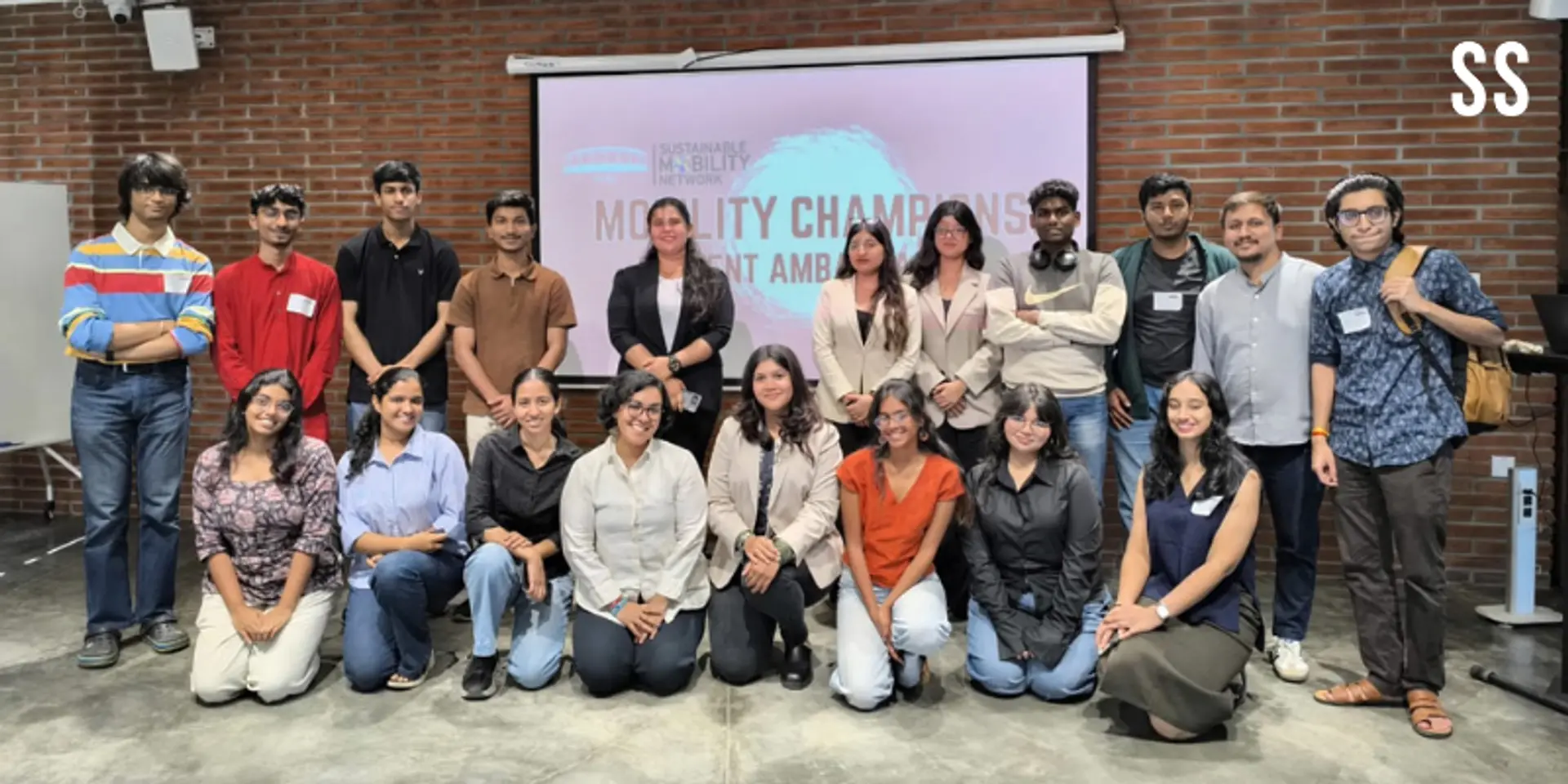

As Indian cities expand, urban mobility becomes central to economic and social participation. An important question arises: who are our streets and public spaces really designed for?
For many women and persons with disabilities, navigating public spaces is not easy. It is marked by safety concerns, inaccessible infrastructure, and the constant need to adapt to systems that were not built with them in mind.
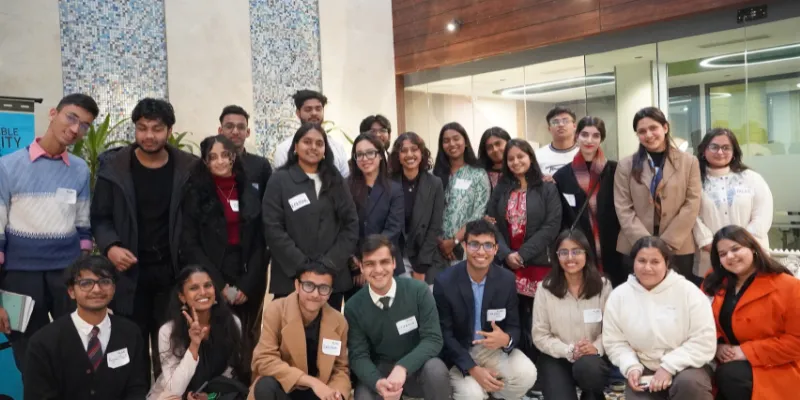
Delhi launch of the Mobility Champions Program
In this scenario, youth-led initiatives are beginning to shift the conversation from abstract policy to lived experience. The Mobility Champions Program by the Young Leaders for Active Citizenship (YLAC) is placing young people at the heart of urban mobility conversations, equipping them to document, question, and influence how cities are planned and experienced.
Founded in 2016, YLAC’s mandate is to introduce young people aged 13 to 30 to democratic processes and civic engagement. Its initiatives include the High School Achievers Programme and its flagship fellowships, Policy in Action and Young Researcher for Social Impact.
Youth at the centre of mobility conversations
Now in its fourth year, YLAC’s Mobility Champions Program aims to bring young talent into the climate and urban mobility space. The idea is to encourage them to engage with issues such as disability access, sustainable and electric mobility, and gender safety in public transport—and to actively contribute to solutions.
“In its first phase in Bengaluru (Years 1-3), it targeted young professionals who had just completed their undergraduate degrees. Fellows were placed with partner organisations such as CFAM, Bengaluru Walks, Sensing Local, Jana USP and Jana Space for architecture, urban planning and accessibility work,” explains Shipra Shipra Baduni, Chief Executive Officer, Young Leaders for Active Citizenship (YLAC).
YLAC was responsible for upskilling while the host organisations provided real project mandates, almost like a structured internship.
After three years, YLAC felt it had nearly saturated the young professional talent pool in Bengaluru. In Phase 2, YLAC pivoted to undergraduate students.
“While these students are among the primary users of urban mobility infrastructure, they were not actively engaging in conversations around it. In this revised model, students are held centrally rather than placed in organisations,” she says.
Partner organisations provide project briefs, and students are trained to conduct advocacy campaigns, surveys, audits, and awareness campaigns.
Last year, the pilot was run in Delhi, and this year, it has expanded to Delhi and Bengaluru. The programme currently includes 70 fellows, working in teams of two, each supported by mentors and partner organisations. In Delhi, its partner organisations are Raahgiri Foundation, Nipman Foundation, and Safetipin, while the Association of People with Disability (APD), the Council for Active Mobility, and Bengawalk support the programme in Bengaluru.
The campaign work reflects a layered approach that combines research, engagement, and communication.
These include research and data collection, surveys capturing mobility challenges, Interviews documenting lived experiences, accessibility and infrastructure audits, on-the-ground engagement, documentation and communication, social media engagement, and more.
In Delhi, fellows are drawn largely from institutions such as the University of Delhi—including colleges like Ramjas, Sri Venkateswara, and Hindu College—along with Jamia Millia Islamia and the School of Planning and Architecture. They typically come from academic backgrounds spanning urban planning and architecture, the social sciences and development studies, and commerce and business.
In Bengaluru, the cohort includes students from institutions such as Christ University, the Indian Institute of Management Bangalore, Azim Premji University, and St. Joseph's University, among others.’
Recruitment happens through an open application process, and awareness is built through a 1,25,000 strong YLAC alumni network, campus ambassadors, and digital outreach.
How Mobility Champions work on the ground
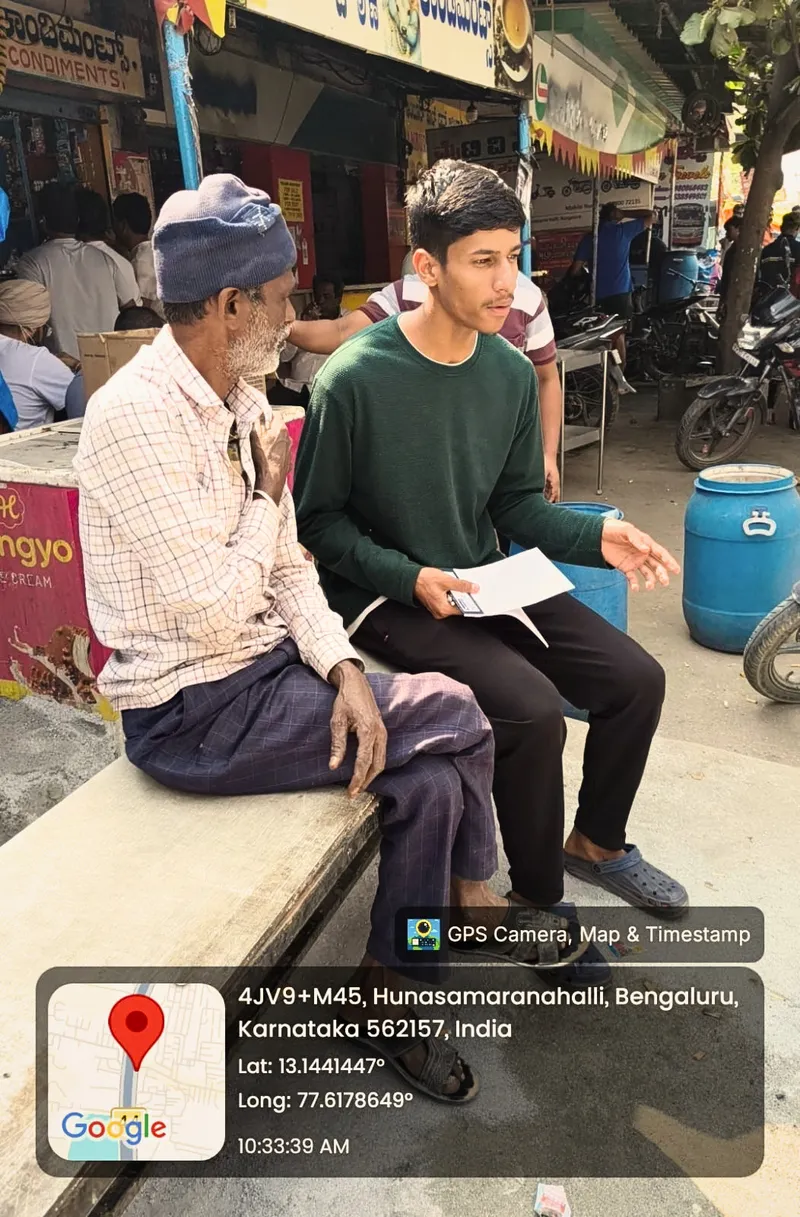
A mobility champion (right) working on ground
The programme runs for three months. The first month is dedicated to upskilling and project refinement — sessions cover advocacy, campaign planning (online and offline), audience engagement, and project implementation. Students finalise their project scope in this period.
“The following two months are dedicated to fieldwork and can include accessibility audits of metro stations, public spaces, or campus infrastructure; walkability campaigns, surveys and data collection and finally, presenting the findings to local administration, college managements, or municipalities,” she elaborates.
Last year, 40 Mobility Champions conducted 88 accessibility audits, surveyed 370 individuals, organised 8 empathy-building workshops with people with disabilities and mixed groups, reached 1,300 individuals through workshops and audits, and reached 1.6 lakh cumulative online impressions and interactions.
A notable example: students from O.P. Jindal Global University conducted a campus accessibility audit and presented their findings to the university administration, which agreed to make improvements in areas that were inaccessible to people with disabilities.
Mobility champion Shreya Chaurasia partnered with the Nipman Foundation to lead Bus Pe Chalo, a campaign advocating for accessible public buses in Delhi, particularly through external audio announcements for routes and bus numbers. Through on-ground activities—such as “Walk in My Shoes” sessions, commuter interviews, and outreach at bus stops and colleges—the team engaged 450–500 people and gathered over 650 signatures (offline and online combined).
The campaign also included digital outreach, media coverage, and direct engagement with policymakers, including the Delhi Transport Corporation and the Delhi Transport Ministry. By combining lived experiences with advocacy, it spotlighted key accessibility gaps and pushed for more inclusive public transport.
In Delhi NCR, teams are working across multiple urban contexts, including Central-South Delhi (ITO, Mandi House, Pragati Maidan, Chanakyapuri), and the University of Delhi North Campus area, South East Delhi and North-West Delhi.
In Bengaluru, teams are working across East Bengaluru (Whitefield, Kadugodi); North Bengaluru, including the airport region (Yelahanka, Sahakarnagar, Air Force Yelahanka, Hunasamaranahalli); Central Bengaluru (Shantinagar, Lalbagh Road, Bangalore GPO, KR Market), South and Southeast Bengaluru, institution and high footfall places and other areas in the city.
Baduni points out that the programme’s goal is not to have students change state policy in three months.
“The aim is for them to deeply understand the policies that govern their cities and their lives, and to begin contributing to change at a hyper-local level, starting at their college or their locality.”
Over the longer term, several alumni have gone on to work with NITI Aayog, policy think tanks, and urban planning organisations. A few have started their own organisations working in the urban mobility space. That long-term shift in perspective and career direction is also a significant measure of YLAC's impact.
What a Mobility Champion learns
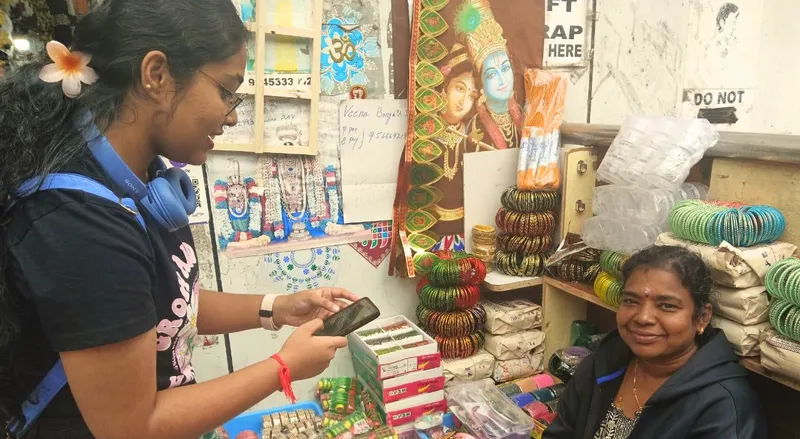
A mobility champion interacting with a shopkeeper
Sanksriti Agarwal, a first-year BA (Hons) Political Science student from Hindu College, Delhi, applied to the Mobility Champions Program after becoming increasingly aware of how everyday mobility challenges, such as safety, accessibility, and last-mile connectivity, shape people’s choices, opportunities, and independence.
“I have observed how something as basic as getting from a metro station or bus stop to campus can feel uncertain, particularly for women. The program stood out as an opportunity to move beyond observation and work on-ground to understand these issues,” she says.
For Sanksriti, a typical day as a Mobility Champion starts by visiting bus stops and nearby routes to assess conditions, including lighting, accessibility, and overall usability.
“Alongside this, we conduct quick surveys and hold conversations with students and commuters to understand their experiences. Later, we compile our observations, analyse survey responses, and translate these insights into campaign outputs, whether that’s mapping routes, identifying gaps, or creating awareness content,” she explains.
Engaging with women commuters and persons with disabilities made it clear that cities are simply not built with them in mind.
“Their needs are treated as exceptions rather than norms, even though they make up over half the population. This shows up in unsafe bus stops, inaccessible pathways, and constant compromises in mobility. It’s unsettling to realise how everyday infrastructure quietly excludes so many, making basic movement feel like a challenge rather than a right,” she adds.
Challenges and way forward
After three years in Bengaluru, YLAC found it difficult to recruit motivated professionals willing to leave their existing employment for a three-month fellowship.
“Pivoting to undergraduate students resolved this, as there was significant demand from that segment. However, a new challenge has emerged: how to expand into more cities where the university ecosystem is less dense and extracurricular culture is less prominent. Bengaluru already presents some of these constraints compared to Delhi. Scaling to other cities in a meaningful way remains an open challenge,” she believes.
What would an ideal city, shaped by Mobility Champions’ work, look like?
Baduni says, “An ideal city is ultimately what its citizens want it to be. But through the lens of urban mobility, we envision a city that is accessible to all—people with disabilities, women, the elderly, and children. A city that is truly walkable, with infrastructure that supports pedestrian movement, and one that has made a just transition to cleaner energy in transport and transit.”
Edited by Affirunisa Kankudti