



How Karghewale is creating a new generation of artisan entrepreneurs
Founded by Nivedita Rai and Sourodip Ghosh, Karghewale is helping artisans move beyond low-paid wage work by building their own creative enterprises.

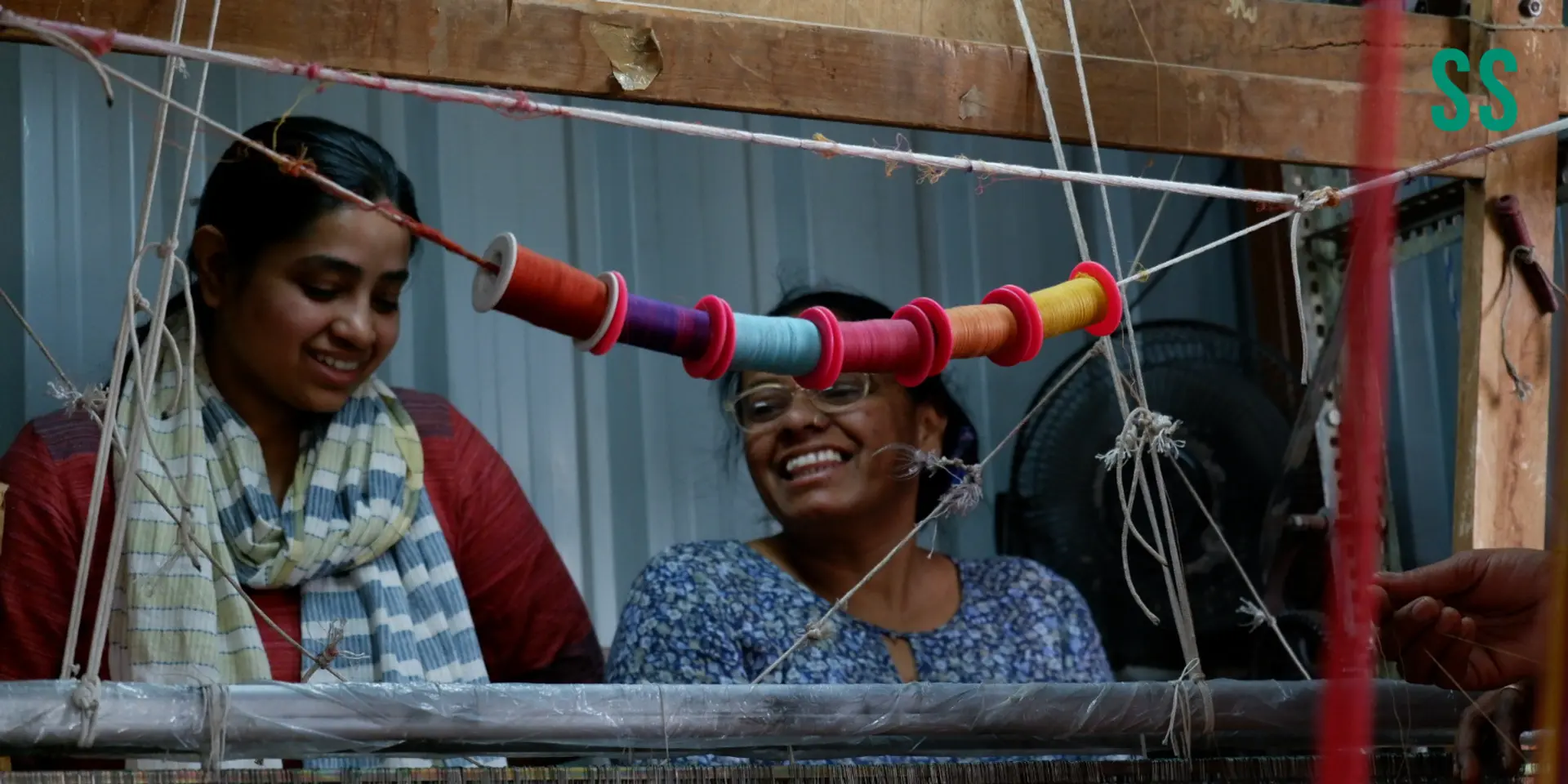

While working with the WomenWeave Charitable Trust in Maheshwar, Madhya Pradesh, Nivedita Rai and Sourodip Ghosh witnessed the same problem unfold over the course of five years. Skilled weavers, trained in techniques preserved across generations, were earning only between Rs 5,000 and Rs 10,000 a month.
Meanwhile, the same fabric was later sold by buyers at several times the price. The math was broken right at the start.
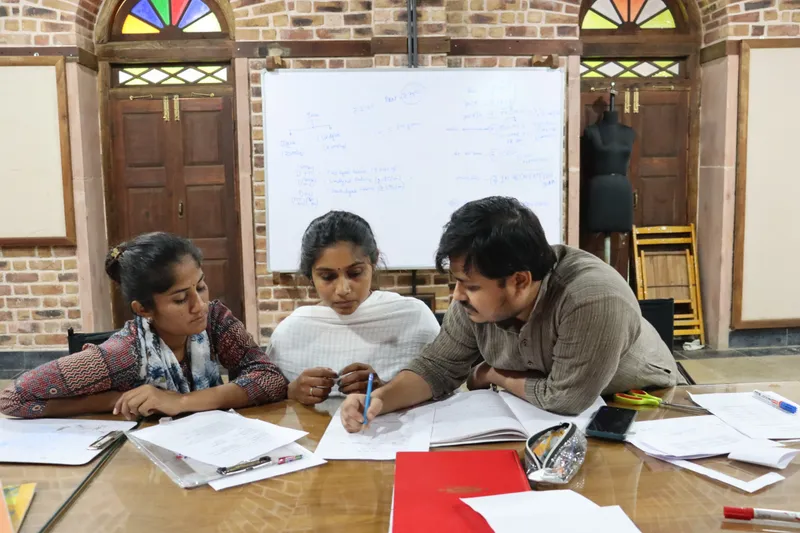
Sourodip Ghosh with artisans
“Over five years, the central challenge I kept returning to was stagnant income and high attrition rates. That is why young people, who have so many opportunities, don’t stay in the craft. Weaving is meticulous work, and they won’t stick with it if there is no recognition, if they are functioning as labourers and earning so little,” Rai explains.
This realisation led to the creation of Karghewale, an organisation that helps young artisans become craft entrepreneurs, giving them greater control over their craft, income, and the value chain.
Rai had arrived in Maheshwar after completing her management degree at the Indian Institute of Rural Management, where she and Ghosh were classmates. Student internships in Gujarat with SEWA and with Madhubani painters and silk weavers in Bihar shaped her inclination towards working with artisan communities.
Turning artisans into entrepreneurs
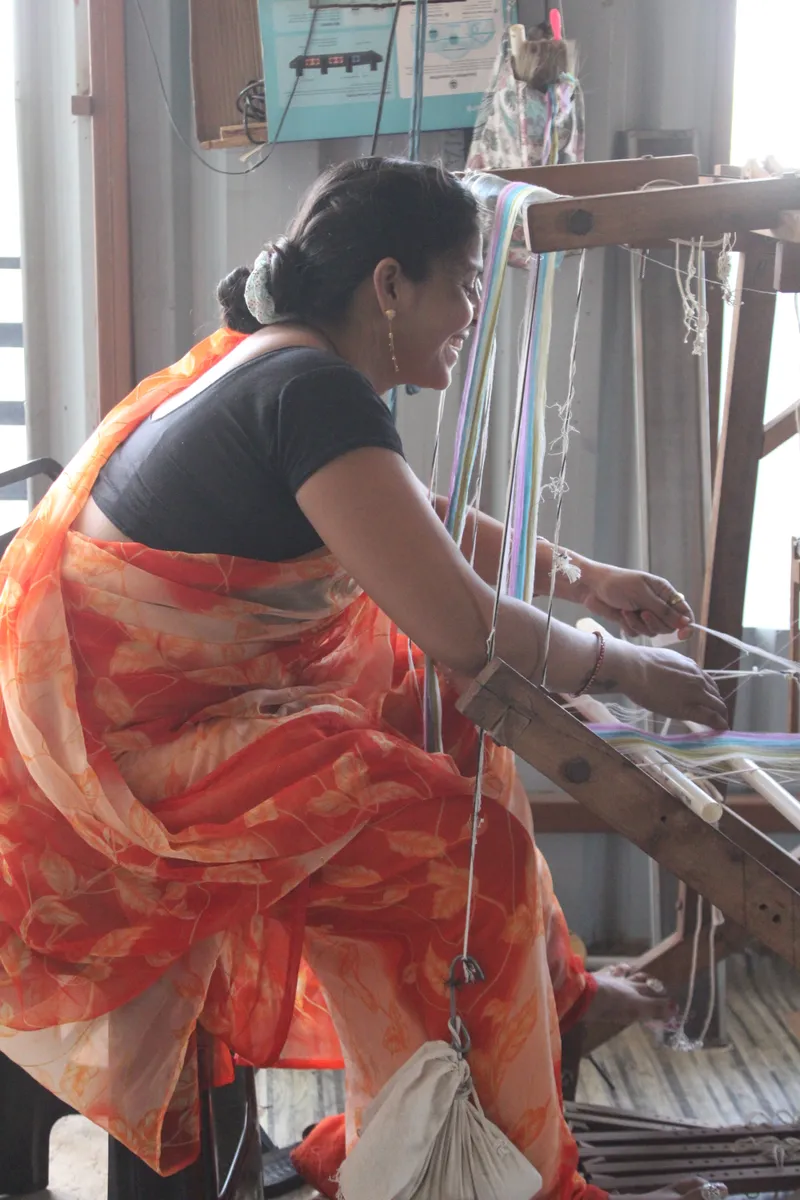
Artisan on a loom
In 2020, when Rai and Ghosh set up Karghewale in Maheshwar, they arrived at a pragmatic conclusion: entrepreneurship is a better path than wage-based work.
“If you go back 150 or 200 years, a village artisan used to ideate, conceptualise, produce a product, and often market it. But as global value chains evolved, everything was stripped away from the artisan, who became just the implementation layer of a much longer chain. Design and marketing were taken away. And when you take design away from an artist, all you're left with is labour. Because production is slow, the labour cannot remunerate the artisan appropriately,” Rai explains.
As artisans gradually lost their design ownership, the value chain grew increasingly layered—with separate designers, marketers, and traders taking their share.
Despite being the original creators, artisans were often left with only a small fraction of the final value.
With the rise of platforms like Instagram and Facebook, the younger generation of artisans was no longer confined by geography.
Through WomenWeave’s Handloom School, Rai witnessed participants learning practical skills in design, business, costing, and production.
“These young artisans were no longer willing to remain invisible wage workers; they wanted ownership, recognition, and a direct stake in the value they created. That was proof of concept for us that the entrepreneurship model could work with the younger generation,” she adds.
Karghewale began with an incubation programme with 150 young artisans through the Handloom School project. Not everyone became an artisan entrepreneur, but 55 from the cohort did over the course of the programme, which runs for 2.5-3 years.
How it works
Karghewale’s premise is simple but radical. It encourages artisans to focus on what they do best, creating and designing textiles, while the organisation helps bridge the often inaccessible worlds of markets, business systems, and global buyers.
“We function as an incubator for artisan-promoted enterprises. We give them an initial order on their designs, they block two or three looms, deliver the production, and we take their textiles to international markets and get orders for them. From there, they begin iterating and receiving direct market feedback, which they never got as labour artisans,” says Rai.
To ease the financial pressures that often limit small producers, Karghewale offers a 100% advance payment on orders. But they operate as businesses, are trained in costing, and they set their own margins.
“We don’t pay wages; we buy the fabrics from them as equal business partners. They add not just a labour component but also a margin, the way any enterprise would. Then they sell to us, and we do the onward selling. Through this process, over three to four years, they grow into established small businesses,” she adds.
Some eventually become fully independent, moving out of Karghewale’s ecosystem altogether, while others continue to route a portion of their business through the platform while building their own client base. Artisans are free to leave when they feel ready.
Among the 55 artisans, 42 have started their own businesses.
The artisans’ incomes have risen from the Rs 7,000–8,000 per month they earned as labour artisans to Rs 35,000–Rs 40,000, with some reaching Rs 60,000–Rs 70,000 from their enterprises.
Changing incomes of artisans
Karghewale operates as a for-profit organisation with a primarily B2B model, as artisans require bulk orders. The platform works across craft clusters in six states: Chanderi and Maheshwar in MP; Jamdani, Dhaniyakhali, and Begampur in West Bengal; Bhagalpur silks and linens in Bihar; Kutchi weaves, Ajrak, and tie-dye in Gujarat; and embroideries in Bikaner and block prints from Sanganer in Rajasthan.
Expanding beyond weaving, it now covers block print, Bagru, Shibori, and some embroideries to provide international buyers with a one-stop solution. "The handcrafted value chain is fragmented and unprofessional. An international buyer who wants to source handcrafted textiles from India faces so many barriers that they often end up not sourcing at all."
Karghewale now handles design, production, stitching, printing, embroidery, tagging, and shipping under one roof.
Its customers are international boutique owners, private-label designers, and retailers focused on ethical or sustainable fashion.
Shraddha Khedekar was not born into a weaving family and had no prior knowledge of the craft. She chose to learn weaving after moving to Maheshwar following her marriage. She wanted to build an income of her own. After training at a government handloom centre and later at WomenWeave’s Handloom School, she worked as a wage weaver, earning around Rs 5,000 a month.
In 2022, Shraddha joined Karghewale’s incubation programme, shifting from wage work to building her own enterprise. She now designs and weaves her own cotton textiles using advanced techniques. She sells through Karghewale’s platform with business and market support. Her monthly income has grown to about Rs 13,500.
Shraddha plans to hire two weavers and grow her business further by reaching direct clients, moving from artisan to entrepreneur and creating jobs in the process.
Karghewale generates revenue by adding a margin to the products it sells to buyers.
On the funding side, it has received support from an Acumen Inc. grant, followed by an institutional round from NextPath Ventures (an impact investor), and a second institutional round from Hero Enterprises' Bridge Incubator, which was set up specifically to support craft-based enterprises.
Rai’s long-term vision for Karghewale is to become a one-stop, trusted platform for handcrafted textiles globally and to help more artisans become entrepreneurs. She has seen the shift over the past 10 years. Aspiration among artisans is now different.
“It used to be: 'I will not let my son or daughter enter this profession.' Now, they say, 'I want my daughter to become a designer-entrepreneur. I want to send her to design school so she can learn and take the craft forward.'
That shift is proof enough. They are on the right track.
Edited by Megha Reddy