



How MeMeraki is bringing Indian folk art and master artists online
Yosha Gupta is the founder of MeMeraki, a tech-enabled platform that works with over 500 master artisans across 300+ traditional art forms, helping them reach global customers and build sustainable livelihoods.

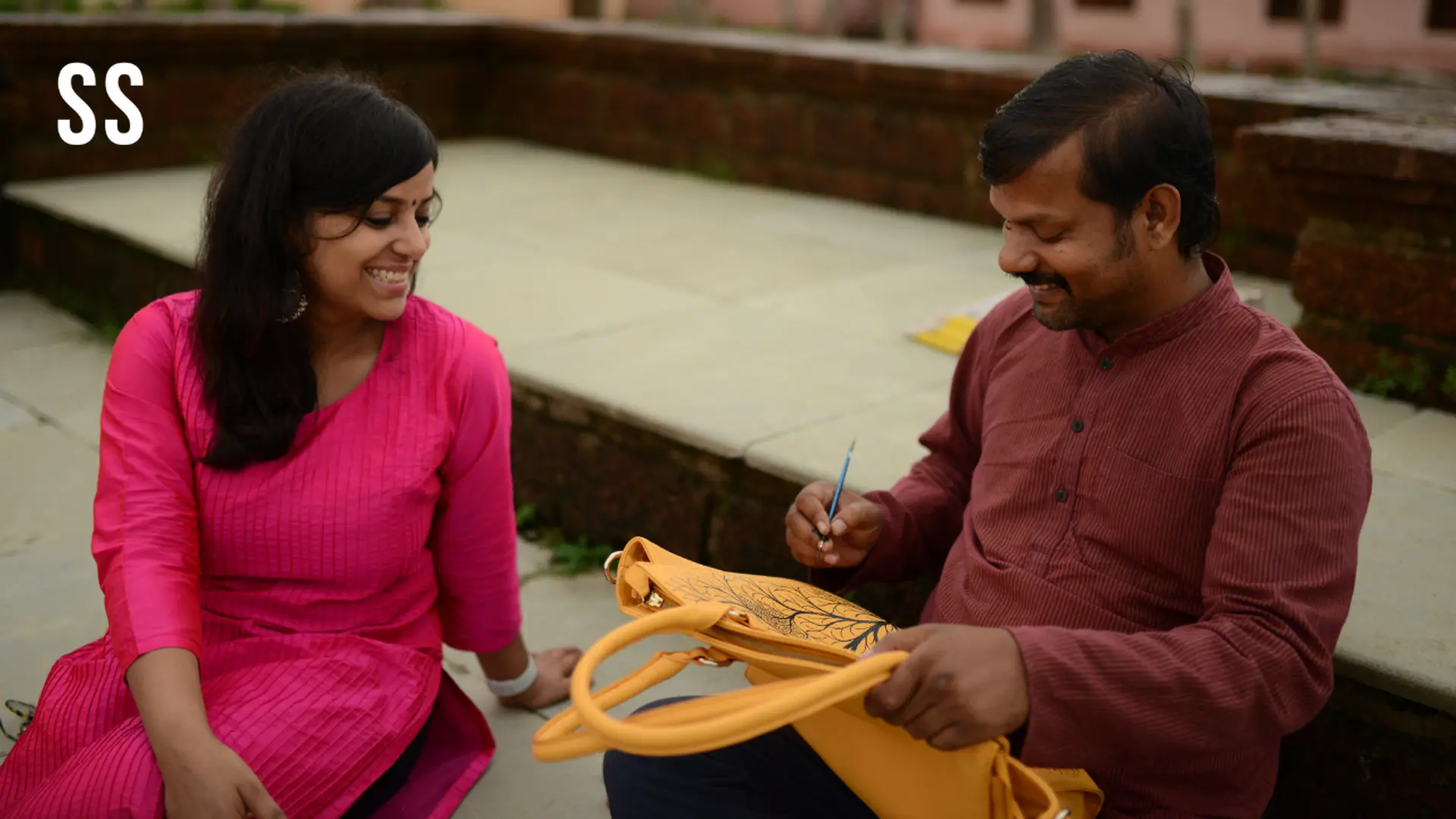

While consulting for the World Bank in Hong Kong, Yosha Gupta would often be asked about her Gucci handbag. The label was unmistakable, but the hand-painted art on it was different and striking.
It was Madhubani art that Gupta had commissioned an artist to paint.
“People in Hong Kong love limited editions, and everyone kept asking me if it was a limited-edition Gucci. I’d say, ‘yes, very limited, only I have it,” she says.
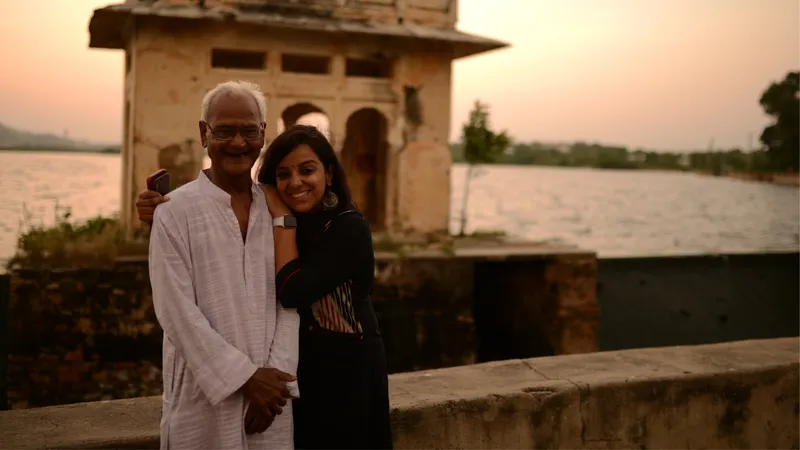
Yosha Gupta with Pichwai artist Shahzad Ali Sherani
People began asking if they could get their handbags painted, too.
“We started with people sending us their luxury handbags. We would show them traditional designs, send the bags to India, get them hand-painted and return them as one-of-a-kind pieces. Gradually, we began launching our own product lines too,” Gupta explains.
Their reactions were insightful: people clearly love the art, but there’s no awareness or access. And even if there is access, it’s not integrated into the kinds of products people want to bring into their lives.
Understanding the gap between desire and access, India's extraordinary artistic heritage, and people’s awareness became the founding insight for MeMeraki.
Today, MeMeraki has grown into a comprehensive platform for traditional and folk art with over 300 craft forms, more than 500 master artists, and 10,000-plus artworks available for sale.
The long way around
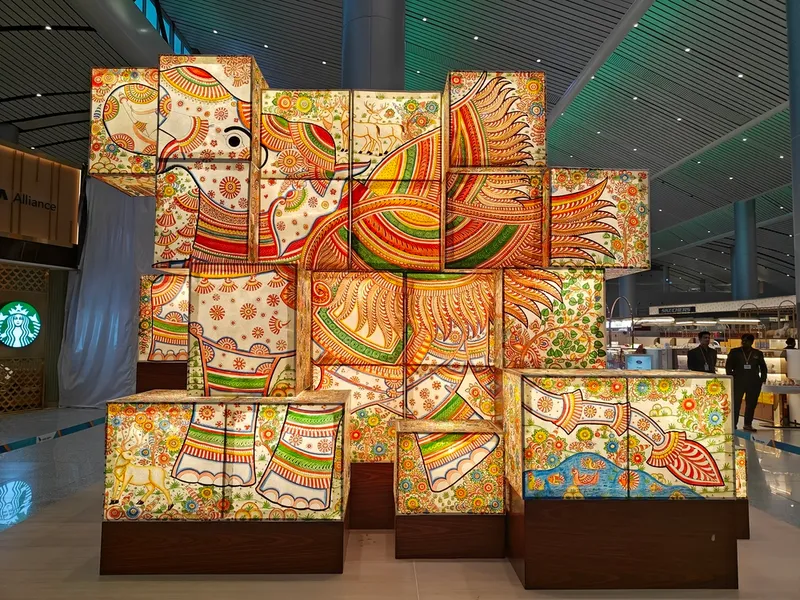
Tholu Bommalata installation
Though Gupta entered this space as an outsider, her work has always orbited a trifecta of the things she loved—art and craft, impact, and technology.
Growing up in Aligarh, she watched her mother, a talented amateur artist who rendered the Khajuraho sculptures in charcoal, and quietly came to understand that, in India, creativity was not considered a career.
“I saw how undervalued it was. So, I decided very early that I had to be financially independent.” She also saw her father struggling as an entrepreneur and so steered away from that path.
While studying Economics at Lady Shriram College for Women in Delhi, she volunteered with SPIC-MACAY, an organisation that promoted classical and folk arts.
After completing her MBA, she joined GE. Following a stint at a mobile gaming startup, Gupta got married and moved to Hong Kong, where she joined a UK-based mobile banking company. She also started the local chapter of SPIC-MACAY.
After gaining experience across larger companies, early-stage startups, and everything in between, Gupta decided to take the entrepreneurial leap and build something of her own. The result was Lafalafa, a mobile-first coupon and offers platform, launched during the peak of the ecommerce funding boom.
“Within a year, we had around a million downloads. We raised funding from 500 Startups, one of the best accelerators in Silicon Valley and from a fund in Hong Kong. But then demonetisation happened. At the time, ecommerce in India was almost entirely cash-on-delivery, so when cash liquidity dried up, transactions tanked,” she reveals.
The downturn turned out to be temporary, and things would have recovered in seven or eight months, but Gupta hadn't raised enough runway to survive it. She tried pivoting to a B2B loyalty model but realised it wasn't the scalable business she wanted to build. So, she made the tough decision to shut it down.
She had started Lafalafa entirely with an exit mindset, but realised that she was never thinking about the value she was creating. That experience reshaped her perspective on entrepreneurship. While consulting with World Bank clients across underdeveloped markets like Bangladesh, Sri Lanka, and Indonesia, MeMeraki began to take shape as a passion project.
When the Covid-19 pandemic hit, and there was no market for handbags, it forced Gupta to dig deeper into MeMeraki’s actual mission: to take Indian art and master artists to the world.
“We started hosting online art workshops. I would be in Hong Kong, a Pattachitra artist would be teaching Pattachitra from their studio in Odisha, and participants from across the world would join. The first few workshops were word of mouth—friends and family. These were paid workshops where participants used their own materials, learned the art form, saw the artist's studio on video, created a small artwork in two hours, and experienced a genuine community connection with like-minded people,” she elaborates.
After five months, the initiative had hosted over 200 workshops and generated nearly Rs 10 lakh in income for artists, far outperforming anything else they had done.
MeMeraki was soon officially launched, and Gupta raised angel funding, hired a team, and sent people across India to record masterclasses. Around 30 high-production-quality masterclasses are available on the website, where anyone can log in and learn from traditional artists.
Evolving the platform
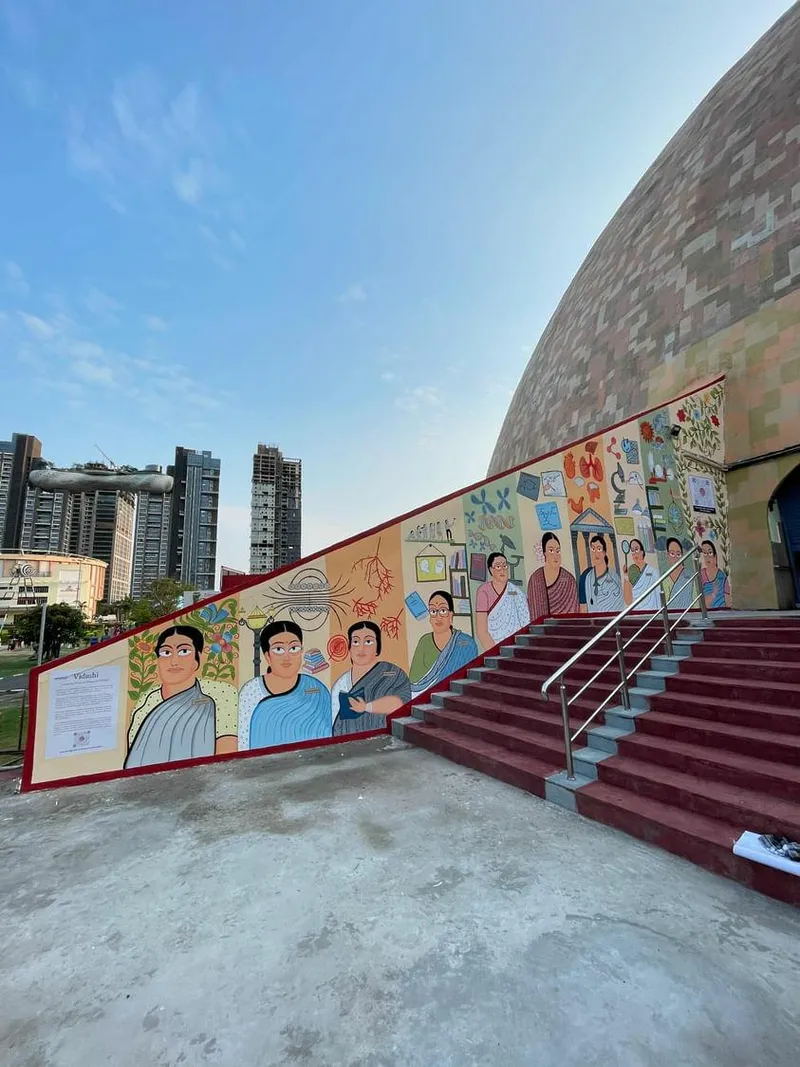
Kalighat wall mural at Science City, Kolkata
When the pandemic ended, the market shifted again, and people didn't want to spend as much time online.
“We asked ourselves again: what is our core mission? It's to build the technology infrastructure for traditional master artists—whether they want to teach their art or sell it. That's when we decided to start listing artworks for sale on the platform,” Gupta says.
As MeMeraki adopted a tech-first approach from the beginning, its website was highly SEO-optimised. The same keywords that brought people to learn about art also attracting people who wanted to buy them.
The company also developed a full augmented reality feature, built from scratch by its tech team, that lets visitors visualise how a traditional artwork would look in their own space.
The same SEO strategy also began attracting B2B clients.
“Our first installation at the Hyderabad airport came through an inbound inquiry—they found us online and asked specifically about the Tholu Bommalata art on our website. We are now working on two more airport art installations, have done installations at malls like DLF Promenade, and are actively reaching out to hotels,” she explains.
MeMeraki has also worked on a range of unconventional commissions. For example, Yippee Noodles wanted to show how its product pairs with local Odisha snacks like Jhalmuri.
“We engaged three of our Pattachitra artists to create a full storyboard, painting every scene frame by frame and then Yippee's team animated the entire ad. Google commissioned a set of artworks, Rajasthani miniature paintings where the subjects wear traditional attire but hold phones with Google products integrated into the scenes, and paintings with text embedded for visual accessibility,” she adds.
MeMeraki handles the entire process of onboarding an artist, including creating their profiles, writing descriptions, training them on basic photography and travelling to their locations to create content.
It relies very little on paid marketing, and about 80% of traffic from roughly 300,000 monthly website visitors is organic, through SEO and content.
MeMeraki has close to 170,000 followers on Instagram, and some of its reels have crossed 20 million views. For coordination, it has over 1,000 WhatsApp groups with artists.
Revenue model and impact
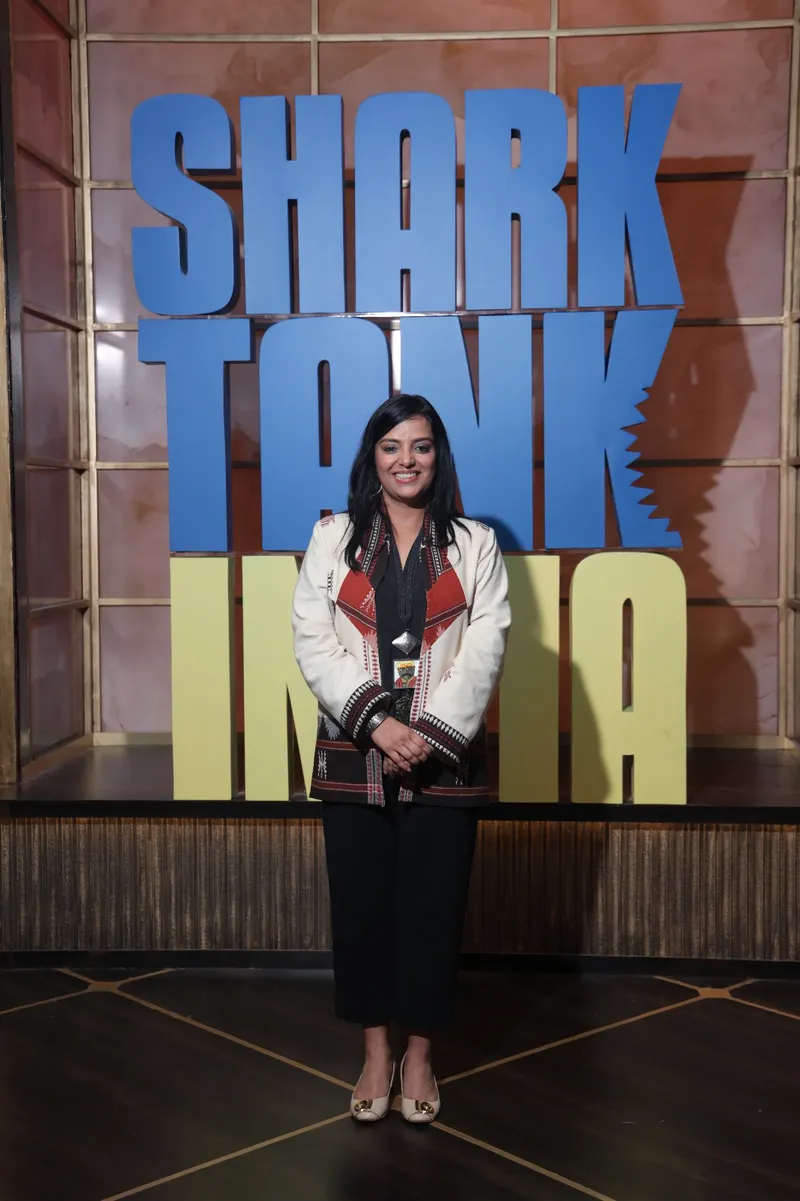
Yosha on Shark Tank India
Once the artist sets the price, the platform retains a gross margin of 35-40%, which Gupta says is used for marketing, co-designing products, and creating commercial opportunities for the artists. The model ensures that artists receive at least 50% of the final sale price.
The impact on its top artists has been transformative. Pichwai artist Shahzad Ali Sherani, 78, who works with a team in Kishangarh and still puts in 14-hour days, has earned Rs 20 lakh through the platform and is on track to touch Rs 30 lakh this year. Kalamkari artist Harinath is also expected to earn Rs 30 lakh this year.
For Kalighat painter couple Uttam and Sonali Chitrakar, the change is broader—their children now attend English-medium schools. MeMeraki has also taken over 25 artists to Hong Kong for its annual mural festival and actively manages Instagram accounts for 15–20 artists, with some crossing 15,000–20,000 followers. Some of the artists are earning 10x of what they were earning earlier.
The first round of funding was the hardest, admits Gupta.
“We were at about Rs 80–90 lakh in annual revenue at the time and were in the early masterclass phase. I pitched to over 50 investors and eventually closed with four—three angel investors and IMA Ventures, for a total of around Rs 1.25 crore, with a small additional grant from AIC Banasthali Vidyapeeth,” she shares.
This year, the company raised an institutional funding round from Next Bharat Ventures, the impact investment arm backed by Suzuki Motor Corporation, Japan. It closed a Rs 1 crore investment for 4% equity on Shark Tank India.
Coming from a technology background, Gupta says she was used to moving fast and scaling aggressively. “You can increase demand quickly, double the marketing budget, and website traffic can triple or even 10x overnight. But the supply is completely hand-painted. It takes the time it takes,” she says.
Learning to slow down and build a business aligned with the realities of craft production, rather than the pace of tech, has been a “genuine personal reset.”
On the market side, Gupta says the larger task is getting consumers to understand the true value of handmade craft and be willing to pay for it.
Fashion has a long history of appropriating traditional Indian art without attribution or just compensation. Gupta emphasises the need for a community effort to make it a fair ecosystem. She points out that organisations like Creative Dignity, a nonprofit that brings together designers, craft entrepreneurs, lawyers, and advocates, are trying to establish common practices.
“One live issue is licensing: if a brand wants to print a traditional artist's design on a product, the typical mindset is to pay the artist once for a small original painting (maybe Rs 10,000) and then print it thousands of times with no further compensation. We try to change that framing. We recently negotiated Rs 2 lakhs per design for a label project, though ideally I'd have wanted Rs 2 lakh plus a percentage of sales,” she explains.
MeMeraki’s primary financial goal is to hit Rs 100 crore in revenue in the next five years, with a corresponding expansion in the number of artists and artisans whose livelihoods MeMeraki can meaningfully impact.
“I also want to improve our gender balance: we currently have only about 30% women artists and want to work toward parity,” she says.
Edited by Megha Reddy